


-
Efficient and automated qPCR plate set-up
The ASSIST PLUS pipetting robot automates 384 well qPCR plate set-up
Setting up a qPCR is a tedious process consisting of multiple pipetting steps. One particularly challenging task is reformatting from microcentrifuge tubes into a 384 well plate, which is time consuming and requires a lot of concentration. Another common problem is the loss of valuable and expensive substances, such as Mastermix and precious samples, due to the reservoir dead volume. The ASSIST PLUS pipetting robot, in combination with the VIAFLO and VOYAGER electronic pipettes, streamlines the workflow and increases the throughput and the reproducibility of qPCR set-ups, with minimal manual input. The loss of expensive substances or valuable samples due to reformatting errors is eliminated. The unique design of the ASSIST PLUS pipetting robot, together with the intuitive VIALAB software, offers exceptional flexibility and straightforward implementation.
-
Table of contents
Setting up a qPCR is a tedious process consisting of multiple pipetting steps. One particularly challenging task is reformatting from microcentrifuge tubes into a 384 well plate, which is time consuming and requires a lot of concentration. Another common problem is the loss of valuable and expensive substances, such as Mastermix and precious samples, due to the reservoir dead volume. The ASSIST PLUS pipetting robot, in combination with the VIAFLO and VOYAGER electronic pipettes, streamlines the workflow and increases the throughput and the reproducibility of qPCR set-ups, with minimal manual input. The loss of expensive substances or valuable samples due to reformatting errors is eliminated. The unique design of the ASSIST PLUS pipetting robot, together with the intuitive VIALAB software, offers exceptional flexibility and straightforward implementation.
Key benefits
Overview: qPCR plate set-up
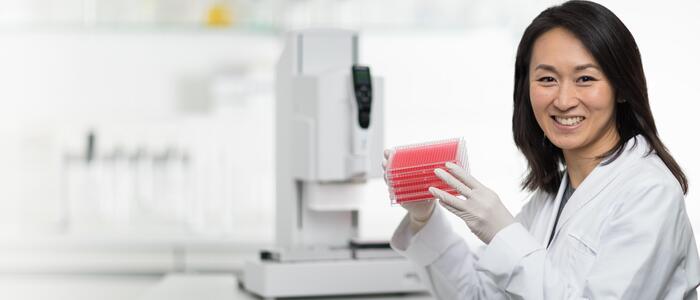
The ASSIST PLUS pipetting robot is used to set up a 384 well format qPCR by pipetting 64 samples in triplicate with two different Mastermixes for the detection of two genes of interest (GOI 1 and GOI 2).
The protocol is divided into two programs that guide the user through all the steps of the qPCR set-up:
- Program 1: Mastermix_qPCR
- Program 2: Samples_qPCR
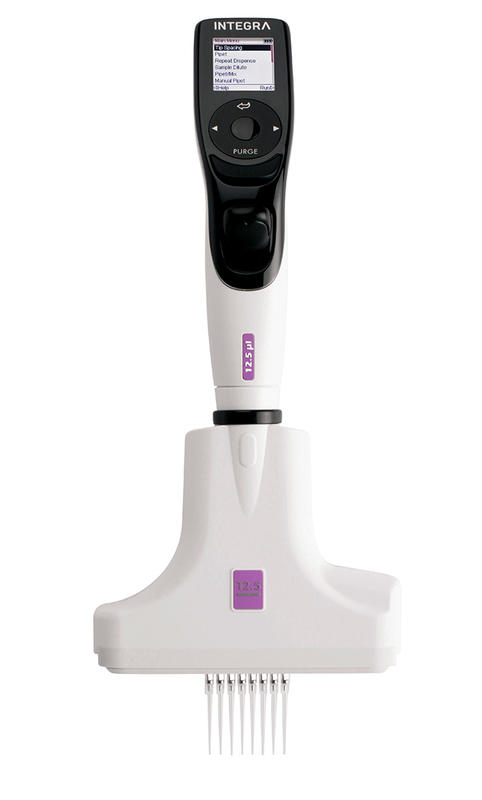
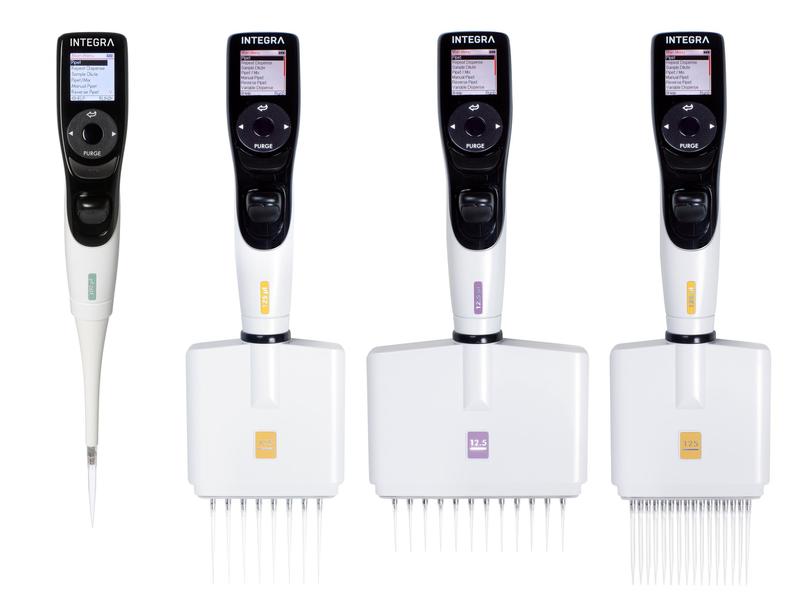
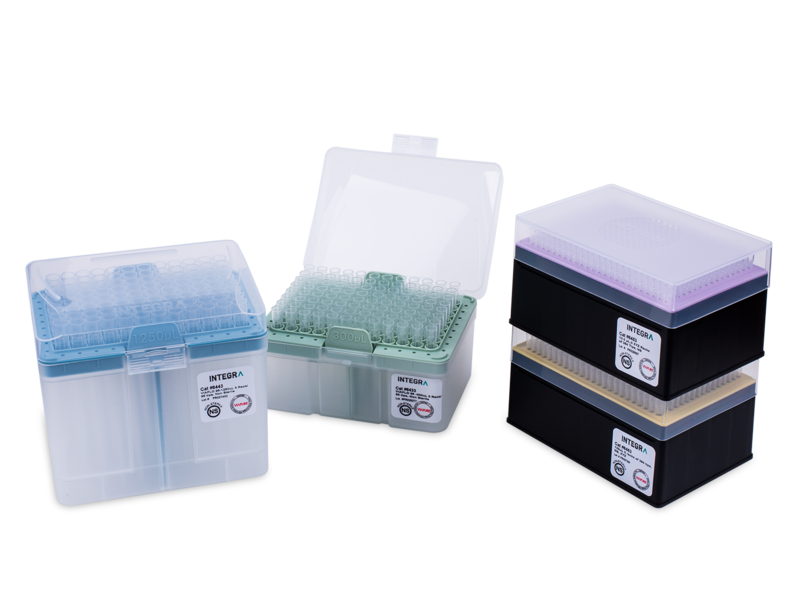
The ASSIST PLUS pipetting robot operates a VIAFLO 16 channel 125 μl electronic pipette with 125 μl Sterile, Filter, Low Retention GRIPTIPS for Program 1 and a VOYAGER 8 channel 12.5 μl electronic pipette with 12.5 μl Sterile, Filter, Low Retention GRIPTIPS for Program 2.
Downloads: Protocols and reports for automated qPCR plate set-up with ASSIST PLUS
Here you can download the complete protocols and reports used in this application and use them on your ASSIST PLUS. The protocol can be customized with the VIALAB software.
Experimental set-up: Program 1 - Mastermix transfer (Mastermix_qPCR)
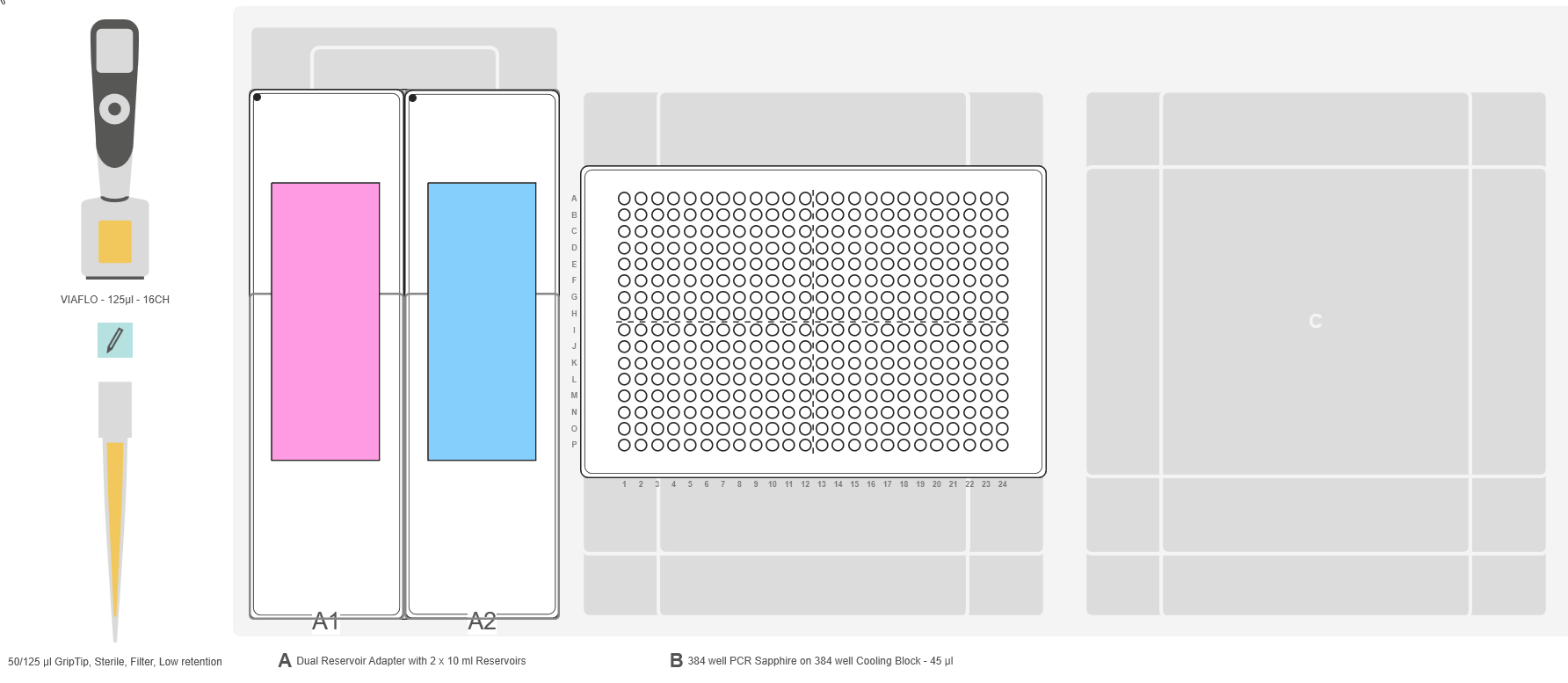
Prepare the pipetting robot deck as follows (Figure 1):
|
Deck position A: |
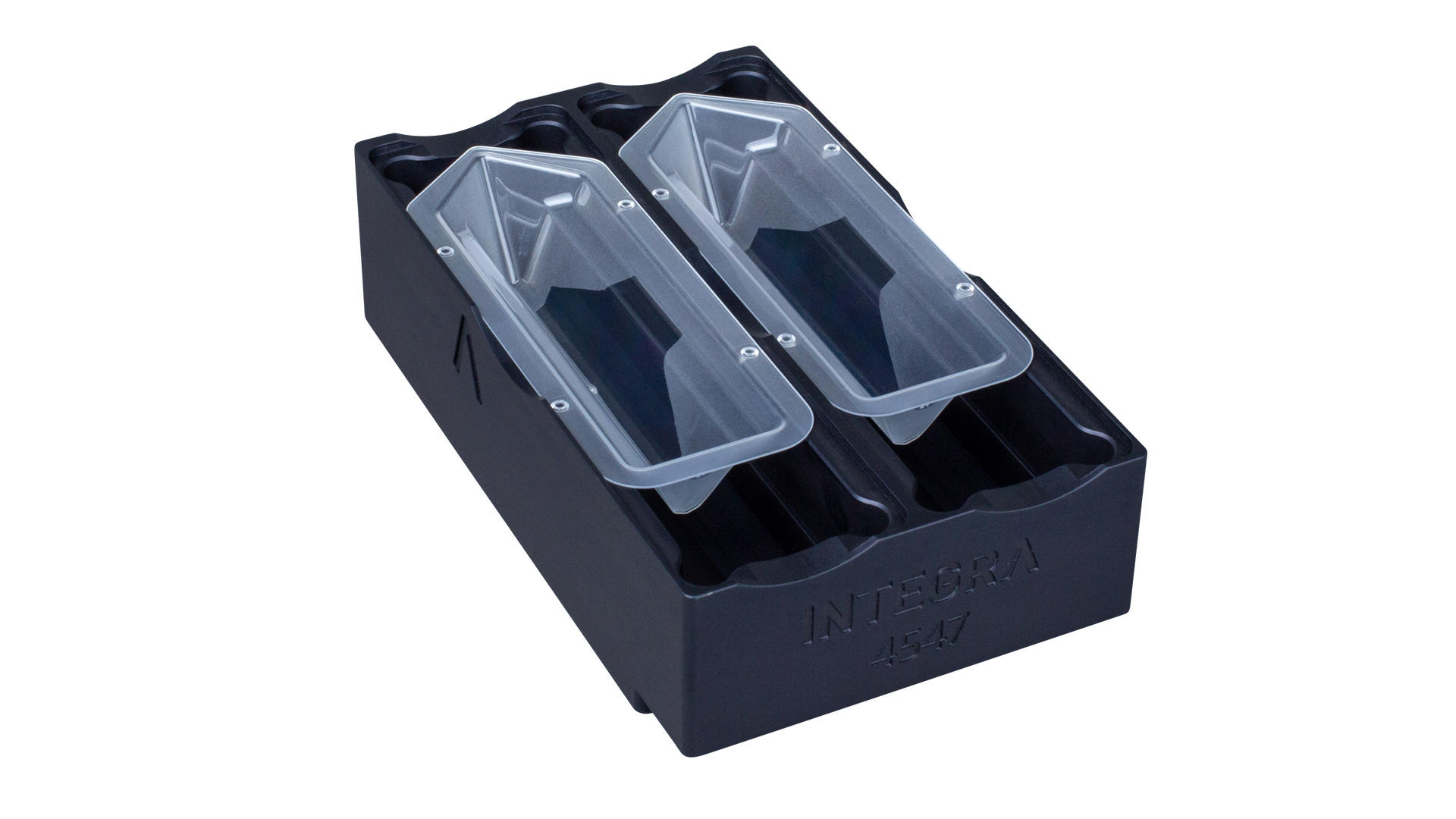
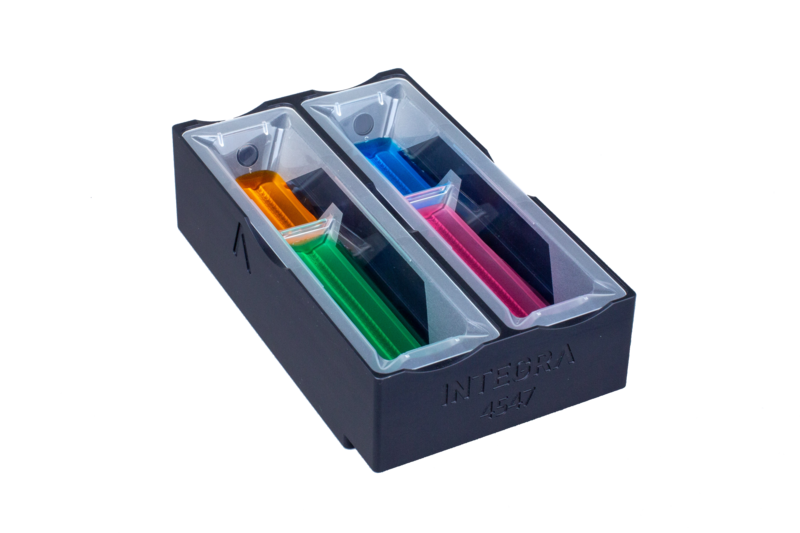
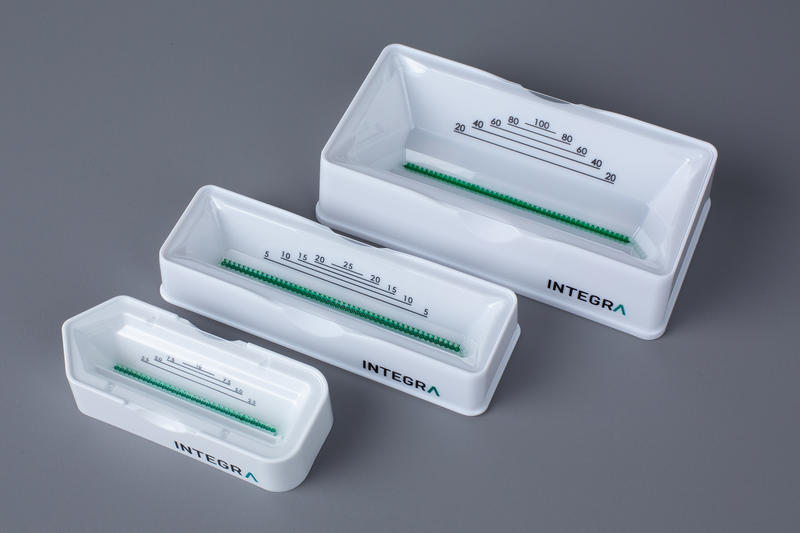
Dual reservoir adapter – 2 x 10 ml reagent reservoir with SureFlo anti-sealing array (Figure 2) containing Mastermix 1 and 2. |
| Deck position B: |
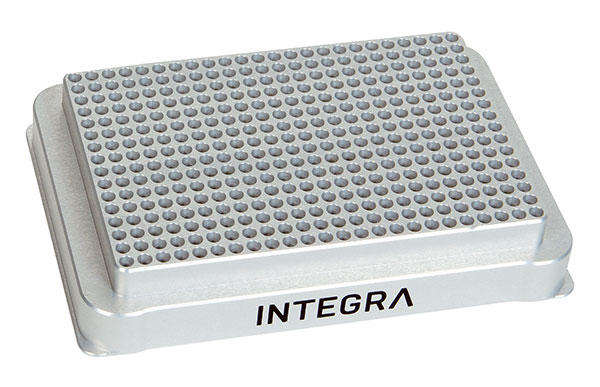
384 well PCR plate, placed on an INTEGRA cooling block in the landscape position. |
Step-by-step procedure
1. Transfer Mastermixes into the 384 well plate
Add Mastermixes 1 and 2 into the left and right sides of the 384 well PCR plate, respectively.
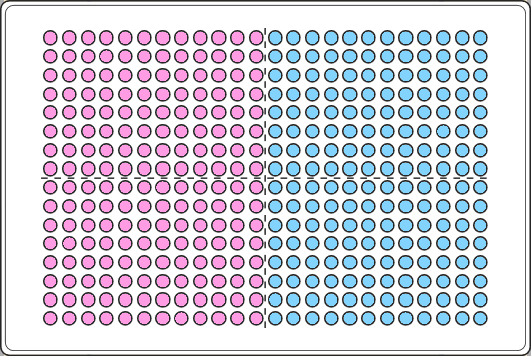
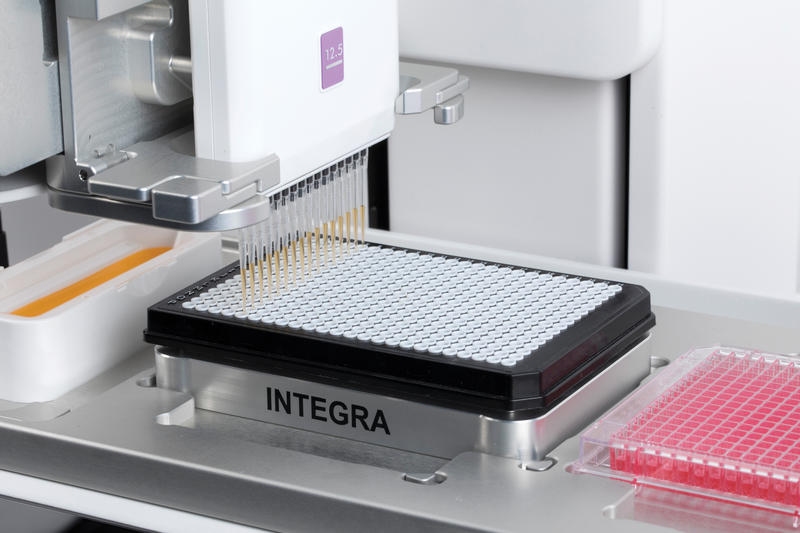
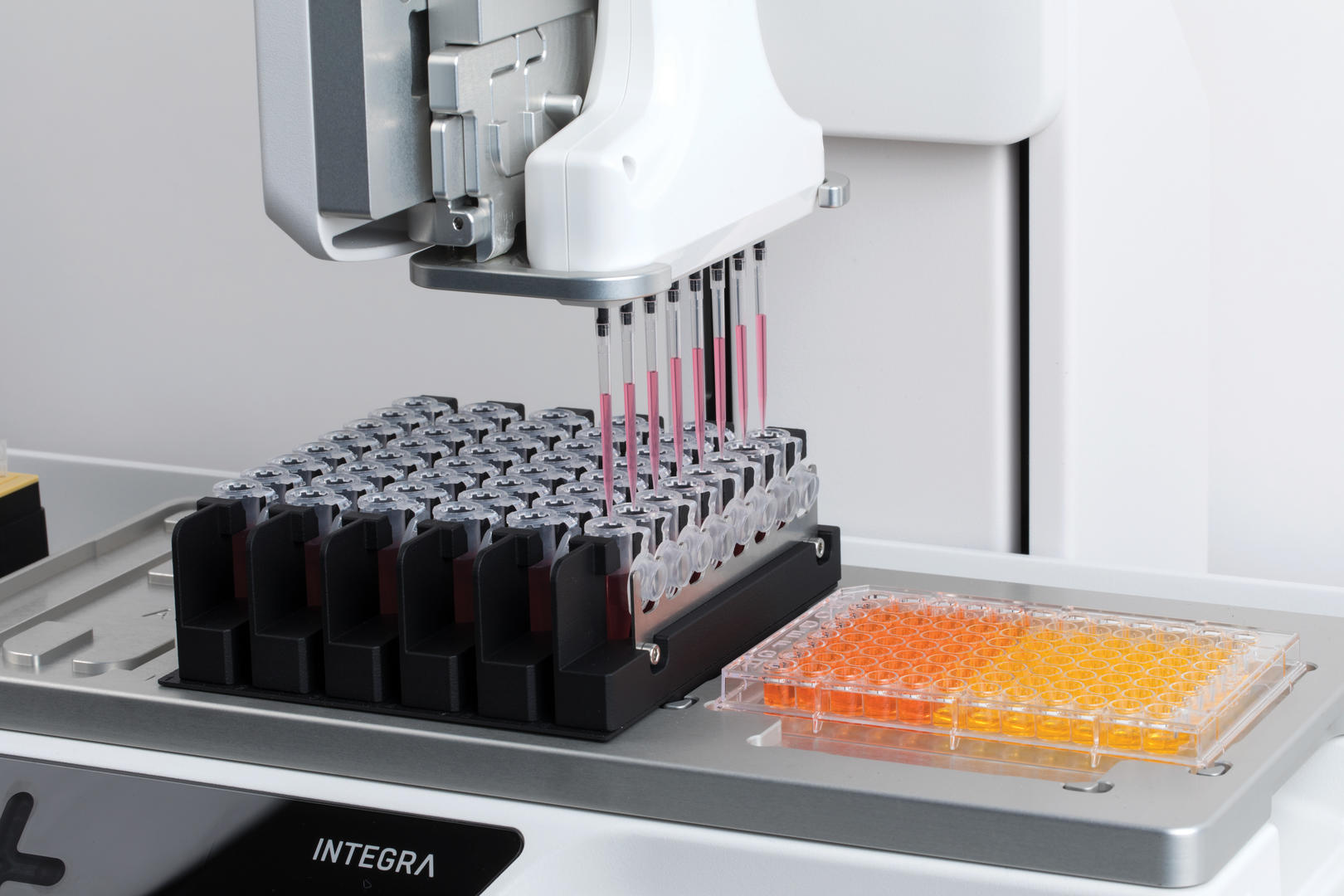
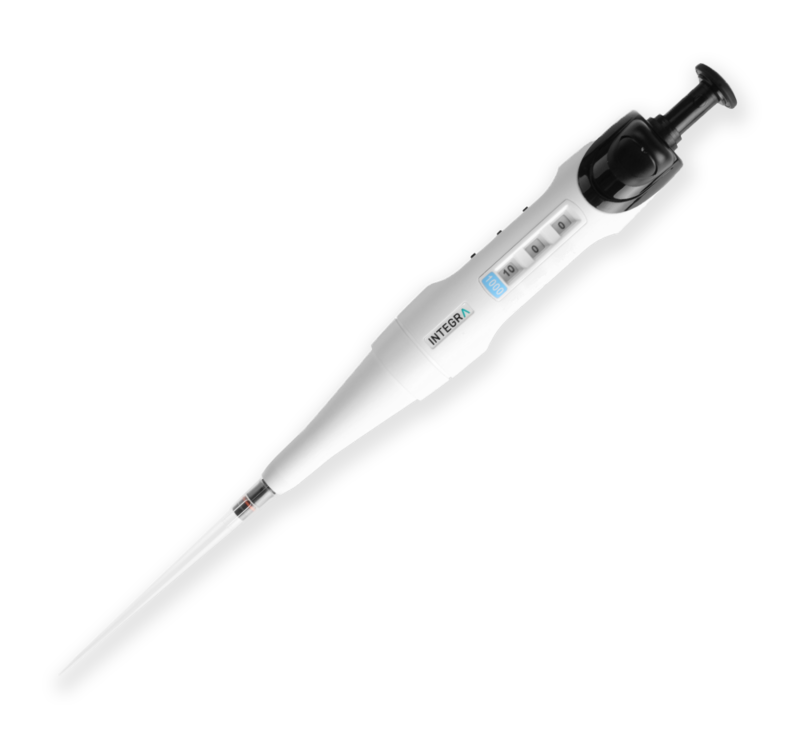
Use an EVOLVE 5000 μl manual pipette with 5000 μl Sterile, Filter, Low Retention GRIPTIPS to fill the left 10 ml reagent reservoir with SureFlo anti-sealing array with 1.6 ml of Mastermix 1 and the right reservoir with 1.6 ml of Mastermix 2 (Position A). Select and run the VIALAB program ‘Mastermix_qPCR’ on the VIAFLO 16 channel 125 μl electronic pipette with 125 μl Sterile, Filter, Low Retention GRIPTIPS. The ASSIST PLUS pipetting robot automatically transfers 7.5 μl of Mastermix 1 (pink) into the left half of the 384 well PCR plate and 7.5 μl of Mastermix 2 (blue) into the right half (Figure 3) using the Repeat Dispense mode with a tip touch on the surface of the liquid to increase pipetting precision. Figure 4 shows the pipetting robot transferring the Mastermix into a 384 well plate.
Tips:
- A pre- and post-dispense step is recommended to increase the accuracy and precision of pipetting. The pre- and post-dispense volume should be between 3 and 5 % of the nominal volume of the pipette.
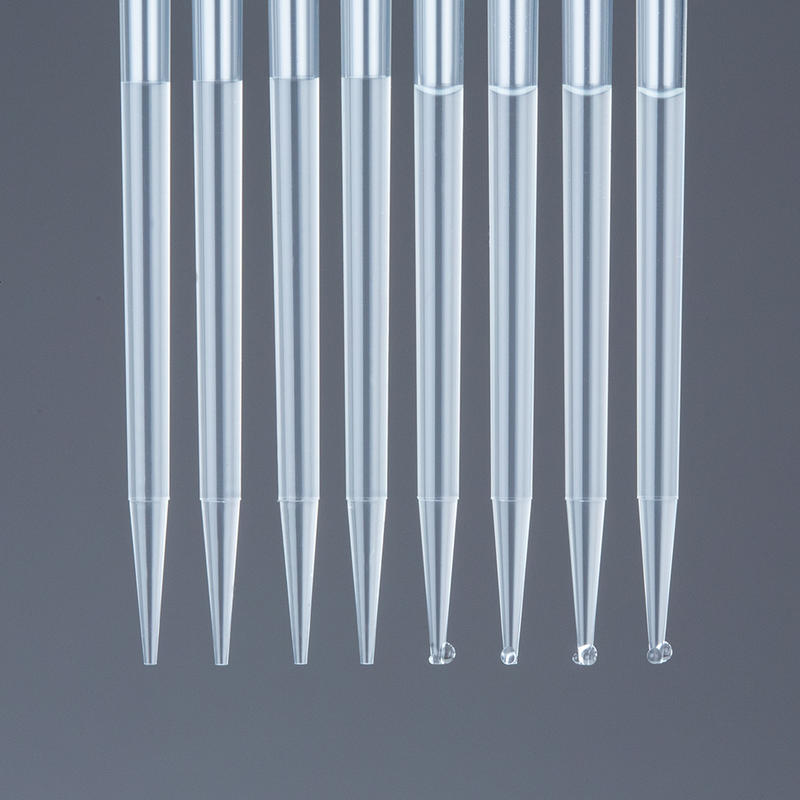
- The Low Retention GRIPTIPS are made from a unique polypropylene blend with heightened hydrophobic properties for superior accuracy and precision while pipetting viscous and low surface tension liquids.
- The reservoirs’ SureFlo anti-sealing array and a unique surface treatment that spreads liquid evenly enable the pipette tips to sit on the bottom and still aspirate liquids accurately, reducing dead volumes.
Experimental set-up: Program 2 - Sample transfer (Samples_qPCR)
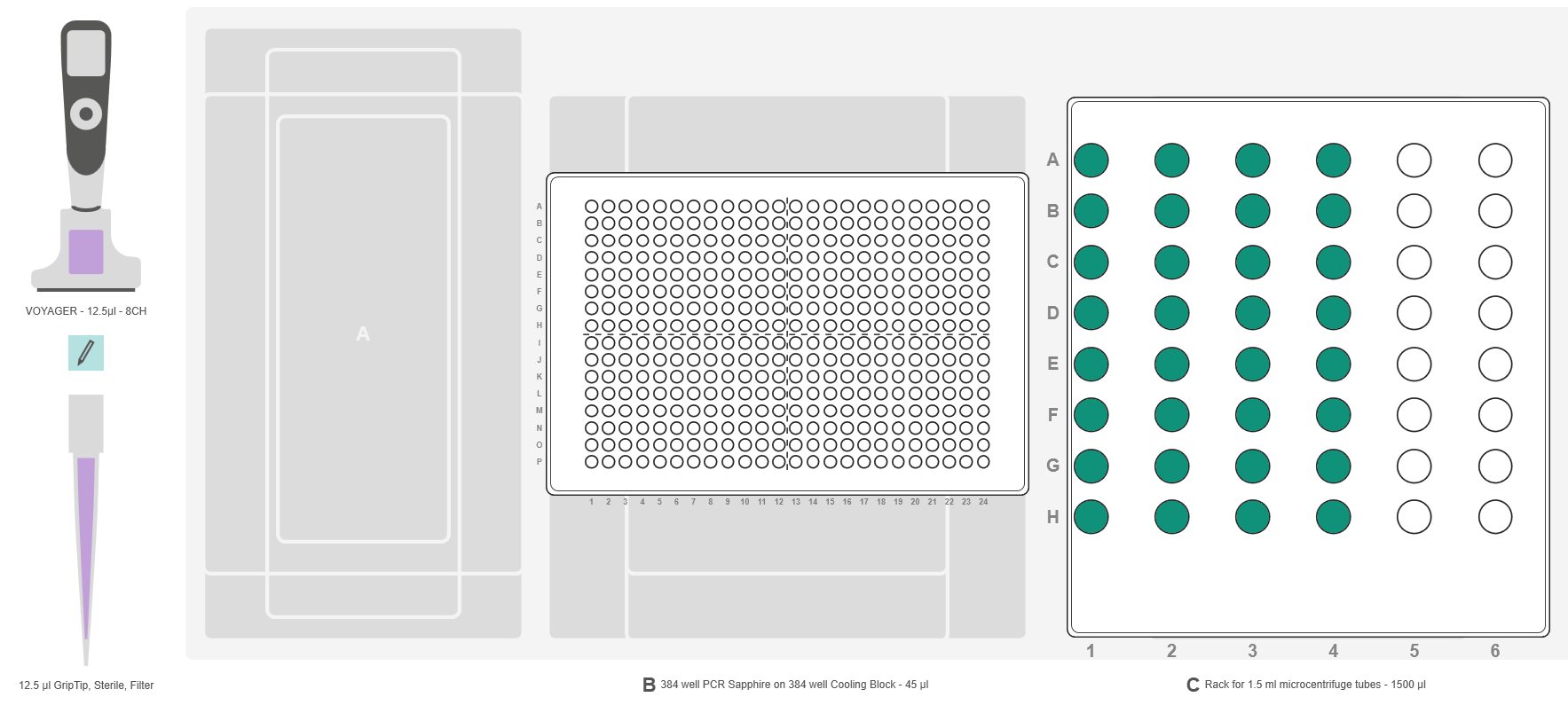
Prepare the pipetting robot deck as follows (Figure 5):
|
Deck position B: |
384 well PCR plate, placed on an INTEGRA cooling block. |
| Deck position C: |
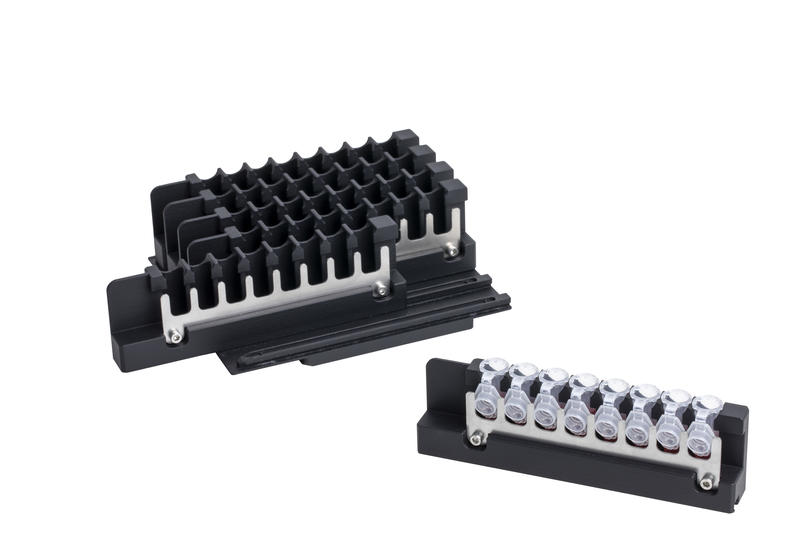
INTEGRA 1.5 ml microcentrifuge tube rack, with tubes containing samples 1-32. |
Step-by-step procedure
1. Sample transfer into the 384 well plate
Add the 64 samples in triplicate to the Mastermixes.
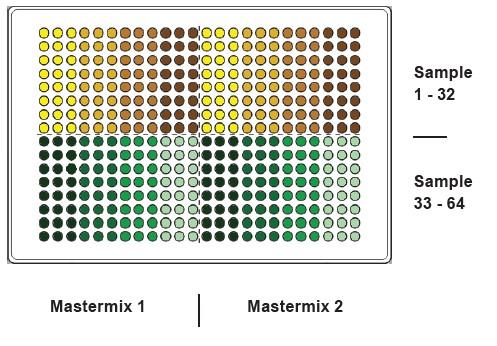
Place samples 1-32 in an INTEGRA 1.5 ml microcentrifuge tube rack on Position C. Run the VIALAB program ‘Samples_qPCR’ on a VOYAGER 8 channel 12.5 μl electronic pipette to start the sample transfer. The ASSIST PLUS transfers 2.5 μl of the first 32 samples in triplicate into Mastermixes 1 and 2 (Figure 7, yellow/brown), using the Repeat Dispense mode with a tip touch on the side of the well to make sure that no droplets adhere to the GRIPTIPS. After this step, a prompt informs the user to place the second series of samples (33-64) on Position C. The ASSIST PLUS pipetting robot continues by transferring 2.5 μl of the samples in triplicate into the other half of Mastermixes 1 and 2 (Figure 7, green).
Tip: Use Sterile, Filter, Low Retention GRIPTIPS for optimal liquid recovery of precious solutions, such as Mastermix and samples.
Remarks
VIALAB software:
The VIALAB program can easily be adapted to fit the user’s demands, especially if specific labware, incubation times or protocols are needed.
Partial plates:
The programs can be adapted at any time to a different number of samples, giving laboratories total flexibility to meet current and future demands.
Conclusion
Related articles
Ask our expert. Leave a comment!
Write us if you have any questions regarding the application note or one of our instruments.
Any questions? I'm happy to help!
Instruments and accessories
ASSIST PLUS, Pipetting Robot
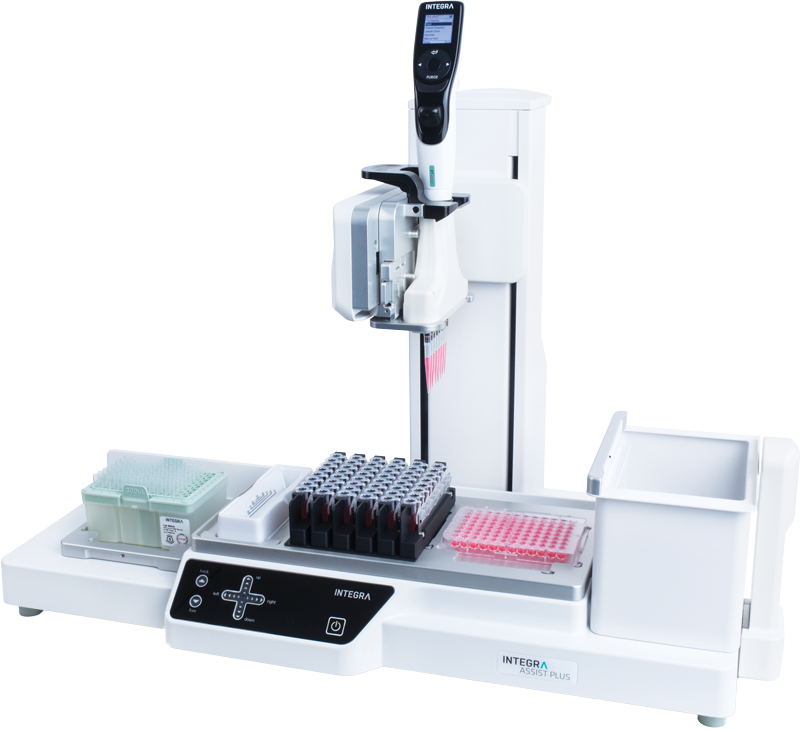
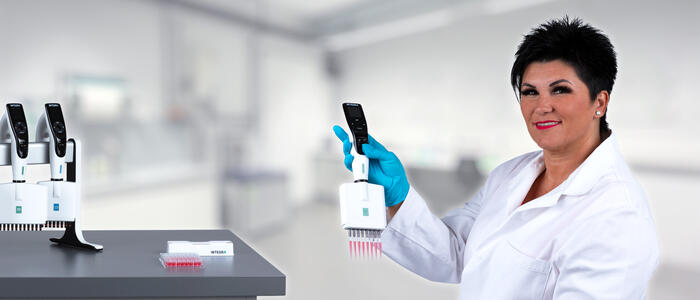
INTEGRA has developed the ASSIST PLUS pipetting robot to streamline routine pipetting tasks at an affordable price. Using INTEGRA electronic multichannel pipettes, the system:
- automates pipetting tasks,
- eliminates physical strain and
- ensures superior reproducibility and
- error free pipetting.
Part No. 4505
Customer’s voice
You must try this. You will fall in love with it. I am so grateful to have had the opportunity to use this tool. It's really more than awesome. I love many products from Integra, which upgrade the quality of our research enormously. Just be ready to enjoy every step of your research with Integra. (Review published on Select Science)
Related products

Applications
Show all-
End-to-end Twist library preparation protocol for NGS workflow automation
-
A simple and streamlined workflow for membrane protein isolation
-
Streamlining single-cell sequencing with the Flex Apex workflow using automated liquid handling solutions
-
Optimizing DNA fragmentation and NGS library preparation with automated liquid handling
Stories
Show all-
 · Company News
Streamlining CRISPR workflows, from editing to analysis
-
 · Customer Testimonial
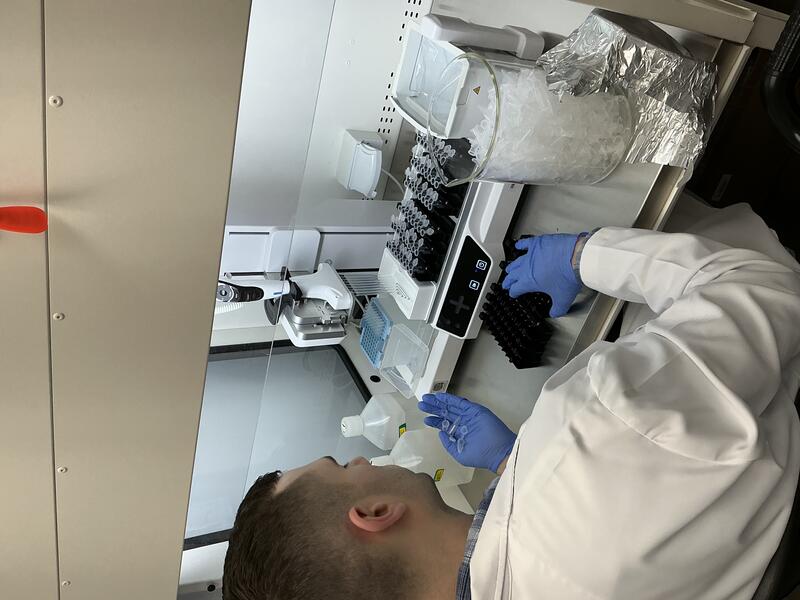
Enhancing the consistency of ag-tech R&D processes with the ASSIST PLUS pipetting robot
-
 · Product News
Magnetic beads represent a modern approach to gDNA isolation
-
 · Product News
Magnetic beads for NGS size selection and PCR purification