


-
Enhanced workflow for high throughput, high density microelectrode array (HD-MEA) electrophysiology on MaxTwo 24-Well Plates
Integration of the VIAFLO 96 for reproducible, high-resolution functional characterization of iPSC-derived neurons
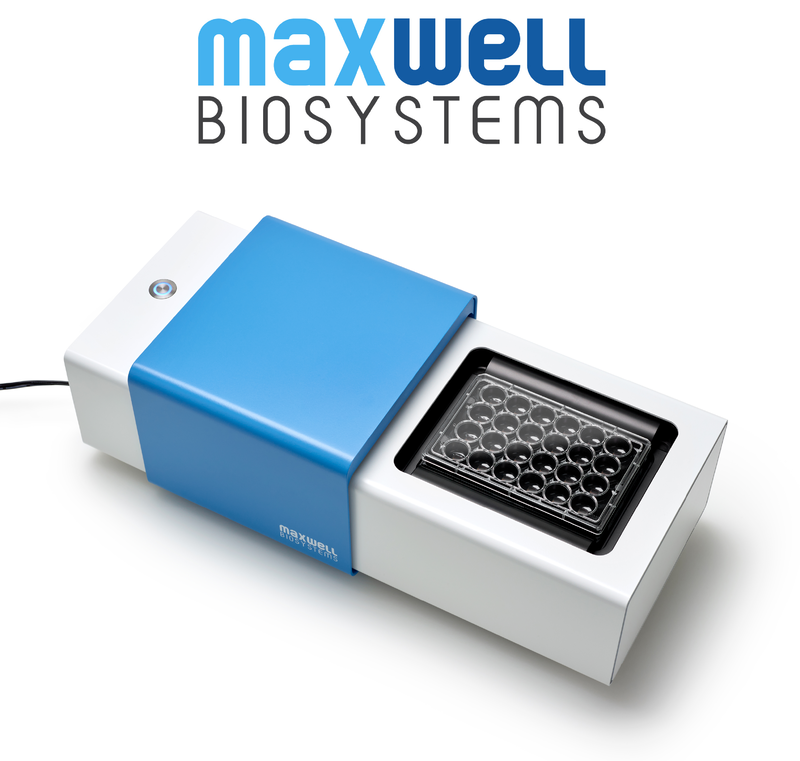
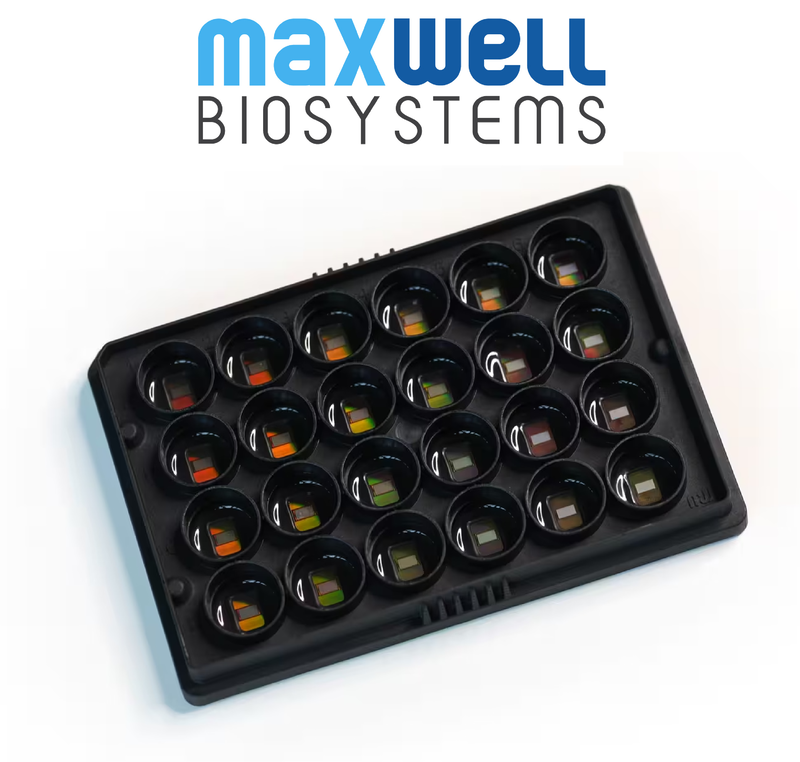
Neurons derived from induced pluripotent stem cells (iPSCs) have become indispensable tools for studying neurological disorders such as Alzheimer’s, Parkinson’s and amyotrophic lateral sclerosis, as well as for advancing drug discovery. Non-invasive characterization of their functional activity and complex network dynamics is crucial to fully understand these in vitro models. MaxWell Biosystems’ MaxTwo Multi-Well HD-MEA System provides scalable, real-time and label-free recordings of electrical activity from electrogenic cells, including iPSC-derived neuronal cultures and neural organoids. This highly sensitive system can capture data from complex neuronal networks at subcellular resolution and precisely stimulate single cells. The MaxTwo 24-Well Plate offers a high throughput and high resolution solution for scale-up of functional phenotyping and evaluation of pharmacological interventions on iPSC-derived cultures. Parallel processing of all wells in the MaxTwo 24-Well Plate using INTEGRA's VIAFLO 96 handheld electronic pipette helps to accelerate routine experimental procedures, such as media changes, cell plating and compound testing. Together, these technologies allow researchers to scale up their HD-MEA experiments, increase throughput and reduce hands-on time.
-
Table of contents
Neurons derived from induced pluripotent stem cells (iPSCs) have become indispensable tools for studying neurological disorders such as Alzheimer’s, Parkinson’s and amyotrophic lateral sclerosis, as well as for advancing drug discovery. Non-invasive characterization of their functional activity and complex network dynamics is crucial to fully understand these in vitro models. MaxWell Biosystems’ MaxTwo Multi-Well HD-MEA System provides scalable, real-time and label-free recordings of electrical activity from electrogenic cells, including iPSC-derived neuronal cultures and neural organoids. This highly sensitive system can capture data from complex neuronal networks at subcellular resolution and precisely stimulate single cells. The MaxTwo 24-Well Plate offers a high throughput and high resolution solution for scale-up of functional phenotyping and evaluation of pharmacological interventions on iPSC-derived cultures. Parallel processing of all wells in the MaxTwo 24-Well Plate using INTEGRA's VIAFLO 96 handheld electronic pipette helps to accelerate routine experimental procedures, such as media changes, cell plating and compound testing. Together, these technologies allow researchers to scale up their HD-MEA experiments, increase throughput and reduce hands-on time.
Key benefits
Downloads: App note and protocols for enhanced workflow for high throughput, high density microelectrode array (HD-MEA) electrophysiology on MaxTwo 24-Well Plates
Overview: How to perform high throughput HD-MEA experiments uring the MaxTwo 24-Well Plate and the VIAFLO 96 handheld electronic pipette
Experimental set-up
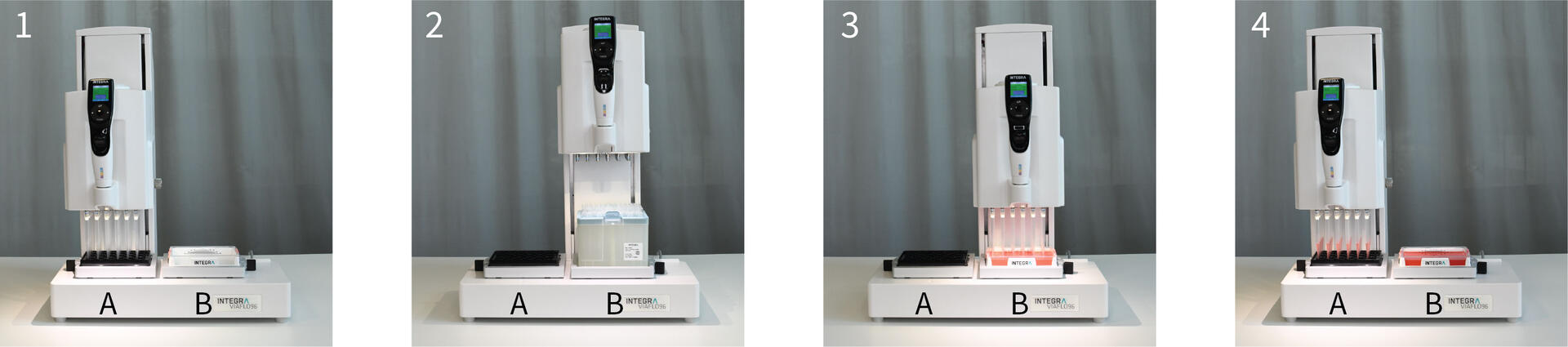
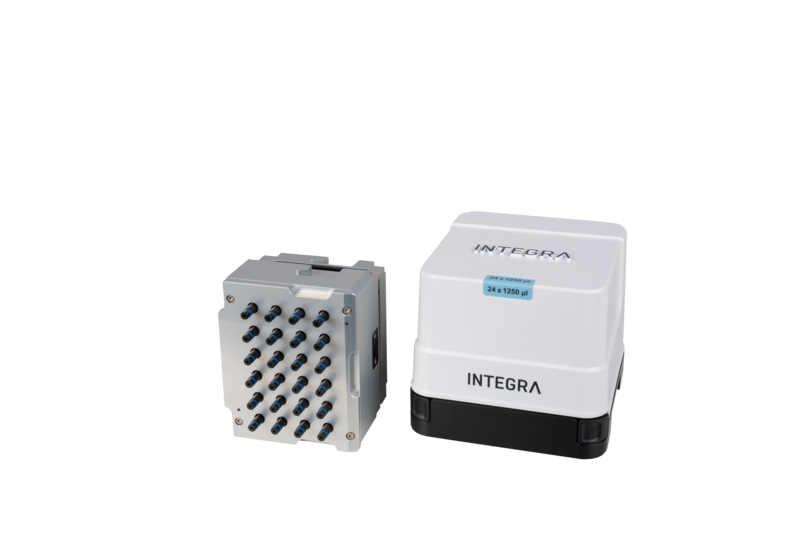
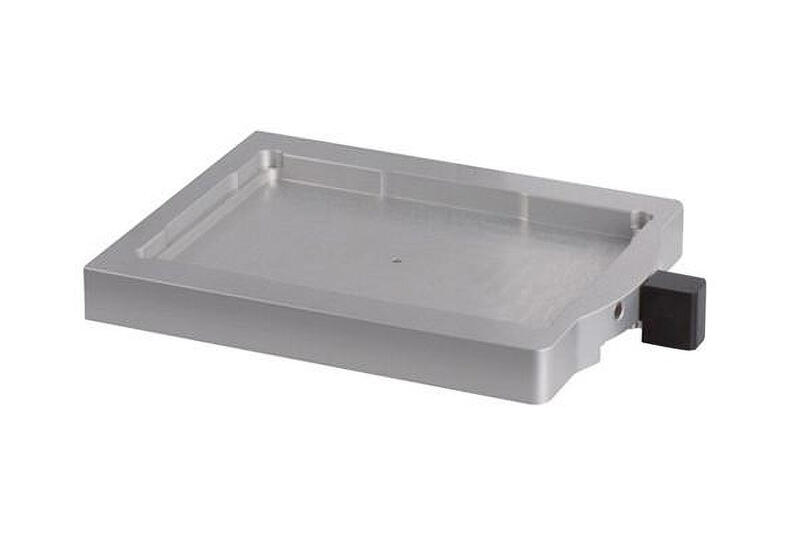
Equip the VIAFLO 96 with the 50-1,250 μl 24 channel pipetting head and 2 plate holders for 24 well plates with slide function.
Position A: MaxTwo 24-Well Plate
Position B: Labware exchange zone
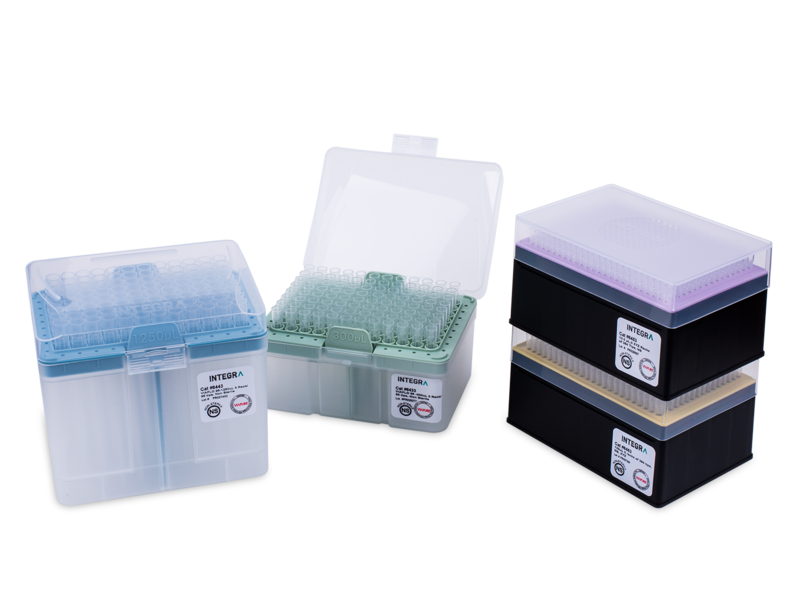
- 1,250 μl low retention, sterile, filter Automation GRIPTIPS® pipette tips
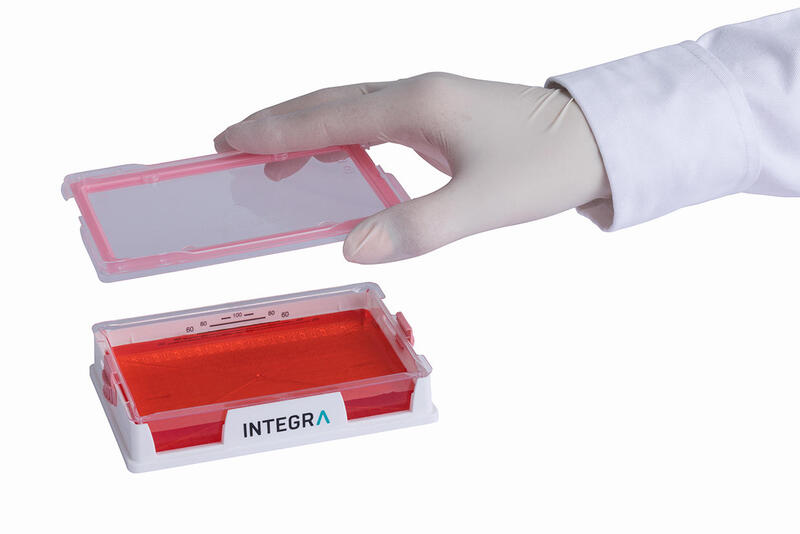
- Automation friendly Clear Advantage™ reagent reservoir for fresh medium
- Waste reservoir (e.g. re-used automation friendly Clear Advantage reagent reservoir)
- Waste box for pipette tips
Step-by-step procedure
A VIAFLO 96 equipped with a 24 channel pipetting head can be used to perform or assist with the following 3 procedures on the MaxTwo 24-Well Plate:
- neuronal cell plating*
- media changes*
- compound administration
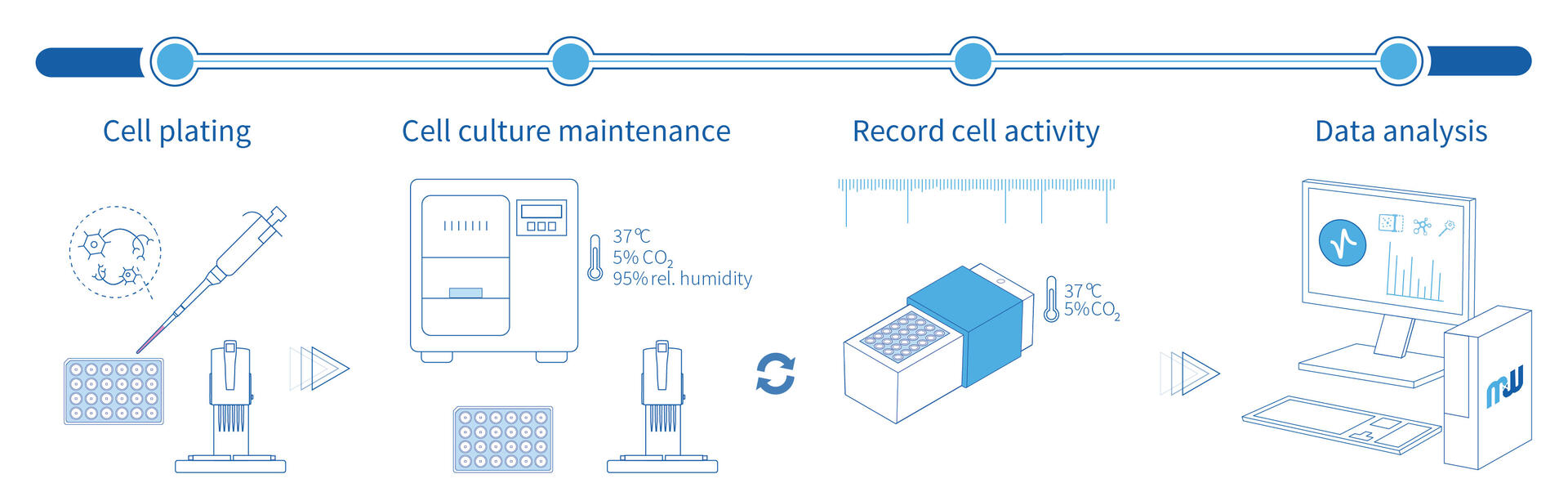
Depending on the experiment, these steps can be performed in parallel on all wells, or on a selected subset using the partial tip loading function of the VIAFLO 96.
The necessary steps for each of the 3 procedures are outlined below. Adjusting the head position for each application prior to performing the experiment is essential. The X position and Z height can be precisely defined on the VIAFLO 96, ensuring the same pipetting position is used in each step of the workflow. Pipetting steps should be performed with a slight offset from the chip area to minimize mechanical stress on the cells during aspiration and dispensing. Ensure that liquid exchanges occur over the packaging material in the well, rather than directly over the chip area (Figure 2). The VIAFLO 96’s default pipetting speeds have been reduced to further minimize disturbance to the cells.

Ready-to-use VIALINK custom pipetting programs for all steps are provided in the download section; pipetting head alignment and speed adjustments must be defined beforehand in the Position Settings. More detailed information about the custom programs and position settings can be found in the appendix.
Neuronal cell plating
Open the MaxTwo 24-Well Plate in a biological safety cabinet (BSC), and transfer it to Position A on the VIAFLO 96 deck. Pre-treat the MaxTwo 24-Well Plate by adding 0.6 ml of complete culture medium to each well using the 'MXW1_PRECOND600' VIALINK program and incubate for 48 h at 37 °C, 5 % CO2 and >95 % relative humidity in a cell culture incubator. Aspirate the complete culture medium, wash the wells once with sterile deionized water (diH2O), and dry by vacuum aspiration. Sequentially apply primary and secondary coatings to each well, incubating after each application. Refer to the MaxTwo 24-Well Plate Neuronal Cell Plating Protocol section for the coating procedure and options suitable for your cell line. After aspirating the secondary coating, leaving a thin film on the surface, plate the cells at the center of each well by performing either whole-area or dot plating, according to the MaxTwo 24-Well Plate Neuronal Cell Plating Protocol. Incubate the plate for 1 h before transferring to Position A on the VIAFLO 96 deck. Finally, gently add 0.6 ml of pre-warmed complete culture medium to each well using the 'MXW2_TRANSFR600' VIALINK program, dispensing along the side of the wells to minimize mechanical disturbance, and transfer the plate to the incubator.
Tips:
- For detailed instructions on neuronal cell plating, follow the MaxTwo 24-Well Plate Neuronal Cell Plating Protocol.
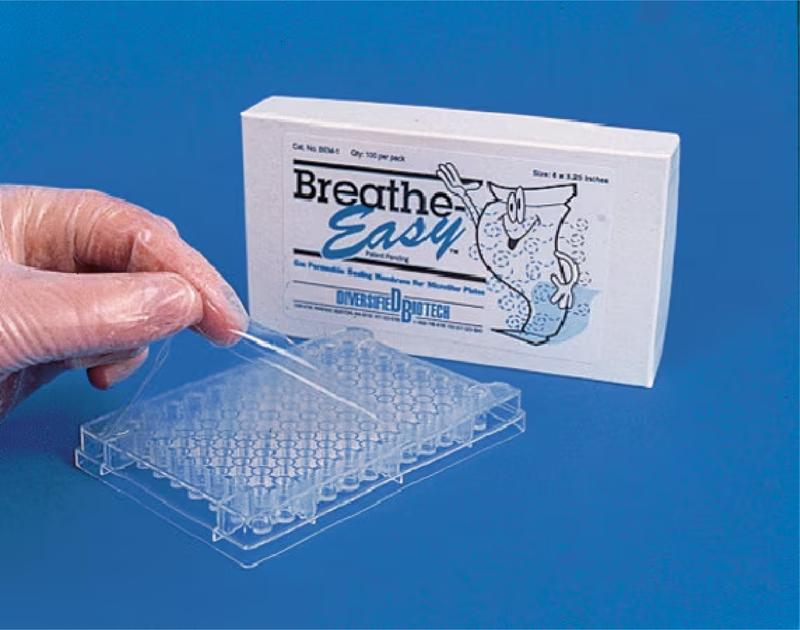
- The use of a Breathe-Easy® sealing membrane is recommended for all incubation steps described above to help prevent evaporation.
Media exchange
Use the VIAFLO 96 to perform culture maintenance (Figure 3), exchanging 50 % of the medium 3 times per week – or as recommended by the cell supplier – starting 1 day after cell plating. Fill an automation friendly Clear Advantage reagent reservoir with pre-warmed complete culture medium (or as recommended). Transfer the MaxTwo 24-Well Plate from the incubator to the BSC, place it on Position A of the VIAFLO 96 and remove the Breathe-Easy membrane. Place a rack of 1,250 µl low retention, sterile, filter Automation GRIPTIPS on Position B, load 24 tips, then remove the tip box and replace it with an empty waste reservoir. Use the custom program 'MXW3_XCHANGE300' to aspirate 300 µl per well from the MaxTwo 24-Well Plate into the waste reservoir. Remove the waste reservoir and load a new reservoir containing fresh medium. Uncover the reservoir and use the same program to transfer 300 µl of fresh medium into the plate. Apply a new Breathe-Easy membrane, cover with a lid and return to the incubator.
Tip:
- Keep the MaxTwo 24-Well Plate covered with a lid between pipetting steps to prevent contamination.
Electrophysiology recordings and analysis
Record and analyze neuronal activity using the MaxTwo Multi-well HD-MEA System with the MaxLab Live software. Perform functional recordings twice per week (or as frequently as desired), maintaining a fixed interval (4-24 h) between medium exchange and recording for consistency. For each recording session, transfer the MaxTwo 24-Well Plate from the incubator to the recording chamber of the MaxTwo System under stable temperature and CO2 conditions, and initialize it in the MaxLab Live software. Use the ActivityScan Assay to localize cell distribution and extract basic activity metrics, including firing rate, spike amplitude, active area, and inter-spike interval (ISI). Based on the ActivityScan results, automatically define optimized electrode configurations for network-level recordings. Assess synchronized network activity using the Network Assay, and quantify burst frequency, burst duration, inter-burst interval (IBI), and burst peak firing rate. To investigate signal propagation along individual axons and extract functional data at subcellular resolution, perform recordings with the AxonTracking Assay. Apply targeted electrical stimulation at the single-cell level using the Stimulation Assay. Process recorded data using the MaxLab Live Batch Analysis Module to analyze multiple recordings in parallel and export all extracted metrics (see Appendix for statistical analysis). Generate figures illustrating neuronal activity and network development using the MaxLab Live Report Generation Module.
Pharmacological compound administration
If desired, perform a complete medium exchange 1 day before compound administration, ensuring that the cell cultures are constantly covered by a thin layer of medium. Transfer the MaxTwo 24-Well Plate from the incubator to the MaxTwo System and allow it to equilibrate for 10 minutes before starting compound administration. Acquire baseline electrophysiological activity prior to treatment by performing an ActivityScan Assay followed by a Network Assay. Once the baseline recordings are complete, transfer the MaxTwo 24-Well Plate to the BSC and place it on Position A of the VIAFLO 96 deck. Remove the Breathe-Easy membrane and cover the plate with a lid. Designate half of the wells to receiving a vehicle control treatment, acting as an appropriate control for the evaluation of compound effects.
Fill a Clear Advantage reservoir with pre-warmed compound solution (tetrodotoxin, TTX) or vehicle solution (diH2O + media) and cover it with a lid. Place a rack of 1,250 µl low retention, sterile, filter Automation GRIPTIPS on Position B, and load the required number of tips using the partial tip loading function. Remove the tip box, place the reagent reservoir on Position B, and dispense 50 µl of compound or vehicle solution into the designated wells using the 'MXW4_TRANSFER50' program.
Return the plate to the MaxTwo System and perform electrophysiology recordings at the desired time after compound administration. Run a Network Assay according to the baseline ActivityScan Assay to evaluate compound effects. For washout, perform three consecutive media changes using the custom program 'MXW5_WASHOUT500', each time removing nearly all of the liquid before adding fresh medium. Record neuronal activity 2 days (or at least 1 h) after the washout, maintaining the same time interval between medium change and recording as in all regular recordings (see media exchange step).
Representative results with iCell® GlutaNeurons and iCell Astrocytes
iPSC-derived iCell GlutaNeurons and iCell Astrocytes (both FUJIFILM Cellular Dynamics, Inc., FCDI) were plated on a PEI- and laminin-coated MaxTwo 24-Well Plate with PEDOT using the whole-area plating modality. Cultures were maintained for over 4 weeks, using the VIAFLO 96 to change 50 % of the medium three times a week. Functional recordings – an ActivityScan Assay followed by a Network Assay – were performed twice weekly.
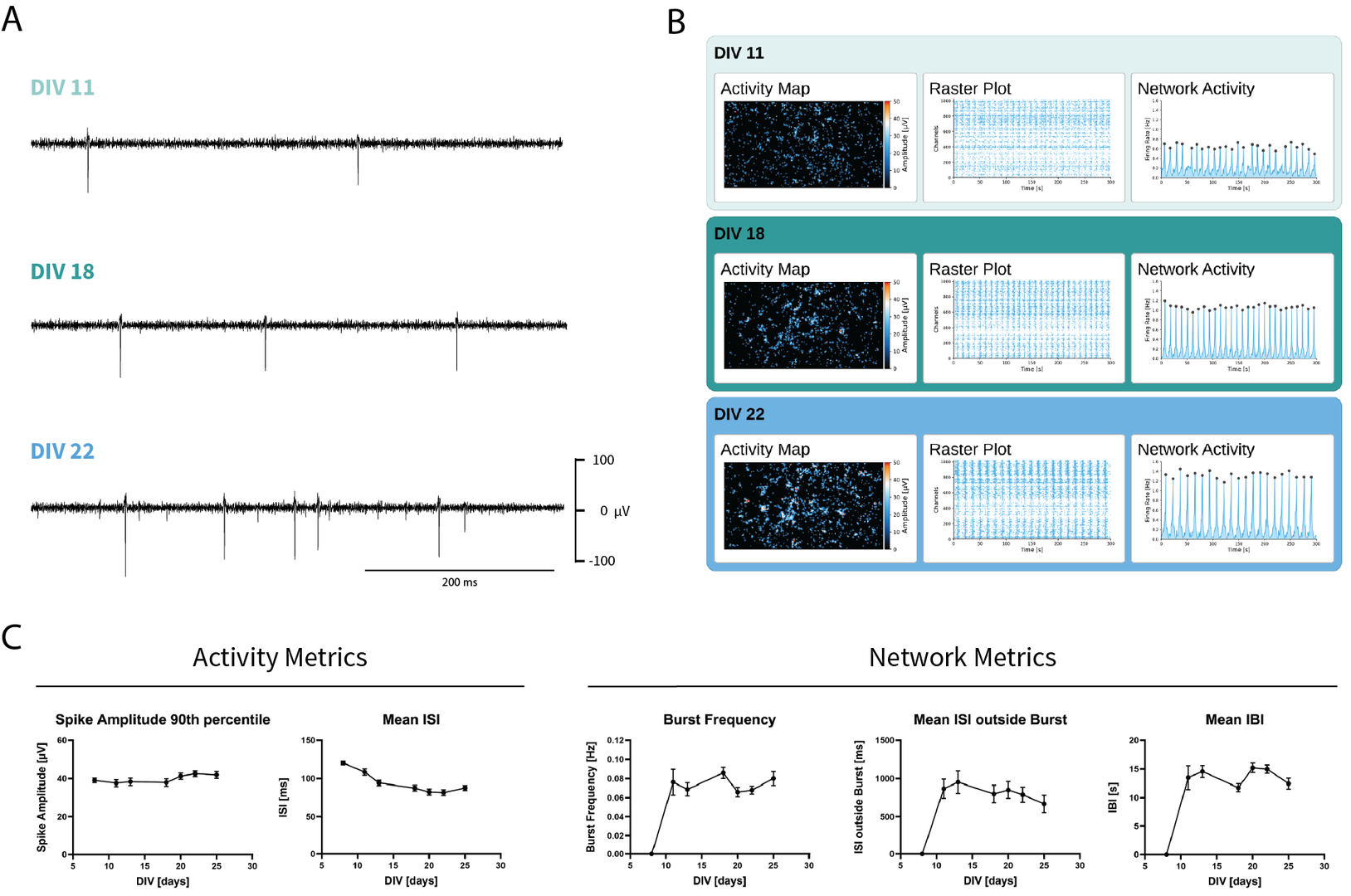
The ActivityScan Assay enables label-free localization of active cells at single-cell resolution, while the Network Assay characterizes neuronal activity at the population level, providing insights into network maturation, synchronicity and connectivity. Glutamatergic neuron-astrocyte co-cultures exhibited typical temporal progression of network maturation, with the first spontaneous extracellular action potentials detected at 8 days in vitro (DIV) (Figure 4A). Network activity progressively increased, with network bursting activity emerging by DIV 11. This reflected synchronized neuronal network firing, which continued to develop and strengthen throughout the remaining culture period (Figure 4B). Quantitative metrics, including burst frequency and mean ISI outside bursts, captured this developmental trajectory, showing progressive increases in overall activity before stabilizing (Figure 4C). Collectively, these observations describe the expected physiological progression of functional human iPSC-derived glutamatergic and astrocyte co-cultures, from sparse and asynchronous firing to mature and synchronized network dynamics.
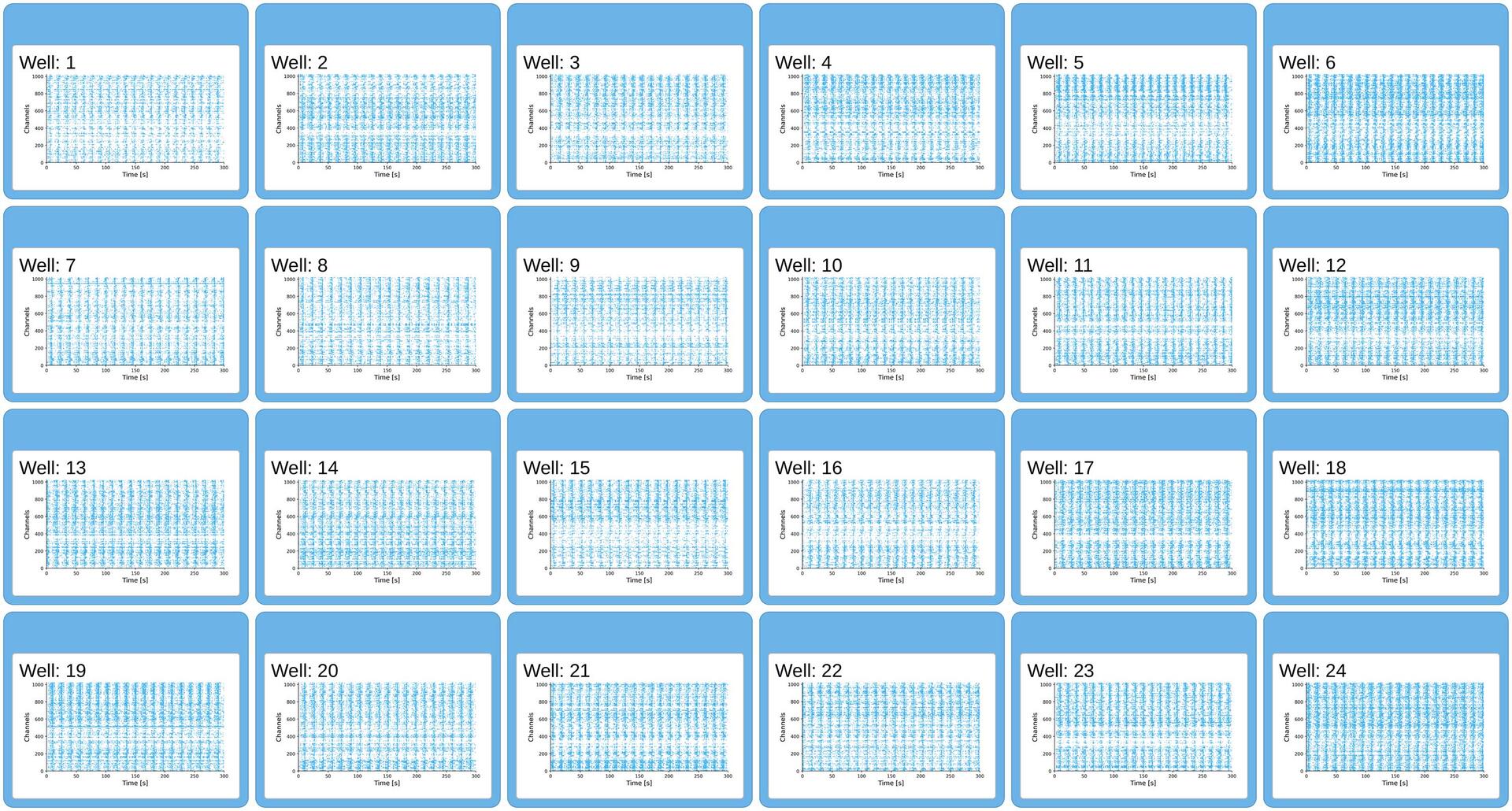
The high resolution and low noise signal acquisition of the MaxTwo 24-Well Plate ensure highly reproducible recordings across wells. This reproducibility is further enhanced by simultaneous medium exchanges in all wells using the VIAFLO 96, guaranteeing precise and uniform culture maintenance across the entire plate. Quantitative network readouts of glutamatergic neurons and astrocytes demonstrated highly consistent results across all 24 wells, with key activity and network metrics showing notably low standard deviations (Figure 4C). Reproducibility analysis further confirmed that coefficients of variation (CVs) for these metrics were consistently below 10 % (spike amplitude 90th percentile: 3.6 %; mean ISI: 4.5 %; burst frequency: 6.5 %; mean IBI: 4.9 %), indicating minimal well-to-well variability. Such robustness ensures sufficient statistical power for accurate phenotyping and comparative studies. Raster plots of 1 example timepoint (DIV 22) illustrate the reproducible network phenotype observed across all wells (Figure 5), underscoring the consistency of the MaxTwo System for capturing subtle differences in network dynamics and ensuring high confidence results.
The MaxTwo 24-Well Plate enables precise and reproducible assessment of pharmacological effects on in vitro neuronal network activity. In this study, tetrodotoxin, a highly specific voltage-gated sodium channel blocker that suppresses action potential generation, was applied to mature neuronal cultures to validate network responsiveness. The experimental workflow (Figure 6A) included a baseline recording at DIV 27, followed by administration of the compound or vehicle control and an immediate post-treatment recording. After compound washout and recovery of network activity, a final recording was acquired 48 h later at DIV 29.
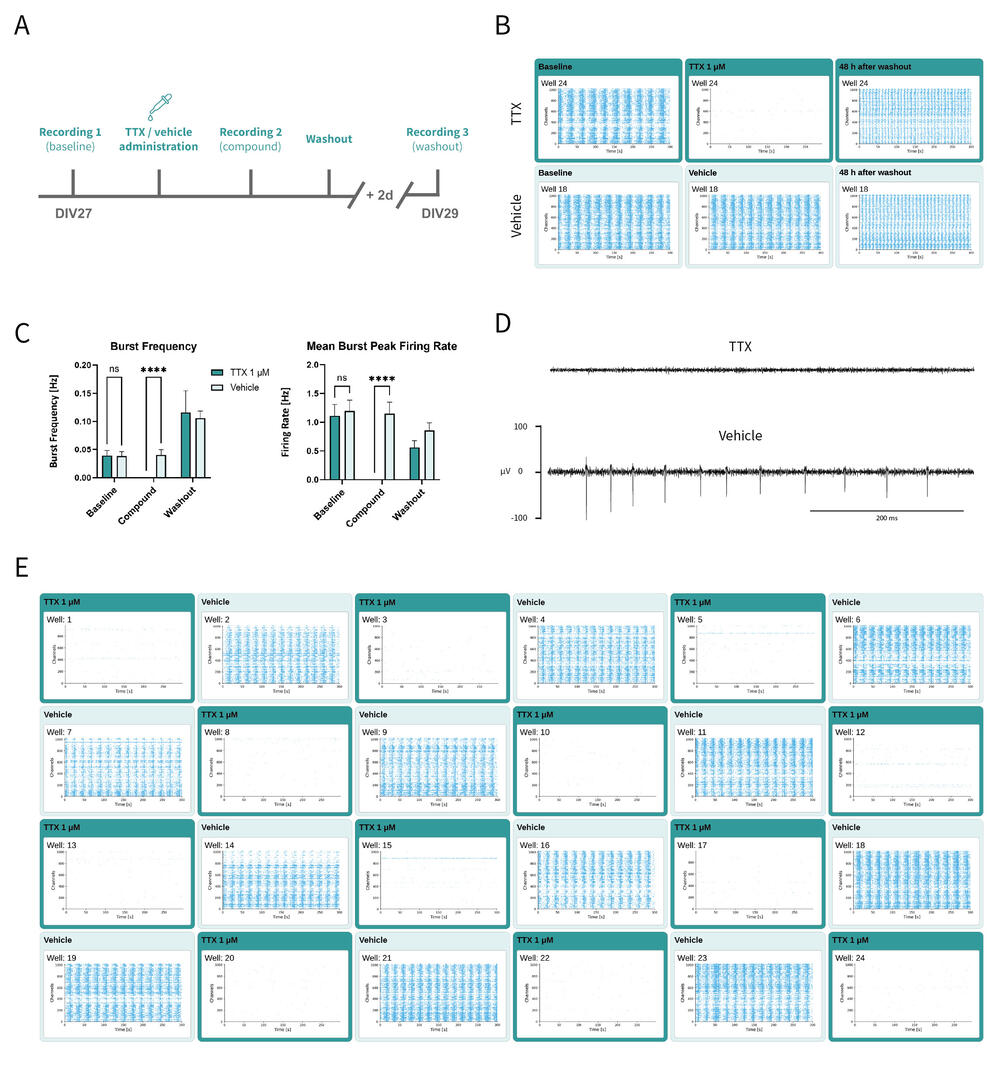
TTX was applied in a checkerboard pattern to half of the wells using the VIAFLO 96 with the partial tip loading function; the remaining wells received the vehicle solution. Administration of TTX resulted in nearly complete ablation of neuronal activity across all treated wells, whereas vehicle-treated wells maintained stable network activity, as shown by raster plots, quantitative metrics and neuronal signal traces (Figures 6B-E). Neuronal activity returned in all wells treated with TTX 48 h after the washout.
While TTX consistently silenced activity in all wells, vehicle administration had no statistically significant effect on neuronal activity (Figure 6E). Compound effects were highly consistent across all wells of each group (Figure 6E). Quantitative analysis (Figure 6C) confirmed significant reductions in all extracted network metrics in the TTX group during compound administration, including burst frequency and mean burst peak firing rate, with both groups returning to comparable levels after washout. These results highlight the capability of the MaxTwo System to perform pharmacological assays with high fidelity, enabling precise compound delivery, robust detection of drug-induced phenotypes, and reliable recovery after washout.
Remarks
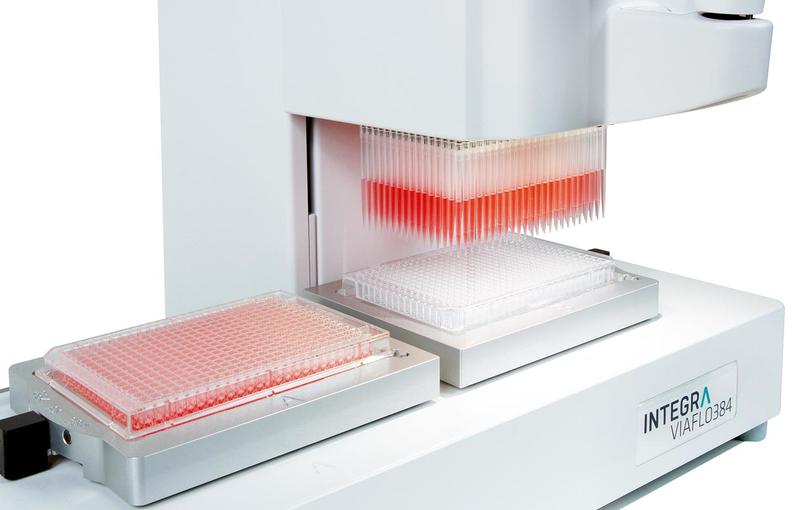
Both the VIAFLO 96 and the VIAFLO 384 are compatible with the 24 channel pipetting head, and either one can be used for this workflow.
Conclusion
Ask our expert. Leave a comment!
Write us if you have any questions regarding the application note or one of our instruments.
Any questions? I'm happy to help!
Instruments and accessories
VIAFLO 96/ VIAFLO 384, Handheld Electronic Pipette
With this 24, 96 and 384 channel pipette, INTEGRA meets the need for an affordable, compact and easy to use pipette that provides increased productivity. The unique operating concept makes VIAFLO 96/384 as easy to use as any traditional handheld pipette.
Part No. 6001 / 6031
Downloads
Download App Note as PDF
DownloadEnhanced workflow for high throughput, high density microelectrode array (HD-MEA) electrophysiology on MaxTwo 24-Well Plates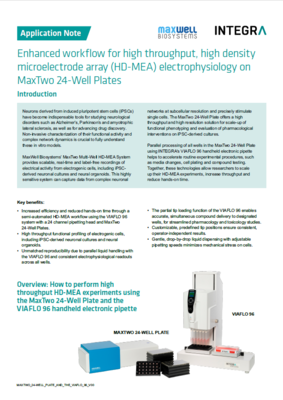
Customer’s voice
Our lab loves our VIAFLO! We use the 96 and 384 well instruments daily for setting up trays for crystallography and loading reagents for our ELISAs. Without the VIAFLO, we would be limited to only a couple plates a day, but with it we are able to perform over 15 384-well ELISAs in a single afternoon.
Related products

Applications
Show all-
Semi-automated medium exchange in Akura™ 96 and 384 Spheroid Microplates with the VIAFLO 96 and VIAFLO 384
-
Automating media exchange and sample collection using Ronawk’s Bio-Blocks® In Similare technology and the ASSIST PLUS
-
Automating the Corning Matrigel® thin coating protocol for cell culture applications
-
Automation-enabled high throughput electroporation of primary cells using the ASSIST PLUS and DropGenie platform
Stories
Show all-
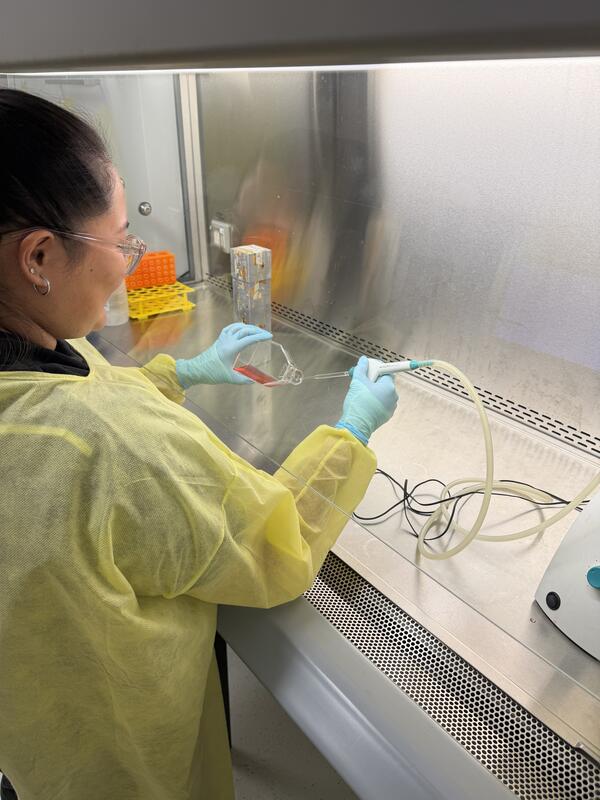 · Customer Testimonial
Optimizing respiratory virus research workflows with VACUBOY
-
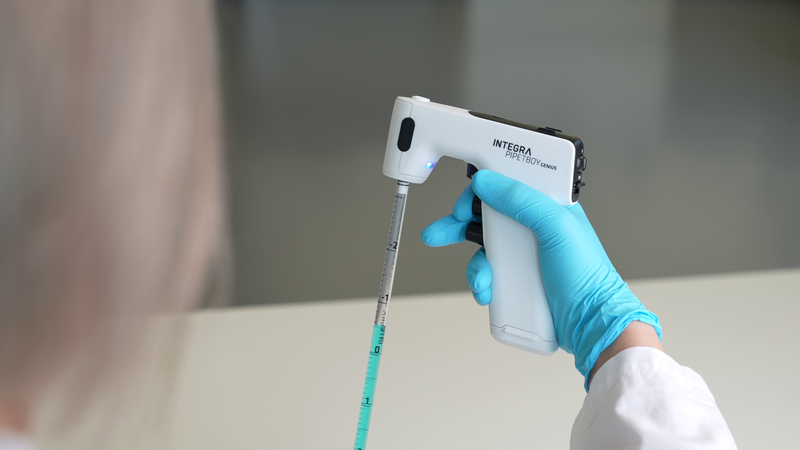 · Customer Testimonial
Setting a new benchmark in efficient cell culture with the PIPETBOY GENIUS
-
 · Customer Testimonial
Exploring new treatment pathways in pediatric oncology
-
 · Customer Testimonial
Pioneering immune sensing and signaling dynamics research