


-
PCR product purification with QIAquick® 96 PCR Purification Kit and the VIAFLO 96 handheld electronic pipette
Semi-automated PCR product purification on the VIAFLO 96 handheld electronic pipette
QIAquick 96 PCR Purification Kit is suitable for purifying up to 10 µg of material for downstream applications, such as sequencing, cloning, labeling and microarrays. The kit facilitates the removal of impurities like primers, unincorporated nucleotides, buffers, salts, mineral oils, agarose and enzymes. The vacuum-driven process is much faster than centrifugation, and gives high, reproducible yields. It is important to avoid cross-contamination in nucleic acid purification, and QIAGEN's column design is optimized to limit carryover of contaminants. Although QIAquick 96 provides a high throughput solution, the elution, washing and binding steps are very laborious and time consuming if performed manually. With VIAFLO 96 handheld electronic pipette, the hands-on time is reduced, as samples and reagents can be transferred to all 96 wells at once. This enables rapid and efficient, high throughput PCR clean-up.
-
Table of contents
QIAquick 96 PCR Purification Kit is suitable for purifying up to 10 µg of material for downstream applications, such as sequencing, cloning, labeling and microarrays. The kit facilitates the removal of impurities like primers, unincorporated nucleotides, buffers, salts, mineral oils, agarose and enzymes. The vacuum-driven process is much faster than centrifugation, and gives high, reproducible yields. It is important to avoid cross-contamination in nucleic acid purification, and QIAGEN's column design is optimized to limit carryover of contaminants. Although QIAquick 96 provides a high throughput solution, the elution, washing and binding steps are very laborious and time consuming if performed manually. With VIAFLO 96 handheld electronic pipette, the hands-on time is reduced, as samples and reagents can be transferred to all 96 wells at once. This enables rapid and efficient, high throughput PCR clean-up.
Key benefits
Overview: How to purify PCR products with VIAFLO 96
Experimental set-up
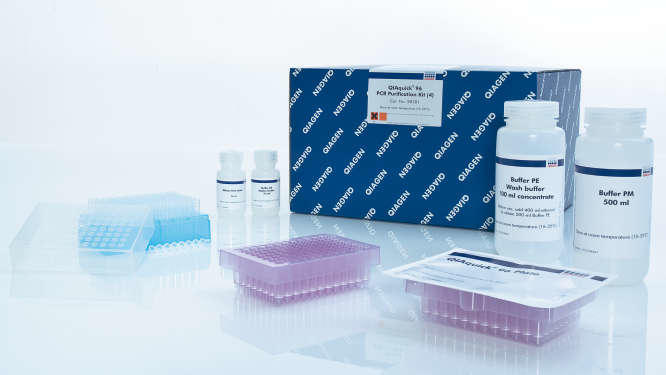
This protocol describes how PCR products are purified using a VIAFLO 96 handheld electronic pipette with a two position stage and the QIAGEN QIAquick® 96 PCR Purification Kit. The following procedure is based on the kit manufacturer's protocol for purification of 96 samples (up to 10 µg PCR products).
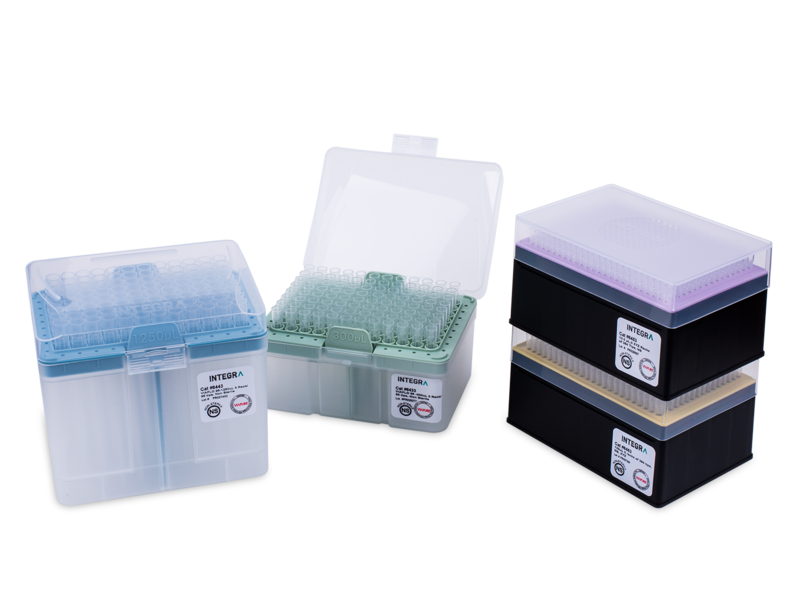
A 96 channel pipetting head (50-1250 µl) is used together with 1250 µl SHORT, Low Retention, Sterile, Filter GRIPTIPS®. Customized VIALINK programs are provided to perform the binding, washing and elution steps. Before starting, ethanol (96-100 %) should be added to the Buffer PE concentrate.
Overview of the purification steps:
- Step 1: Binding
- Step 2: Washing
- Step 3: Elution
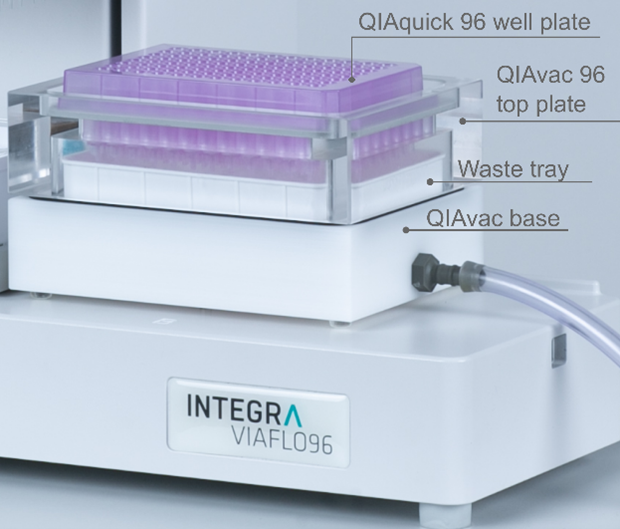
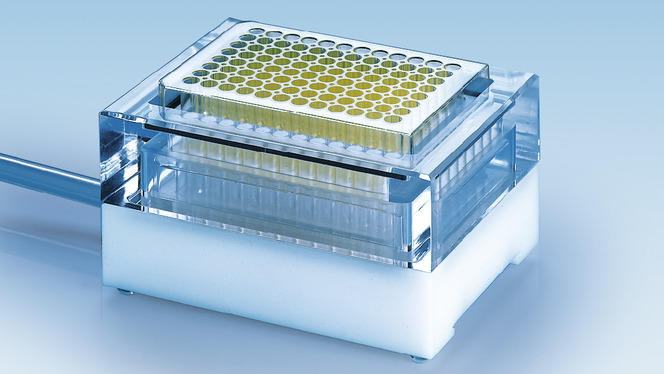
The initial set-up of the QIAvac 96 Vacuum Manifold consists of a waste tray on top of a QIAvac base, followed by a QIAquick 96 well plate (pink) mounted on a QIAvac 96 top plate, as shown in Figure 1.
The QIAvac has to be attached to a vacuum source (house vacuum or vacuum pump) that generates negative pressure between 100 and 600 mbar.
Downloads: App note and protocols for semi-automated PCR product purification
Here you can download the complete protocols used in this application and use them on your VIAFLO 96. The protocol can be customized with the VIALINK software.
Step-by-step procedure
1. Binding
Binding the DNA to the silica-gel membran
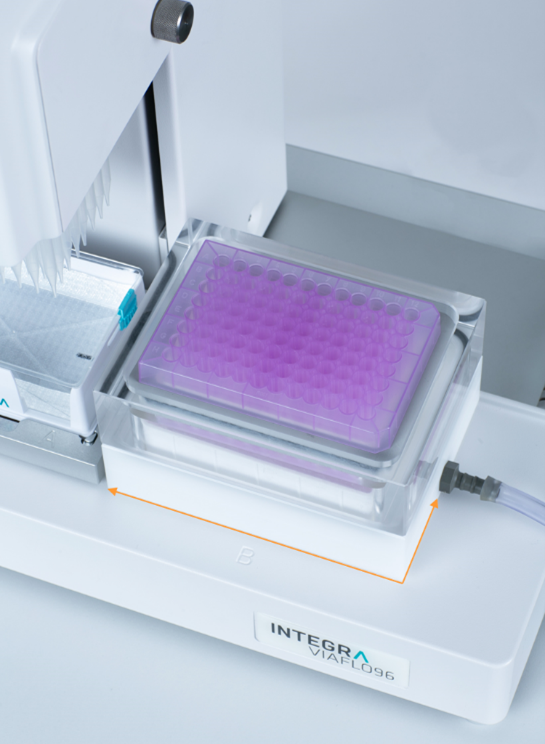
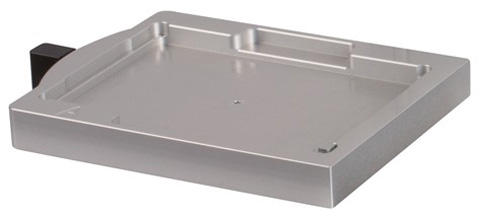
Load the 1250 µl SHORT, Low Retention, Sterile, Filter GRIPTIPS on the VIAFLO 96. Place a 150 ml Automation Friendly Reagent Reservoir in position A. The QIAvac 96 Vacuum Manifold should be placed on position B of the VIAFLO96 in landscape orientation. No plateholder is needed on position B where the manifold is placed.
Important: The vacuum manifold should be aligned before each run (Figure 2).
Begin by launching the custom VIALINK program 'Qiaquick_purification_M'. The pipette will prompt the user to place Buffer PM on position A, then air is aspirated. This ensures that every single drop of the liquid can be dispensed later. The VIAFLO96 will then guide the user through the two pre-wetting steps, starting with aspiration and dispensing 200 µl of Buffer PM. After a second aspiration, the pipette will display the prompt 'Move the head out of buffer', before dispensing the final 200 µl of Buffer PM. This is followed by a 20 second wait, giving the buffer residues time to flow down to the tip and be dispensed.
After pre-wetting, the pipette aspirates 75 µl Buffer PM (three times the volume of the PCR product). The instrument then tells the user to remove the reservoir from position A, and replace it with the 96 well plate containing the 25 µl of PCR products. After dispensing, and four mixing steps, the resulting mixture is transferred to the QIAquick plate wells in two steps. It is then time to switch on the vacuum source, as indicated by the pipette.
Tips:
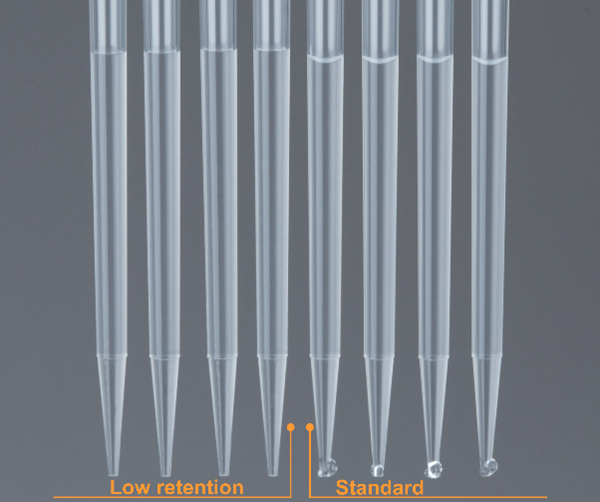
- Pre-wetting the tips prior to pipetting prevents droplets and dripping when pipetting volatile liquids, such as isopropanol, which is one of the constituents in Buffer PM.
- Low Retention GRIPTIPS (Figure 3) are used for these pipetting steps to avoid dripping.
2. Washing
Two-step purification of the PCR product
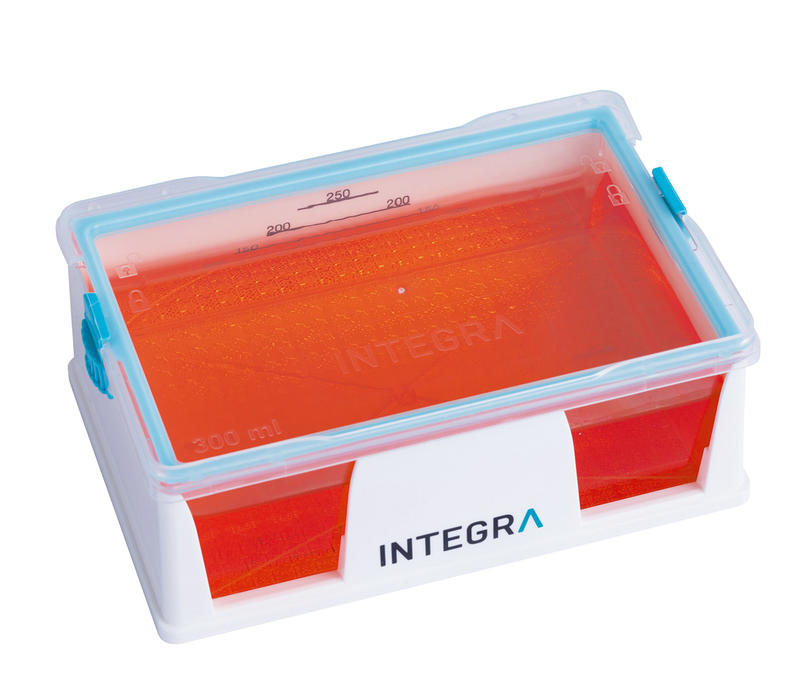
Eject the used tips and load new 1250 µl SHORT, Low Retention, Sterile, Filter GRIPTIPS on the VIAFLO 96. Place a new 300 ml automation friendly reagent reservoir in position A. The VIAFLO 96 will then prompt the user to pour Buffer PE into the reservoir, followed by a pre-wetting step, which is necessary since the buffer contains ethanol. After pre-wetting, the pipette will aspirate 900 µl of Buffer PE, and dispense it into QIAquick plate wells. The instrument will then notify the user that is it time to turn on the vacuum pump. With the pump turned on, another dose of the buffer is dispensed into the wells, followed by a 10 minute wait to dry the membrane and remove all residual ethanol.
IMPORTANT: The final drying step is crucial to remove residual ethanol prior to elution. Residual ethanol in the elution buffer could inhibit downstream applications (e.g. PCR).
Tip:
- After this step, the manufacturer suggests tapping the plate on a stack of absorbent paper to ensure that all residual buffer is removed.
3. Elution
Elution of DNA from the silica-gel membrane
When prompted, start by replacing the waste tray with the blue collection microtube rack provided, which contains 1.2 ml vessels (Figure 4 a)). Load new 1250 µl SHORT, Low Retention, Sterile, Filter GRIPTIPS, and place a new 150 ml automation friendly reagent reservoir in position A. The instrument will then prompt the user to place Buffer EB into the reservoir, aspirate 80 µl, and dispense it into the QIAquick plate wells. After a 1 minute incubation, the pipette tells the user to switch on the vacuum source for 5 minutes.
Tips:
- The purified PCR product could also be eluted in a 96 well microplate. In this case, when replacing the waste tray, the 96 well microplate has to be placed on the empty blue collection tube rack (Figure 4 b)).
- For increased DNA concentration, decrease the elution volume to 60 µl, as per QIAGEN's recommendations, in the VIALINK software.
Remarks
Vacuum manifold
Alignment of the vacuum manifold is very important in this process. Adding marks on the deck helps to reposition the manifold whenever needed. To check the position of the well plate on top of the vacuum manifold, attach the tips manually to the pipette. The pipette tips should be in the middle of the wells. If not, adjust the position of the vacuum manifold on the deck.
Automatic mode
The VIAFLO 96 can also operate in hands-free automatic mode, allowing the user to have more walk-away time and less interaction, which is highly beneficial when using the instrument in a laminar flow cabinet. The customized automatic VIALINK program can be found in the download section.
Conclusion
Related articles
Further reading:
Ask our expert. Leave a comment!
Write us if you have any questions regarding the application note or one of our instruments.
Any questions? I'm happy to help!
Instruments and accessories
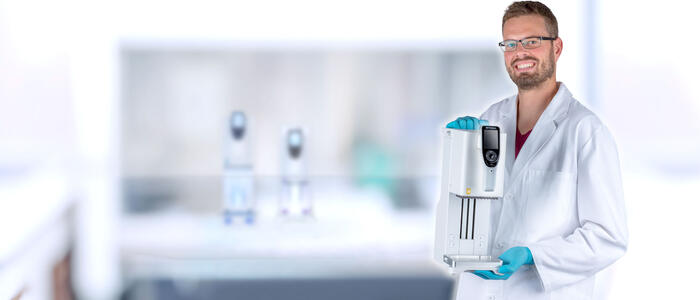
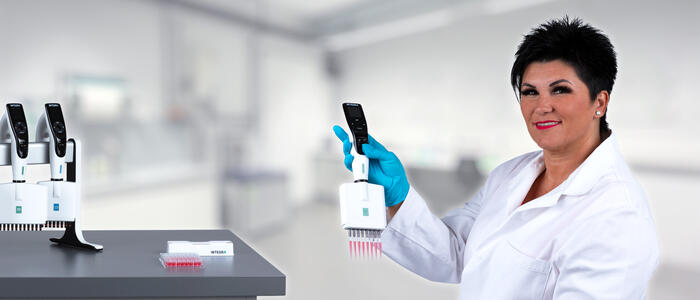
VIAFLO 96/ VIAFLO 384, Handheld Electronic Pipette
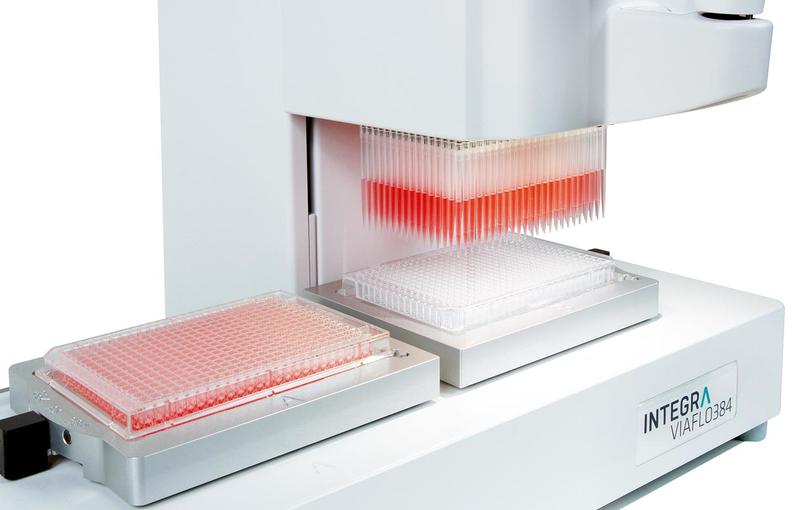
With this 24, 96 and 384 channel pipette, INTEGRA meets the need for an affordable, compact and easy to use pipette that provides increased productivity. The unique operating concept makes VIAFLO 96/384 as easy to use as any traditional handheld pipette.
Part No. 6001 / 6031
Download
Download App Note as PDF
DownloadPCR product purification with QIAquick® 96 PCR Purification Kit and the VIAFLO 96 handheld electronic pipette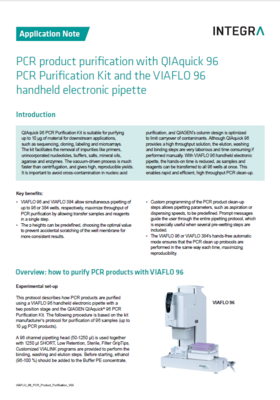
Customer’s voice
The device is user friendly with simple software which can easily be taught to anyone. We've replaced lot of manual pipetting steps with VIAFLO 96/384 and became more efficient and our TAs happier. We've also scaled up the tests we are doing and established new assays and applications that we haven't had before.
Related products

Applications
Show all-
Automated DNA size selection for flexible NGS workflow integration
-
Automated DNA clean-up using the Zymo Research DNA Clean & Concentrator® MagBead Kit
-
Automated qPCR master mix preparation with the D-ONE single channel pipetting module and the ASSIST PLUS pipetting robot
-
Minimizing dead volume during qPCR set-up with the divided reservoir on the ASSIST PLUS pipetting robot
Stories
Show all-
 · Customer Testimonial
QIAGEN is accelerating PCR sample prep with our flexible pipetting solutions
-
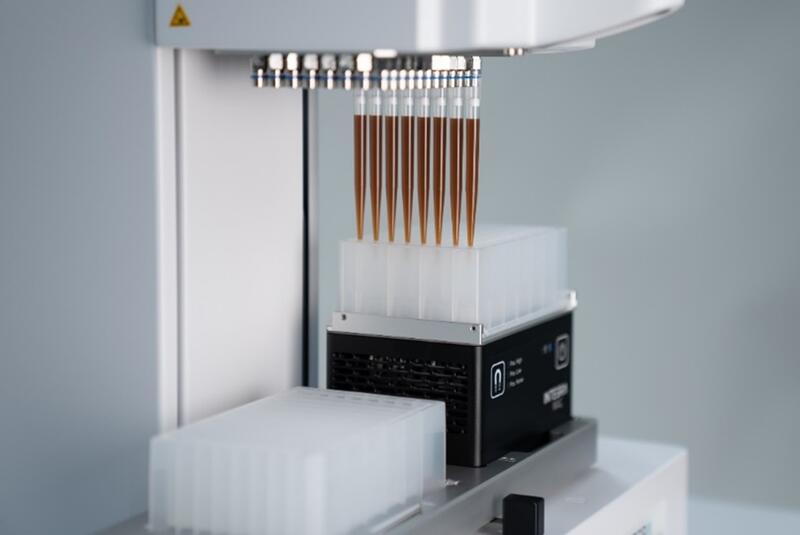 · Product News
Achieve effortless large volume PCR purification with our MAGFLO™ NGS magnetic beads and benchtop pipetting set-up
-
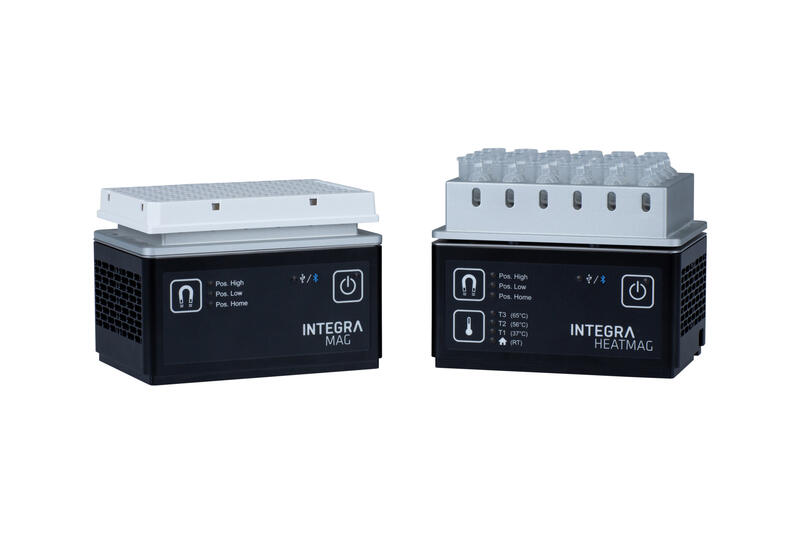 · Product News
Our innovative modules enhance magnetic bead purification workflows
-
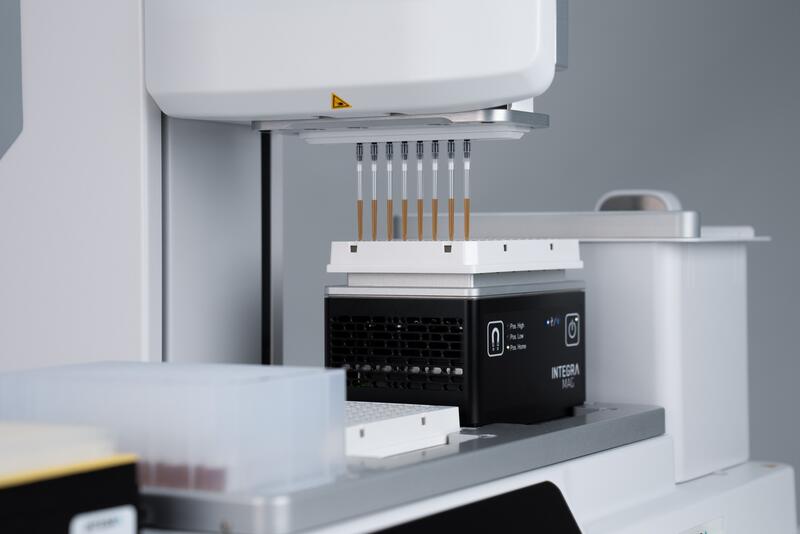 · Product News
Streamline NGS size selection and PCR purification with MAGFLO™ magnetic beads