


-
Protein purification using immobilized metal affinity chromatography (IMAC) with a VIAFLO 96/384 handheld electronic pipette
Speed up your IMAC purification in 96 well plates using a VIAFLO 96/384 handheld electronic pipette
Immobilized metal affinity chromatography (IMAC) is a method used to purify tagged proteins according to their affinity to specific metal ions. The experimental procedure involves many pipetting steps that are challenging and time consuming for the researcher, especially when performed in a 96 well format. The VIAFLO 96/384 electronic multichannel pipette offers a unique solution for this protocol, allowing simultaneous pipetting of 96 samples with the ease of use of a traditional handheld pipette, to significantly increase the sample throughput and enhance data reproducibility. Its compact design means that the VIAFLO 96/384 system requires little space and fits easily on the workbench.
-
Table of contents
Immobilized metal affinity chromatography (IMAC) is a method used to purify tagged proteins according to their affinity to specific metal ions. The experimental procedure involves many pipetting steps that are challenging and time consuming for the researcher, especially when performed in a 96 well format. The VIAFLO 96/384 electronic multichannel pipette offers a unique solution for this protocol, allowing simultaneous pipetting of 96 samples with the ease of use of a traditional handheld pipette, to significantly increase the sample throughput and enhance data reproducibility. Its compact design means that the VIAFLO 96/384 system requires little space and fits easily on the workbench.
Key benefits
Overview: Protein purification using IMAC
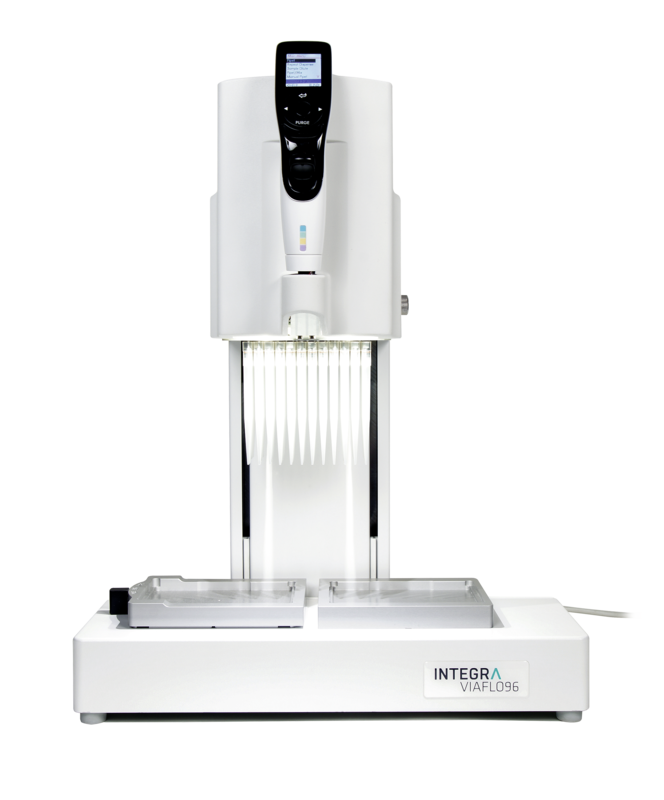
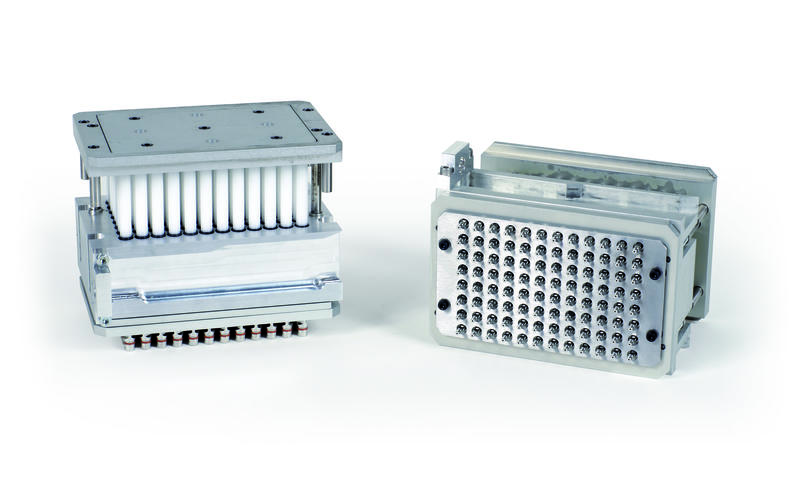
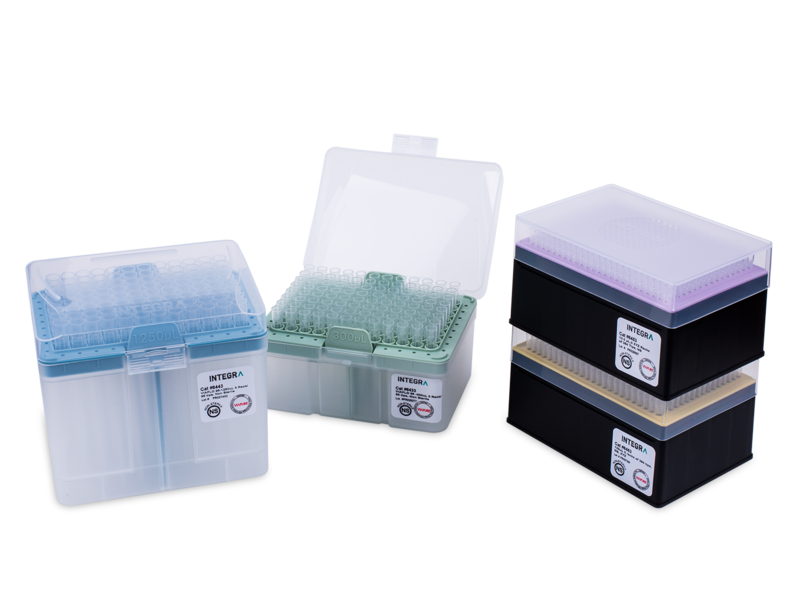
The following protocol shows an example set-up for performing an IMAC protein purification with a VIAFLO 96/384 handheld electronic pipette. The protocol uses 96 channel pipetting heads in the volume ranges of 50-1250 μl and 5-125 μl with Non-Sterile GRIPTIPS® (Figure 1).
Step-by-step procedure
1. Culture bacteria
Culture bacteria for protein expression in 96 well format.
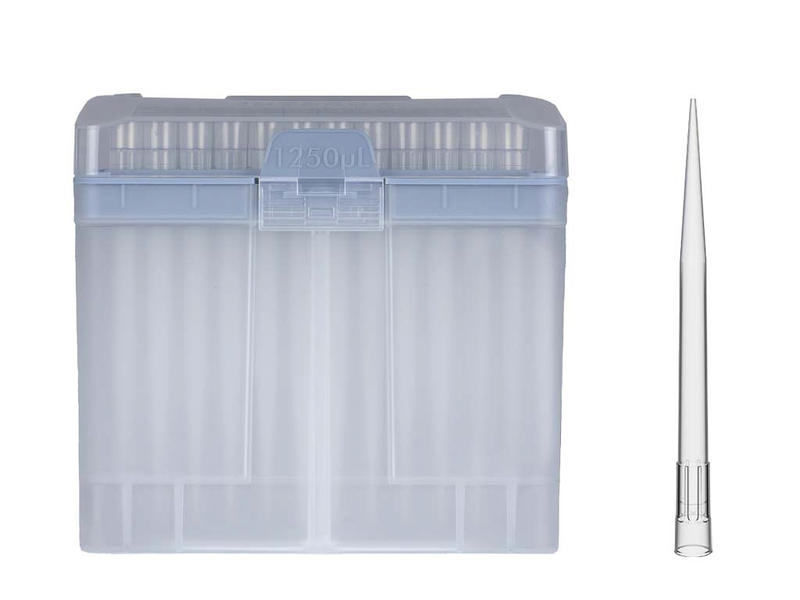
This step uses the VIAFLO 96/384 with a 96 channel pipetting head 1250 μl and Non-Sterile GRIPTIPS.
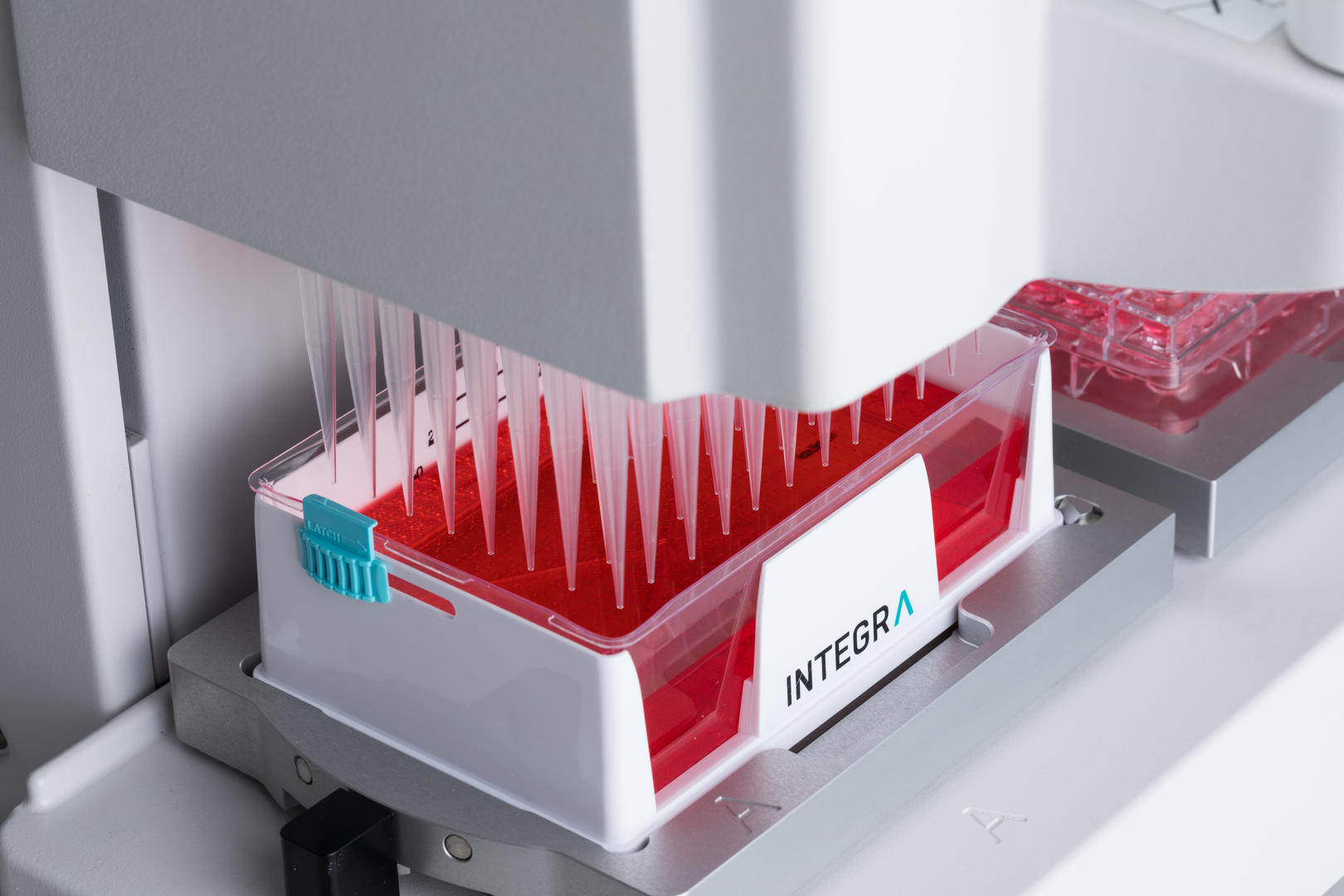
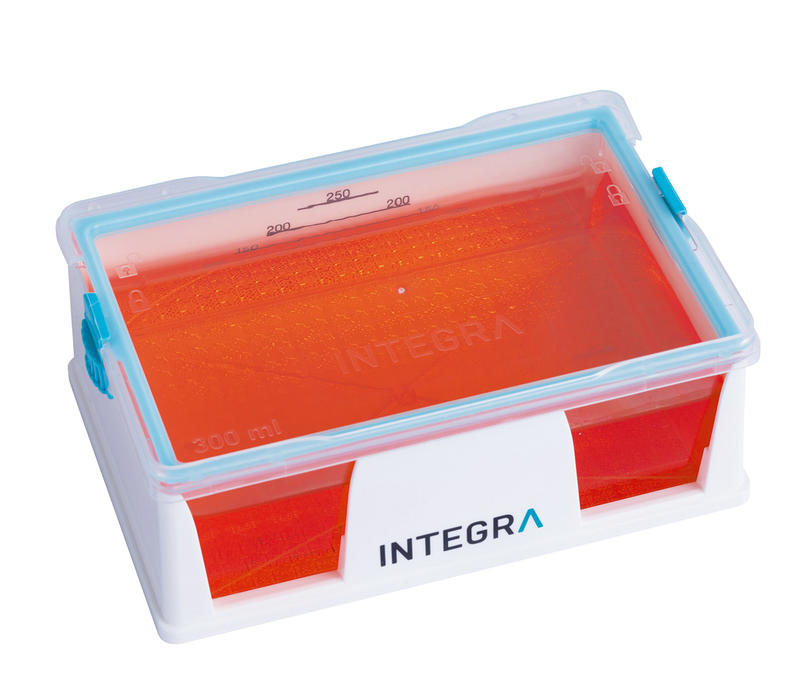
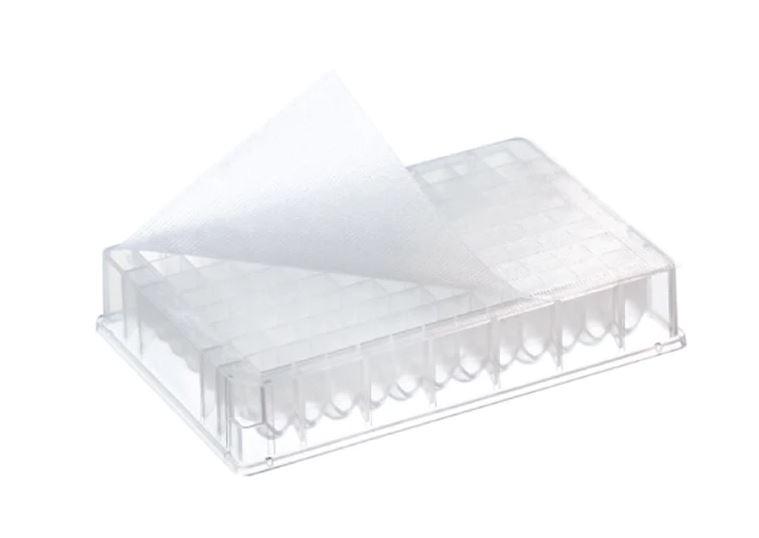
Fill bacteria growth media into a 300 ml automation friendly reagent reservoir and place it on Position A of the VIAFLO 96/384 deck (Figure 2). Put a 2.2 ml 96 well, deep well plate on Position B and transfer the media into it using the VIAFLO 96/384 handheld electronic pipette in Pipet mode. Inoculate the growth media with bacteria by transferring them into the pre-filled 96 well plate. Incubate the bacteria overnight at 37 ºC to express the protein of interest and then centrifuge until they form a pellet. Use the Pipet mode of the VIAFLO 96/384 to carefully aspirate the supernatant without touching the cell pellet.
Tips: By using the z-height limit, it is possible to fix the tips so that you can’t touch the cell pellet. Set the Tip Align strength to 2 to allow the user to manually move the pipette tips to one side of the well to avoid disturbing the pellet during aspiration. Use a slow aspiration speed – speed 2/3 – to avoid accidentally sucking up the cell pellet.
2. Preparation of cell extract
Lysis of bacteria and lysate filtration.
This step uses the VIAFLO 96/384 with the 96 channel pipetting head 125 μl and Non-Sterile GRIPTIPS for the first stage of the process and then the 96 channel pipetting head 1250 μl and Non-Sterile GRIPTIPS for the lysate filtration pipetting step.
Fill lysis buffer into a 150 ml automation friendly reagent reservoir (Position A). Transfer the buffer onto the cell pellet (Position B). Use the Pipet/Mix mode of the VIAFLO 96/384 to resuspend the pellet in the lysis buffer, mixing thoroughly to ensure it is homogeneous. Incubate at room temperature for 1 hour on an orbital shaker. Prepare equilibration buffer in a 150 ml automation friendly reagent reservoir (Position A) and transfer it to the cell lysate. Centrifuge the plate to separate the cell debris from the supernatant containing the protein of interest.
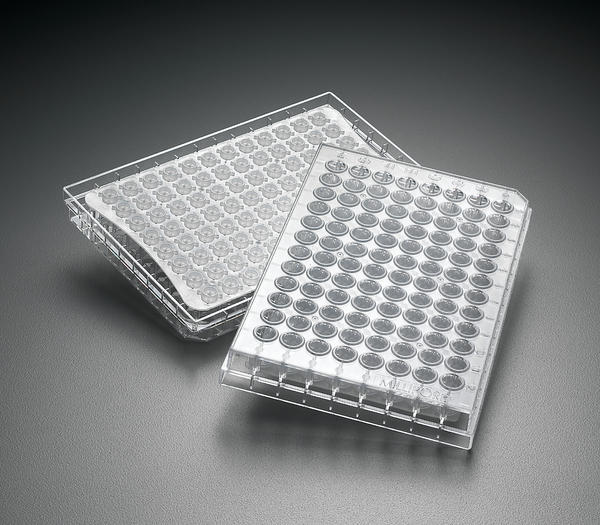
Switch to the 96 channel pipetting head 1250 μl with Non-Sterile GRIPTIPS for the lysate filtration step. Attach a 96 well, 0.65 μm MultiScreenHTS DV Filter Plate (Merck Millipore) on top of a 1.2 ml 96 well, deep well plate and carefully transfer the supernatant using the Pipet mode of the VIAFLO 96/384. Repeat this filtration step until no supernatant remains.
Tips: Fix the z-height to prevent disturbance of the pellet and to avoid damaging the filter mesh. Aspirate at low speed – speed 1/2 – and watch the liquid level of the supernatant carefully.
Note: Filtration of the lysate can also be performed with a vacuum manifold instead of a plate centrifuge.
3. IMAC protein purification
Prepare the HisPur™ Cobalt Spin Plate (Thermo Scientific) and transfer the cell lysate.
The plate preparation and protein purification steps are performed using the VIAFLO 96/384 with the 96 channel pipetting head 1250 μl, and involve several liquid transfer stages. Position A of the VIAFLO 96/384 deck is dedicated to 300 ml automation friendly reagent reservoirs containing the ultrapure water and equilibration, wash and elution buffers. The purification plate is placed on Position B.
Place the HisPur™ Cobalt Spin Plate on the collection plate provided and centrifuge to discard the preloaded storage solution. Quickly dry the collection plate by tapping it on a paper towel and then remount the purification plate. Add ultrapure water and then centrifuge to remove any residual storage buffer, then add equilibration buffer. Allow to equilibrate and then centrifuge to remove buffer. Repeat the equilibration step.
Load the filtered lysate onto the prepared plate using a low pipetting speed. Wash the plate several times to remove unspecific proteins from the sample. Finally, elute the purified protein with the elution buffer.
Note: Dry the collection plate by tapping it on a paper towel after each step to completely remove the last drops of the different buffers.
4. Re-buffering the purified proteins
Re-buffer the purified proteins using a Zeba™ Spin Desalting Plate (Thermo Scientific).
Plate preparation
The Zeba™ Spin Desalting Plate must first be equilibrated by washing four times with the desired buffer. This step uses the 96 channel pipetting head 1250 μl with the VIAFLO 96/384 handheld electronic pipette.
Place a 300 ml automation friendly reagent reservoir filled with the equilibration buffer on Position A and the desalting plate on Position B. Transfer the equilibration buffer into the plate and centrifuge. Repeat the equilibration step three times.
Final re-buffering of the purified proteins
After equilibration, the plate can be used with the protein samples. This step uses the 96 channel pipetting head 125 μl.
Stack the desalting plate on top of a new 0.5 ml 96 well, deep well plate (Position B). Transfer the previously purified proteins into the plate using a low aspiration speed (speed 3). Carefully touch the pipette tips to the top of the resin. Centrifuge the desalting plate to collect the final re-buffered proteins.
Remarks
Three position stage:
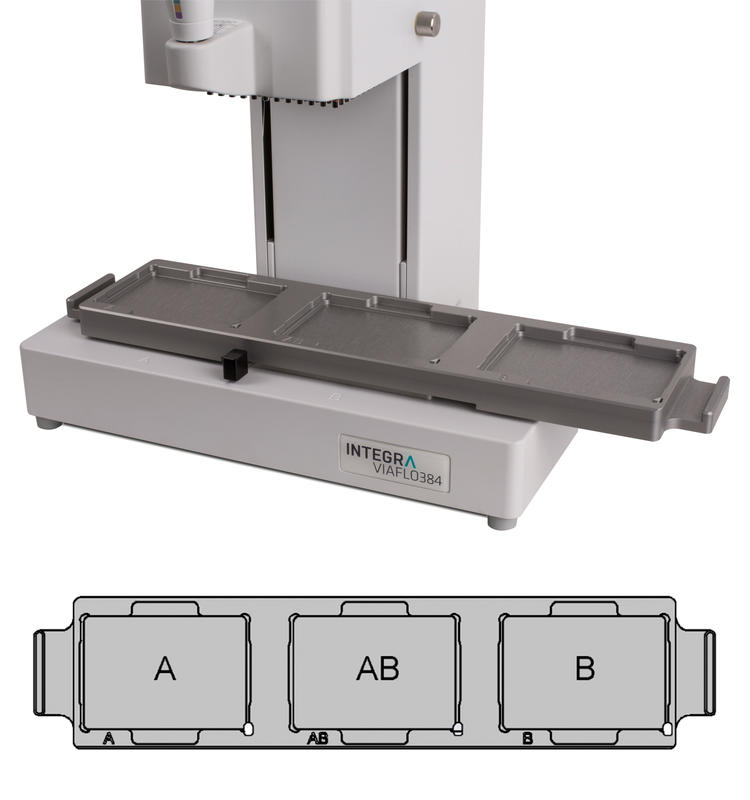
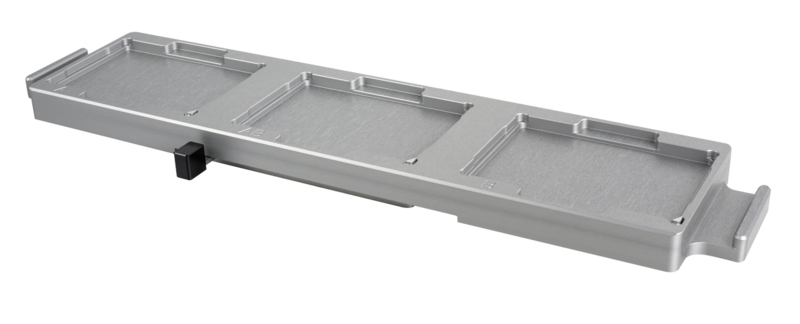
Improve your workflow by using the VIAFLO 96/384 together with a three position stage. Position A can be then dedicated to the GRIPTIP box, Position AB to the buffers and Position B to the multiwell plate (Figure 3).
Automatic mode:
The Automatic mode of the VIAFLO 96/384 enables automation of pre-programmed VIALINK protocols, minimizing the user-to-pipette interaction. This is especially helpful in confined spaces, such as a laminar flow cabinet.
Partial tip load:
If your experimental set-up requires purification of less than 96 samples at once, the VIAFLO 96/384 can work with any number of tips loaded. Simply adjust the number of tips needed to perform your experiment.
Conclusion
Ask our expert. Leave a comment!
Write us if you have any questions regarding the application note or one of our instruments.
Any questions? I'm happy to help!
Instruments and accessories
VIAFLO 96/ VIAFLO 384, Handheld Electronic Pipette
With this 24, 96 and 384 channel pipette, INTEGRA meets the need for an affordable, compact and easy to use pipette that provides increased productivity. The unique operating concept makes VIAFLO 96/384 as easy to use as any traditional handheld pipette.
Part No. 6001 / 6031
Download
Download this App Note as PDF file
DownloadProtein purification using immobilized metal affinity chromatography (IMAC) with a VIAFLO 96/384 handheld electronic pipette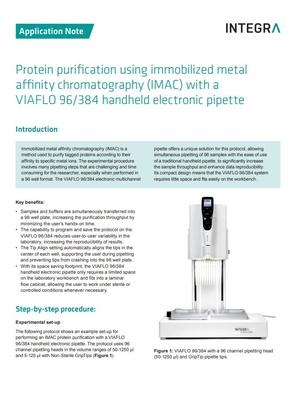
Customer’s voice
VIAFLO is VITAL to our Lab! The production lab recently acquired a new VIAFLO 96/384 channel pipette and it is fantastic to use for our repeatable processes that require the same sample volume. We love the XYZ range of motion, the nice bright light to illuminate the reservoir, and the improved efficiencies we gain from the use of this pipette.
Related products


Applications
Show all-
A simple and streamlined workflow for membrane protein isolation
-
Enhanced workflow for high throughput, high density microelectrode array (HD-MEA) electrophysiology on MaxTwo 24-Well Plates
-
Cost-efficient miniaturization of 16S metagenomic library preparation
-

Efficient high throughput scNMT profiling with the VIAFLO 384
Stories
Show all-
 · Product News
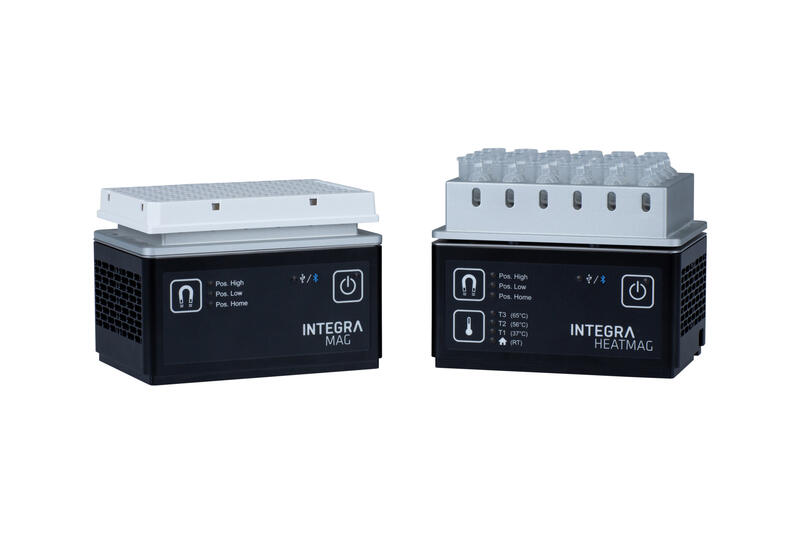
Our innovative modules enhance magnetic bead purification workflows
-
 · Customer Testimonial
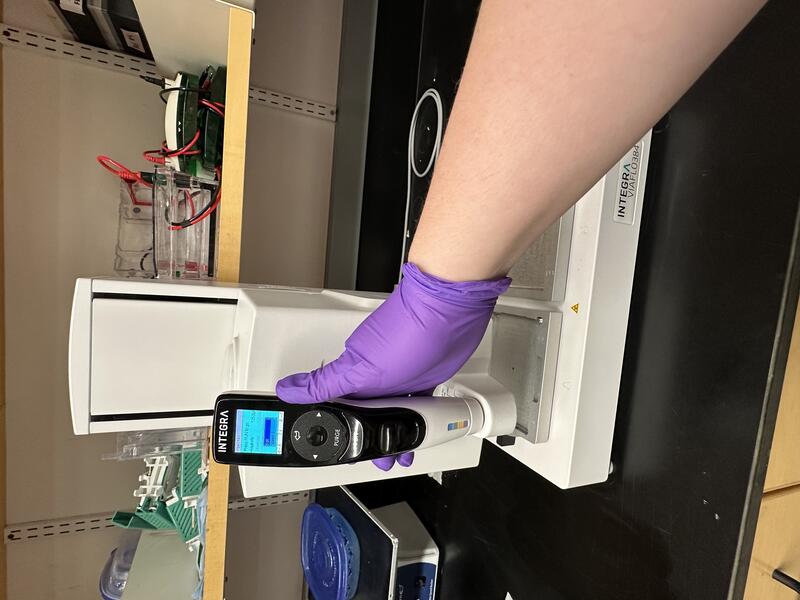
Streamlining hepatitis C vaccine research using VIAFLO pipettes
-
 · Product News
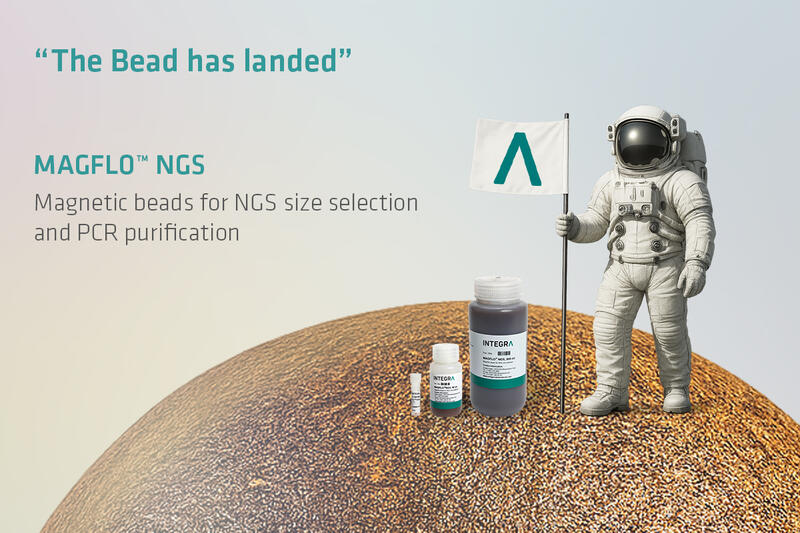
Magnetic beads for NGS size selection and PCR purification
-
 · Customer Testimonial
QIAGEN is accelerating PCR sample prep with our flexible pipetting solutions
-
 · Product News
Ergonomic pipettes and pipetting guidelines