


-
Optimizing DNA fragmentation and NGS library preparation with automated liquid handling
Eliminating manual pipetting using the ASSIST PLUS in the sparQ DNA Frag & Library Prep Kit workflow
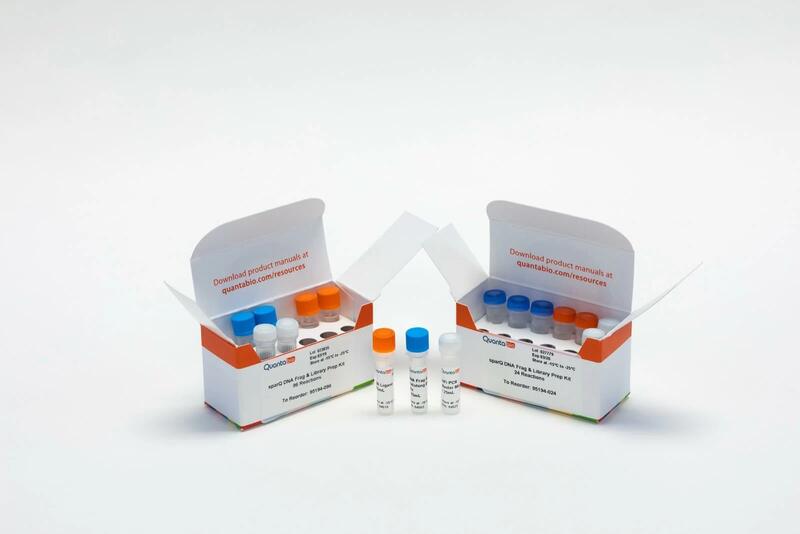
Next generation sequencing (NGS) plays a central role in modern genomics. The Quantabio sparQ DNA Frag & Library Prep Kit combines enzymatic DNA fragmentation and library construction for short-read NGS applications. The resulting ready-to-sequence libraries are compatible with most short-read sequencers, including Illumina NGS platforms. This workflow relies on a multitude of repetitive manual pipetting steps, which can introduce variability and limit overall lab efficiency. These pain points can be alleviated using automated liquid handling solutions.
In this application note, liquid handling for the sparQ DNA Frag & Library Prep Kit workflow is automated using the ASSIST PLUS pipetting robot. To this end, validated, ready-to-use VIALAB programs are provided for each step, enabling fast and easy implementation of lab automation.
-
Table of contents
Next generation sequencing (NGS) plays a central role in modern genomics. The Quantabio sparQ DNA Frag & Library Prep Kit combines enzymatic DNA fragmentation and library construction for short-read NGS applications. The resulting ready-to-sequence libraries are compatible with most short-read sequencers, including Illumina NGS platforms. This workflow relies on a multitude of repetitive manual pipetting steps, which can introduce variability and limit overall lab efficiency. These pain points can be alleviated using automated liquid handling solutions.
In this application note, liquid handling for the sparQ DNA Frag & Library Prep Kit workflow is automated using the ASSIST PLUS pipetting robot. To this end, validated, ready-to-use VIALAB programs are provided for each step, enabling fast and easy implementation of lab automation.
Key benefits
Overview: How to automate the sparQ DNA Frag & Library Prep Kit
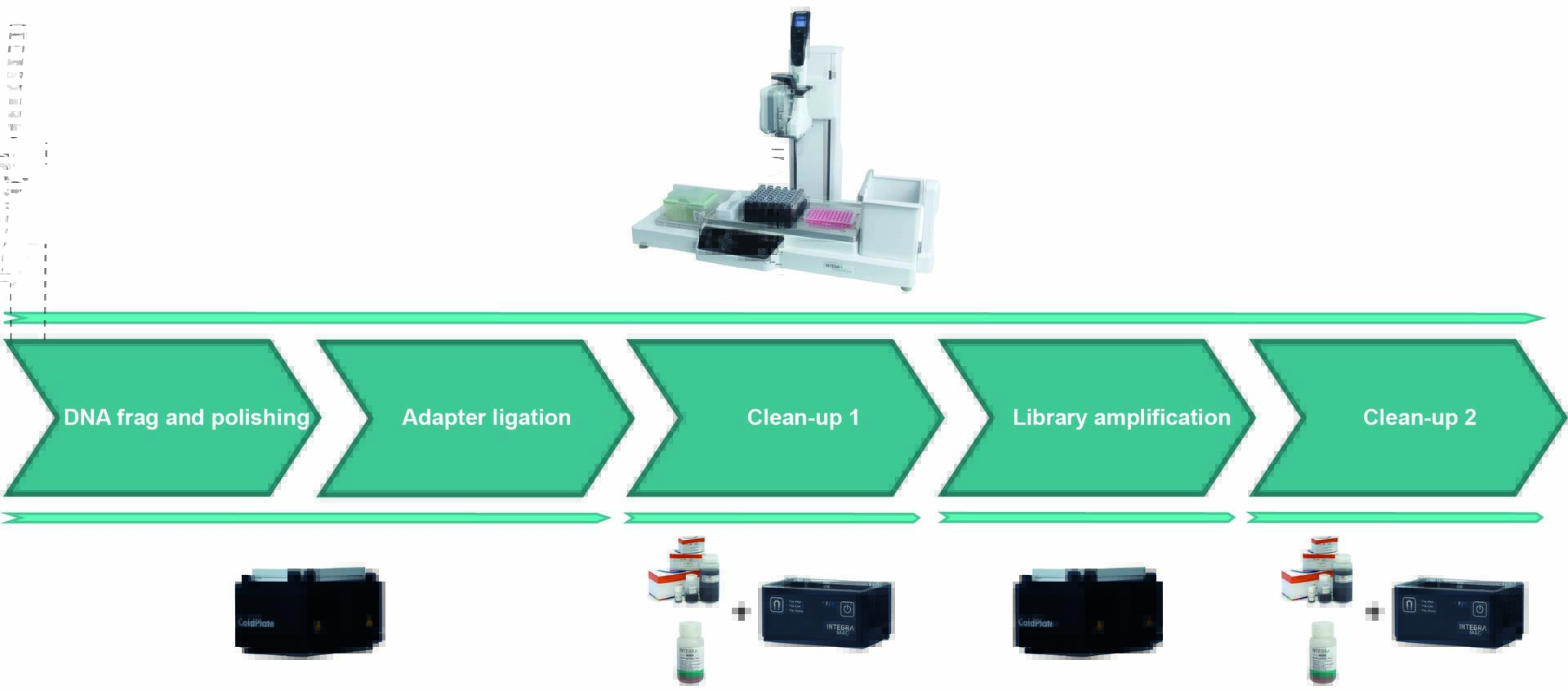
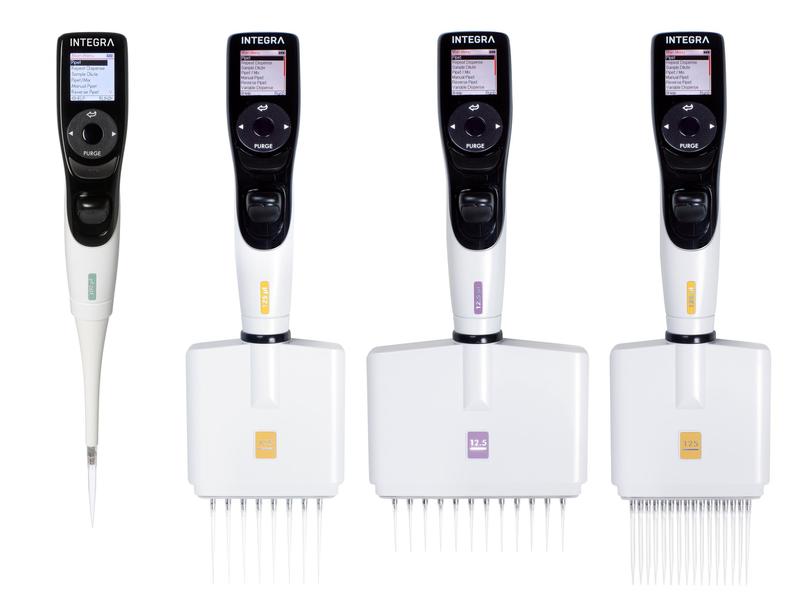
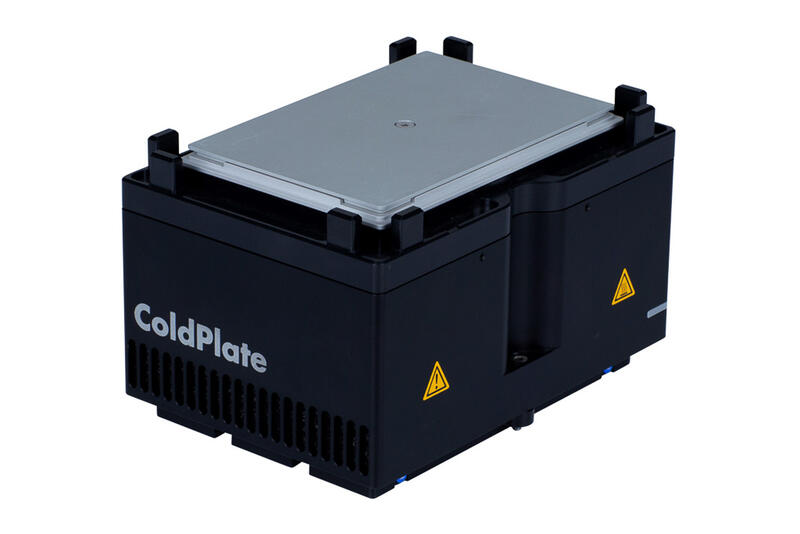
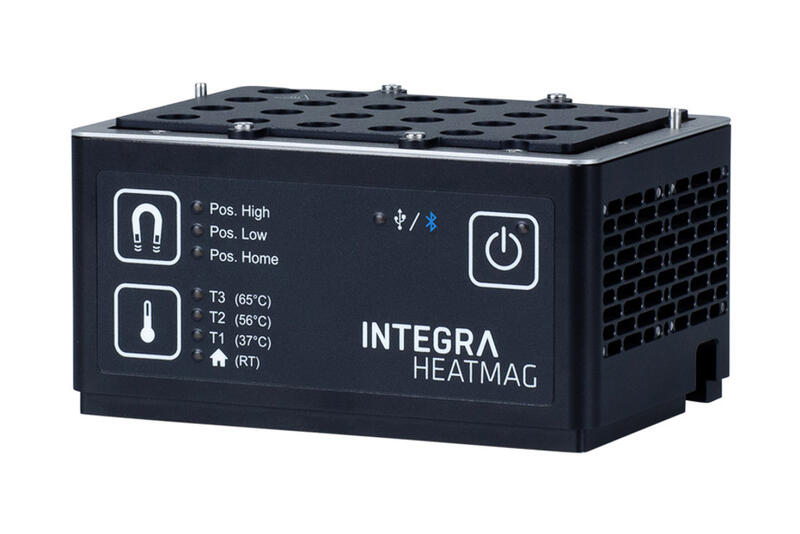
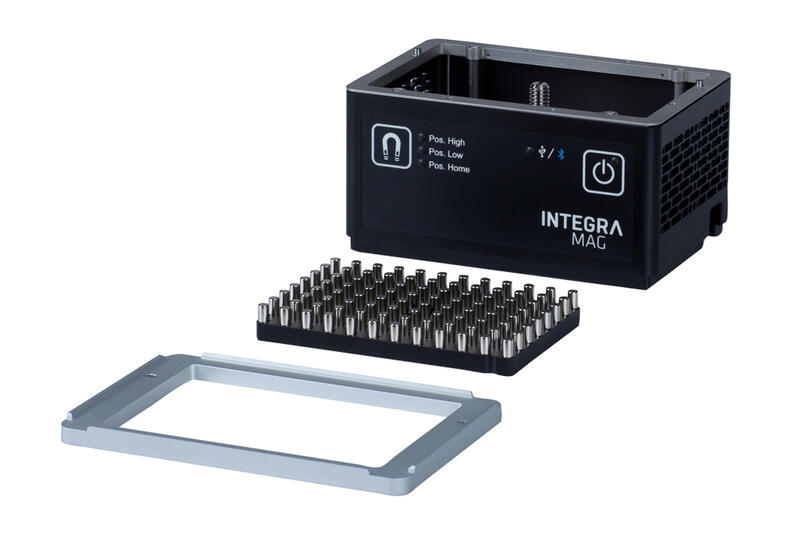
The ASSIST PLUS enables reliable and efficient execution of the sparQ DNA Frag & Library Prep Kit workflow (Figure 1). This app note provides verified VIALAB programs, allowing straightforward set-up and reproducible processing of up to 96 samples. The programs are performed with a 125 µl, 12 channel VIAFLO electronic pipette to obtain the highest degree of consistency between samples and minimize the time between reactions. A COLDPLATE module provides active cooling to avoid premature activation of reactions, while a MAG module allows fully automated, magnetic bead-based clean-ups. Together, this set-up enables high throughput DNA fragmentation and polishing, adapter ligation, clean-ups and library amplification with minimal manual interventions.
Downloads: App note and protocols for optimizing DNA fragmentation and NGS library preparation with automated liquid handling
Experimental set-up
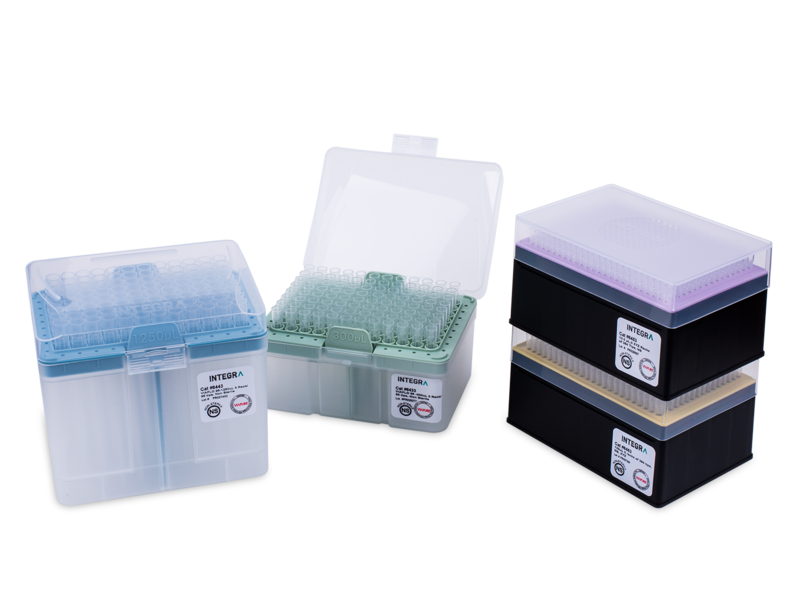
The ASSIST PLUS can be used to automate all liquid handling steps of the sparQ DNA Frag & Library Prep Kit workflow, using a MAG module for automated magnetic bead handling, a COLDPLATE for active cooling, a 125 µl 12 channel VIAFLO electronic pipette and 125 µl sterile, filter GRIPTIPS® pipette tips. The workflow consists of the following steps (Figure 1):
- DNA fragmentation and polishing
- Adapter ligation
- Clean-up 1
- Library amplification
- Clean-up 2
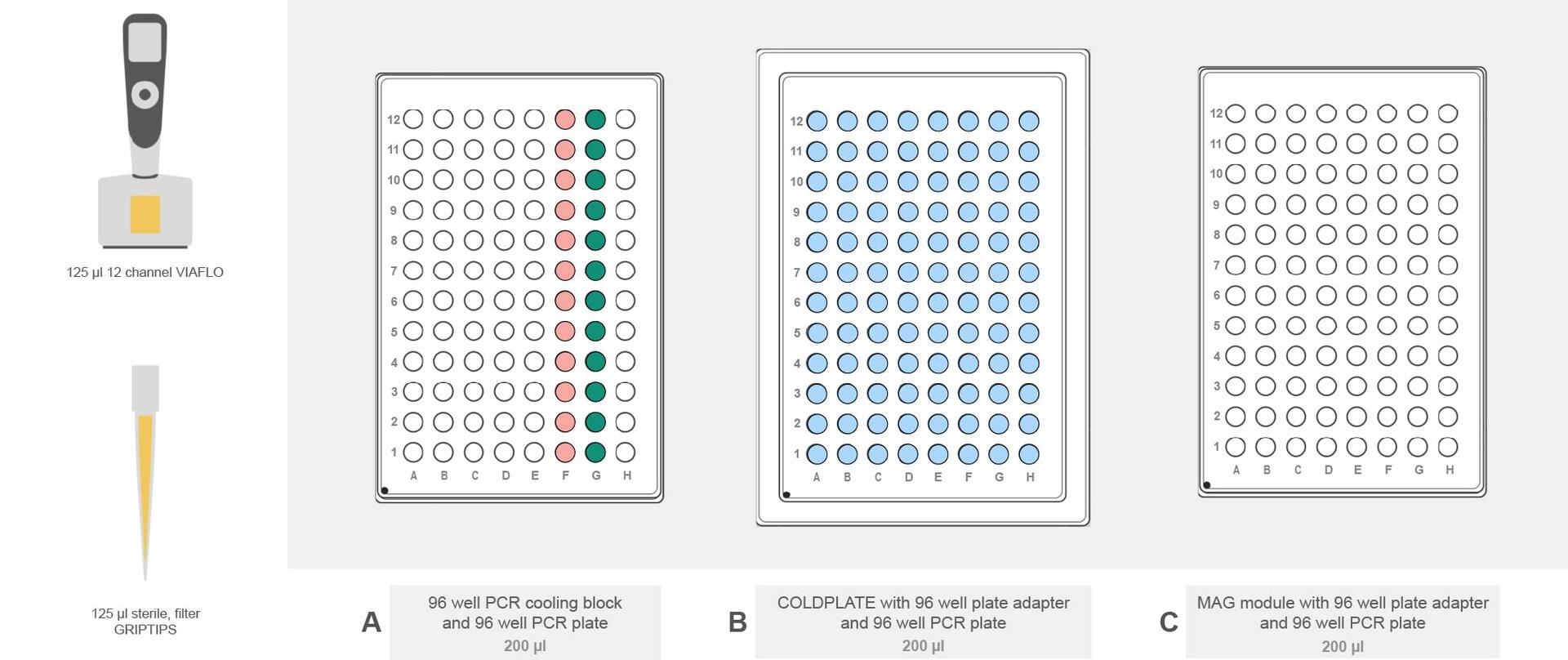
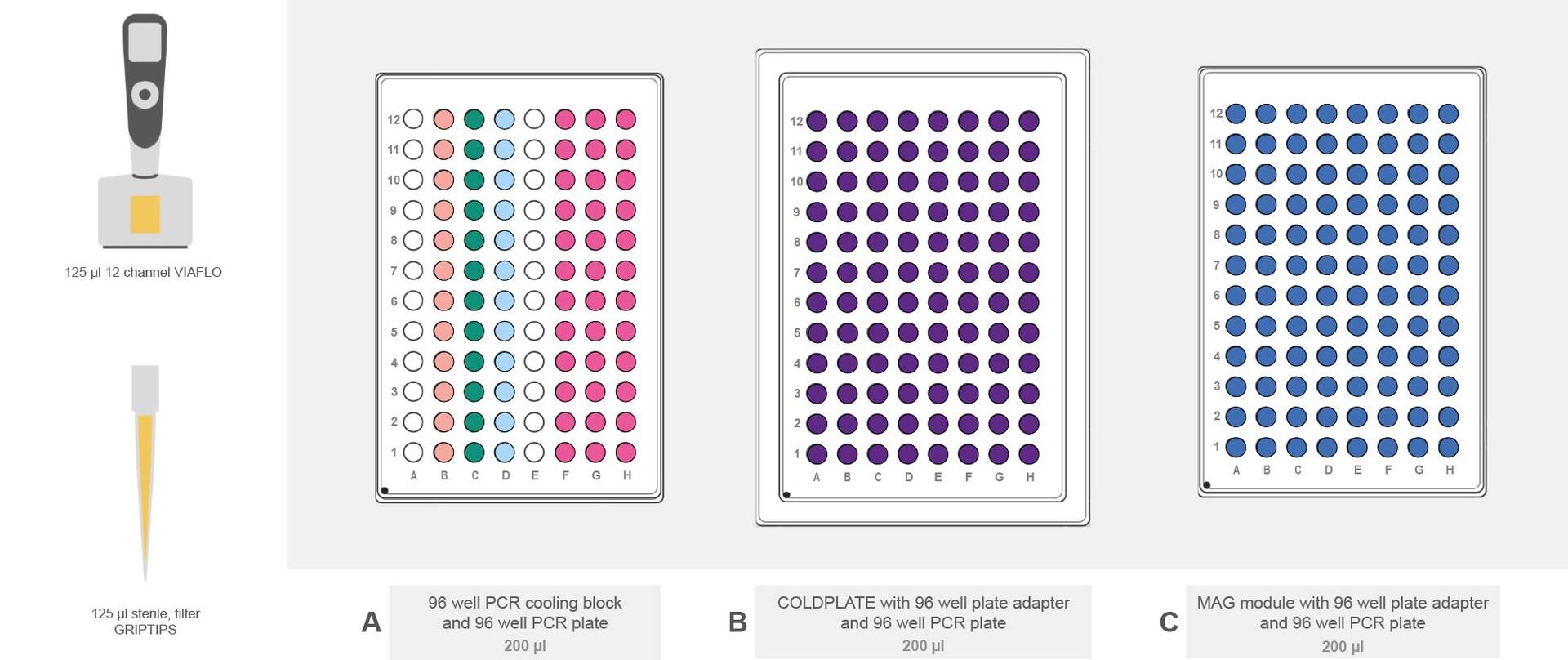
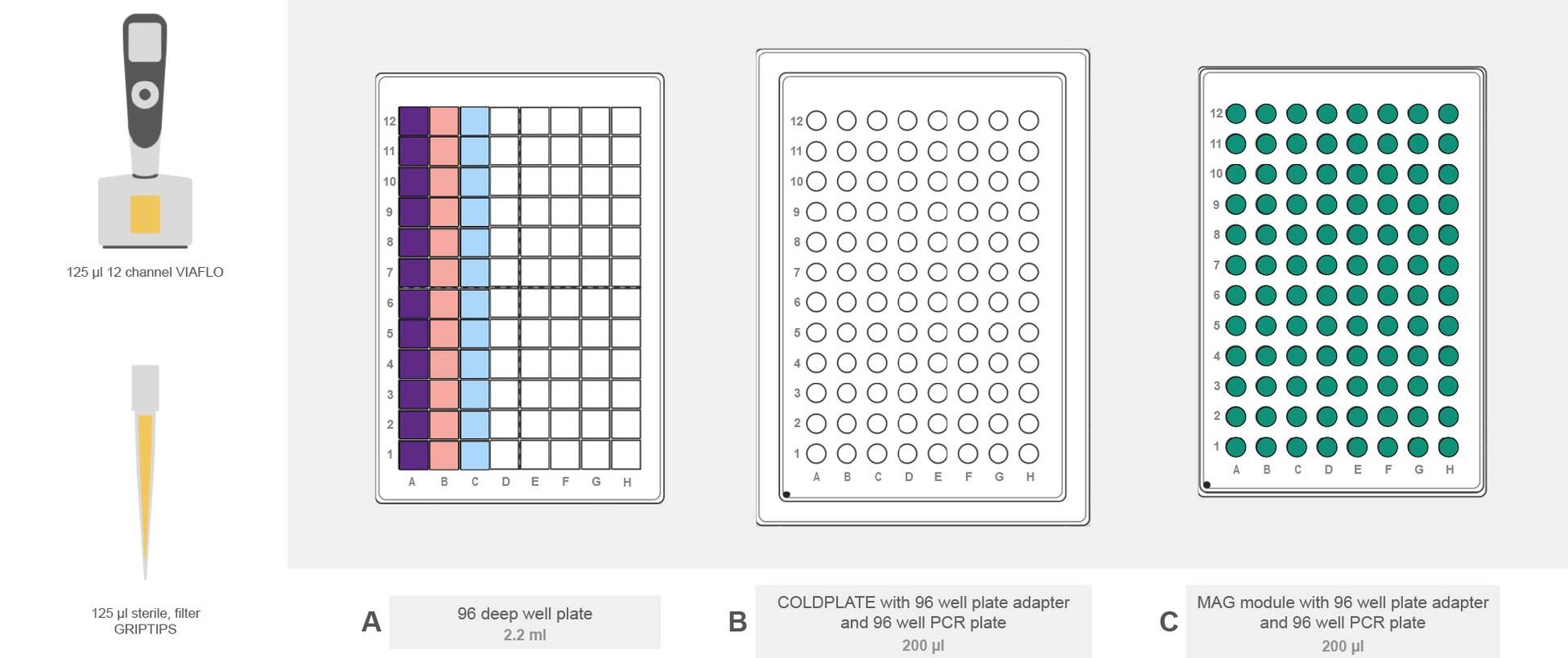
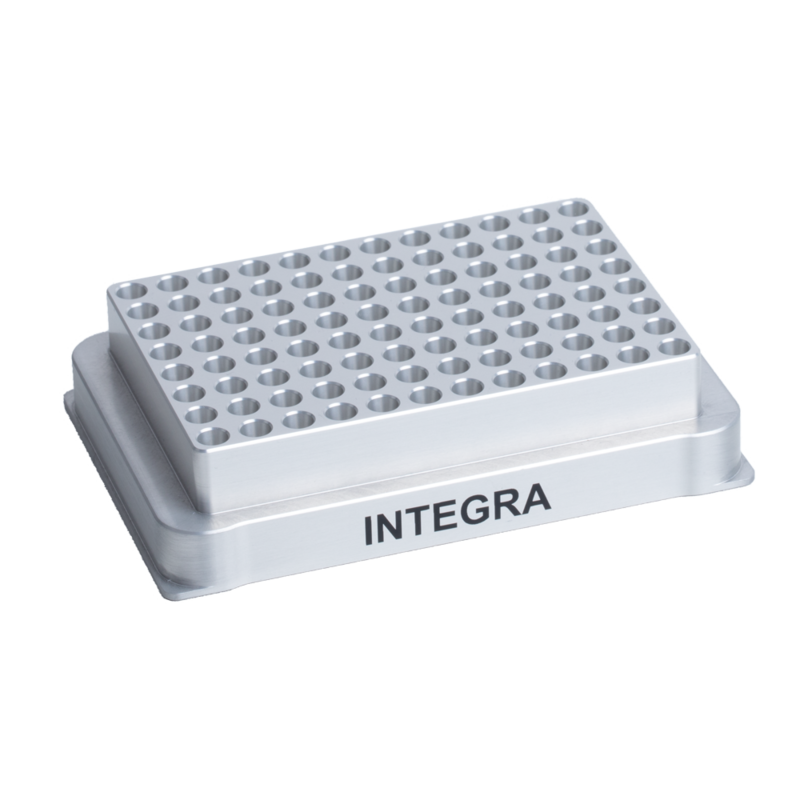
Two basic labware layouts are used in each program, as shown in Figure 2 and Figure 4. Both consist of a reagent plate in position A, either a 96 well PCR plate or a 96 deep well plate mounted on a COLDPLATE with a 96 well plate adapter in position B, and a MAG module with a 96 well plate adapter in position C.
Step-by-step procedure
DNA fragmentation and polishing
Fragment and polish DNA in a single step.
Enzymatic fragmentation breaks genomic DNA into the desired size range, while end repair and A-tailing – referred to as polishing – occur in the same reaction, generating fragments with 5′-phosphate and 3′-A overhangs ready for ligation.
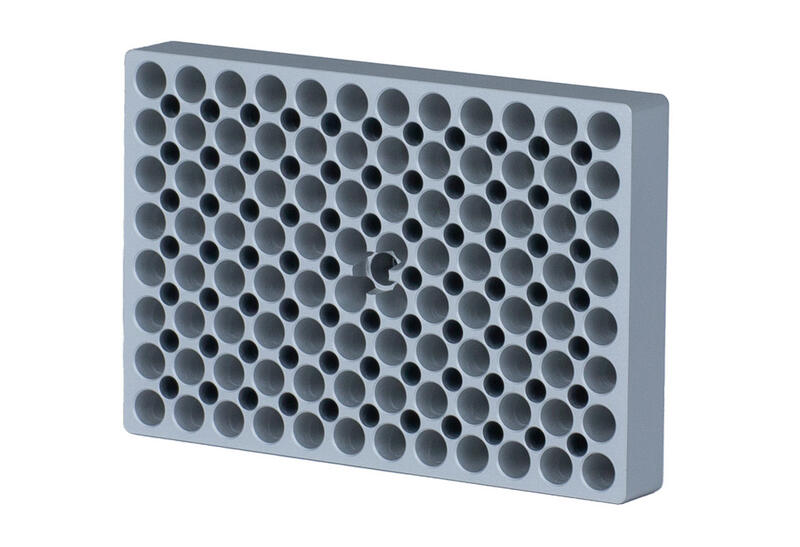
To prepare for this step, make sure that the COLDPLATE is connected to the ASSIST PLUS via the AUX cable. Only 1 module can be used at a time, and the MAG module is not required for this step. Place a fridge-cooled 96 well PCR cooling block on position A and place a clean 96 well PCR plate on it. Add 100 µl of DNA Frag & Polishing Buffer (10x) to column 7 and 50 µl of DNA Frag & Polishing Enzyme Mix (5x) to column 6. Place a 96 well PCR plate onto the COLDPLATE with the corresponding adapter on position B. Fill the plate with 35 µl of sample DNA containing a recommended minimum of 10 ng (Figure 2). Position C is not needed in this step, but a MAG module with a 96 well plate adapter can be placed on it to streamline later steps.
Once the input reagents are prepared, run the program 'DNA_FRAG_POL' using a 125 µl 12 channel VIAFLO electronic pipette.
The program mixes the DNA Frag & Polishing Buffer and DNA Frag & Polishing Enzyme Mix in column 8 on position A. This master mix is distributed to each sample on position B and mixed. Then seal the sample plate with heat resistant foil and incubate it in a thermocycler with a heated lid at 32 °C for the time recommended in the 'sparQ DNA Frag & Library Prep Kit user guide' provided in the download section, followed by 30 minutes at 65 °C. While the fragmentation and polishing are ongoing, place the 96 well PCR cooling block and corresponding 96 well PCR plate back into a fridge. They will be used for the next step of the workflow. After these incubations, keep samples at 4 °C.
Adapter ligation
Ligate adapters to the fragmented and polished DNA.
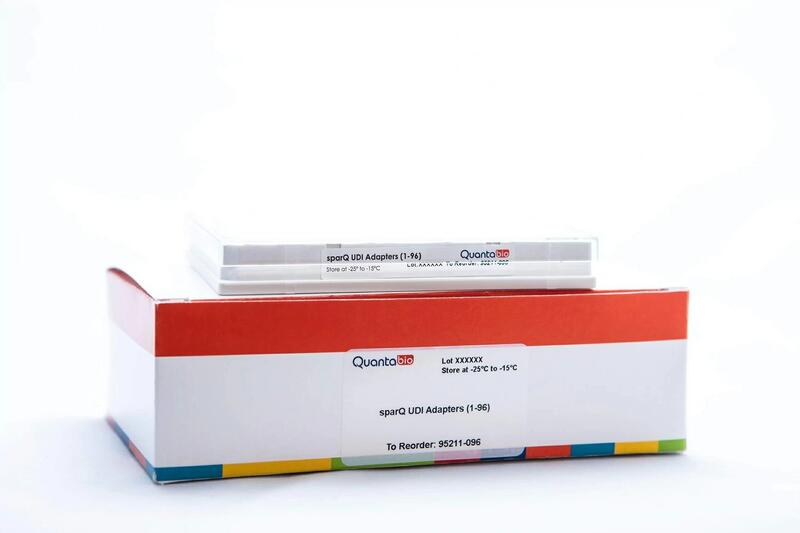
The sparQ UDI Adapters are ligated to both ends of the polished DNA fragments, enabling library amplification and providing compatibility with sequencing platforms. They should be diluted in a clean 96 well PCR plate according to the amount of starting material described in the 'sparQ DNA Frag & Library Prep Kit user guide'.
For this step, make sure that the COLDPLATE is connected to the ASSIST PLUS via the AUX cable, as the MAG module is not required for this step. Place the fridge-cooled 96 well PCR cooling block onto position A, along with the 96 well PCR plate from the previous step. Add 174 µl of DNA Rapid Ligation Buffer (5x) to column D, 95 µl of DNA Ligase to column C and 155 µl of nuclease-free water to column B. Place the 96 well PCR plate containing the fragmented DNA from the previous step onto the COLDPLATE on position B. Place a MAG module with 96 well plate adapter onto position C, and add the 96 well PCR plate containing the diluted sparQ UDI Adapters (Figure 3).
Once the input reagents are prepared, run the program 'ADAPTER_LIGATION' using a 125 µl 12 channel VIAFLO electronic pipette.
Due to the volume limitation of the PCR plate, the program prepares the master mix in 2 separate columns. DNA Rapid Ligation Buffer is distributed evenly to columns 1 and 5 of position A, then DNA Ligase and nuclease-free water are added, and the reagents are mixed. After preparing the master mix, sparQ UDI Adapters are transferred to the fragmented samples and mixed. Finally, the program distributes the master mix to the samples. Seal the sample plate with heat-resistant foil and incubate it for 15 minutes at 20 °C on a thermocycler with the heated lid set to ‘OFF’. After incubation, keep samples at 4 °C.
Clean-up 1
Clean up libraries after adapter ligation.
Magnetic bead-based purification removes enzymes, buffer components and excess/unligated adapters to prevent downstream interference.
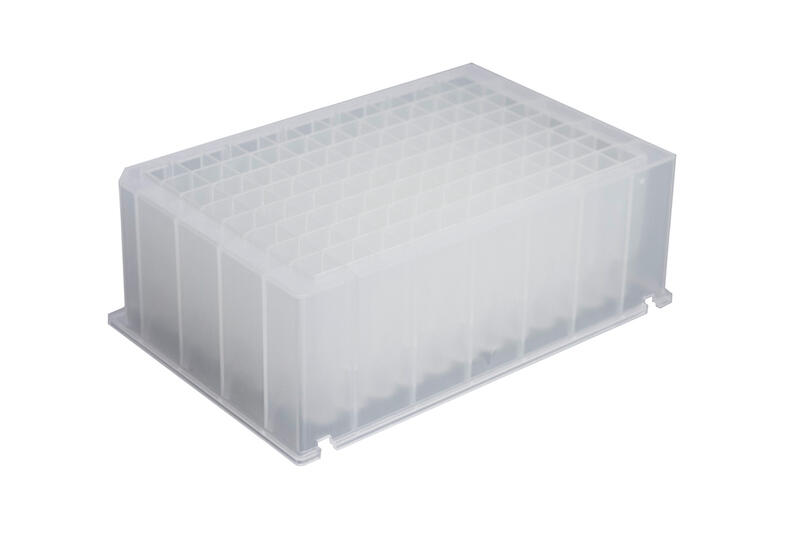
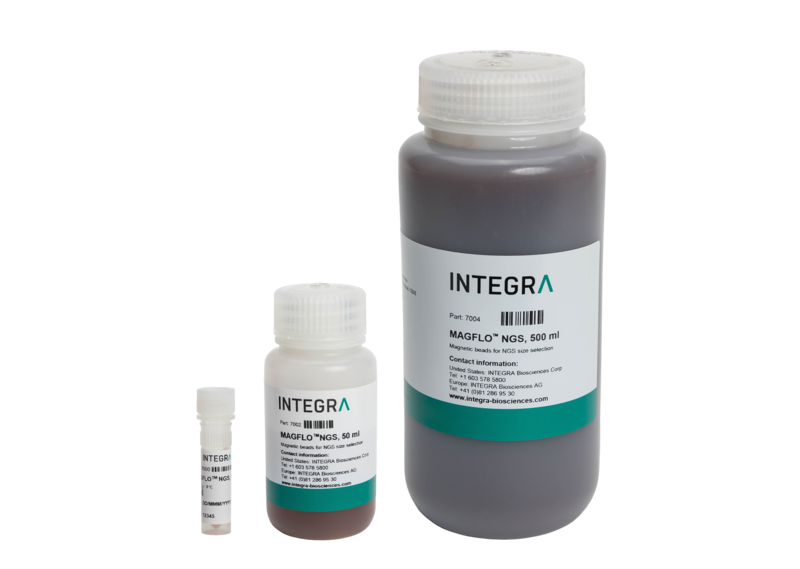
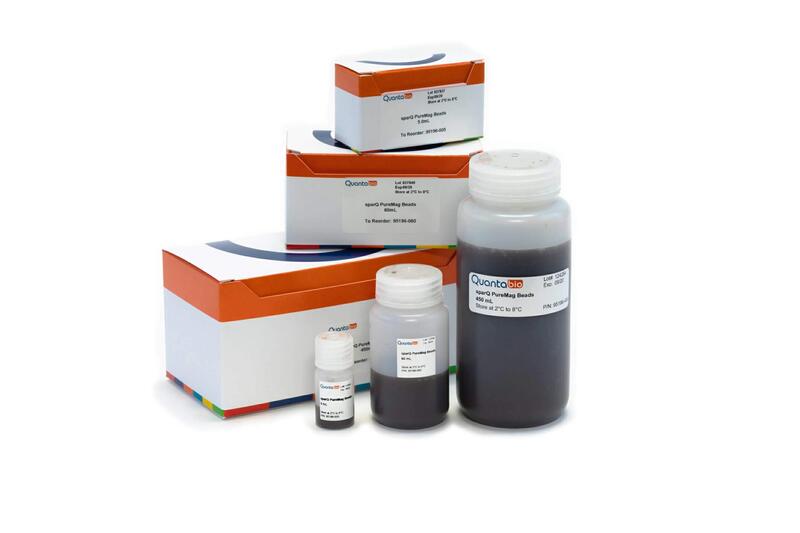
To prepare for this step, make sure that the MAG module is connected to the ASSIST PLUS via the AUX cable, as the COLDPLATE is not required for this step. Place a clean 2.2 ml deep well plate onto position A. Fill the plate with 700 µl of magnetic beads (sparQ PureMag Beads or MAGFLO NGS) in column C, 2,100 µl of ethanol (80 %) in column B and 250 µl of Tris-HCl (pH 8) in column A. Place a clean 96 well PCR plate onto the COLDPLATE on position B. This plate will be used for post-washing collection. Place the post-adapter ligation sample plate from the thermocycler onto the MAG module on position C. The clean-up will be performed in this plate (Figure 4).
Once the input reagents are prepared, run the program 'DNA_CLEAN-UP-1' using a 125 µl 12 channel VIAFLO electronic pipette.
The program adds magnetic beads in a 0.8x bead-to-sample ratio to the sample plate and mixes. After a 5- minute incubation, the MAG module automatically raises its magnets to collect the beads. Supernatant is removed, and 80 % ethanol is added without disturbing the bead pellet to wash impurities from the beads. After removing the ethanol from the beads, the wash is repeated a second time. After the second wash, the pipette aspirates any remaining ethanol droplets to speed up bead drying. After air drying, the beads are resuspended in Tris-HCl (pH 8) to elute the DNA. After 2 minutes of incubation, the beads are collected by the MAG module and the supernatant is transferred to the fresh 96 well PCR plate on position B.
Library amplification
Amplify libraries after clean-up.
PCR amplification enriches samples for properly adapter-ligated fragments, increasing library yields to reach the concentration needed for downstream sequencing.
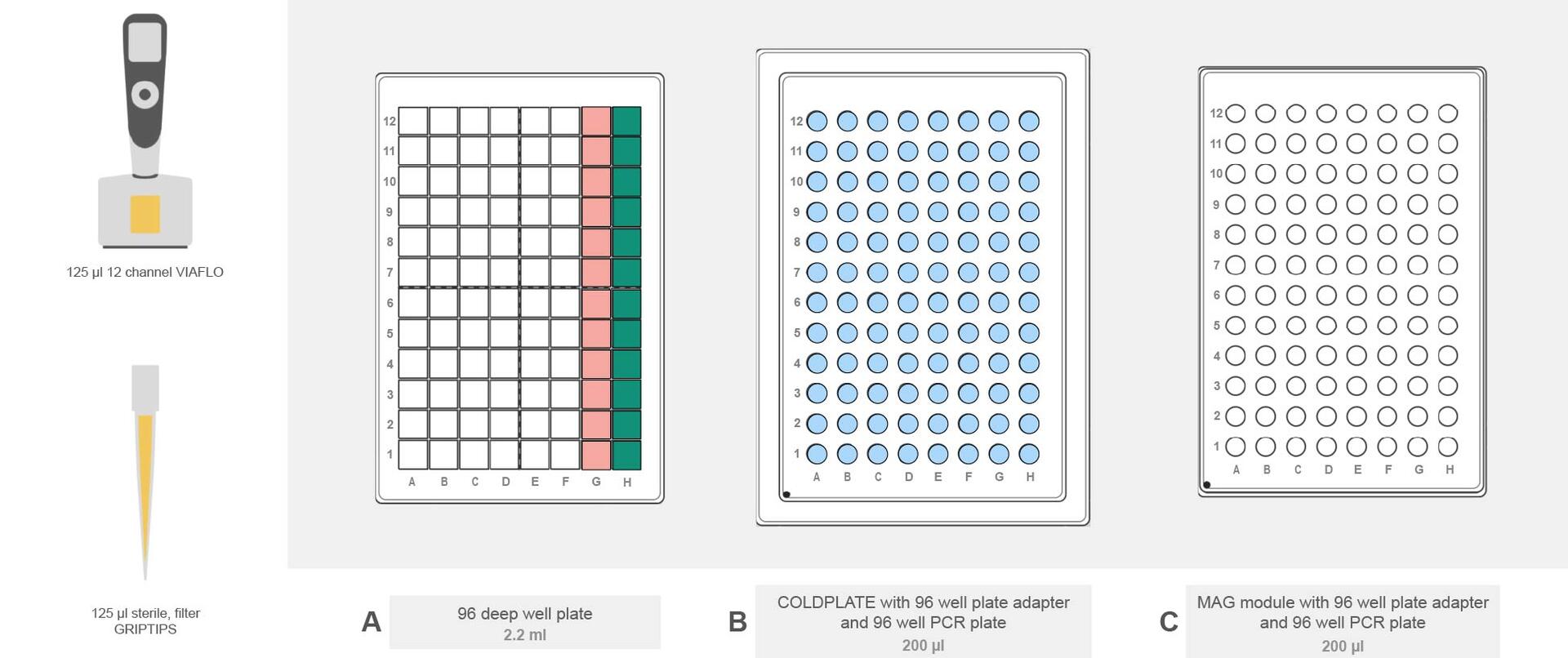
To prepare for this step, make sure that the COLDPLATE is connected to the ASSIST PLUS via the AUX cable, as the MAG module is required for this step. Place a fresh 2.2 ml deep well plate onto position A. Fill the plate with 13.5 µl of Primer Mix in column H and 250 µl of HiFi PCR Master Mix (2x) in column G. Transfer the 96 well PCR plate with the cleaned-up libraries from last step onto the COLDPLATE on position B (Figure 5). Position C is not used in this step.
Once the input reagents are prepared, run the program 'LIB_AMPLIFICATION' using a 125 µl 12 channel VIAFLO electronic pipette. This program mixes the HiFi PCR Master Mix with the Primer Mix. Next, the master mix is distributed into the libraries on position B. Seal the library plate with heat-resistant foil and run a PCR program on a thermocycler, as described in the 'sparQ DNA Frag & Library Prep Kit user guide'. The number of cycles should be adapted according to these instructions. After the PCR, keep samples at 4 °C.
Clean-up 2
Clean up libraries after amplification.
A second bead clean-up removes PCR reagents, primer dimers and small fragments, producing a clean, sequencing-ready library.
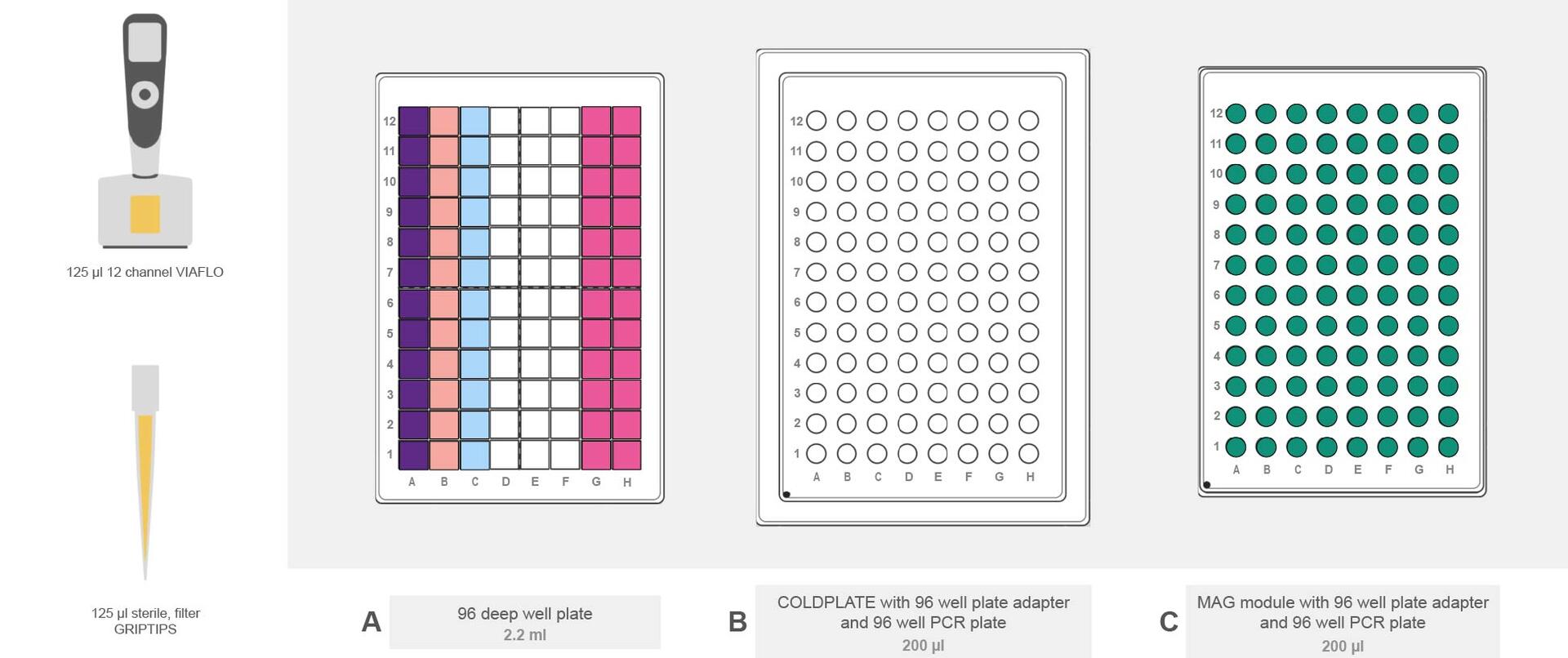
To prepare for this step, make sure that the MAG module is connected to the ASSIST PLUS via the AUX cable, as the COLDPLATE is not required for this step. Place the same 2.2 ml deep well plate from the library amplification step onto position A. Fill the plate with 380 µl of magnetic beads (sparQ PureMag Beads or MAGFLO NGS beads) in column C, 2,100 µl of ethanol (80 %) in column B and 300 µl of Tris-HCl (pH 8) in column A. Columns G and H are used for waste collection. Add a fresh 96 well PCR plate onto the COLDPLATE on position B. This plate will be used for collecting the final, purified library. Place the post-amplification library plate from the thermocycler onto the MAG module on position C. The clean-up will be performed in this plate (Figure 6).
Once the input reagents are prepared, run the program 'FINAL_CLEAN-UP' using a 125 µl 12 channel VIAFLO electronic pipette.
This program follows the same principle as the first DNA clean-up program, 'DNA_CLEAN-UP-1'. Changes include a 0.9x bead-to-sample ratio and the final elution volume. When the program is finished, the clean, sequencing-ready libraries are found in the 96 well PCR plate on position B.
Results
Library preparation is a key step in NGS, where workflow complexity and manual handling can introduce variability and limit throughput. Automation of the sparQ DNA Frag & Library Prep Kit on the ASSIST PLUS can reduce hands-on time while improving consistency and yields.
To demonstrate this, 96 libraries were prepared using 100 ng of human genomic DNA from human blood (buffy coat) as starting material, and compared to 8 manually prepared libraries following the recommended protocol. Conditions for both manual and automated library preparation were:
- DNA was fragmented for 16 minutes at 32 °C.
- Adapters were diluted in a 1:2 ratio in 10 mM Tris-HCl (pH 8), 50 mM NaCl and 0.5 mM EDTA.
- 5 cycles of library amplification PCR were performed.
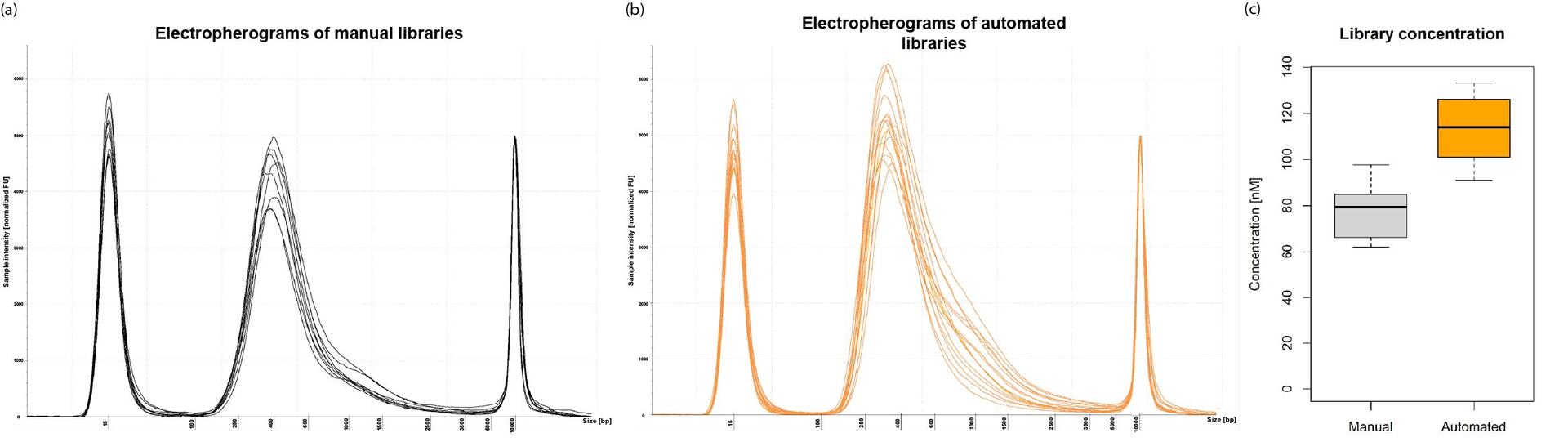
Performance was assessed through size distribution and yield using the 4150 TapeStation System. The electropherograms of manual and automated libraries display similar shapes and sizes, indicating only minimal differences in size distribution (Figure 7 a, b). However, the average concentration of automated libraries (113 nM, n=15) was significantly higher than manually prepared libraries (77.6 nM, n=8, Figure 7 c) in the same elution volume (30 μl). Both concentrations are significantly higher than the recommended minimum of 60 nM.
Remarks
- Flexible magnetic bead options: Automated library preparation using either sparQ PureMag Beads (Quantabio) or MAGFLO NGS beads (INTEGRA Biosciences) at identical bead-to-sample ratios showed no impact on size distribution and minimal impact on the yields of the corresponding libraries (Data available upon request).
Conclusion
Ask our expert. Leave a comment!
Write us if you have any questions regarding the application note or one of our instruments.
Any questions? I'm happy to help!
Instruments and accessories
ASSIST PLUS, Pipetting Robot
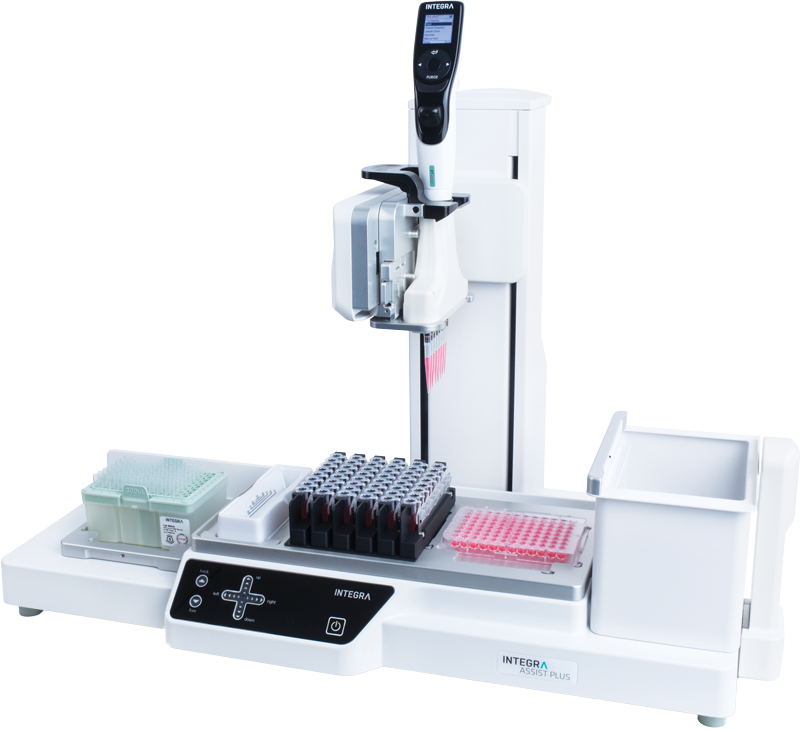
INTEGRA has developed the ASSIST PLUS pipetting robot to streamline routine pipetting tasks at an affordable price. Using INTEGRA electronic multichannel pipettes, the system:
- automates pipetting tasks,
- eliminates physical strain and
- ensures superior reproducibility and
- error free pipetting.
Part No. 4505
Downloads
Download App Note as PDF
DownloadOptimizing DNA fragmentation and NGS library preparation with automated liquid handling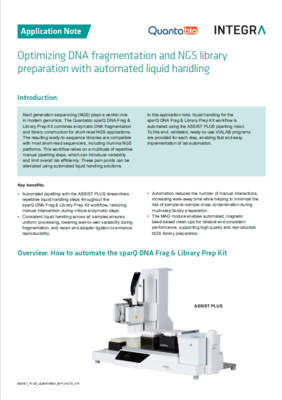
Customer’s voice
We’ve been using the INTEGRA ASSIST PLUS for routine workflows such as plate transfers, serial dilutions, and reagent addition. It has been effective in reducing hands-on pipetting and improving consistency for repetitive tasks. The system is straightforward to implement and operate. The software is intuitive and easy to use. INTEGRA has been very proactive in support. Their team visited onsite for training, ensuring a smooth setup and user adoption, and they continue to be responsive, regularly checking in and providing assistance whenever needed. Overall, the ASSIST PLUS is a practical solution that improves reproducibility and reduces manual workload without adding complexity, with the added benefit of responsive and engaged vendor support.
Related products
Applications
Show all-
End-to-end Twist library preparation protocol for NGS workflow automation
-
Streamlining single-cell sequencing with the Flex Apex workflow using automated liquid handling solutions
-
A simple and streamlined workflow for membrane protein isolation
-
Automating media exchange and sample collection using Ronawk’s Bio-Blocks® In Similare technology and the ASSIST PLUS
Stories
Show all-
 · Product News
Magnetic beads represent a modern approach to gDNA isolation
-
 · Product News
Magnetic beads for NGS size selection and PCR purification
-
 · Company News
Streamlining CRISPR workflows, from editing to analysis
-
 · Customer Testimonial
Enhancing the consistency of ag-tech R&D processes with the ASSIST PLUS pipetting robot