-
Nucleic acid extraction with the Arcis Sample Prep Kit
Automatic nucleic acid extraction with the ASSIST PLUS pipetting robot in just two steps!
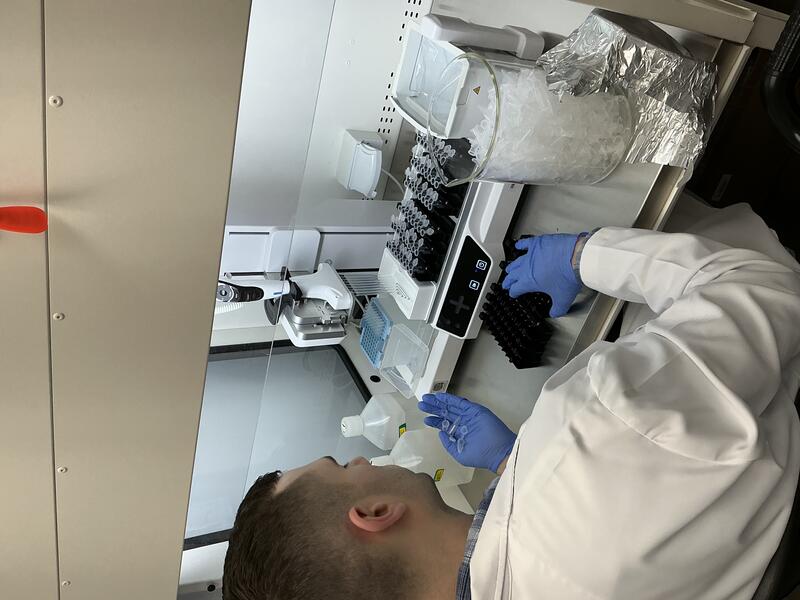
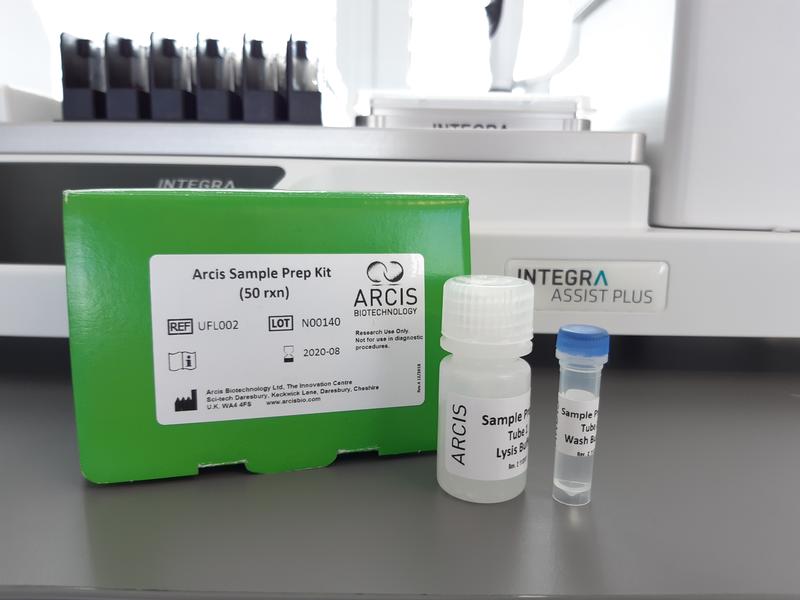
The Arcis Sample Prep Kit is a ready-to-use kit comprising two reagents that enables pre-analytical processing of a variety of biological sample types, including whole blood, saliva, bacteria and plant cells. DNA/RNA extraction can be so simple; the Arcis Sample Prep Kit allows the user to go from cells to downstream nucleic acid investigations in only three minutes, without the need for isolation or purification. The protocol consists of just two steps that can be easily automated with the ASSIST PLUS pipetting robot, offering the user a convenient solution for nucleic acid extraction. Sterile working conditions are essential, especially for RNA extractions. The ASSIST PLUS meets the requirements for working under sterile conditions, as its small footprint means that it can be easily placed in a laminar flow cabinet.
-
Table of contents
The Arcis Sample Prep Kit is a ready-to-use kit comprising two reagents that enables pre-analytical processing of a variety of biological sample types, including whole blood, saliva, bacteria and plant cells. DNA/RNA extraction can be so simple; the Arcis Sample Prep Kit allows the user to go from cells to downstream nucleic acid investigations in only three minutes, without the need for isolation or purification. The protocol consists of just two steps that can be easily automated with the ASSIST PLUS pipetting robot, offering the user a convenient solution for nucleic acid extraction. Sterile working conditions are essential, especially for RNA extractions. The ASSIST PLUS meets the requirements for working under sterile conditions, as its small footprint means that it can be easily placed in a laminar flow cabinet.
Key benefits
Overview: Nucleic acid extraction
Note: Make sure that all samples have thawed completely before starting this procedure!
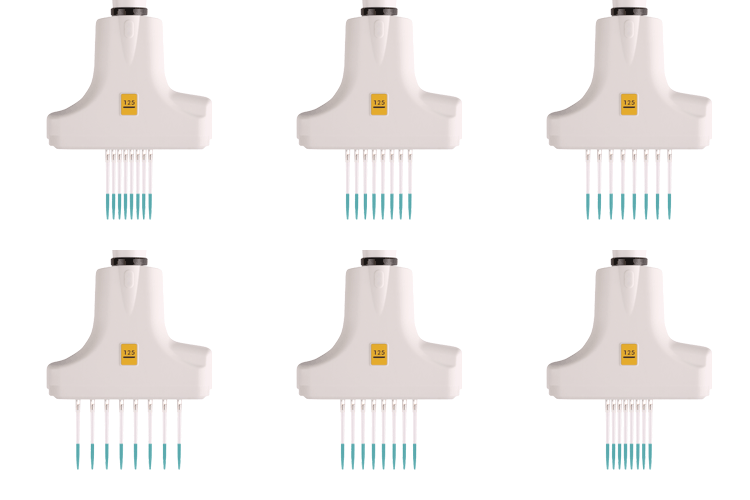
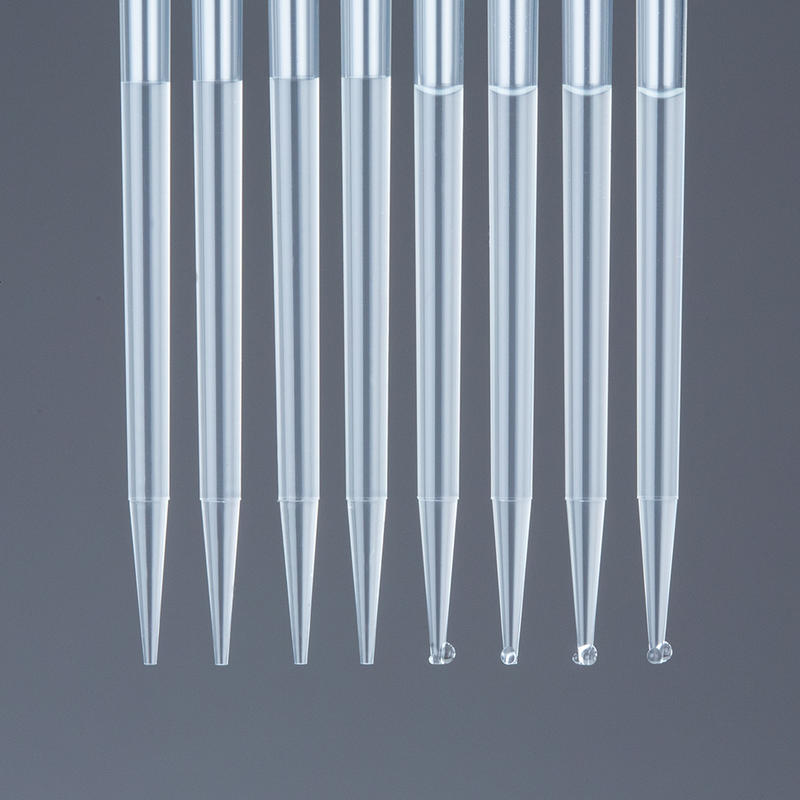
In this protocol, DNA is extracted from whole blood samples using the Arcis Sample Prep Kit and the ASSIST PLUS. The pipetting robot operates a VOYAGER 8 channel 125 μl electronic pipette with 125 μl Sterile, Filter, Low Retention GRIPTIPS®. The use of Low Retention GRIPTIPS ensures optimal handling of viscous liquids, such as blood samples.
The protocol is divided into two parts:
- Program 1: Blood sample transfer (ARCIS_Transfer_WholeBlood)
- Program 2: Nucleic acid extraction with the Arcis Sample Prep Kit (ARCIS_DNA_Extraction)
Downloads: Protocols for automated nucleic acid extraction with ASSIST PLUS
Here you can download the complete protocols and reports used in this application and use them on your ASSIST PLUS. The protocol can be customized with the VIALAB software.
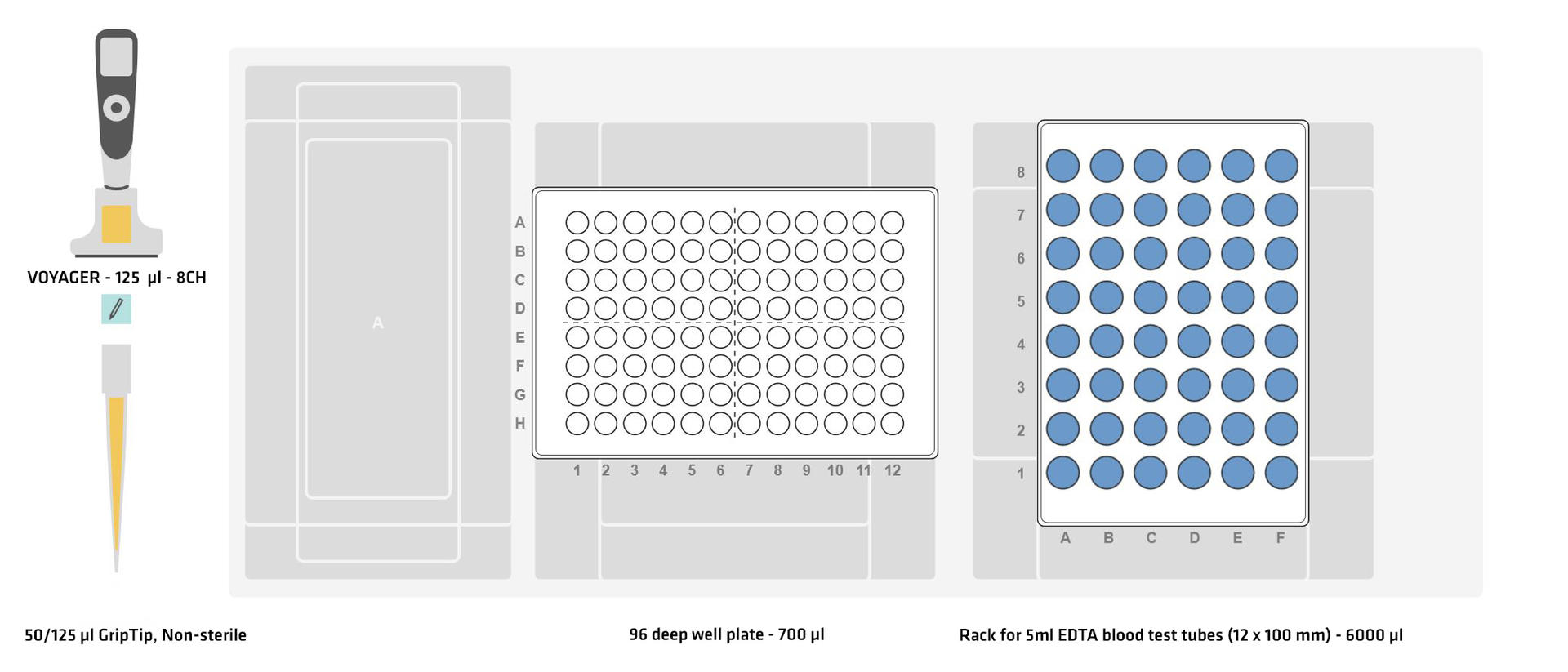
Experimental set-up: Program 1
|
Deck position B: |
96 deep well plate - empty. |
| Deck position C: |
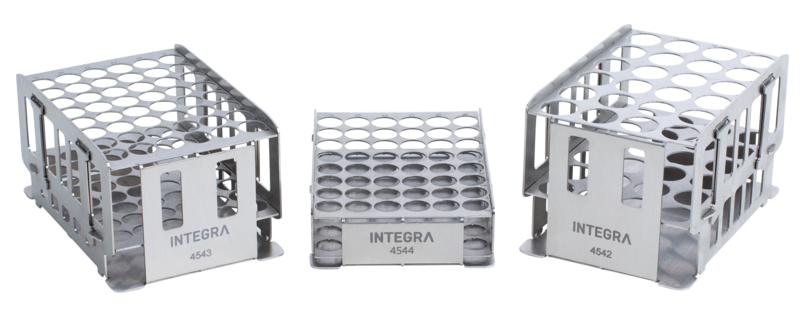
Rack for 6 ml EDTA blood test tubes (12 x 100 mm) – 6000 μl. |
Step-by-step procedure
1. Aliquot the blood samples
Transfer the blood samples from the collection tubes.
Place the blood collection tubes on position C and a 700 μl deep well plate on position B. Then select the ARCIS_SAMPLES program on the VOYAGER electronic pipette by pressing Run. The ASSIST PLUS immediately starts to transfer blood from the collection tubes into the deep well plate.
Tip: Use the Tip Travel feature of the ASSIST PLUS to keep the tip immersion depth constant during aspiration and dispensing, ensuring contamination-free and consistent liquid handling for more reproducible results, no matter how often the application is repeated.
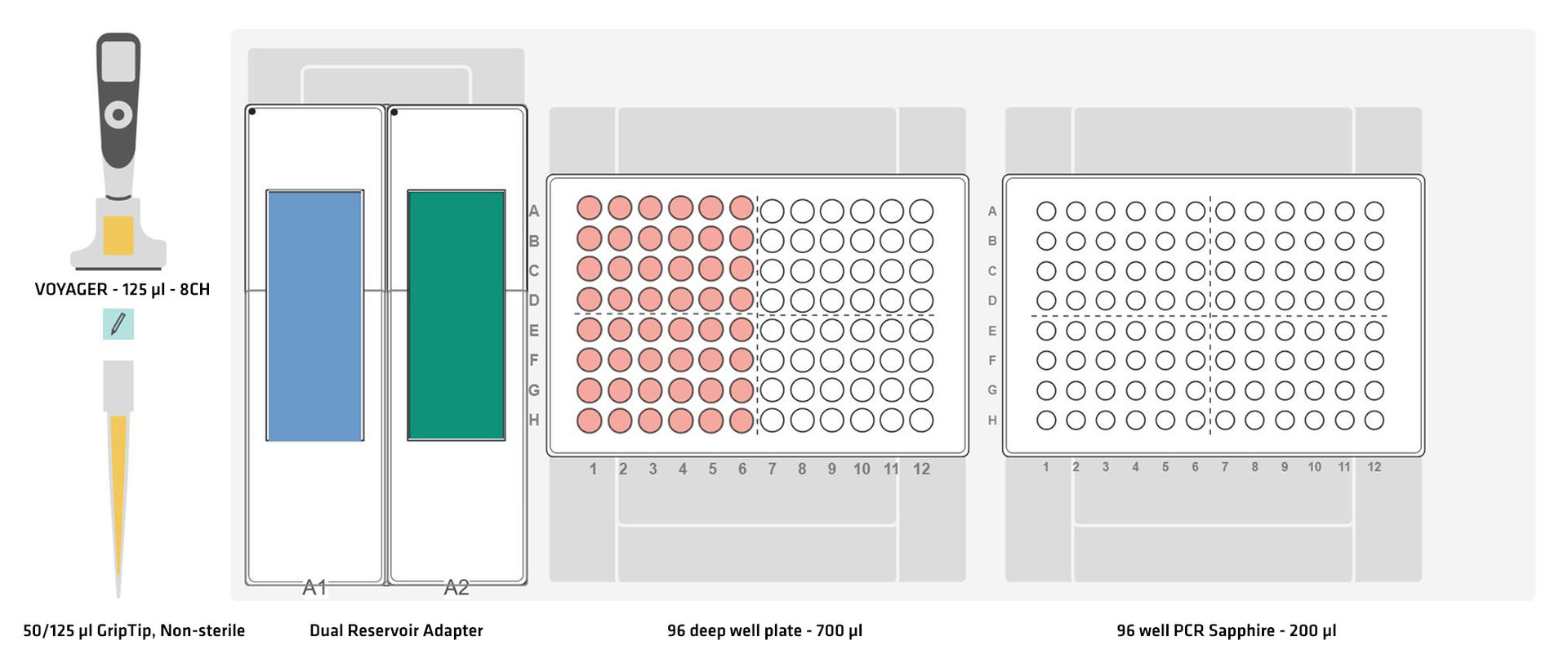
Experimental set-up: Program 2
|
Deck position A: |
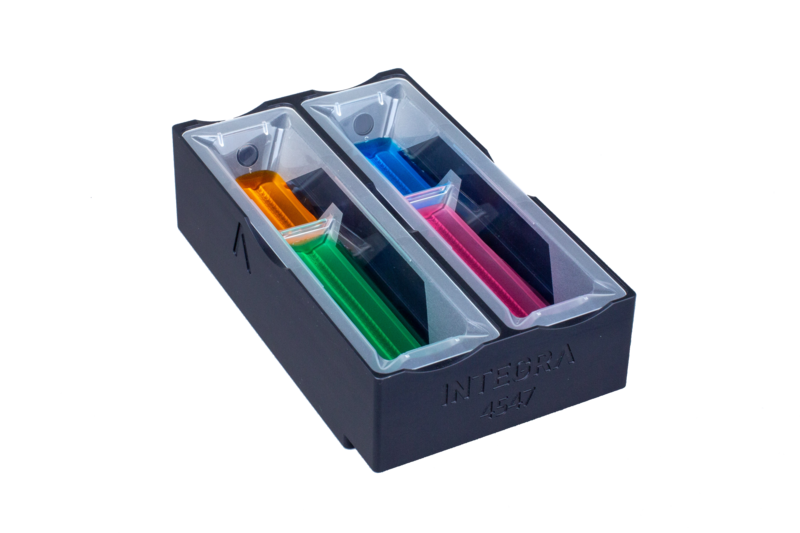
Dual Reservoir adapter with 2 x 10 ml multichannel reagent reservoirs for Reagent 1 (blue) and Reagent 2 (green). |
|
Deck position B: |
96 deep well plate - partially filled with 100 μl of blood samples (pink). |
| Deck position C: |
96 well PCR Sapphire - empty. |
Step-by-step procedure
1. Reagent distribution
Aliquot Reagent 1 and Reagent 2.
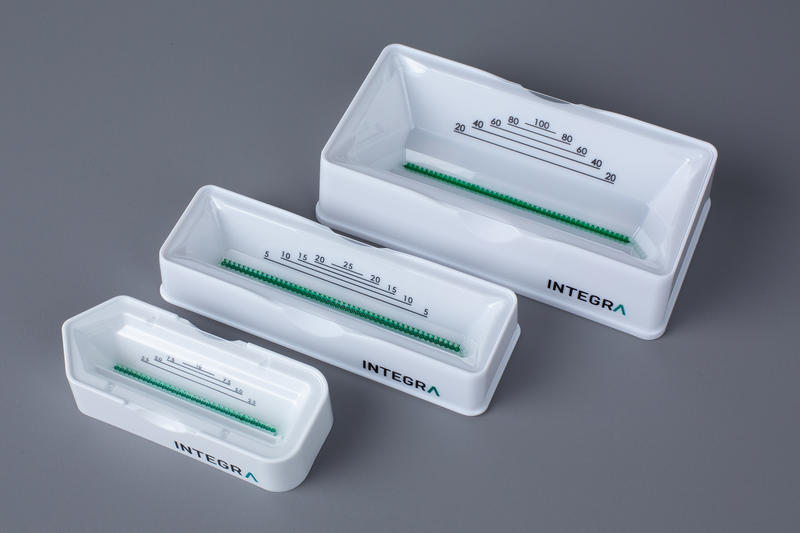
Place two 10 ml multichannel reagent reservoirs into a dual reservoir adapter from INTEGRA on position A, the deep well plate with the preloaded blood samples on position B, and a new 96 well plate on position C. Fill the two 10 ml multichannel reagent reservoirs with Reagent 1 and 2, and change the program on the VOYAGER pipette to ARCIS_KIT. The ASSIST PLUS then starts to aliquot 150 μl of Reagent 1 in to the deep well plate (position B, columns 7-12) followed by the distribution of 20 μl of Reagent 2 in the 96 well plate (position C, columns 1-6).
Tips:
- A pre- and post-dispense step is recommended to increase the accuracy and precision of pipetting. The pre- and post-dispense volume should be between 3 and 5 % of the nominal volume of the pipette.
- Save reagents by using the 10 ml multichannel reagent reservoir with SureFlo anti-sealing array. This allows you to aspirate from the very bottom of the reservoir in order to minimize the dead volume of the reagents.
2. Sample lysis
Add blood samples to Arcis Reagent 1.
Transfer 90 μl of each blood sample to the wells containing Reagent 1. After mixing, there is a one-minute incubation period before the samples are further processed or stored for processing later, according to the manufacturer’s protocol (Arcis Sample Prep Kit).
Tip: Be sure to mix Reagent 1 thoroughly with the blood samples to ensure a homogenous solution.
Note: Nucleic acids are stable for 90 days at room temperature, provided there is no further processing.
3. Sample washing
Wash lysed samples with Arcis Reagent 2.
Continuing this protocol, use the ASSIST PLUS to automatically transfer 5 μl of the lysed blood samples (position B) to Reagent 2 in the new 96 well plate (position C) and mix them thoroughly.
Tip: After addition of Reagent 2, the samples must be used immediately or frozen at -20 ºC. To reduce sample dilution, samples can be added to Reagent 2 at a ratio of 1:3, 1:2 or 1:1.
Remarks
- The PCR reaction can be run immediately or go directly to other downstream techniques. To continue with a PCR reaction, add the appropriate volume to the PCR master mix (e.g. 5 μl per 25 μl of PCR reaction).
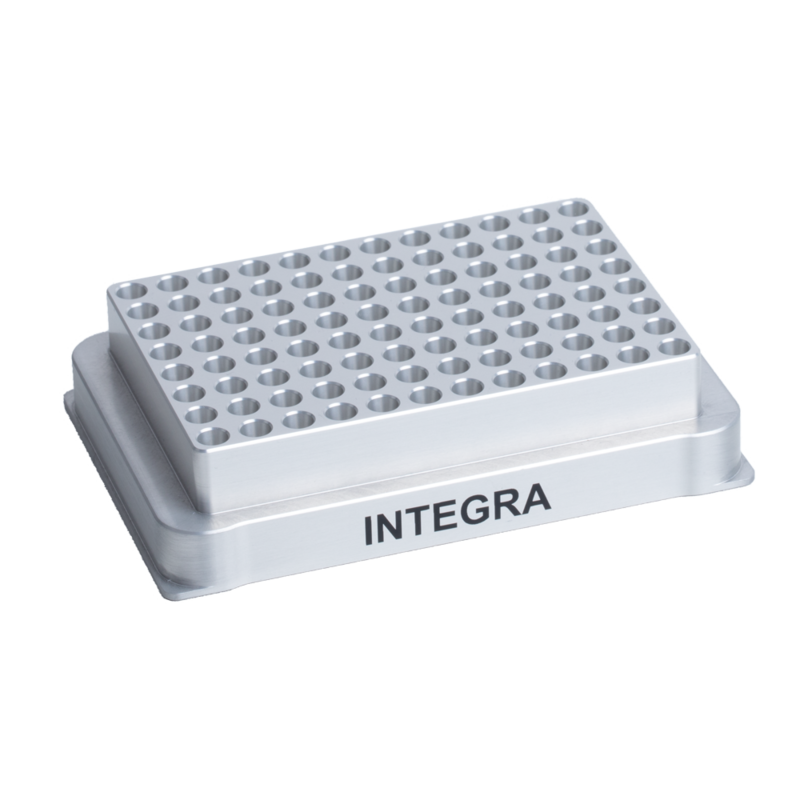
- Users who only want to extract DNA from eight samples can place an 8 well PCR strip in a PCR 96 well cooling block (INTEGRA) instead of a 96 well plate.
- To process a higher number of samples consider using the kit for 500 reactions and choose the VIAFLO 96/384 to add reagents or samples simultaneously.
Conclusion
Ask our expert. Leave a comment!
Write us if you have any questions regarding the application note or one of our instruments.
有疑问?很高兴为您提供帮助!
Used instruments and accessories
ASSIST PLUS, Pipetting Robot
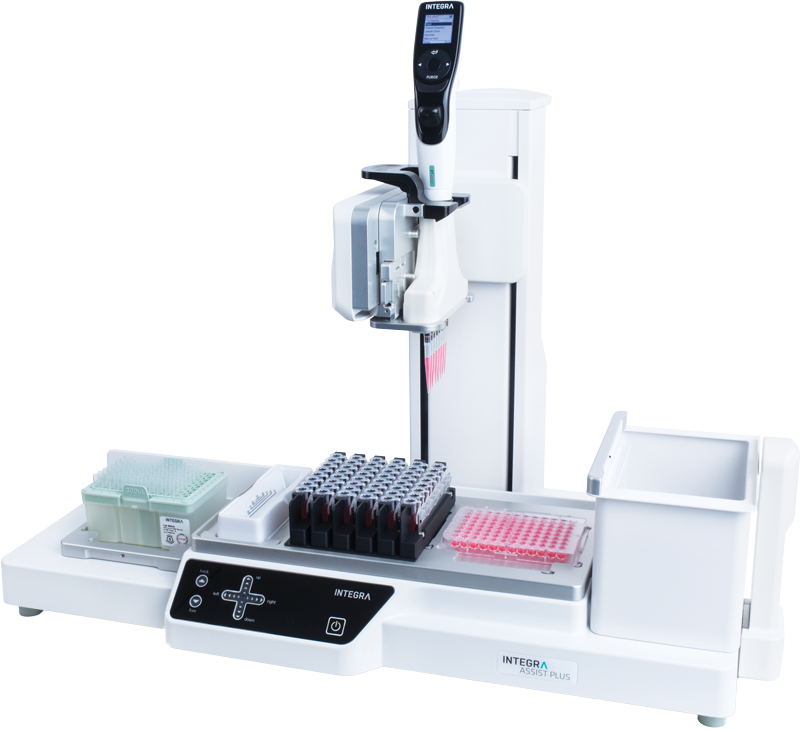
INTEGRA has developed the ASSIST PLUS pipetting robot to streamline routine pipetting tasks at an affordable price. Using INTEGRA electronic multichannel pipettes, the system:
- automates pipetting tasks,
- eliminates physical strain and
- ensures superior reproducibility and
- error free pipetting.
Part No. 4505
Download
Download this App Note as PDF file
下载Nucleic acid extraction with the Arcis Sample Prep Kit
Customer’s voice
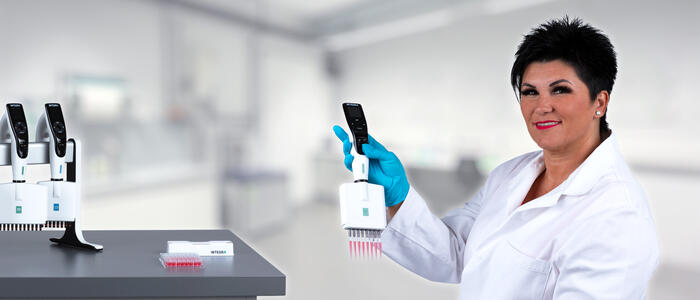
Easy and flexible pipetting robot! The device is easy to use and therfore it saves us a lot of work. In addition, pipetting is more precise that manual pipetting and there is less risk of contamination. The software for making protocols is very inuitive and provides a lot of options, so the Assist can be easily used for different applications.


应用
显示所有-
End-to-end Twist library preparation protocol for NGS workflow automation
-
A simple and streamlined workflow for membrane protein isolation
-
Streamlining single-cell sequencing with the Flex Apex workflow using automated liquid handling solutions
-
Optimizing DNA fragmentation and NGS library preparation with automated liquid handling