-
3D cell culture processing with the VIAFLO 96 and VIAFLO 384 handheld electronic pipette and the Corning® Elplasia® plate
Protocol for high throughput cell seeding and media change in a 96 well Elplasia plate with the VIAFLO 96/384 handheld electronic pipette
The use of spheroids and other 3D cell culture models in cancer research and drug discovery has grown in recent years, as these are more physiologically relevant than traditional 2D models. Corning Elplasia plates enable researchers to generate multiple spheroids in a scaffold-free model using microcavity technology, making it possible to obtain several high signal data points from a single well without increasing the spheroid size. However, 3D cell seeding and washing within the plate require very accurate pipetting in order to increase reproducibility.
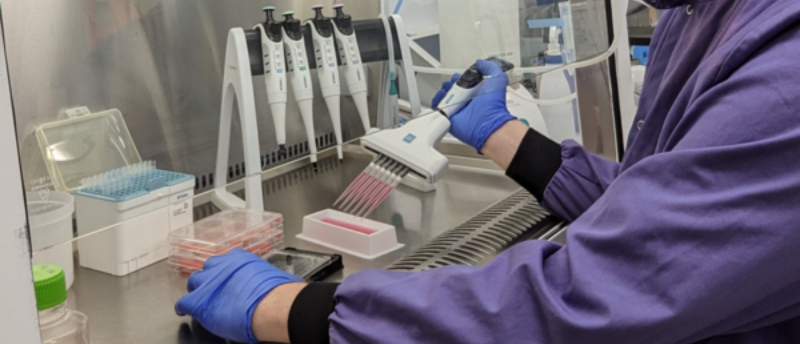
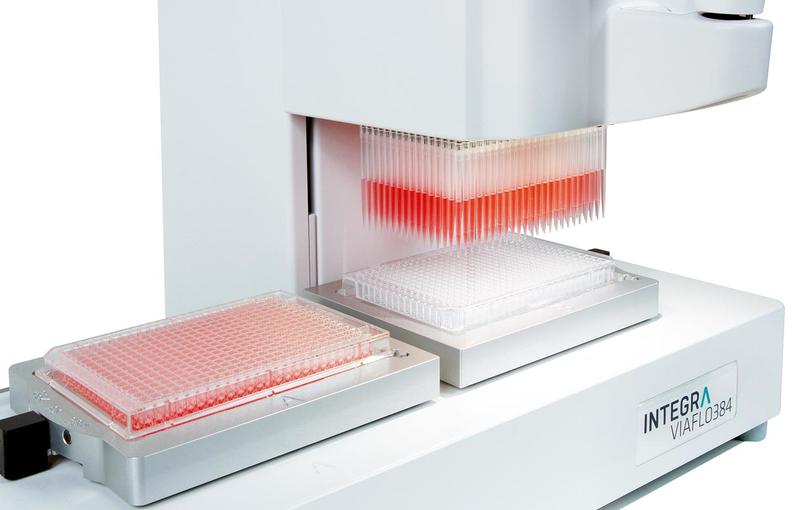
A 96 or 384 channel pipette, such as the VIAFLO 96/384 handheld electronic pipette, can make working with 3D cell plates like Corning Elplasia much more efficient, reproducible and simple to perform, as parameters such as pipetting height and speed can be adjusted.
-
Table of contents
The use of spheroids and other 3D cell culture models in cancer research and drug discovery has grown in recent years, as these are more physiologically relevant than traditional 2D models. Corning Elplasia plates enable researchers to generate multiple spheroids in a scaffold-free model using microcavity technology, making it possible to obtain several high signal data points from a single well without increasing the spheroid size. However, 3D cell seeding and washing within the plate require very accurate pipetting in order to increase reproducibility.
A 96 or 384 channel pipette, such as the VIAFLO 96/384 handheld electronic pipette, can make working with 3D cell plates like Corning Elplasia much more efficient, reproducible and simple to perform, as parameters such as pipetting height and speed can be adjusted.
Key benefits
Downloads: Corning application note
Application note: Liquid handling in a 96-well Corning Elplasia Plate using the INTEGRA VIAFLO 96/384
For more detailed information on high throughput 3D cell screening assay development with Corning Elplasia microplates and INTEGRA Biosciences’ VIAFLO 96/384 handheld electronic pipette, please refer to the Corning application note.
Step-by-step procedure
Experimental set-up
The cell lines HT-29/GFP (Creative Biogene CSC-RR0119), HepG2 (ATCC® HB-8065™), and A549 (ATCC® CCL-185™) were thawed and cultured following the vendors’ protocols. Cells were harvested using 0.05 % trypsin with 0.53 mM EDTA (Corning 25-052-CV) and resuspended in the recommended culture media.
Overview of the 3D cell culture process
- Step 1: Cell seeding
- Step 2: Media change
1. Cell seeding
Cell seeding into the Corning Elplasia 96 well plate with the VIAFLO 96/384 handheld electronic pipette
Accurate handling of the cell suspension during seeding is critical to ensure that the spheroids are of uniform size across the entire microplate. A VIAFLO 96/384 handheld electronic pipette equipped with a 10 – 300 µl 96 channel pipetting head was used to pre-wet a 96 well Corning Elplasia plate with 50 µl per well of McCoy’s 5A medium supplemented with 10 % fetal bovine serum.
The plate was centrifuged at 500 x g for 1 minute to remove air bubbles, and HT-29/GFP cells were then seeded with the VIAFLO 96/384, using 100 µl per well at 500 cells per microcavity. The plate was incubated for 1 day at 37 °C, 5 % CO2 in a humidified incubator to allow spheroid formation.
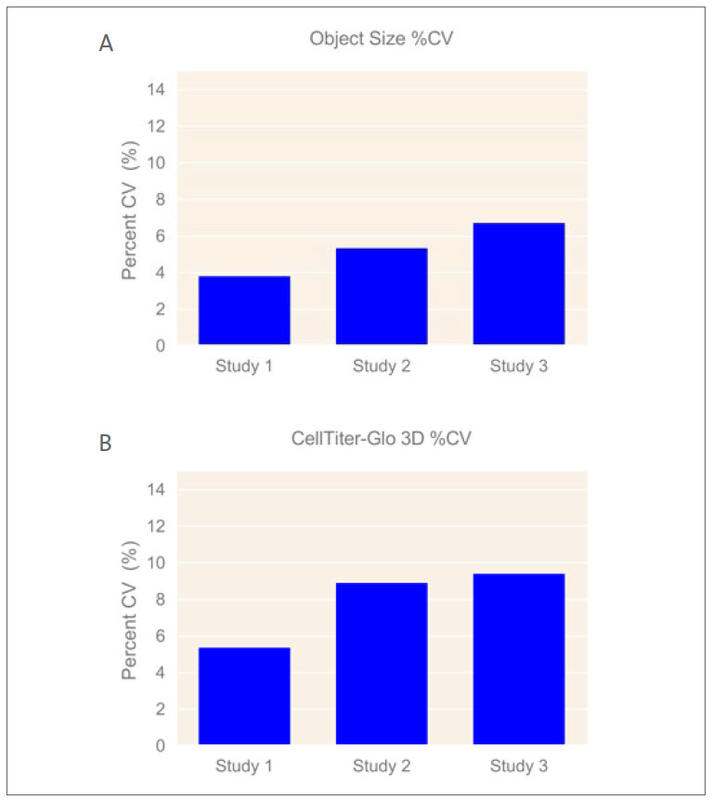
Experimental results (Corning) showed low variability in spheroid size in each well across the entire microplate, thanks to the accurate dispensing of the cell suspension with the VIAFLO 96/384 (Figure 1 and 2).
Tips:
- The Z-height should be defined to provide more accurate results
- Adjust the handle sensitivity as required by the user for optimal automation of the process
Figure 1: Seeding HT-29/GFP cells using a VIAFLO 96/384 handheld electronic pipette resulted in consistent, single spheroids in each microcavity. Representative image of HT-29/GFP cells seeded at 500 cells per microcavity in a 96 well Corning Elplasia plate. Image was taken with a CellInsight CX7 confocal imager using a 4x objective with one field digitally zoomed in.
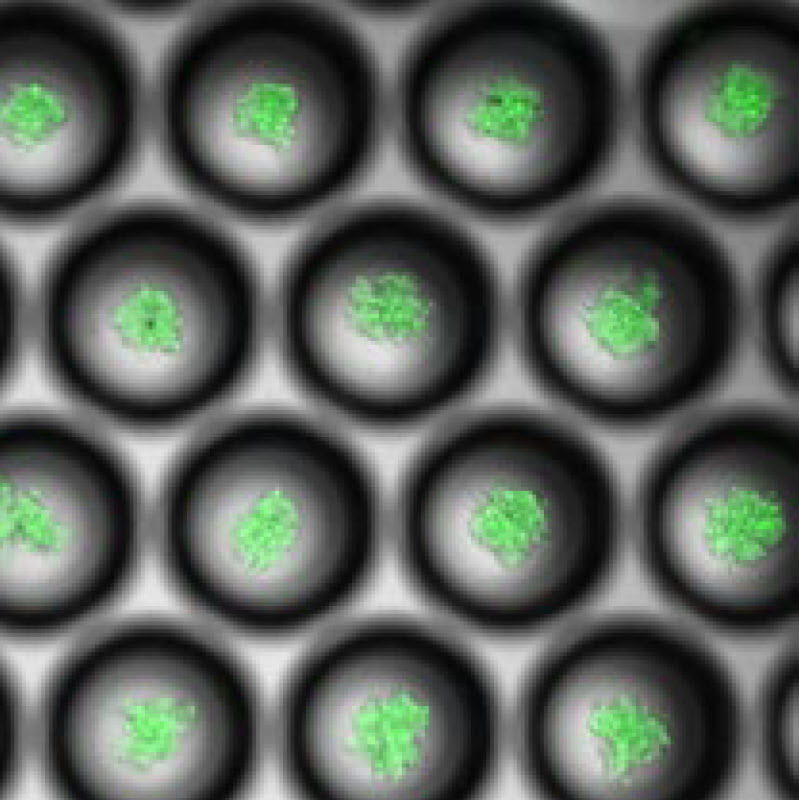
Figure 2: Low percent CV values (<10 %) were achieved for cell seeding using a VIAFLO 96/384 handheld electronic pipette. HT-29/GFP cells were seeded into a 96 well Corning Elplasia plate with a VIAFLO 96/384 on three different days (studies 1-3). (A) After overnight incubation, the average spheroid diameter (object size) in each well was determined using a CellInsight CX7 HCS platform and used to calculate a %CV value for each plate. (B) The same plate was then used for a CellTiter-Glo™ 3D luminescence assay, and the resulting luminescence was used to calculate a %CV value for each plate.
2. Media exchange and washing steps
Changing cell culture media and washing the cells without disturbing the spheroids
The VIAFLO 96/384 handheld electronic pipette was used to pre-wet the plate with 50 µl of culture media, which was then centrifuged at 500 x g for 1 minute to remove trapped air prior to cell seeding. Three different cell lines (HT-29/GFP, HepG2 and A549) were seeded using 100 µl per well at seeding densities of 125, 250, 500 and 1000 cells per microcavity (one column per density). The plate was incubated in a 37 °C, 5 % CO2 humidified incubator for 1 day.
The next day, the VIAFLO 96/384 was used to add 20 µl of Hoechst 34580 to the plate wells to stain the cell nuclei, followed by incubation in a 37 °C, 5 % CO2 humidified incubator for 30 minutes.
The plate was then washed using the VIAFLO 96/384. The culture medium was removed, leaving a volume of 50 µl per well, and 150 µl per well of DPBS without calcium and magnesium was added. Finally, the plate was washed 4 times and imaged after each wash to monitor spheroid loss.
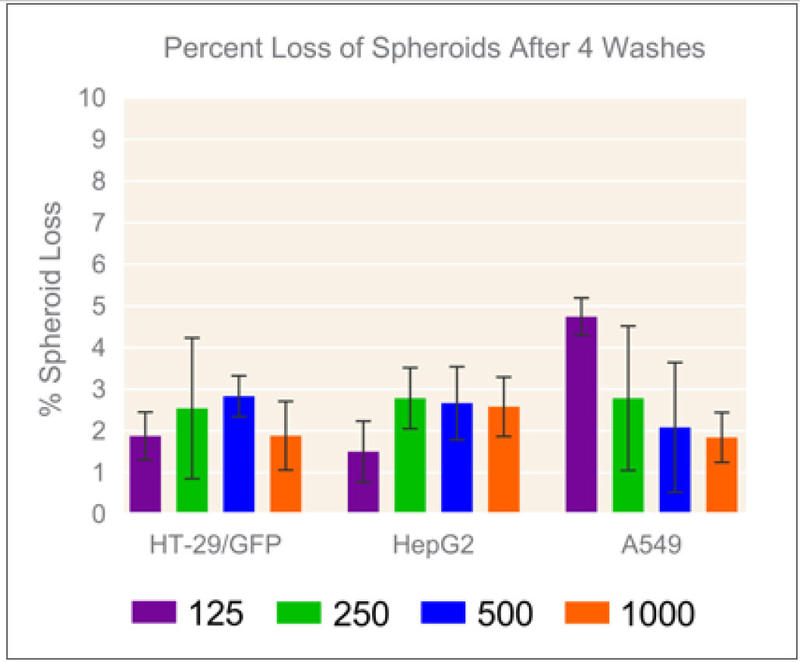
The experimental results (Corning) show the ability of the VIAFLO 96/384 handheld electronic pipette to perform high quality media exchange and washing steps (Figure 3 and 4).
Tip:
- By using the 10 – 300 µl 96 channel pipetting head with the VIAFLO 96/384 throughout, cell seeding can be performed faster without needing to change the pipetting head.
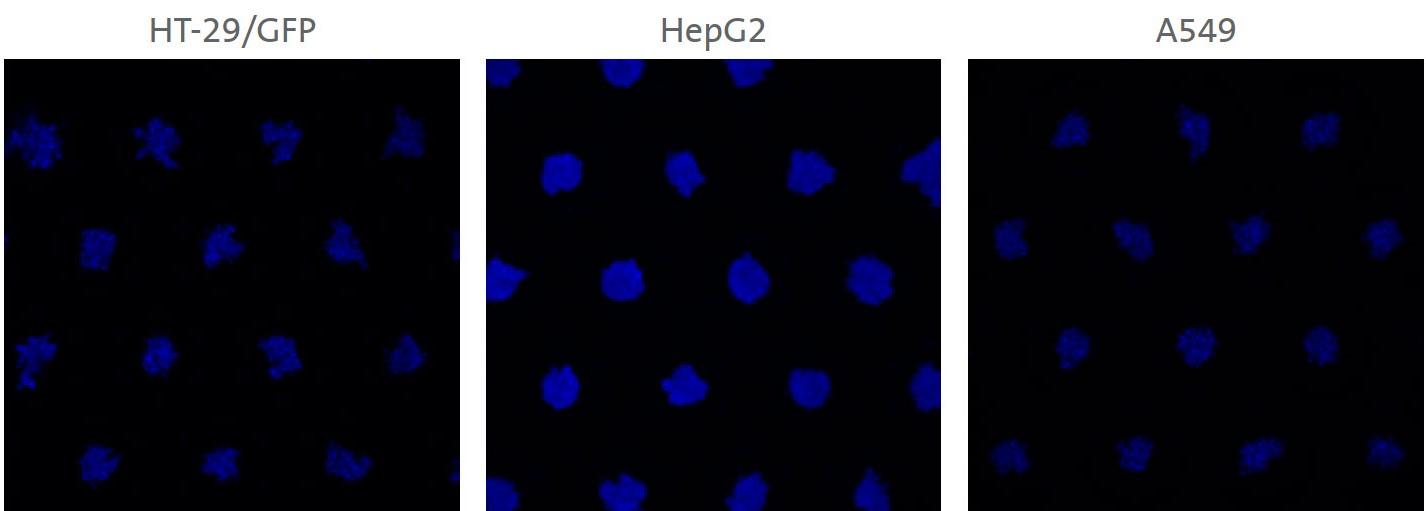
Figure 3: Three cell lines formed consistent, single spheroids in each microcavity of a 96 well Corning Elplasia plate. Representative images of nuclei-stained HT-29/GFP, HepG2, and A549 cells seeded at 500 cells per microcavity in a 96 well Corning Elplasia plate. Images were taken with a CellInsight CX7 confocal imager using a 4x objective with one field digitally zoomed in.
Figure 4: Four washes with the VIAFLO 96/384 handheld electronic pipette resulted in less than 5 % spheroid loss from 96 well Corning Elplasia plates. The HT-29/GFP, HepG2, and A549 cell lines were seeded at 125 to 1000 cells per microcavity and incubated overnight. A VIAFLO 96/384 was used to add Hoechst stain to each well and to perform 4 wash steps, removing all but 50 µl/well and then adding 150 µl/well of DPBS. Each plate was imaged using a CellInsight CX7 to count the number of spheroids per well before and after each wash. Data shown with standard error of the mean from three independent studies. N=24 wells.
Conclusion
Related articles
Further reading: An introduction to cell culture and its challenges
Ask our expert. Leave a comment!
Write us if you have any questions regarding the application note or one of our instruments.
有疑问?很高兴为您提供帮助!
Used instruments and accessories
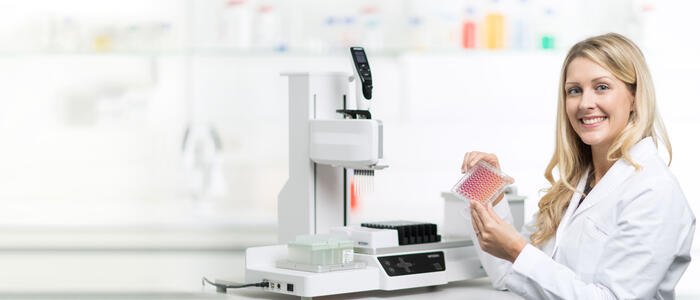
VIAFLO 96/ VIAFLO 384, Handheld Electronic Pipette
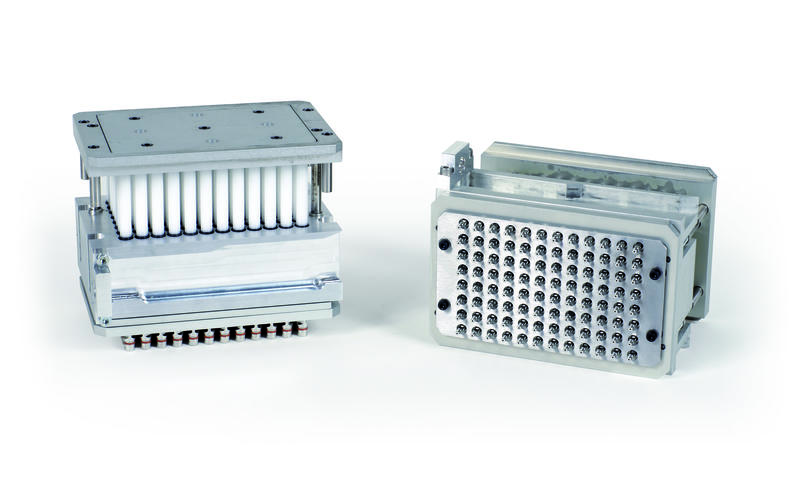
With this 24, 96 and 384 channel pipette, INTEGRA meets the need for an affordable, compact and easy to use pipette that provides increased productivity. The unique operating concept makes VIAFLO 96/384 as easy to use as any traditional handheld pipette.
Part No. 6001 / 6031
Download
Download App Note as PDF
下载3D cell culture processing with the VIAFLO 96 and VIAFLO 384 handheld electronic pipette and the Corning® Elplasia® plate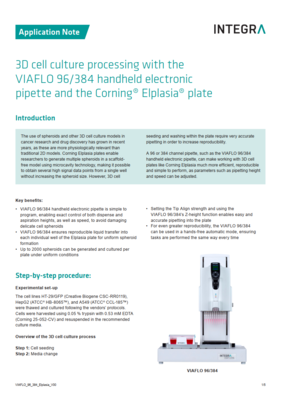
Customer’s voice
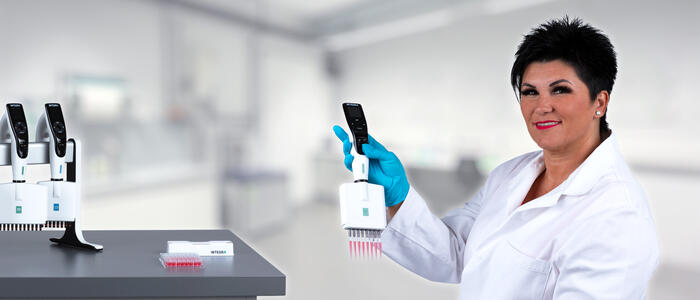
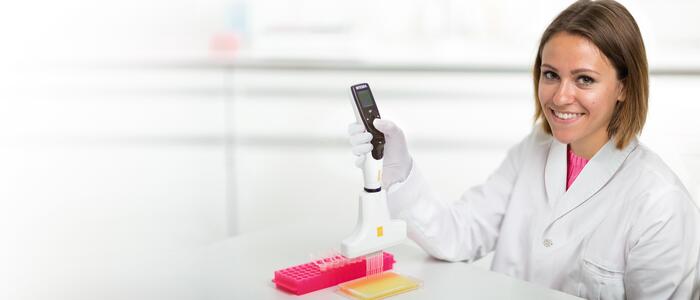
The INTEGRA VIAFLO 96/384 can be used to seed precise volumes of cells into Corning Elplasia plates to meet higher throughput demands.
应用
显示所有-
Enhanced workflow for high throughput, high density microelectrode array (HD-MEA) electrophysiology on MaxTwo 24-Well Plates
-
Automating media exchange and sample collection using Ronawk’s Bio-Blocks® In Similare technology and the ASSIST PLUS
-
Automating the Corning Matrigel® thin coating protocol for cell culture applications
-
Automation-enabled high throughput electroporation of primary cells using the ASSIST PLUS and DropGenie platform