


-
Affordable, high throughput bulk RNA barcoding and sequencing plate preparation with the VIAFLO 384
Streamline BRB-seq preparation with the VIAFLO 384
3ʹ mRNA-seq is an effective tool for measuring gene expression in an unbiased and quantitative manner. However, existing technologies are too laborious and expensive to be applied to large scale projects with numerous samples. Alithea Genomics has developed a novel, proprietary technology called bulk RNA barcoding and sequencing (BRB-seq), which enables the streamlined preparation of 3ʹ mRNA-seq libraries for hundreds of RNA samples in a single tube. The cornerstone of this technology is the use of BRB-seq oligos, which are synthetic DNA oligonucleotides.
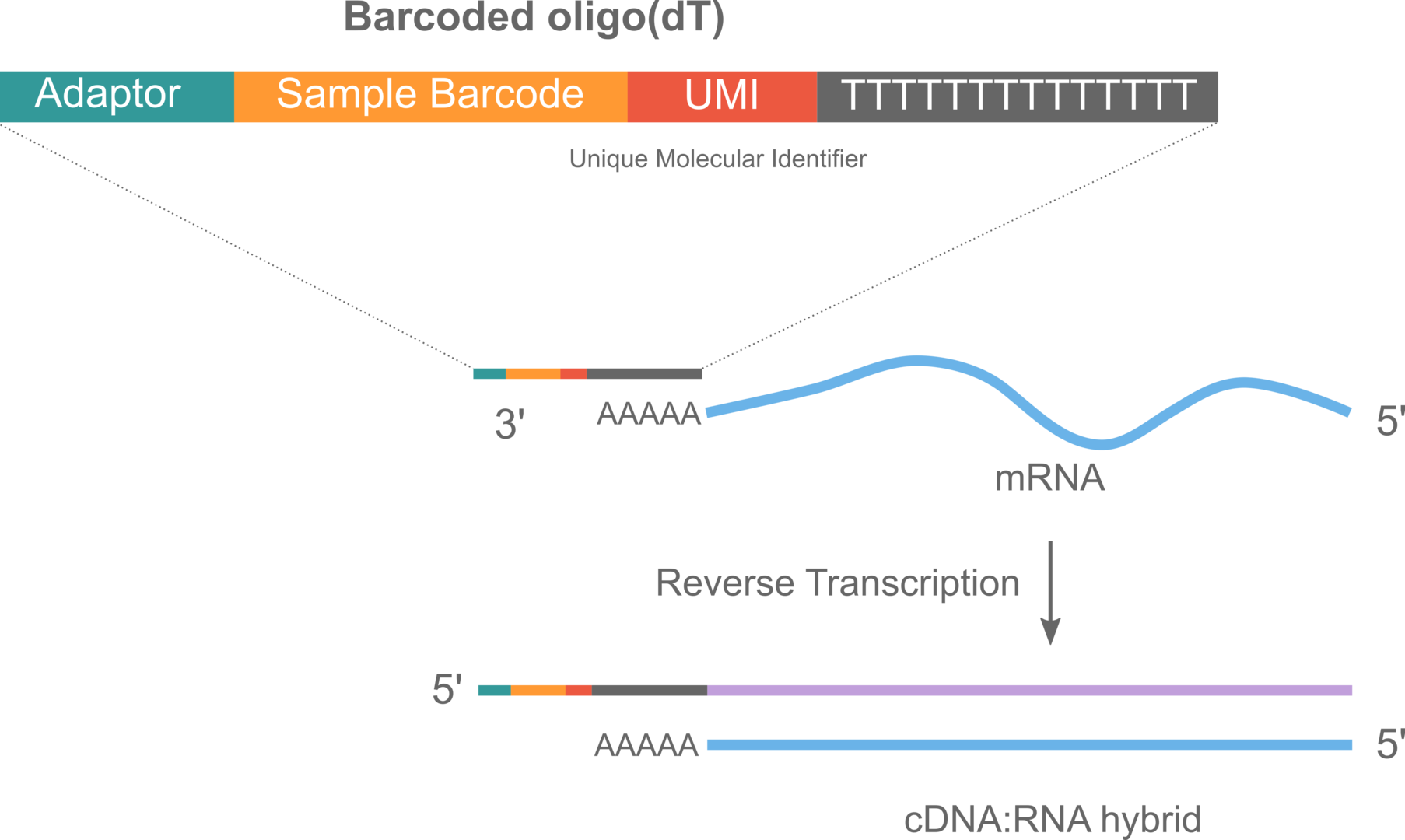
BRB-seq oligos prime the reverse transcription (RT) reaction, during which the unique molecular identifier (UMI) and the sample-specific barcode are integrated into the synthesized complementary DNA (cDNA) strand. The use of BRB-seq oligos enables the molecular ‘tagging’ of individual RNA samples. After this initial tagging step, all samples (up to 384) can be pooled and processed simultaneously in a single tube for the rest of the workflow.
Alithea Genomics provides kits that contain all the reagents necessary to perform BRB-seq on different sample types, including purified RNA, whole-blood RNA, and cell/organoid lysates.
The combination of the BRB-seq kits with the VIAFLO 96 and VIAFLO 384 systems provides a convenient, efficient and reliable workflow for massively multiplexed RNA-seq experiments.
-
Table of contents
3ʹ mRNA-seq is an effective tool for measuring gene expression in an unbiased and quantitative manner. However, existing technologies are too laborious and expensive to be applied to large scale projects with numerous samples. Alithea Genomics has developed a novel, proprietary technology called bulk RNA barcoding and sequencing (BRB-seq), which enables the streamlined preparation of 3ʹ mRNA-seq libraries for hundreds of RNA samples in a single tube. The cornerstone of this technology is the use of BRB-seq oligos, which are synthetic DNA oligonucleotides.
BRB-seq oligos prime the reverse transcription (RT) reaction, during which the unique molecular identifier (UMI) and the sample-specific barcode are integrated into the synthesized complementary DNA (cDNA) strand. The use of BRB-seq oligos enables the molecular ‘tagging’ of individual RNA samples. After this initial tagging step, all samples (up to 384) can be pooled and processed simultaneously in a single tube for the rest of the workflow.
Alithea Genomics provides kits that contain all the reagents necessary to perform BRB-seq on different sample types, including purified RNA, whole-blood RNA, and cell/organoid lysates.
The combination of the BRB-seq kits with the VIAFLO 96 and VIAFLO 384 systems provides a convenient, efficient and reliable workflow for massively multiplexed RNA-seq experiments.
Key benefits
Downloads: App note and protocol for the affordable, high throughput bulk RNA barcoding and sequencing plate preparation with the VIAFLO 96 or VIAFLO 384
Here you can download the complete protocol used in this application and use them on your VIAFLO 96 or VIAFLO 384. The protocol can be customized with the VIALINK software.
Overview: How to prepare samples for BRB-seq
Early-stage multiplexing is possible because of the highly optimized sets of barcoded primers (BRB-seq oligos), which are added during the RT reaction (Figure 1).
Step-by-step procedure:
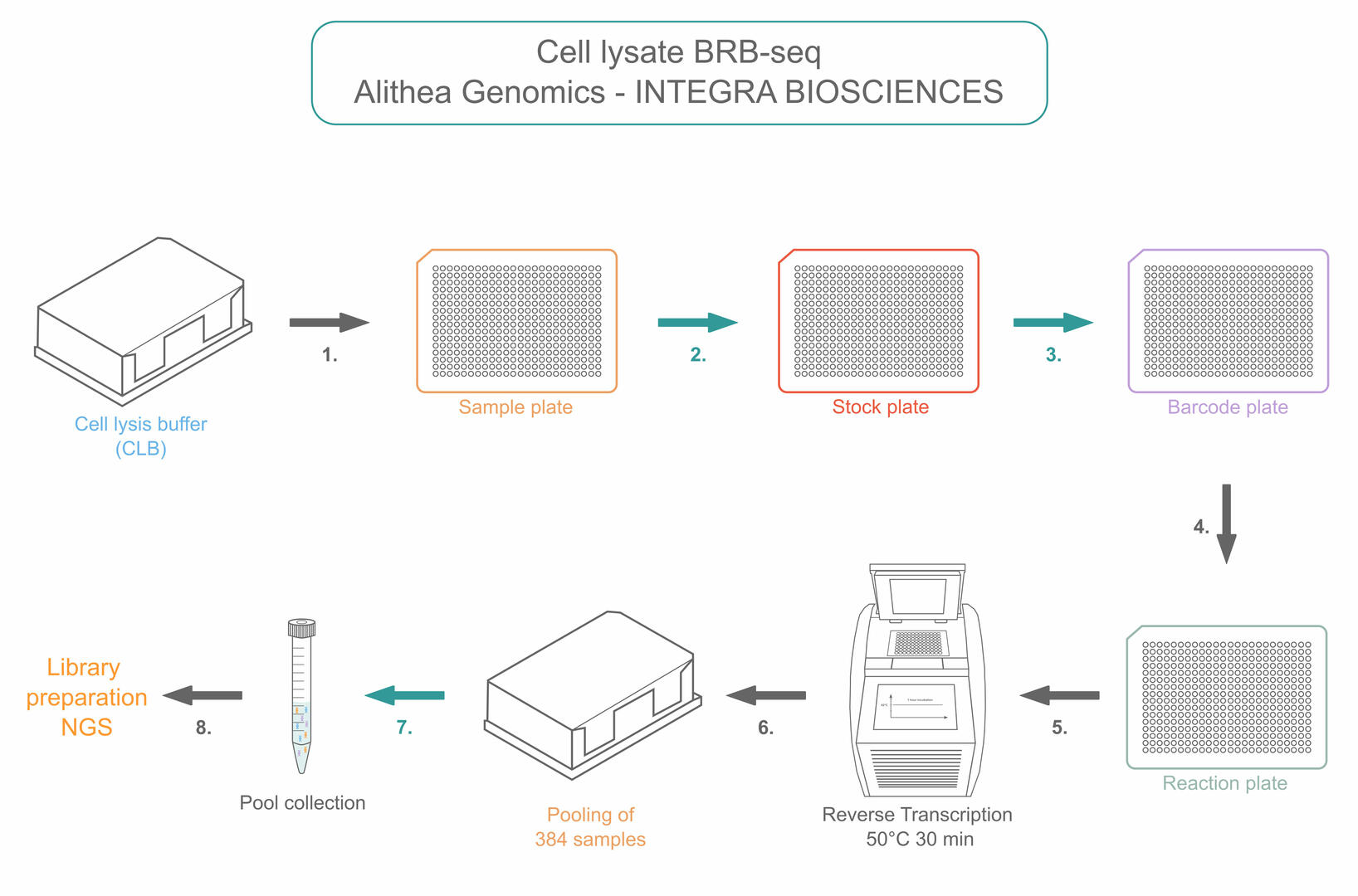
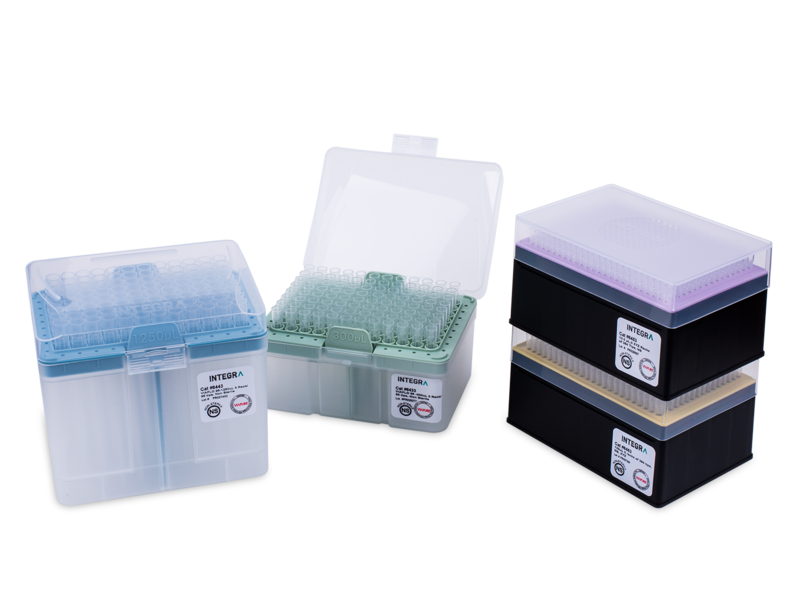
Either the VIAFLO 96 or VIAFLO 384 can be used for the main pipetting steps during sample preparation for BRB-seq. The instruments are equipped with a 96 or 384 channel pipetting head (0.5-12.5 µl) and a three position stage (with positions A, A/B, and B). 12.5 µl Sterile, Filter GRIPTIPS are used. Pre-washed cells (in a 96 well or 384 well Sample plate) are lysed with 10 or 5 µl cell lysis buffer (respectively). Customized VIALINK programs are provided for the cell lysate transfers and pooling steps (Figure 2, steps 2, 3 and 7) in 384 well plates. The custom VIALINK programs for 96 well plates are available in the download section.
Overview of the programs:
- Program 1: Transfer the cell lysates to the Stock plate – Cell lysate transfer
- Program 2: Transfer the cell lysates to the Barcode plate – Barcoding
- Program 3: Pooling of samples after RT reaction – Pooling
1. Cell lysate transfer
Transfer of cell lysates to the Stock plate.
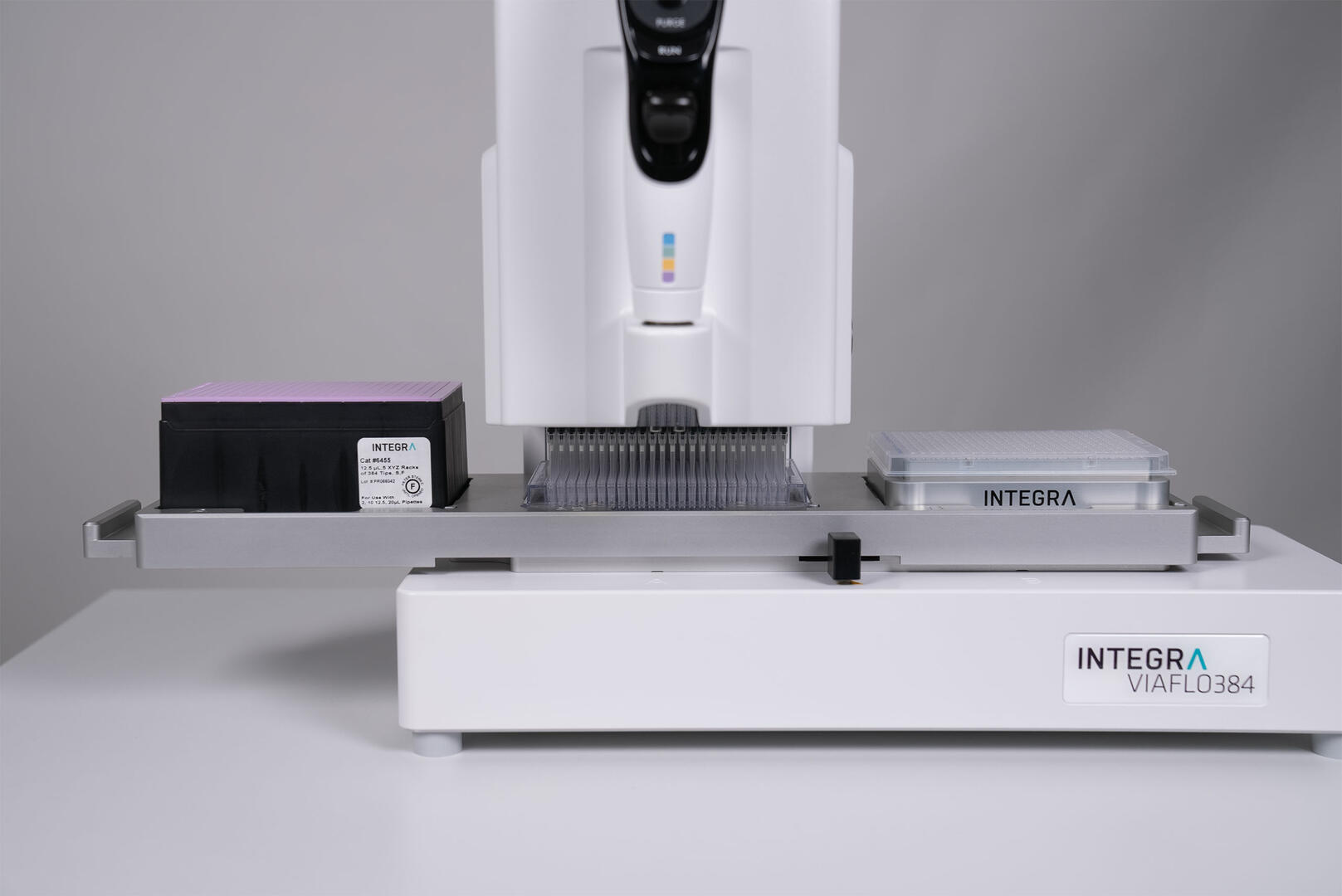
Load a full box of 12.5 µl Sterile, filter GRIPTIPS onto the VIAFLO 384. Slide the three position stage to the left so that it is in the second position (A/B-B). Launch the custom program '384 LYS STORAGE'. A prompt on the pipette screen informs the user that the Sample plate (384 well cell culture plate, Corning) should be placed on position A/B, and the Stock plate – a new 384 well PCR plate (Eppendorf) placed on 384 well cooling block – on position B (Figure 3). The pipetting head should then be lowered and the pipette tips should be placed into the individual wells of the Sample plate. The pipette aspirates 7 µl of cell lysate from the wells of the Sample plate and dispenses it to the wells of the Stock plate. When the dispense step is finished, if more samples are to be transferred, the pipette will notify the user that the pipette tips need to be changed and the program restarted. Alternatively, if there are no further samples to transfer, the pipette will notify the user that the program is finished. The Stock plate can then be kept at -80 °C for later analysis or used immediately for continuation of the workflow.
Tips:
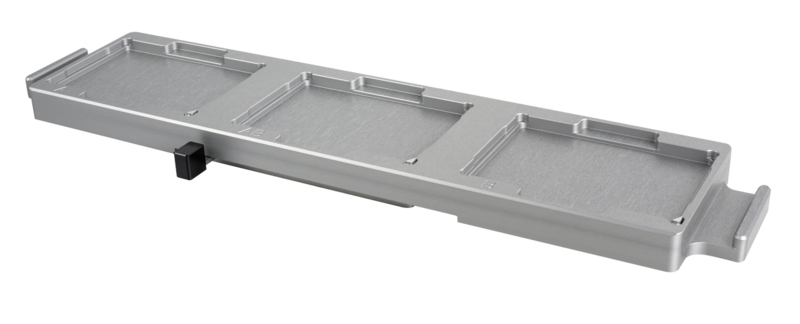
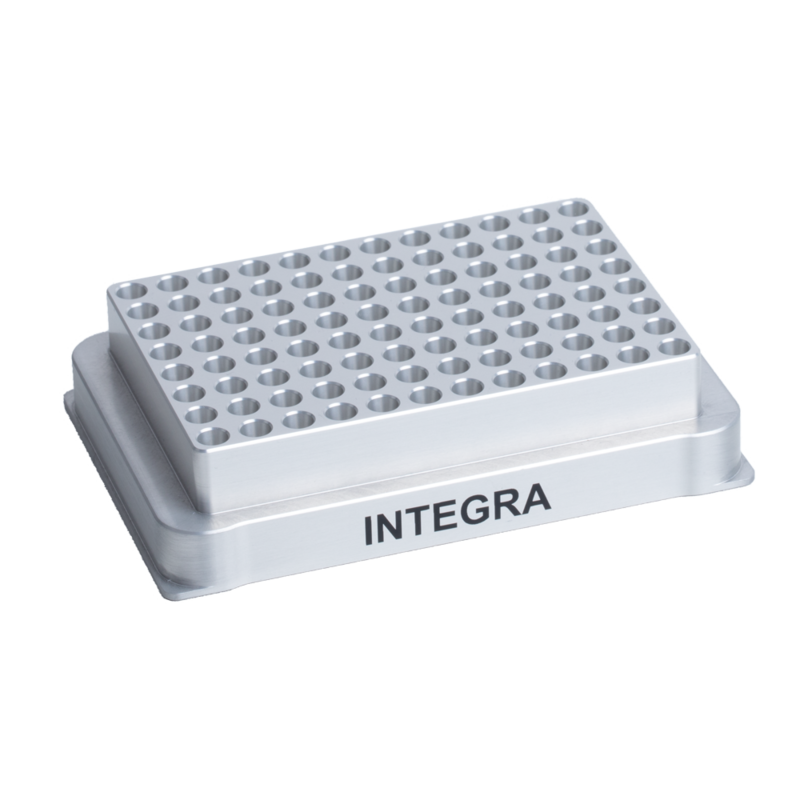
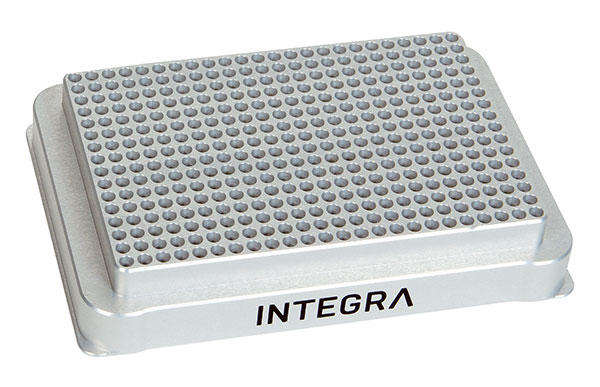
- The aluminum 384 (or 96) well PCR cooling block keeps the samples or reagents chilled.
- The Z-heights are defined in the programs to ensure optimal tip immersion depth.
2. Barcoding
Transfer of cell lysates to the Barcode plate.
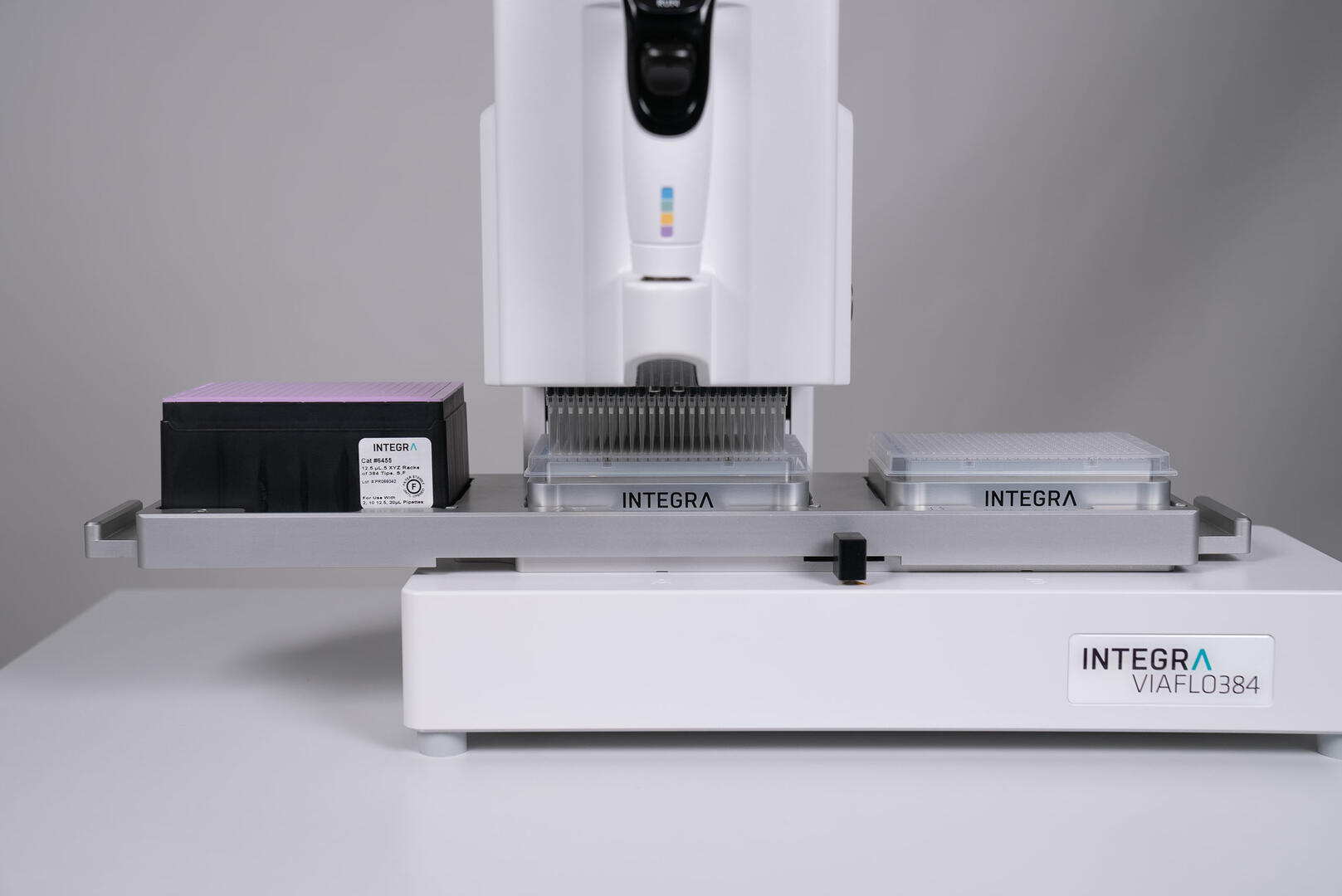
Load a full box of new 12.5 µl Sterile, Filter GRIPTIPS onto the VIAFLO 384. Move the three position stage to the second position (A/B-B). Select the custom program ‘384_LYS_OLIGOS’. The instrument will display the prompt that the Stock plate (on a 384 well cooling block) needs to be placed on position A, and the Barcode plate (on a 384 well cooling block) on position B. The pipetting head with the tips should then be lowered into the individual wells of the Stock plate (Figure 4). The VIAFLO 384 aspirates 5 µl of the cell lysate from each well of the Stock plate, and dispenses it to the Barcode plate that contains the optimized barcoded oligos. After the dispense step, if new cell lysates are to be transferred to new Barcode plates, the pipette informs the user that the pipette tips need to be changed. Alternatively, if there are no further samples to transfer, the pipette informs the user that the program is finished.
After adding the cell lysate to the barcodes, 10 µl of RT mix should be added manually with a 16 channel (12 channel in the case of 96 well plate) VIALFO pipette from PCR strip tubes (Starlab). The Reaction plate containing the cell lysates, the barcodes, and the RT mix needs to be transferred to a thermal cycler and incubated at 50 °C for 30 min.
3. Pooling
Pooling of samples after RT reaction.
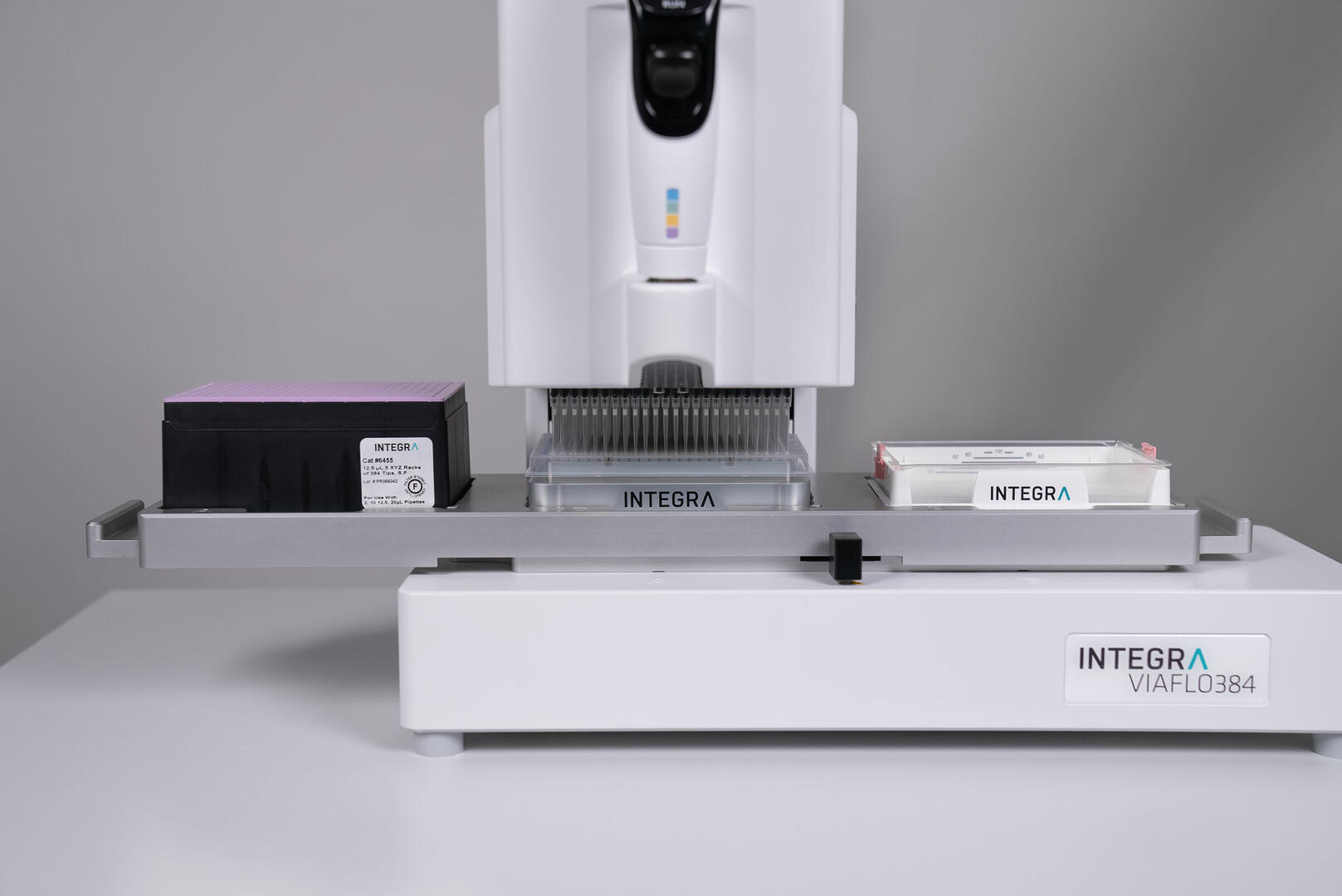
After incubation, the barcoded cDNA samples can be pooled together. Load a full box of new 12.5 µl Sterile, Filter GRIPTIPS, slide the three position stage to the second position (A/B-B), and start the custom program '384 POOLING'. The pipette tells the user to place the Reaction plate (on the cooling block) on position A, an INTEGRA 150 ml automation-friendly reservoir on position B, and to lower the pipetting head with the tips into individual wells of the reaction plate (Figure 5). The pipette then aspirates 10 µl solution from each well, and dispenses it to the reservoir.
4. Collecting the pool
Transferring the pool to a vessel.
The pool can be transferred to a 15 ml centrifuge tube (Greiner Bio-one) for further precleaning. This process can be easily executed with INTEGRA's PIPETBOY acu 2. The pool is ready for subsequent library preparation and next generation sequencing.
5. Results
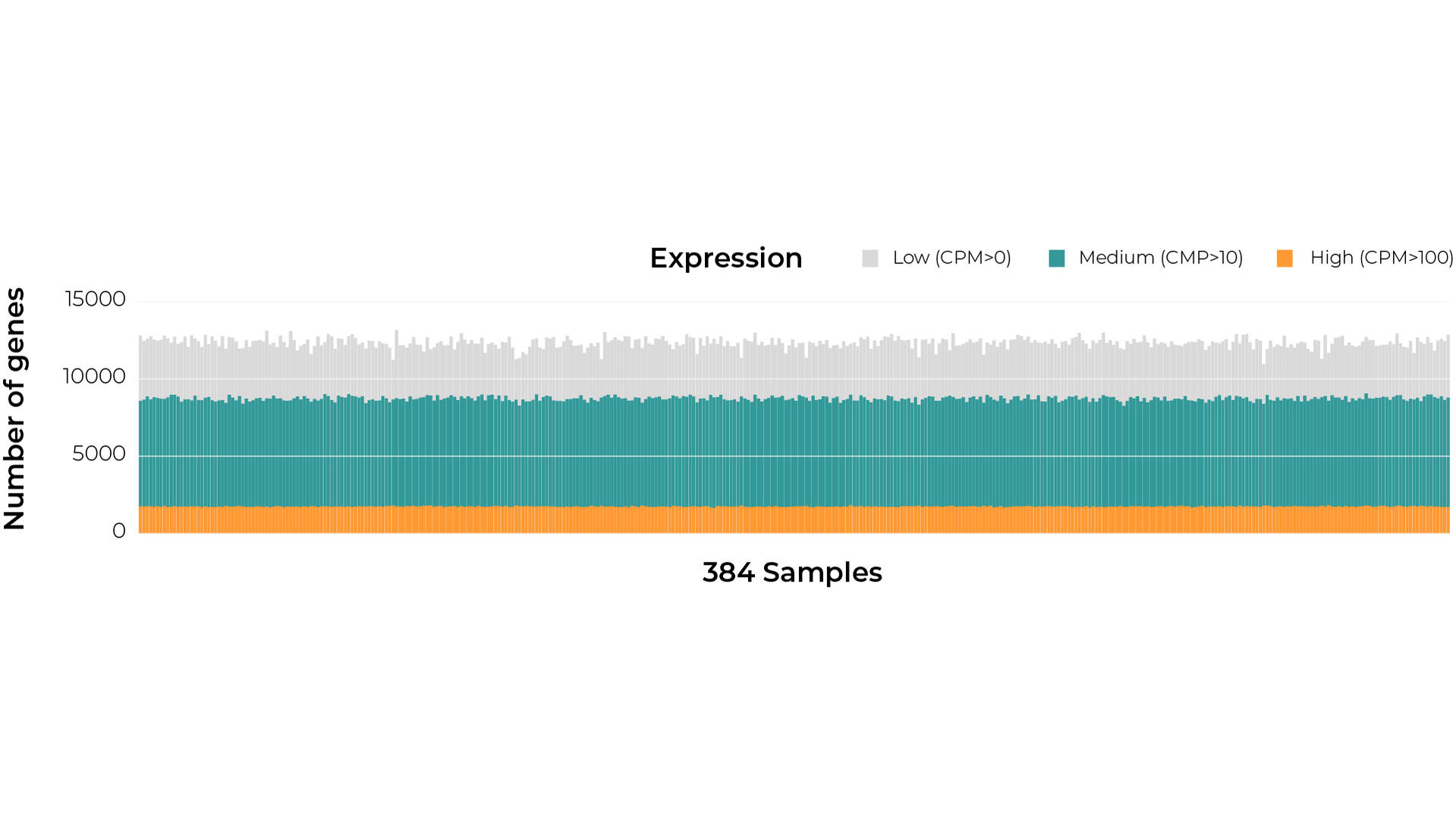
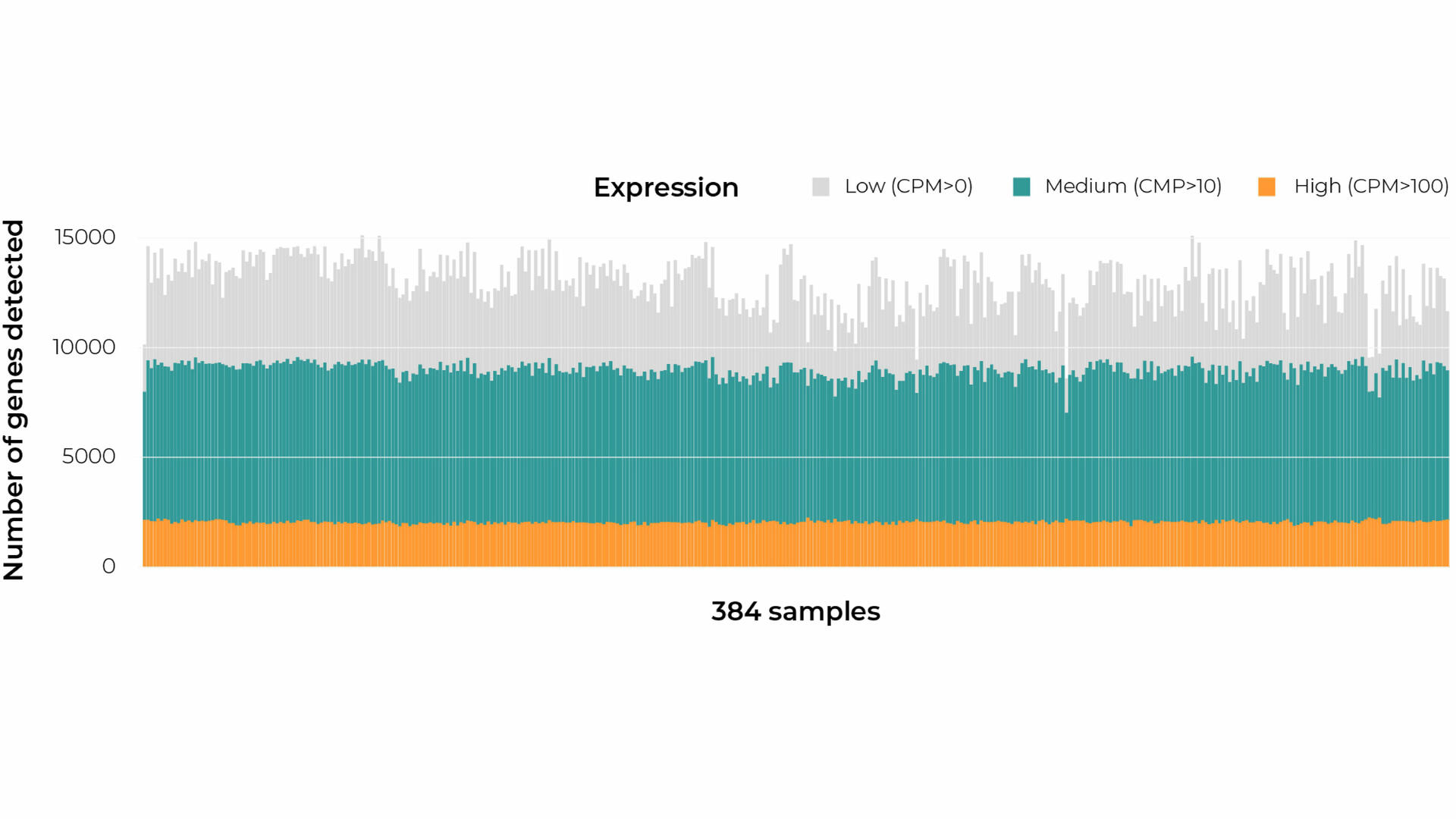
Sample results obtained using either the BRB-seqTM kit, or the Cell lysate BRB-seqTM kit, and the VIAFLO 384 channel handheld electronic pipettes are shown below.
Conclusion
Related articles
Further reading:
Ask our expert. Leave a comment!
Write us if you have any questions regarding the application note or one of our instruments.
Any questions? I'm happy to help!
Instruments and accessories
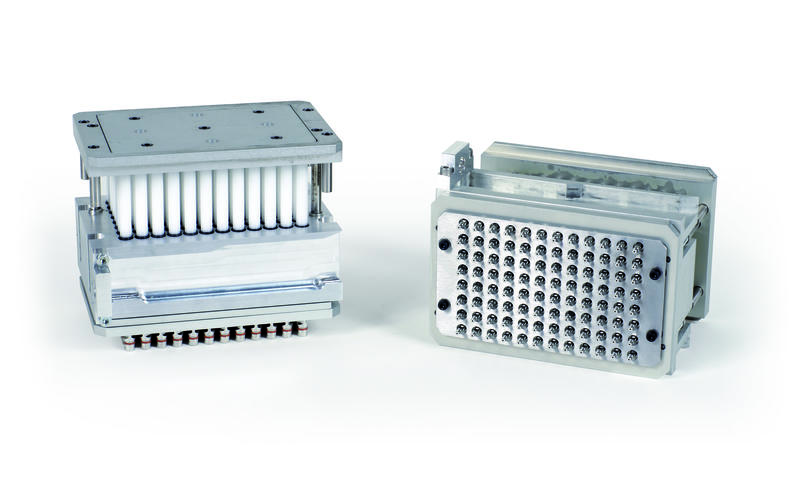
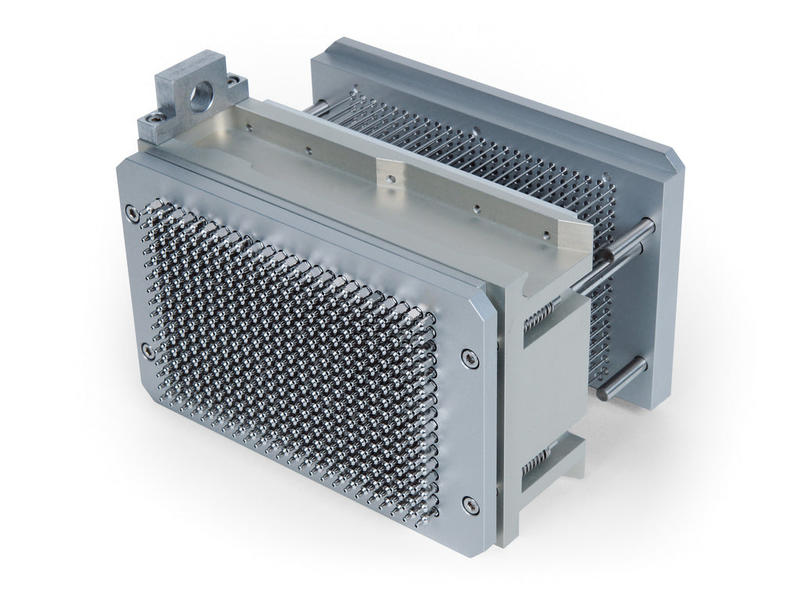
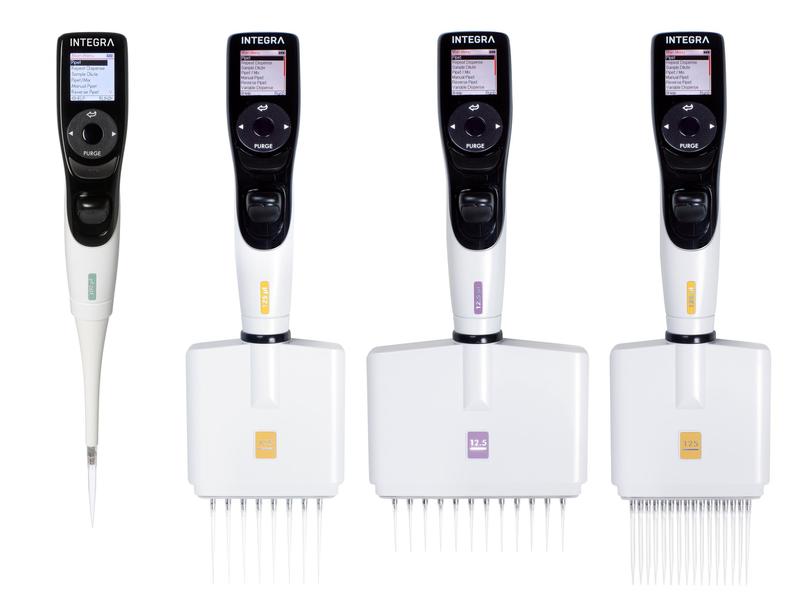
VIAFLO 96/ VIAFLO 384, Handheld Electronic Pipette
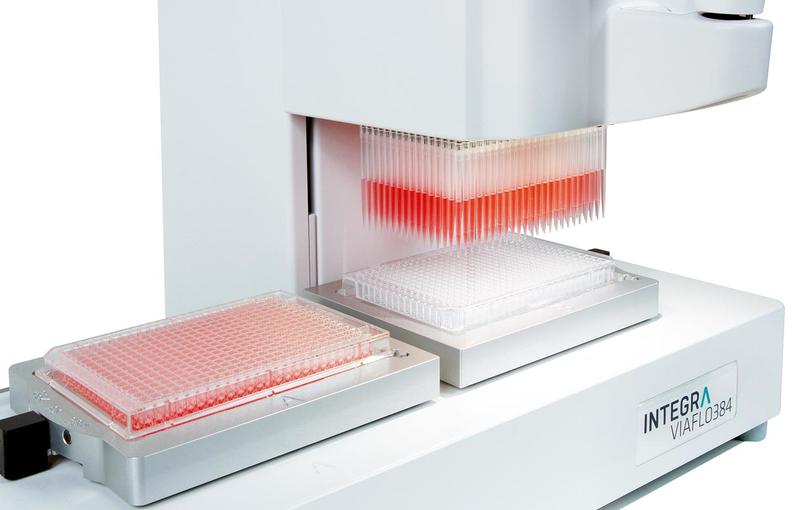
With this 24, 96 and 384 channel pipette, INTEGRA meets the need for an affordable, compact and easy to use pipette that provides increased productivity. The unique operating concept makes VIAFLO 96/384 as easy to use as any traditional handheld pipette.
Part No. 6001 / 6031
Download
Download App Note as PDF
DownloadAffordable, high throughput bulk RNA barcoding and sequencing plate preparation with the VIAFLO 384
Customer’s voice
Great Little Robot
"I love the ability to use it hand free, as a robot as well as being able to use it as a manual pipette. The small footprint allows us to easily move it around the lab and place it in our biological safety hoods as needed."
Related products


Applications
Show all-
Cost-efficient miniaturization of 16S metagenomic library preparation
-
End-to-end Twist library preparation protocol for NGS workflow automation
-
Streamlining single-cell sequencing with the Flex Apex workflow using automated liquid handling solutions
-
Optimizing DNA fragmentation and NGS library preparation with automated liquid handling
Stories
Show all-
 · Product News
How our liquid handling solutions streamline NGS workflows
-
 · Product News
Streamline your NGS workflow (Webinar)
-
 · Customer Testimonial
Exploring the human microbiome with automated NGS library prep
-
 · Customer Testimonial
Revolutionizing NGS library preparation with automated liquid handling integration