


-
Automated ultrapure plasmid DNA preparation with the ZymoPURE™ 96 Plasmid Miniprep Kit
Transfection-grade plasmid purification on the ASSIST PLUS pipetting robot
Automated plasmid purification is a revolutionary technique that streamlines the isolation of transfection-grade plasmid DNA from bacterial cultures. It combines automated liquid handling with advanced purification methods to eliminate labor-intensive manual steps, reduce human errors and increase throughput. Traditionally, obtaining plasmid DNA pure enough for mammalian cell transfection was a major bottleneck due to slow gravity-flow columns, laborious precipitation steps and multiple rounds of culturing and verification, making the process poorly suited for high throughput workflows. Automation has transformed the field of molecular biology, allowing researchers to efficiently obtain large quantities of high quality plasmid DNA for various applications, such as cloning, gene expression studies and genetic engineering.
The ZymoPURE 96 Plasmid Miniprep Kit, developed by Zymo Research, uses a modified alkaline lysis method and novel high binding chemistry to streamline the purification of plasmids, resulting in up to 100 µg of ultrapure transfection-grade plasmid DNA. This process can be automated using a VIAFLO electronic pipette on an ASSIST PLUS pipetting robot equipped with an EZ-Vac 96 vacuum manifold, eliminating user errors and drastically reducing tedious liquid handling steps for high throughput applications. In this application note, we show the high binding capacity and ability to obtain ultrapure high yielding plasmid DNA when using the ZymoPURE 96 Plasmid Miniprep Kit on the automated ASSIST PLUS.
-
Table of contents
Automated plasmid purification is a revolutionary technique that streamlines the isolation of transfection-grade plasmid DNA from bacterial cultures. It combines automated liquid handling with advanced purification methods to eliminate labor-intensive manual steps, reduce human errors and increase throughput. Traditionally, obtaining plasmid DNA pure enough for mammalian cell transfection was a major bottleneck due to slow gravity-flow columns, laborious precipitation steps and multiple rounds of culturing and verification, making the process poorly suited for high throughput workflows. Automation has transformed the field of molecular biology, allowing researchers to efficiently obtain large quantities of high quality plasmid DNA for various applications, such as cloning, gene expression studies and genetic engineering.
The ZymoPURE 96 Plasmid Miniprep Kit, developed by Zymo Research, uses a modified alkaline lysis method and novel high binding chemistry to streamline the purification of plasmids, resulting in up to 100 µg of ultrapure transfection-grade plasmid DNA. This process can be automated using a VIAFLO electronic pipette on an ASSIST PLUS pipetting robot equipped with an EZ-Vac 96 vacuum manifold, eliminating user errors and drastically reducing tedious liquid handling steps for high throughput applications. In this application note, we show the high binding capacity and ability to obtain ultrapure high yielding plasmid DNA when using the ZymoPURE 96 Plasmid Miniprep Kit on the automated ASSIST PLUS.
Key benefits
Overview: How to automate plasmid miniprep on the ASSIST PLUS with the ZymoPURE 96 kit
This application note describes a protocol of plasmid purification of up to 5 ml of overnight E. coli JM109 (pGL3®) culture using the automated miniprep protocol on the ASSIST PLUS pipetting robot with the ZymoPURE 96 Plasmid Miniprep Kit and the EZ-Vac 96 vacuum manifold.
Downloads: App note and protocols for automated ultrapure plasmid DNA preparation with the ZymoPURE™ 96 Plasmid Miniprep Kit
Experimental set-up
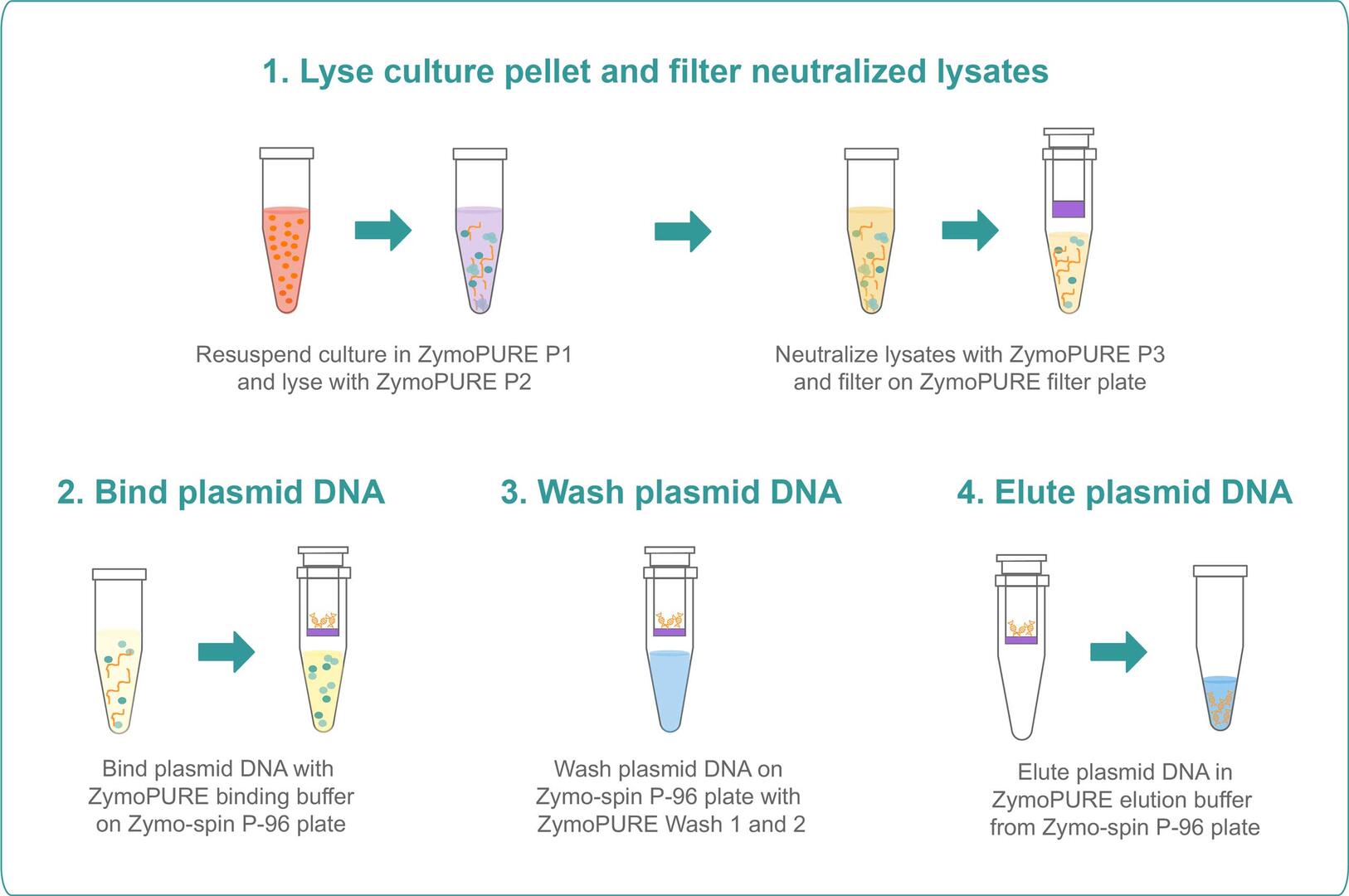
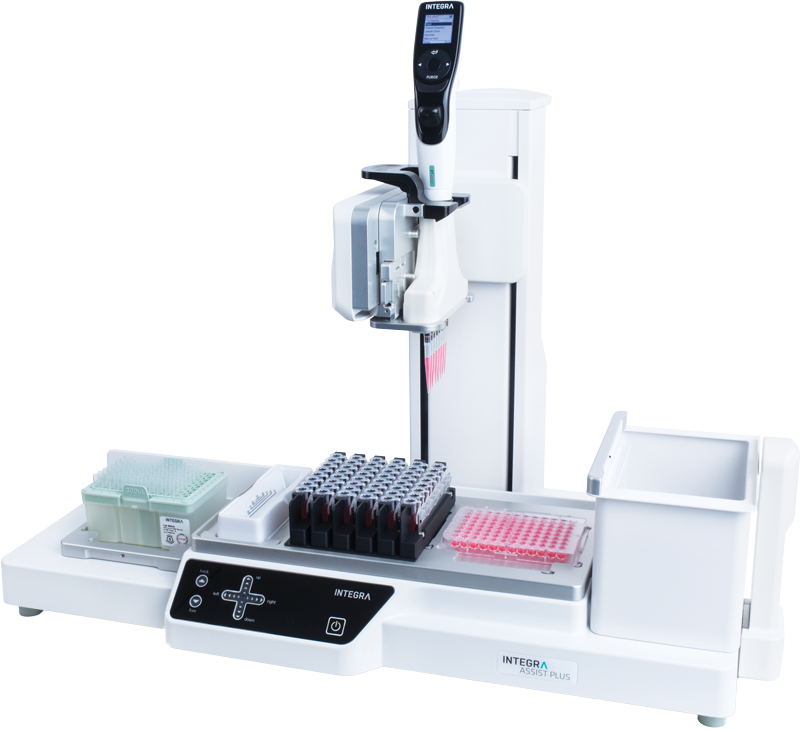
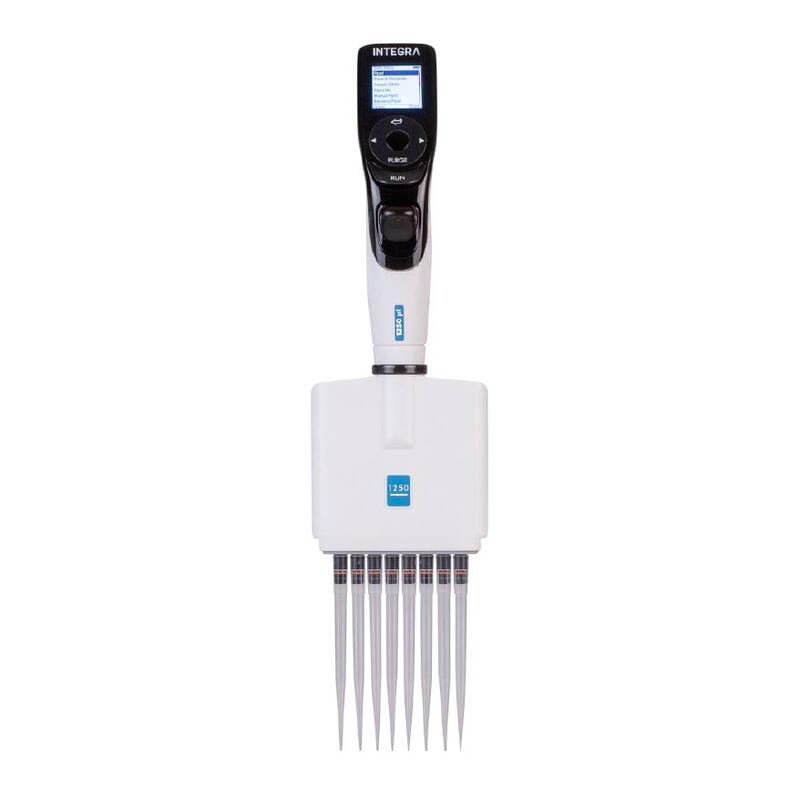
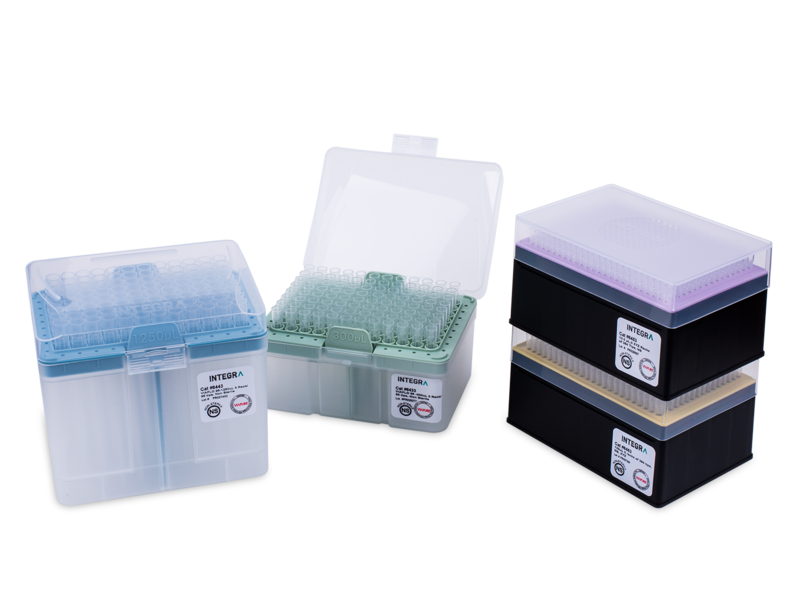
The ASSIST PLUS, together with the 8 channel 1,250 µl VIAFLO electronic pipette and 1,250 µl sterile, filter GRIPTIPS® pipette tips, automates all liquid handling steps in one program consisting of the following steps (Figure 1):
- Lyse culture pellet and filter neutralized lysates
- Bind plasmid DNA
- Wash plasmid DNA
- Elute plasmids DNA
Step-by-step procedure
Lyse culture pellets and filter neutralized lysates
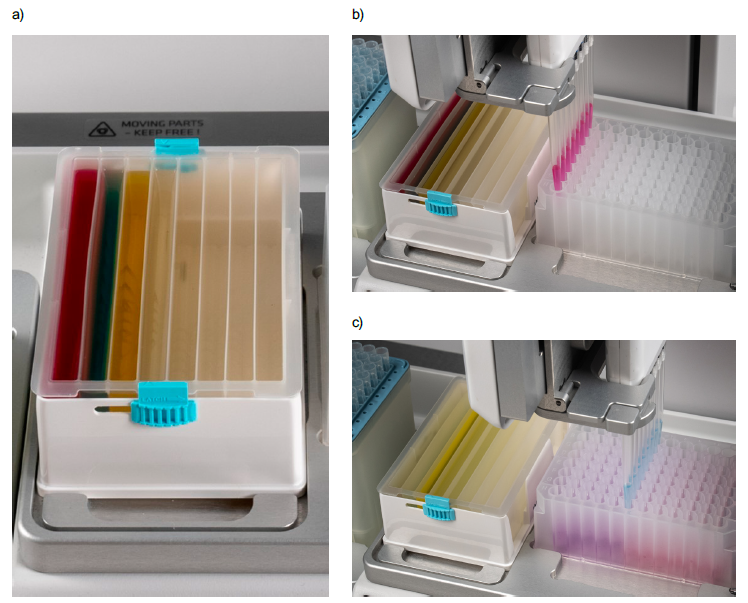
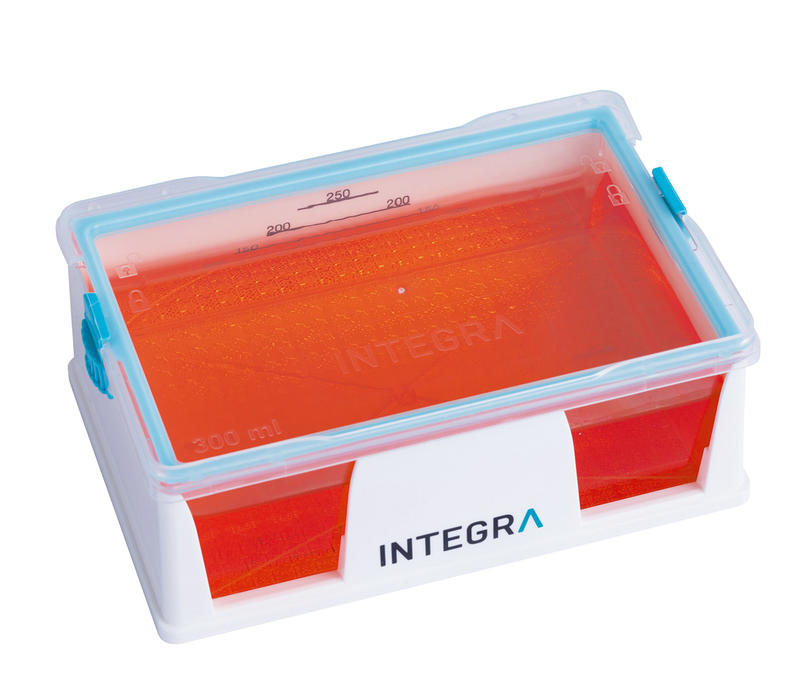
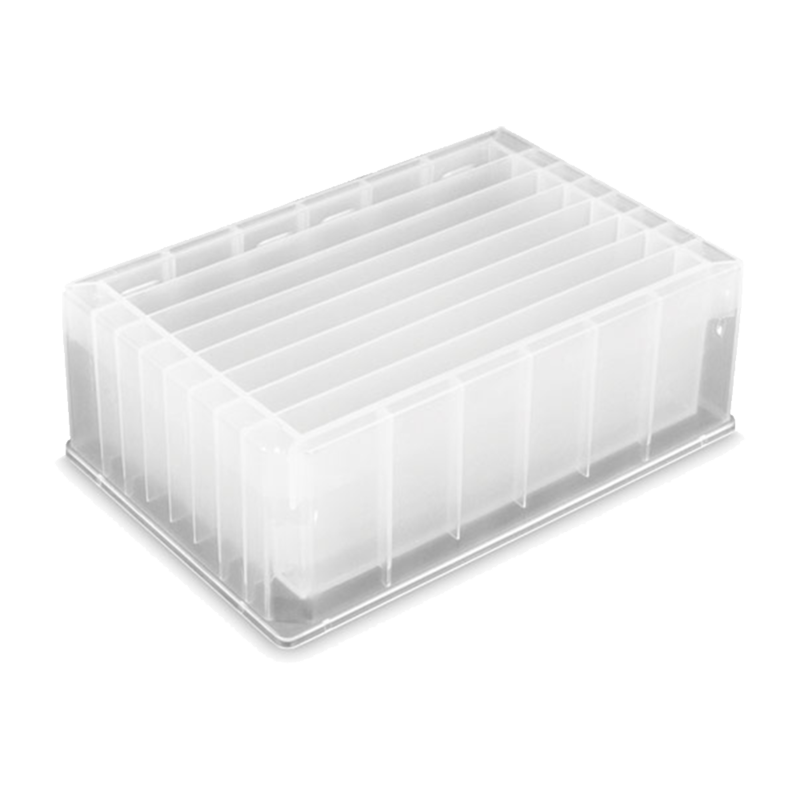
Place an automation-friendly 8 row reservoir insert and base in portrait orientation on position A (Figure 2). Fill the whole bottle volume (at least 28 ml) of ZymoPURE P1 in column 1 (Figure 2, red), ZymoPURE P2 in column 2 (Figure 2, light blue), ZymoPURE P3 in column 3 (Figure 2, yellow) and ZymoPURE binding buffer in column 4 (Figure 2, light green). Place the deep well plate (DWP) containing E. coli pellets in each well in landscape orientation on position B (Figure 2, orange).
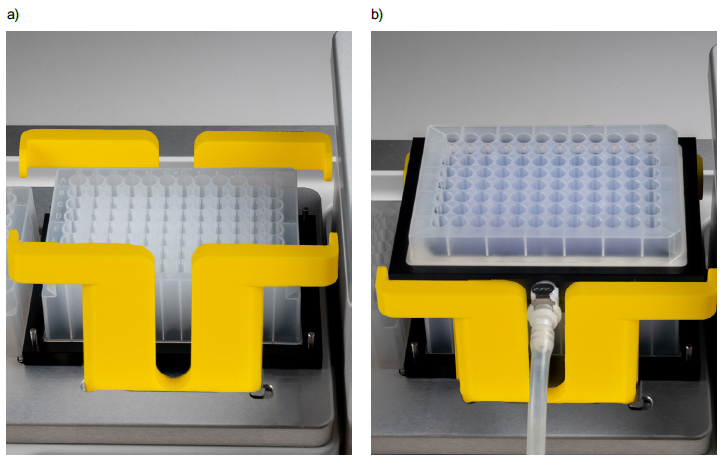
The EZ-Vac 96 vacuum manifold can be assembled with the provided labware from the ZymoPURE 96 Plasmid Miniprep Kit in 3 different ways:
- EZ-Vac 96 set-up A (Figure 3)
- EZ-Vac 96 set-up B (Figure 6)
- EZ-Vac 96 set-up C (Figure 3)
First, assemble the EZ-Vac 96 set-up A, as shown in Figure 3a. Put the manifold bed with the DWP in position C (Figure 3a) with the manifold collar that accommodates the ZymoPURE filter plate on top (Figure 3b). Connect the tubing to the vacuum pump.
Tips:
- Samples can be transferred between different labware formats. With the MINI 96 or VIAFLO 96 electronic pipettes, the E. coli culture can be transferred from an automation-friendly reservoir to the DWP in one step.
- Media transfer and inoculation can be sped up with the MINI 96 or VIAFLO 96.

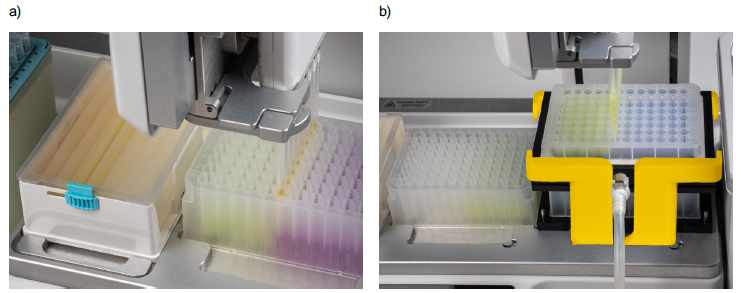
Select and run the VIALAB program 'ZymoPURE_plasmid_isolation_below_3ml' for culture inputs under 3 ml or 'ZymoPURE_plasmid_isolation_above_3ml' for 3-5 ml culture inputs (max. 5 ml). The VIAFLO on the ASSIST PLUS transfers 250 µl ZymoPURE P1 (Figure 2, red) from column 1 of the reservoir on position A (Figure 4a) to the DWP on position B (Figure 4b). All E. coli pellets are mixed 50 times at speed 10 to ensure homogeneity of different input volumes, and the VIAFLO will automatically change GRIPTIPS between columns. Afterwards, the VIAFLO will transfer 250 µl ZymoPURE P2 (Figure 2, blue) from the second column of the 8 row reservoir (Figure 4a) to the DWP on position B (Figure 4c). The red E. coli suspension with ZymoPURE P1 is mixed 10 times with ZymoPURE P2 at speed 8, until the liquid turns clear purple. The lysis is stopped with the transfer of 250 µl of ZymoPURE P3 (Figure 2, yellow) from the third column of the reservoir on position A (Figure 4a) to the DWP on position B (Figure 5a). Every well is mixed 13 times at speed 3 until the mixture becomes yellowish to ensure proper neutralization. The lysates, including the precipitates, are transferred from the DWP on position B to the ZymoPURE filter plate on position C (Figure 5b) by the VIAFLO, followed by a 5 minute incubation. The pipette instructs the operator to turn on the vacuum for 5 minutes to collect the cleared lysates.
Tip:
- The mixing cycles are increased to 13 and the mixing speed is reduced to 2 at the neutralization step with the program 'ZymoPURE_plasmid_isolation_above_3ml' to help complete neutralization.
Bind plasmid DNA
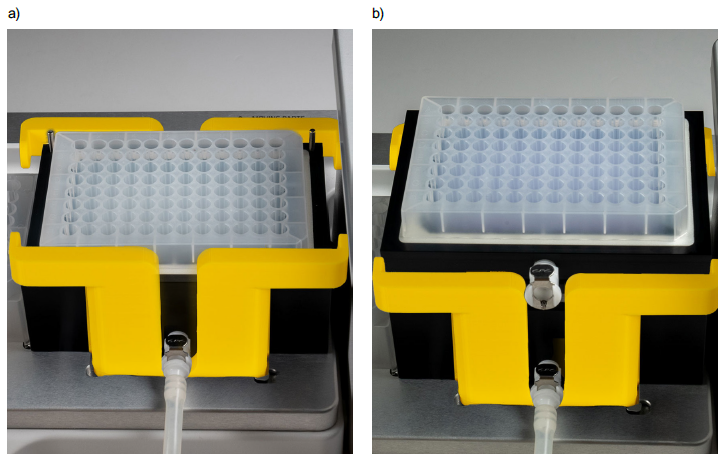
The operator is instructed to disassemble the EZ-Vac 96 set-up A (Figure 3b) and replace the empty DWP from position B with the DWP containing the cleared lysates. Discard the ZymoPURE filter plate and keep the 8 row reagent reservoir on position A (Figure 4a). Assemble EZ-Vac 96 set-up B by placing the manifold base, including the wash plate, on position B (Figure 6a), with the manifold collar and Zymo-Spin P-96 plate on top (Figure 6b). Connect the tubing to a collection flask.
Confirm and continue the run. The VIAFLO will transfer 220 µl of ZymoPURE binding buffer from the 4th column of the reagent reservoir on position A (Figure 2, light green) into every well of the DWP on position B, mixing each cleared lysate 10 times. The mixture is then transferred to the Zymo-Spin P-96 plate at position C. After incubating the lysates for 2 minutes, the pipette instructs the operator to turn on the vacuum and wait until all liquid has passed through.
Tip:
- The volume of the ZymoPURE binding buffer is reduced to 165 µl when using the VIALAB program ZymoPURE_plasmid_isolation_above_3ml to accommodate the reduced volume of cleared lysate.
Wash plasmid DNA
The VIAFLO instructs the operator to load another automation-friendly 8 row reagent reservoir with 27 ml of ZymoPURE wash 1 in columns 1 to 3 (Figure 7, lilac), 27 ml of ZymoPURE wash 2 in columns 4 to 6 (Figure 7, blue), 21 ml of ZymoPURE wash 2 in column 7 (Figure 7, blue) and 14 ml of ZymoPURE elution buffer in column 8 (Figure 7, green) on position A. Remove the empty DWP from position B. 800 µl of ZymoPURE wash 1 (Figure 7, lilac) is added to every column of the Zymo-Spin P-96 plate on position C (Figure 7). Once all ZymoPURE wash 1 is transferred, a prompt message instructs the operator to turn on the vacuum pump and wait until all the liquid has gone. After turning off the vacuum pump, the VIAFLO will follow the same procedure for the second wash step using 800 µl of ZymoPURE wash 2 from columns 4 to 6 of the reagent reservoir on position A (Figure 7, blue). Again, the operator is instructed to turn on the vacuum until all the liquid has gone, then the VIAFLO will continue with another wash step by transferring 200 µl of ZymoPURE wash 2 from column 7 of the reagent reservoir (Figure 7, blue) to every well on position C. The pipette instructs the operator to apply the maximum vacuum force (>600 mm Hg) for 10 minutes to dry the membrane. Disassemble the EZ-Vac 96 set-up B and blot the nozzles of the Zymo-Spin P-96 plate with clean absorbent paper to remove any residual buffer droplets.
Tip:
- A tip touch at the target plate guarantees complete droplet removal when working with ethanol-containing buffers.

Elute plasmids DNA from Zymo-Spin P-96 plate
Assemble EZ-Vac 96 set-up C by placing the manifold bed with a fresh DWP on position C (Figure 3a). Put the manifold collar with the Zymo-Spin P-96 plate on top of the DWP (Figure 3b), connect the tubing to the vacuum pump.
After confirmation, the VIAFLO transfers 125 µl of ZymoPURE elution buffer from the last row of the reagent reservoir on position A (Figure 7, green) to every column of the Zymo-Spin P-96 plate. After 2 minutes, the pipette instructs the operator to apply maximum vacuum for 30 seconds, and informs when the run is finished. Disassemble the EZ-Vac 96 set-up C and discard the Zymo-Spin P-96 plate. Seal and store the DWP containing the isolated plasmid DNA as indicated in the kit protocol.
Experiment
We compared the automated miniprep protocol for 96 replicates of 1 ml E. coli JM109 (pGL3) culture described above to a similar manual approach. E. coli JM109 (pGL3) was cultured overnight in Luria-Bertani (LB) media containing 100 µg/ml ampicillin (as indicated in the kit protocol) on a shaker at 37 °C and 250 RPM. 1 ml of culture was transferred to the provided DWP and centrifuged as indicated in the kit protocol. Additionally, 5 ml culture input was tested by pelleting with multiple centrifugation steps, using a reduced volume of the ZymoPURE binding buffer during the automated miniprep protocol.
Results
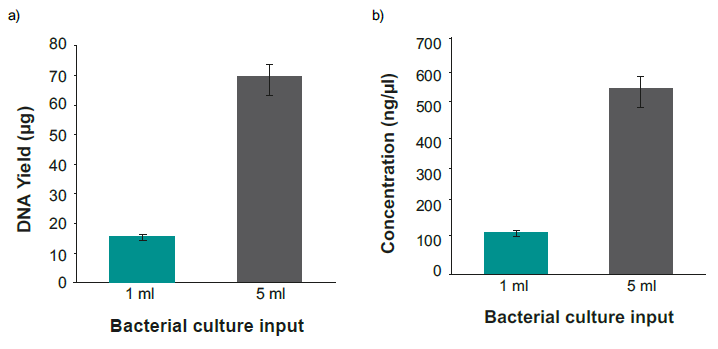
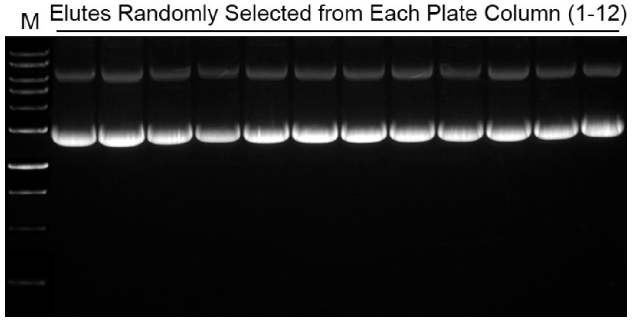
The yields and purities of eluted plasmid DNA (n=96) were measured using a Nanodrop Spectrophotometer. Total plasmid DNA yield and purified plasmid DNA were consistently high for 1 ml and 5 ml cultures, and sufficient to carry out sequencing and mammalian cell transfection. The average total plasmid DNA yield from 5 ml was about 5 times greater than the 1 ml cultures (15.3 μg from 1 ml and 69.7 μg from 5 ml) (Figure 9). High absorbance ratios (pure DNA has a 260/280 absorbance ratio above 1.8 and a 260/230 absorbance ratio above 2.0) also showed that the automated plasmid purification protocol was also shown to be very effective at removing proteins and unwanted chemicals from the recovered plasmid DNA. 12 samples – 1 randomly selected from each plate – were run through gel electrophoresis for 120 minutes at 120 volts on a 0.8 % TE agarose gel, which showed the consistent purification of pGL3 control plasmid (Figure 10). The majority of recovered plasmid was supercoiled, which is preferred for efficient transfection.
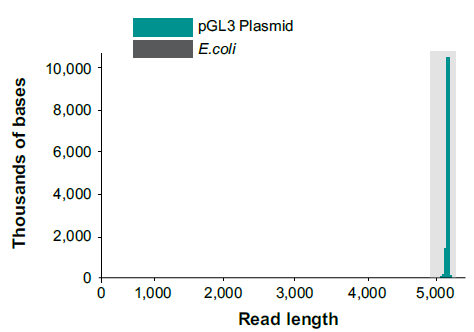
Long read nanopore sequencing validated the compatibility of plasmid DNA for whole-plasmid sequencing. Nanopore sequencing confirmed that the recovered plasmid had the correct sequence, was free from genomic DNA, and exhibited purity suitable for sensitive downstream applications (Figure 8).
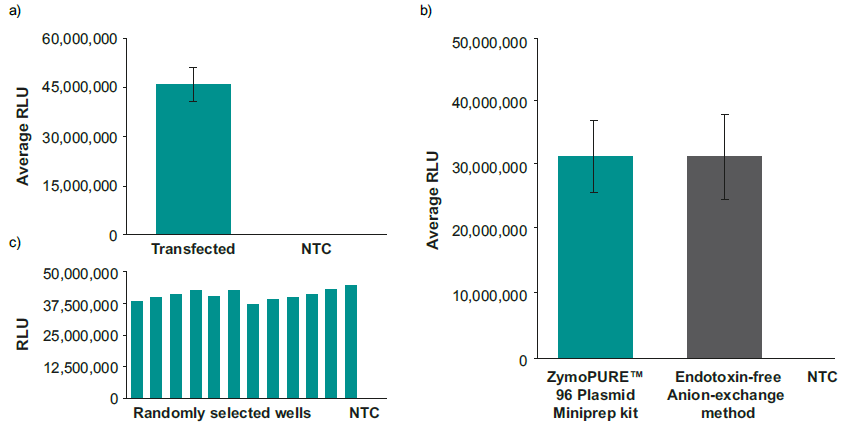
Transfecting mammalian cells with plasmid DNA is often used in the development of modern molecular based therapies, including gene editing, recombinant protein expression, cell and gene therapy, and recombinant viral vector production. Purified pGL3 control plasmid from 5 ml of overnight culture was transfected into HEK293T cells to test the feasibility of using plasmid DNA purified with this automated method for recombinant protein expression and viral vector production. HEK293T cells were plated on a 96 well plate at 10K cells/well, and each well was transfected with 200 ng of plasmid 24 hours later using FuGENE 4K Transfection Reagent. Transfection efficiency was assessed 48 hours later by measuring luciferase expression. Average transfection efficiency was high for plasmid DNA prepared using this automated method, and consistent across the 96 well plate (Figure 11). Luciferase expression levels were consistent between the high throughput miniprep method and a manual, endotoxin-free, anion exchange plasmid purification method.
Remarks
- Vacuum manifold: The labware of ZymoPURE 96 Plasmid Miniprep kit can be used for any vacuum manifold using a 96 well plate format.
- VIALAB software: The VIALAB programs can be easily adapted to specific pipette, labware and protocols, for instance when partial plates are needed.
- Partial plates: Programs can be adapted at any time to a different number of samples, giving laboratories total flexibility to meet current and future demands.
Conclusion
Ask our expert. Leave a comment!
Write us if you have any questions regarding the application note or one of our instruments.
Any questions? I'm happy to help!
Instruments and accessories
ASSIST PLUS, Pipetting Robot
INTEGRA has developed the ASSIST PLUS pipetting robot to streamline routine pipetting tasks at an affordable price. Using INTEGRA electronic multichannel pipettes, the system:
- automates pipetting tasks,
- eliminates physical strain and
- ensures superior reproducibility and
- error free pipetting.
Part No. 4505
Downloads
Download App Note as PDF
DownloadAutomated ultrapure plasmid DNA preparation with the ZymoPURE™ 96 Plasmid Miniprep Kit
Customer’s voice
The Assist plus is the most user friendly automation system I've used. Protocols are incredibly easy to write, and can even be done spur of the moment to automate simple tasks effortlessly. Whether a routine task, or a one off experiment, the Assist Plus has proved itself useful time and again for our lab.
Related products
Applications
Show all-
End-to-end Twist library preparation protocol for NGS workflow automation
-
A simple and streamlined workflow for membrane protein isolation
-
Streamlining single-cell sequencing with the Flex Apex workflow using automated liquid handling solutions
-
Optimizing DNA fragmentation and NGS library preparation with automated liquid handling
Stories
Show all-
 · Company News
Streamlining CRISPR workflows, from editing to analysis
-
 · Customer Testimonial
Enhancing the consistency of ag-tech R&D processes with the ASSIST PLUS pipetting robot
-
 · Product News
Magnetic beads represent a modern approach to gDNA isolation
-
 · Product News
Magnetic beads for NGS size selection and PCR purification