


Streamlining CRISPR workflows, from editing to analysis
CRISPR discovery and development processes involve two critical stages: gene editing followed by confirmation that the intended result has been achieved. Editing reagents must be introduced into precious, sensitive – often scarce – cells without compromising viability, a time-consuming and potentially error-prone process when performed manually. The subsequent analysis to confirm that editing has been successful often relies on lengthy, complex sequencing-based workflows that can take days, or even weeks, delaying future experiments. However, automation can be used to increase the speed and reproducibility of CRISPR editing workflows. We have collaborated with biotech companies DropGenie and QUiCKR, using INTEGRA liquid handling solutions to automate low input electroporation and rapid edit quantification, respectively, enabling laboratories to benefit from streamlined CRISPR processes, from primary cell engineering to data-driven optimization.
Combining miniaturization and automation
Miniaturization and automation offer advantages to CRISPR researchers. Miniaturization allows laboratories to perform many more experiments with a lot less starting material, while automation allows the workflow to be performed faster and at a lower cost, improving throughput and repeatability, and simultaneously removing the possibility of human errors. DropGenie, based in Montreal, Canada, is focused on miniaturization of cell and molecular biology workflows, to accelerate the pace of gene editing, functional genomics and drug discovery research. These applications require careful handling of precious samples to generate meaningful biological data. Co-founder and Chief Operating Officer Hugo Sinha explained: “We have developed a low volume, high throughput transfection device – the DropGenie Transfection Platform – to deliver various compounds intracellularly and subsequently study the effects that they have. It's a platform that has applications in functional genomics workflows, cell engineering, and drug screening, particularly for big pharma wanting to increase the depth of data produced during the drug discovery phase of development.”
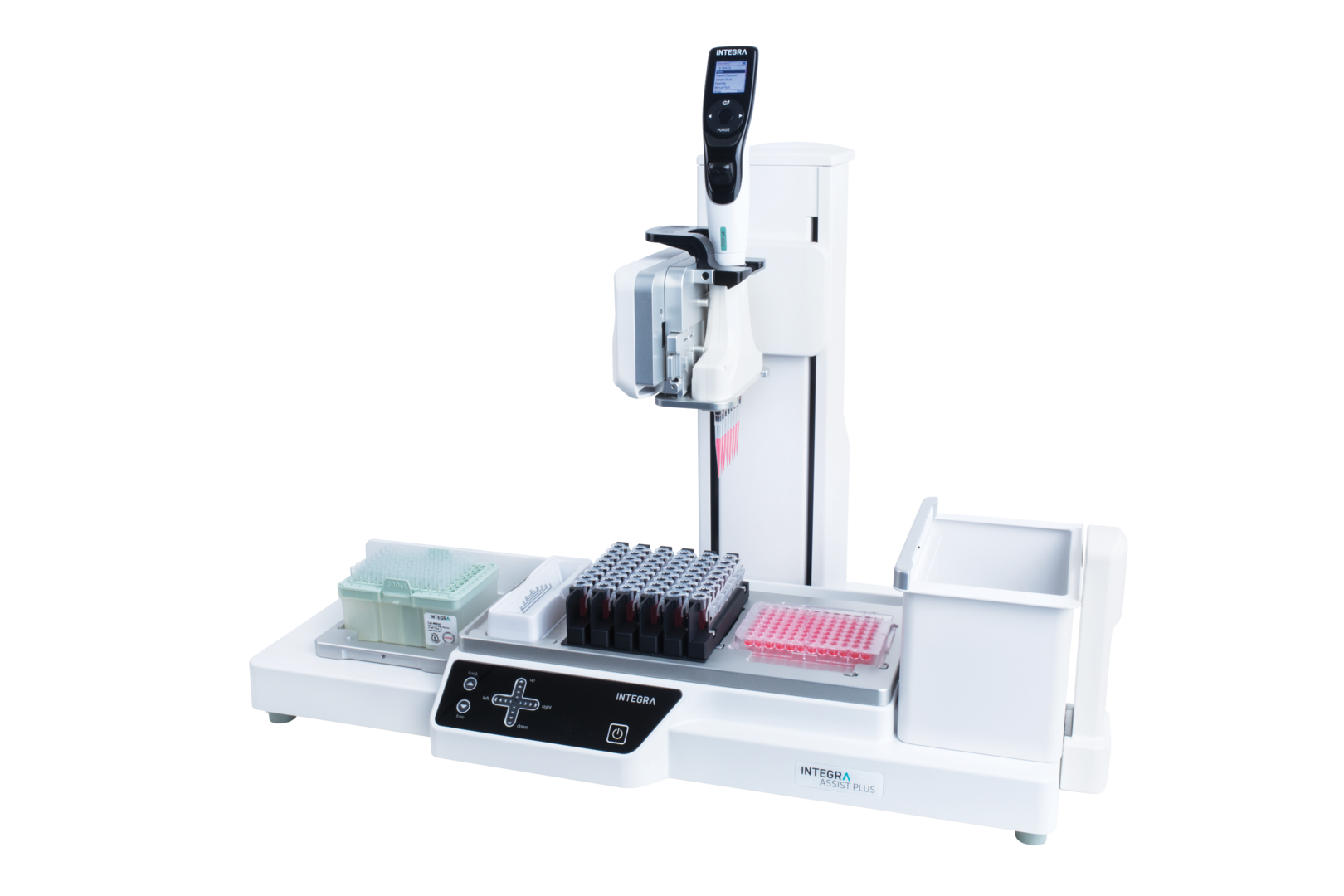
Most conventional transfection workflows require in the region of a million cells per edit, whereas the DropGenie Transfection Platform needs just 10,000 – a 100x reduction. Hugo continued: “Rather than scaling screens around large cell inputs, our device – which is effectively a lab-on-a chip – combines two technologies, miniaturization using digital microfluidics1 and tri-drop electroporation.2 It features 48 independent, programmable reaction sites where cells, Cas9 and guide RNAs can be combined and electroporated at low volumes, for efficient genome editing with drastically reduced cellular input requirements. The massive reduction in input material means 100 times as many experiments can be performed with the same amount of starting material, but we also wanted to streamline the process, which is where automation comes in. The challenge is to transfer liquids into the miniaturized world, as they are hard to handle in these formats. Like us, INTEGRA is interested in miniaturization, and its ASSIST PLUS pipetting robot, which we use daily with a VOYAGER adjustable tip spacing pipette, integrates seamlessly with our device to remove this bottleneck. We have developed streamlined protocols for the ASSIST PLUS, and the scripts are available to DropGenie customers as part of our support services. We encourage them to use the ASSIST PLUS, to make it easy to implement the workflow in their own labs.”
Seamless integration of gene editing protocols
The DropGenie protocol begins with the deposition of nanoliter payloads of guided RNA (sgRNA) onto the cartridge prior to assembly. Once the cartridge has been assembled, the ASSIST PLUS is used to load the cells and reagents onto the device for tri-drop electroporation. After quenching, the electroporated cells are offloaded to well plates by the ASSIST PLUS, ready for downstream analysis. “We like the ASSIST PLUS for many reasons,” said Hugo. “It integrates seamlessly with the assay format and handles precious, sensitive primary cells gently. We have full control over the pipetting speed and height, enabling bubble-free transfers that preserve cell integrity, and have demonstrated efficient CRISPR knockouts with excellent recovery and viability; TRAC knockout efficiency was 92.5 % in CD4+ T-cells and 90.9 % in CD8+ T-cells, with CVs below 5 %.3 The system is user friendly and high throughput, with a simple-to-operate, standardized workflow programmed using VIALAB software, and its small footprint means that it fits easily into a tissue culture hood. Adjustable tip spacing is important to us too, as the distances between the ports on our device vary. Using the VOYAGER adjustable tip spacing pipette on the ASSIST PLUS reduces set-up time, allowing us to perform hundreds of edits an hour. The tip selection is excellent; using low retention GRIPTIPS® pipette tips has a really noticeable impact on the results, especially when working with low volumes. We have also used the VOYAGER to validate shear stress and optimize biological work-ups manually prior to implementing automation.”
QUiCKR genomic results
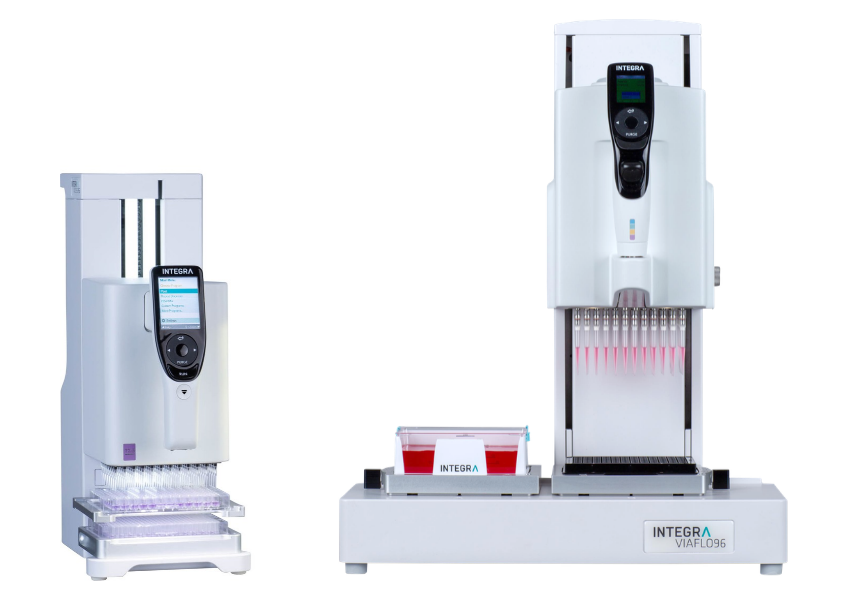
Once the gene editing stage is complete, the outcome must be quantified. Historically, this has been performed using NGS or droplet digital PCR (ddPCR), which are both time consuming. QUiCKR Bio, based in New York, offers pre-plated assays and cloud platform analysis to enable quantification of any DNA sequence with NGS-level accuracy in just 20 minutes, and has automated its process on the ASSIST PLUS, VIAFLO 96 and MINI 96. The QUiCKR assay is designed for optimizing therapeutic candidates, guide RNAs, enzymes, dose responses or process conditions, and allows researchers to rapidly determine whether the intended edit occurred by quantifying editing outcomes, copy numbers or genomic titers.
QUiCKR Co-founder and Chief Executive Officer Charles Blanluet explained: “The QUiCKR assay was initially developed as a COVID diagnostic from my research at the Stanford Microfluidics Laboratory. This quantitative assay replaces long and complex workflows like NGS or ddPCR, and is just as applicable to gene editing as it is to viral genome QC. Our goal is to enable fast and accurate editing readouts for everyone, from bench scientists to NGS cores. For individual scientists it means no longer having to wait days or weeks for long and complex workflows to be run by analytical cores, allowing them to iterate their experiments the same day. At the other end of the spectrum, NGS cores can process 380 samples per hour, accelerating their turnaround times and flexibility, while also freeing NGS capacity for samples requiring deep sequencing.”
On the fast track
QUiCKR works with pharma and biotech companies to deliver assays for optimization of therapeutic candidates and quality control of manufacturing, helping to accelerate the path to the clinic and regulatory approval of new drugs. Charles continued: “QUiCKR is an end-to-end kit and software-based solution that is tailored to the customer’s specific use case. It includes custom-made, ready-to-use plates that can be run on existing fluorescence readers and automation platforms, and software for downstream analysis. All the user has to do is add serially diluted DNA to the QUiCKR plate, and place it in a fluorescence reader. The raw fluorescence data is then analyzed by dragging and dropping a CSV file into our software. The editing efficiency of the assay matches NGS results with a 0.96 r2 fit.”
Spreading the word
Manual pipetting of a 384 well plate-based assay such as QUiCKR requires strong pipetting skills to ensure accurate, error-free liquid transfers. “Manually pipetting into 384 well plates is tedious, time consuming and error prone, and we realized early on that it would be important to partner with a liquid handling company, such as INTEGRA. We invested in INTEGRA because we found its pipetting solutions – the ASSIST PLUS, VIAFLO electronic pipettes and the MINI 96 – very easy to use and implement, and the quality of the liquid handling matched the demands of our assay. We can set up the entire QUiCKR workflow and confirm its accuracy on 200 edited samples within 5 hours of arriving on site. Many of our customers already have an ASSIST PLUS or VIAFLO 96, allowing them to implement the assay without additional capital expenditure. For those who don’t, we partnered with INTEGRA to offer a 30-day trial period of its instruments to support QUiCKR’s onboarding. This fits perfectly with the QUiCKR mission – to allow scientists to focus on curing diseases, not troubleshooting fluorescence data,” said Charles.
Fast and accurate liquid transfers
Kinetic experiments such as the QUiCKR assay require precise, accurate, rapid and consistent pipetting for serial dilutions and sample transfers, which is difficult without automation and a multichannel pipetting head. Charles described the process: “For lower throughput kits, serial dilutions of the DNA samples are prepared in a 96 well plate using the ASSIST PLUS with a VIAFLO pipette. We then use the MINI 96 to transfer these dilutions to each quadrant of the 384 well QUiCKR plate, 96 at a time. For our highest throughput formats, which are just 2-step workflows, the VIAFLO 96 can perform the serial dilutions and plate transfer in a few clicks using preloaded scripts. We use low retention GRIPTIPS, which are excellent, and the long tip versions are perfect for pipetting into 384 well plates with greater precision. Once prepared, the QUiCKR plate is placed in a qPCR system for about 15 minutes at 37 degrees Celsius, and the resulting CSV file is uploaded to the QUiCKR cloud platform for analysis. Together, the ASSIST PLUS and MINI 96 reduce hands-on time by up to 75 %.4 Automation on the VIAFLO 96 and the ASSIST PLUS enables walk-away processing and increases reproducibility, while simultaneous pipetting of 96 samples with the MINI 96 reduces variation and saves time. This is essential for time-sensitive kinetic assays where slow manual loading can reduce the quality of the data captured. We also use the MINI 96 for serial dilutions in a 384 well format, and really appreciate its user friendliness and accuracy.”
Collaboration drives success
The collaborations with DropGenie and QUiCKR have proved beneficial all around. Miniaturization with DropGenie makes low input CRISPR editing feasible, and can be followed by fast edit confirmation with QUiCKR, addressing both the delivery challenges and the analysis bottleneck. INTEGRA provides the automation capability and liquid handing consistency required to combine these two steps into a streamlined, reproducible CRISPR workflow for faster iteration of experiments. Hugo commented: “It's been a joy to work with INTEGRA, it’s a great partner. The team understands what we're doing and the value that we're trying to bring to the workflow, and has been very supportive. At the same time, we bring value to INTEGRA by introducing our customers to the ASSIST PLUS. It’s all been very positive.” Charles added: “We collaborated with INTEGRA because we both want to provide a complete solution to our customers, from samples to results. It's rare to be able to build products that are very easy to use, yet highly accurate and ready for chemistry, manufacturing and controls (CMC) use, but INTEGRA does just that.”
Download the Automation-enabled high throughput electroporation of primary cells using the ASSIST PLUS and DropGenie platform application note and Ultra-fast DNA sequence quantification flyer to learn more about automated liquid handling for CRISPR workflows.
Our upcoming webinar will elaborate on DropGenie’s and QUiCKR’s solutions, as well as our automated liquid handling solutions for these applications. This online session will take place on 8 October, and will cover the key benefits of these complementary technologies in CRISPR workflows. Find out more and register for the webinar today.
References
- Patel, M.A., Boribong, B.P., Sinha, H. et al. Miniaturized scalable arrayed CRISPR screening in primary cells enables discovery at the single donor resolution. Sci Rep 15, 29350 (2025). https://doi.org/10.1038/s41598-025-13532-z
- Little, S.R., Leung, Z., Quach, A.B.V., Hirukawa, A., Gholizadeh, F., Hajiaghayi, M., Darlington, P.J. and Shih, S.C.C. (2023), A Tri-Droplet Liquid Structure for Highly Efficient Intracellular Delivery in Primary Mammalian Cells Using Digital Microfluidics. Adv. Mater. Technol., 8: 2300719. https://doi.org/10.1002/admt.202300719
- Application Note. Automation-enabled high throughput electroporation of primary cells using the ASSIST PLUS and DropGenie platform. https://www.integra-biosciences.com/en/applications/automation-enabled-high-throughput-electroporation-primary-cells-using-assist-plus-and-dropgenie-platform
- Flyer. Ultra-fast DNA sequence quantification for genetic engineering. https://www.quickrbio.com/wp-content/uploads/2026/05/325-26-QUiCKR-Flyer-INTEGRA-1.pdf
Applications
Show all-
End-to-end Twist library preparation protocol for NGS workflow automation
-
A simple and streamlined workflow for membrane protein isolation
-
Streamlining single-cell sequencing with the Flex Apex workflow using automated liquid handling solutions
-
Optimizing DNA fragmentation and NGS library preparation with automated liquid handling
Stories
Show all-
 · Customer Testimonial
Enhancing the consistency of ag-tech R&D processes with the ASSIST PLUS pipetting robot
-
 · Customer Testimonial
Generating the largest scRNA-seq datasets in the world with automated pipetting
-
 · Product News
Magnetic beads represent a modern approach to gDNA isolation
-
 · Product News
Magnetic beads for NGS size selection and PCR purification