


SWITCH hybrid pipette: scientifically proven ergonomics for better pipetting
The SWITCH combines the tactile feedback of a manual instrument with the intelligent control of an electronic system. This dual functionality allows the freedom to 'switch' seamlessly between manual precision and electronic repeat dispensing, depending on the demands of your task. The result? A pipette that's scientifically engineered to reduce strain, tested against competitor products, and proven to perform.
Why ergonomics matters in the lab
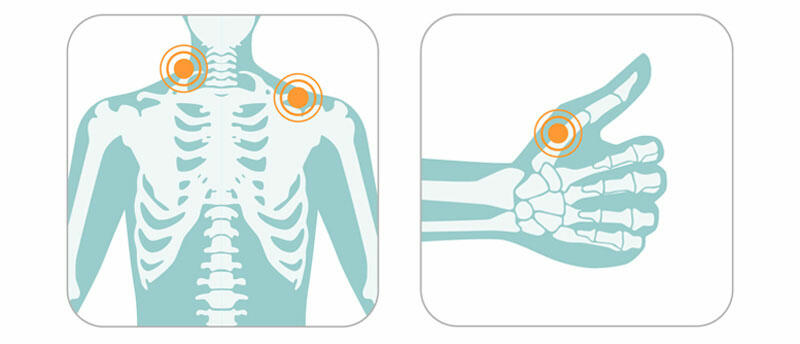
Pipetting demands more physical effort than many realize – just a single hour can involve up to 1,000 repetitive motions. According to the ZHAW report, this can lead to:
- Repetitive thumb flexion and abduction
- Sustained muscle loading in the wrist, elbow and shoulder
- Awkward postures due to visually intensive tasks
- Joint stress in the saddle joint of the thumb and radial deviation of the wrist
Over time, these stresses can accumulate, leading to issues such as tendonitis, carpal tunnel syndrome, and neck or shoulder pain. Adopting proper ergonomic techniques can help to reduce these risks, allowing users to work comfortably while preserving both precision and efficiency.
How the SWITCH pipette reduces physical strain
- Handle dimensions that fit the human hand
The SWITCH handle, with diameters of 3 cm along its short axis (A-axis) and 3.7 cm along its long axis (B-axis) (see Figure 1), sits comfortably within the ergonomically optimal range of 3 to 4 cm for tasks involving precision finger control, as outlined by Grandjean (1991). This alignment validates the pipette’s suitability for manual pipetting tasks that demand both control and comfort.
By meeting these ergonomic standards, the SWITCH provides a grip that supports the natural biomechanics of the hand – an advantage that becomes especially important during extended pipetting sessions. In contrast, nearly all competitor pipettes fall significantly below this optimal range (see Table 1). This shortfall is particularly evident along the A-axis, where grip width plays a critical role in both stability and comfort.
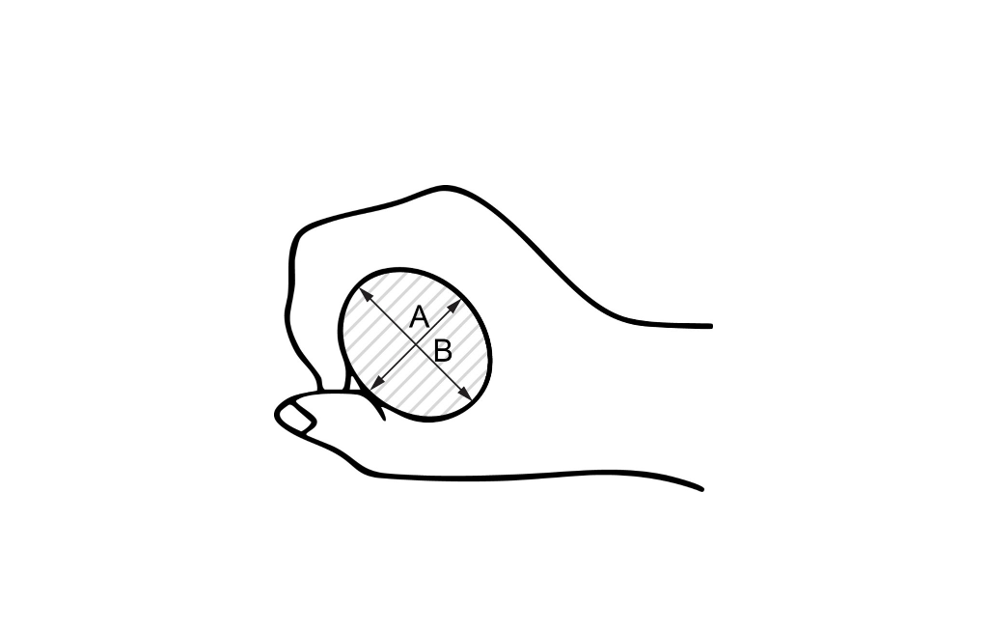
Table 1: A comparison of the dimensions (A-axis and B-axis) of different pipettes*
| Product | Company | A (mm) | B (mm) |
| SWITCH | INTEGRA | 30.4 | 37 |
| Product 1 | A | 27.1 | 36.1 |
| Product 2 | B | 24 | 40.4 |
| Product 3 | C | 26 | 30.3 |
| Product 4 | C | 22.2 | 32 |
| Product 5 | D | 23.6 | 35.6 |
| Product 6 | E | 31 | 27.1 |
- Length and shape designed for comfort
The SWITCH was built to accommodate a broad range of hand sizes. According to Grandjean (1991), ergonomic handles should range from 6.6 to 11 cm in length to ensure a secure, comfortable grip. The SWITCH meets this benchmark, and features a tapered, cylindrical shape that reduces pressure on the little finger and allows neutral wrist alignment.
- A plunger designed around the thumb
In virtually all manual pipettes, the plunger height varies depending on the selected volume. High volumes push the thumb into an overextended position, while low volumes force it into awkward angles.
The SWITCH breaks this pattern by maintaining a consistent plunger height across all volumes, keeping the thumb in a neutral, relaxed position. This design reduces discomfort and improves long-term ergonomics, while allowing the user to maintain complete control of the liquid at all volumes. This is particularly important for avoiding overuse injuries in the thumb’s saddle joint, one of the highest-risk areas identified by the ZHAW study.
In performance tests, the SWITCH consistently showed the lowest total plunger force across various volumes. For example:
- At 200 µl, the SWITCH required only 8.4 N total force (the force to start, move and blowout the plunger), compared to up to 17.5 N for competitor pipettes
- At 1000 µl, the SWITCH required just 8.2 N of total force, outperforming many pipettes with forces exceeding 16.0 N
This makes the SWITCH ideal for high throughput applications, where hundreds of cycles per day are the norm.
- Lightweight yet balanced
As a hybrid pipette, the SWITCH integrates both manual and electronic functions, yet weighs only 128 to 132 g. This is well below the grip force capabilities of both men and women, according to normative strength studies such as that by McGee et al (2020). While it is slightly heavier than most manual pipettes, it is significantly lighter than typical electronic models, striking an ideal balance between advanced functionality and all-day comfort. Over time, this translates into better user posture, fewer breaks due to discomfort, and reduced risk of chronic fatigue.
- Less time and movement to set volumes
Adjusting volumes on many manual pipettes requires repetitive wrist rotations and fine motor effort. In contrast, the design of the SWITCH reduces thumb and wrist movement by 70 % during volume setting.
The result is a faster setup and significantly less strain, factors that are especially valuable when frequent volume adjustments are part of the workflow. Tables 2 to 4 show the time and number of wrist turns required to set the volume of the SWITCH compared to competitor products, with one turn representing a 45° turn of the wrist.
Table 2: Setting the dispense volume from 100 % to 50 %*
| Product | SWITCH | Product A | Product B | Product C | Product D |
| Company | INTEGRA | A | B | C | D |
| Time (s) | 8 | 9 | 12 | 10 | 13 |
| Wrist turns | 10 | 15 | 15 | 13 | 18 |
Table 3: Setting the dispense volume from 10 % to 100 %*
| Product | SWITCH | Product A | Product B | Product C | Product D |
| Company | INTEGRA | A | B | C | D |
| Time (s) | 1 | 16 | 27 | 18 | 15 |
| Wrist turns | 1 | 24 | 44 | 27 | 21 |
Table 4: Setting the dispense volume to 25 % from 50 %*
| Product | SWITCH | Product A | Product B | Product C | Product D |
| Company | INTEGRA | A | B | C | D |
| Time (s) | 8 | 6 | 9 | 8 | 6 |
| Wrist turns | 4 | 6 | 11 | 8 | 6 |
- Repeat dispensing to reduce repetition
The SWITCH features an integrated repeat dispense function that eliminates the need to aspirate before each dispense cycle. This dramatically reduces the total number of movements per task, and can reduce dispensing time by up to 50 %.
In repetitive workflows – such as ELISA, PCR preparation or cell culture – the SWITCH decreases both total movements and execution time compared to traditional pipettes, making it ideal for high throughput environments.
Below (Table 5) are the results from our comparison of the 1,000 µl SWITCH hybrid pipette against the 1,000 µl EVOLVE pipette. The SWITCH proved to be around 50 % faster than the EVOLVE pipette when dispensing 10 aliquots of 100 µl of liquid.
Table 5: Comparison between the 1,000 µl SWITCH hybrid pipette and the 1,000 µl EVOLVE pipette
| Product | Time to dispense 10 aliquots (s) | Repeated movements |
| 1,000 µl SWITCH hybrid pipette | 15.04 | 1 aspiration 10 dispenses (one press of the button, and move from tube to tube) |
| 1,000 µl EVOLVE pipette | 30.87 | 10 aspirations 10 dispenses (moving between source vessel and sample vessel) |
Data-informed design, expert-guided ergonomics
To ensure that the SWITCH was built on a solid scientific foundation, INTEGRA collaborated with the ZHAW to develop comprehensive ergonomic design guidelines for manual pipettes. These guidelines were based on anatomical, biomechanical and task-specific criteria, including optimal grip dimensions, joint angles and muscle load tolerance.
Guided by these expert recommendations, we designed the SWITCH from the ground up to meet or exceed the most critical ergonomic parameters. We then conducted internal benchmarking against leading manual and electronic pipettes, evaluating factors such as plunger and ejector force, handle dimensions, weight and task efficiency. The results confirmed that the SWITCH delivers superior ergonomic performance across a wide range of applications.
Table 6: The SWITCH pipette at a glance
| Ergonomic feature | The SWITCH advantage |
| Grip diameter | 30-37 mm (an ideal range for optimal grip force) |
| Handle shape | Cylindrical and tapered to support neutral wrist alignment |
| Plunger force (200 µl) | 8.4 N total (lowest in test class) |
| Weight | ~130 g, minimizing arm and shoulder fatigue |
| Repeat dispense | Reduces aliquoting time by 50 % |
| Volume setting | Requires up to 70 % less movement |
| ZHAW ergonomic evaluation | Meets or exceeds the most critical ergonomic parameters |
Why the SWITCH is the right choice for your lab
The SWITCH brings together comfort, precision and scientific validation in a design that works with your hand, not against it. Whether you're pipetting for 30 minutes or 5 hours, the SWITCH helps to protect your body from the long-term strain of repetitive tasks, allowing you to focus on what matters most: your results.
Guided by experts. Validated by data. Designed for you.
* This article is intended for illustrative and informational purposes only. Any reference to companies, products, or brands has been omitted to maintain confidentiality and neutrality.
References
Grandjean Etienne (1991). Physiologische Arbeitsgestaltung. Leitfaden der Ergonomie. 4. Auflage. Ott Verlag und Druck AG Thun
McGee, C., et al. (2020). Age-and gender-stratified adult myometric reference values of isometric intrinsic hand strength. Journal of hand therapy, 33(3), 402-410.
Stories
Show all-
 · Product News
Ergonomic pipettes and pipetting guidelines
-
 · Product News
Enhancing ergonomics with intelligent serological pipetting
-
 · Product News
Why iHEALTH 360 champions INTEGRA's pipetting solutions to prevent RSIs
-
 · Product News
Set volumes in the blink of an eye with the EVOLVE manual pipette