Treading the path towards net zero
It is now 3 years since we committed to the SBTi, a partnership between the Carbon Disclosure Project, the UN Global Compact, the World Resources Institute and the World Wide Fund for Nature (WWF) that promotes best practices for large-scale climate action in the private sector. Companies participating in the initiative set emissions reduction targets for 3 scopes:
- Scope 1 – all direct emissions from owned or controlled sources, such as business travel in company cars or the combustion of fuels in heating systems.
- Scope 2 – all indirect emissions from the production of purchased energy consumed by the company.
- Scope 3 – all other indirect emissions within the supply chain, encompassing upstream processes during the production of raw materials, and downstream processes such as the distribution, use and end-of-life treatment of products.
But what do you need to do to achieve these goals?
Where do you start?
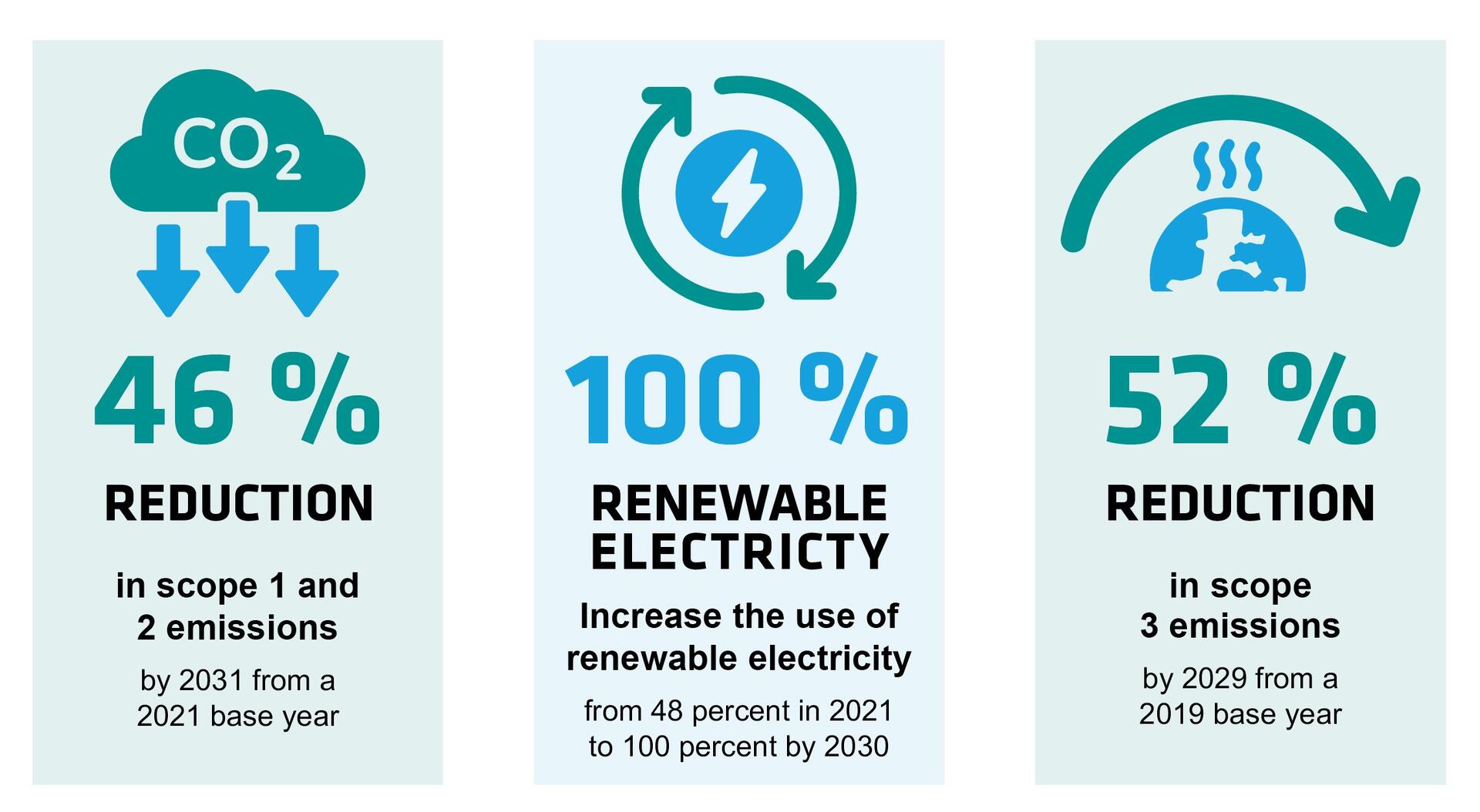
When you embark on the journey towards net zero, it can be difficult to know where to start. How do you identify the hot spots and gather data efficiently and cost effectively, without involving a large number of people? We partnered with a leading climate protection organization, the myclimate foundation, which provided step-by-step guidance to help us calculate our carbon footprint, analyze the data and implement practices to reduce carbon emissions. Relevant company data was captured using a software solution for customized recording, analysis and evaluation of sustainability data and integrated carbon management. This allowed us to create emissions inventories in accordance with the Greenhouse Gas Protocol (GHG), identify hotspots, set SBTi-compliant reduction targets (Figure 1), and develop a clearly structured reduction plan.
Making great strides forward
With support from myclimate, we have already made great progress towards meeting our emissions targets,1 including:
- In-house generation of 970 MWh of photovoltaic electricity per year
- Increasing the use of renewable energy from 48 to 98 % since 2021
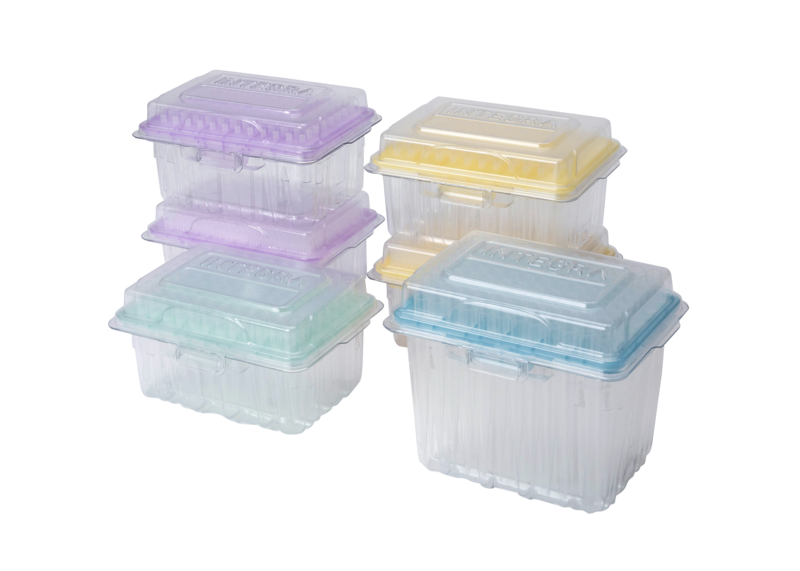
- 28 % reduction in Scope 3 emissions per turnover, notably by halving the volume of air freight, material savings on pipette tip boxes (50 %) and supporting e-mobility via company-owned charging stations
Moving forwards, we plan to use recycled polyethylene terephthalate (rPET) – a sustainable alternative to virgin PET – in our products.
Improved transparency
Identifying the company’s carbon footprint was just the start. We are also taking part in the My Green Lab® ACT® Ecolabel program to deliver the transparency our customers are asking for. The ACT – accountability, consistency and transparency – program uses a science-based, 100-point weighted scoring system that evaluates the environmental impact of energy use, materials, chemical hazards and end-of-life options associated with a product. It also evaluates manufacturing facilities and company commitments to reducing greenhouse gas emissions. Sustainability data and claims are independently audited by a third party, and the product is awarded bronze (a score of 40+), silver, gold, platinum or green (a score of 100) status.
High standards, low environmental impact
We’ve made many sustainability advances in recent years, and are proud of everything we have achieved so far. But this is only the beginning. We are continually looking at our products, facilities, and company commitments to enhance sustainability and improve transparency for our customers. We’ve done a lot, but we want to do even more to look after the world we live in.
Take a look at our sustainability page to learn more about INTEGRA’s initiatives and future plans.
* May 2026
, by