


-
Accelerated loading of Fluidigm's 192.24 Dynamic Array™ IFC for genotyping with the ASSIST PLUS pipetting robot
IFC loading in no time at all
Genotyping is widely used in disease associated studies, molecular epidemiology, agricultural research (trait selection, modern selective breeding), forensics, the development of novel markers in pharmaceutical and biotechnology research, population genetics, and more. It enables the detection of small genetic differences across individual organisms, which may be single nucleotide polymorphisms (SNPs), copy number variants, or large structural changes in DNA. Fluidigm has developed a flexible, affordable, high throughput tool – the 192.24 Dynamic Array IFC (integrated fluidic circuit) – using nanoliter sample volumes for SNP genotyping, allowing genotyping of 192 samples against 24 assays to provide a total of 4608 reactions in a single run.
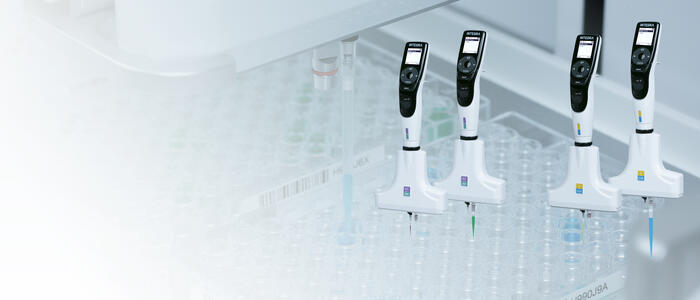
Sample and assay loading requires precise pipetting of small volumes, which can be easily achieved using the ASSIST PLUS pipetting robot together with a VOYAGER adjustable tip spacing pipette. It takes less than 15 minutes to load the 192.24 Dynamic Array IFC with 192 samples and 24 assays using the ASSIST PLUS pipetting robot.
In April, 2022 Fluidigm changed its name to Standard BioTools.
-
Table of contents
Genotyping is widely used in disease associated studies, molecular epidemiology, agricultural research (trait selection, modern selective breeding), forensics, the development of novel markers in pharmaceutical and biotechnology research, population genetics, and more. It enables the detection of small genetic differences across individual organisms, which may be single nucleotide polymorphisms (SNPs), copy number variants, or large structural changes in DNA. Fluidigm has developed a flexible, affordable, high throughput tool – the 192.24 Dynamic Array IFC (integrated fluidic circuit) – using nanoliter sample volumes for SNP genotyping, allowing genotyping of 192 samples against 24 assays to provide a total of 4608 reactions in a single run.
Sample and assay loading requires precise pipetting of small volumes, which can be easily achieved using the ASSIST PLUS pipetting robot together with a VOYAGER adjustable tip spacing pipette. It takes less than 15 minutes to load the 192.24 Dynamic Array IFC with 192 samples and 24 assays using the ASSIST PLUS pipetting robot.
In April, 2022 Fluidigm changed its name to Standard BioTools.
Key benefits
Downloads: App note and protocols for genotyping with the ASSIST PLUS pipetting robot
Here you can download the complete protocols and reports used in this application and use them on your ASSIST PLUS. The protocol can be customized with the VIALAB software.
Overview: How to load the Fluidigm 192.24 Dynamic Array IFC
Step-by-step procedure:
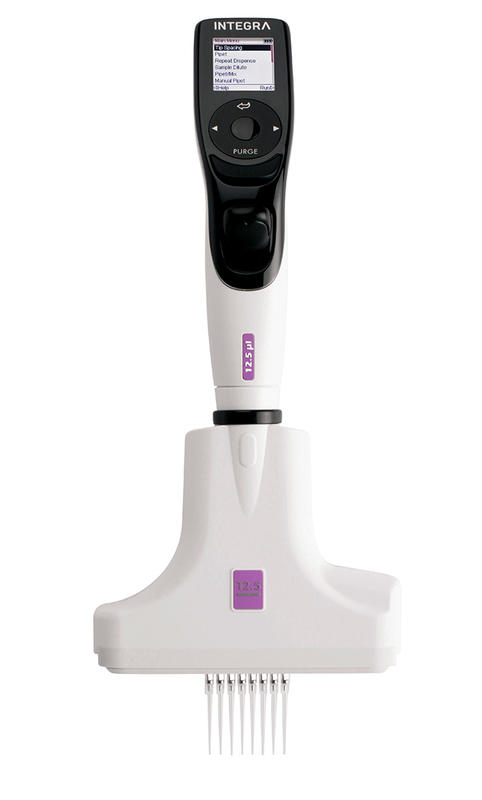
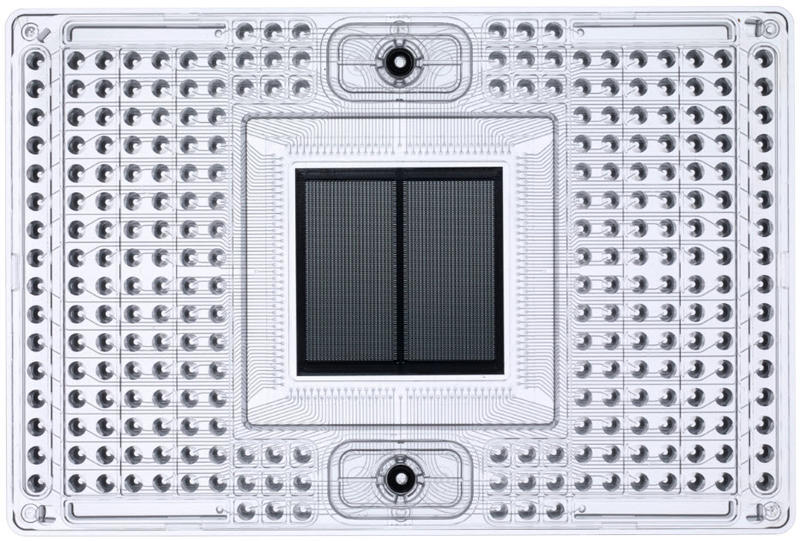
The ASSIST PLUS is equipped with a VOYAGER 8 channel 12.5 µl electronic pipette using 12.5 µl LONG, Sterile, Filter, Low Retention GRIPTIPS® to automate the pipetting steps of sample and assay loading on the 192.24 Dynamic Array IFC. The pipette guides the user whenever manual intervention is needed during the process. The sample and assay inlets are shown in Figure 1.
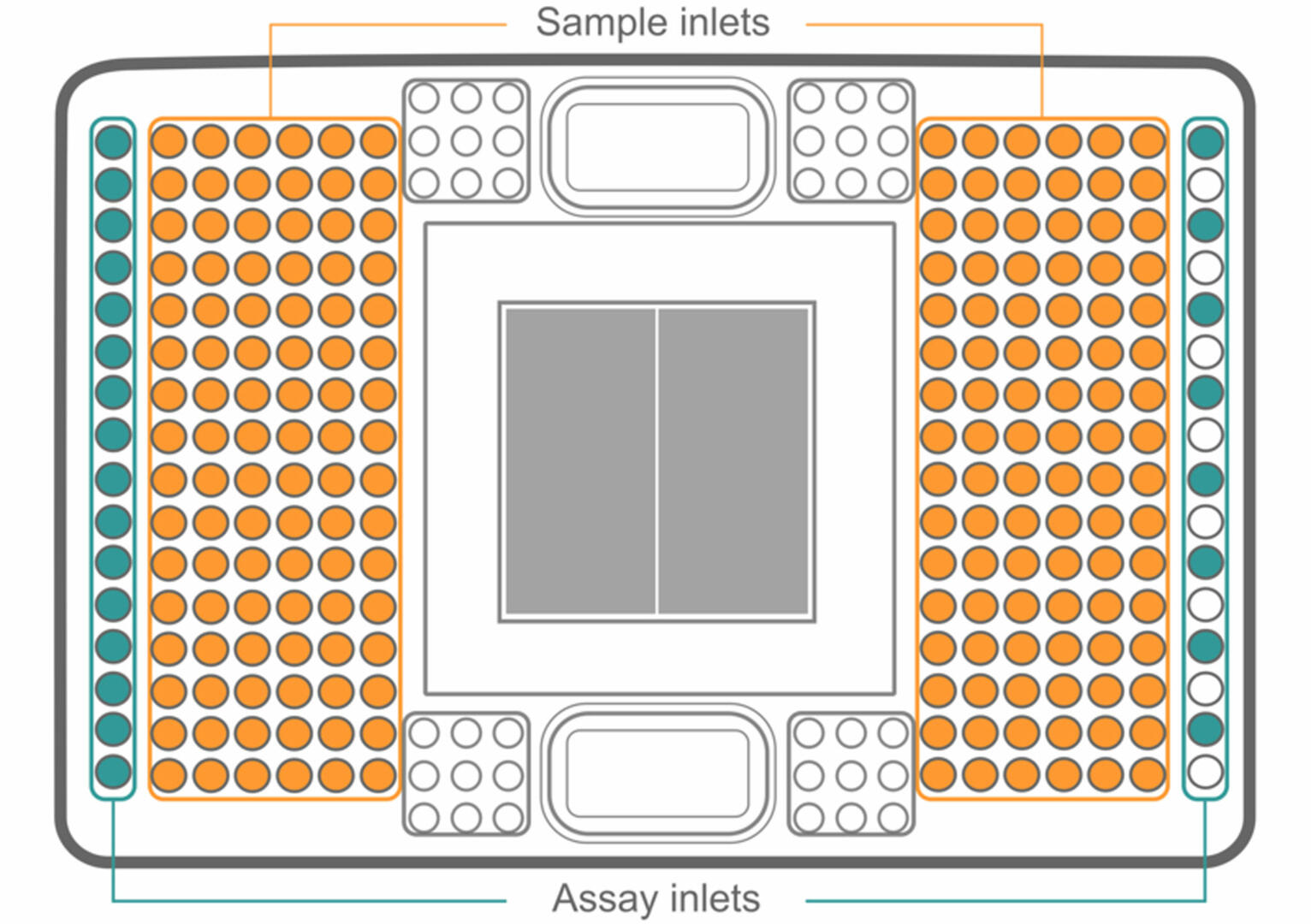
The 192.24 Dynamic Array IFC should be freshly prepared according to the Fluidigm Quick Reference Guide: Genotyping with the 192.24 IFC Using SNP Type Assays (see downloads) prior to loading the samples and assays. The assay mixes and sample premixes should be prepared following the Fluidigm Quick Reference Guide, then mixed and spun down before loading onto the IFC.
IMPORTANT: Once opened, the 192.24 Dynamic Array IFC should be used withing 24 hours.
The protocol is divided into two programs:
Program 1: IFC_Sample
Program 2: IFC_Assay
Experimental set-up – Program 1
Deck position A: Empty.
Deck position B: 192.24 Dynamic Array IFC.
Deck position C: Armadillo 96 well PCR plate (Thermo Fisher Scientific) containing the samples.
IFC sample loading
Loading the IFC with the samples
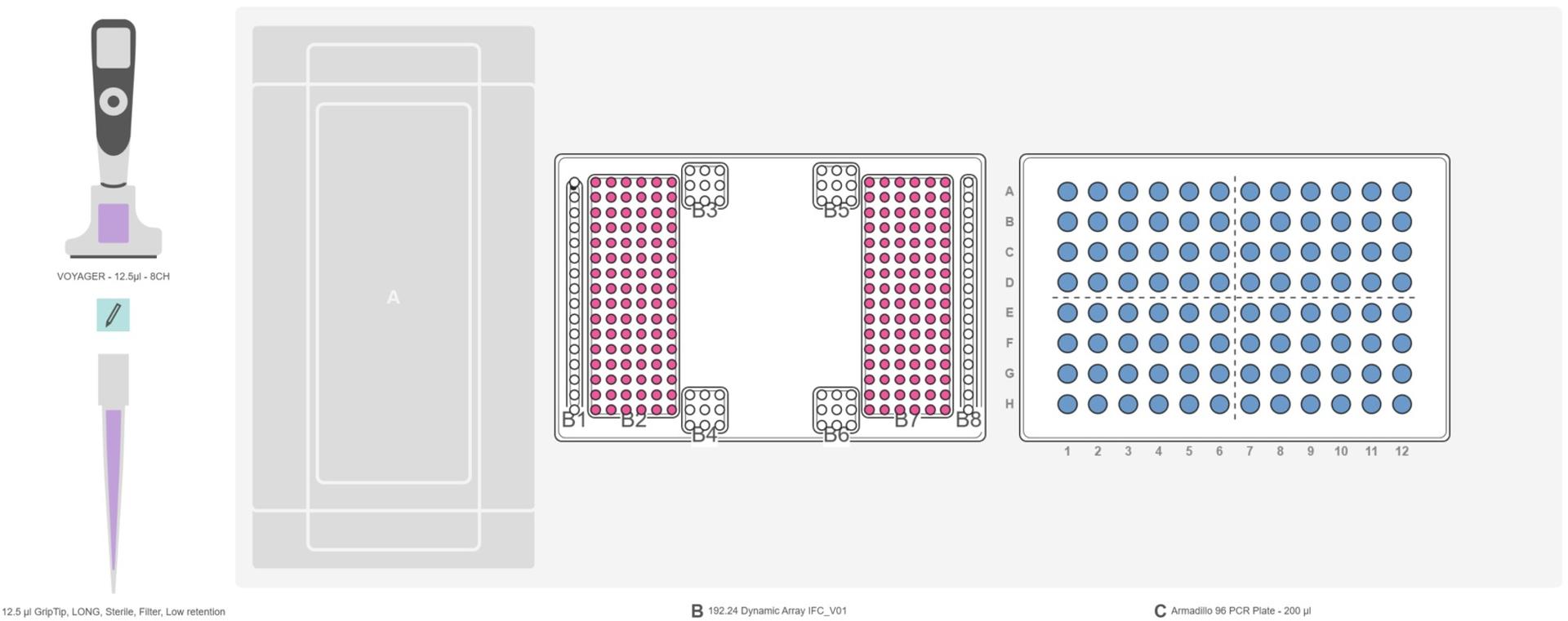
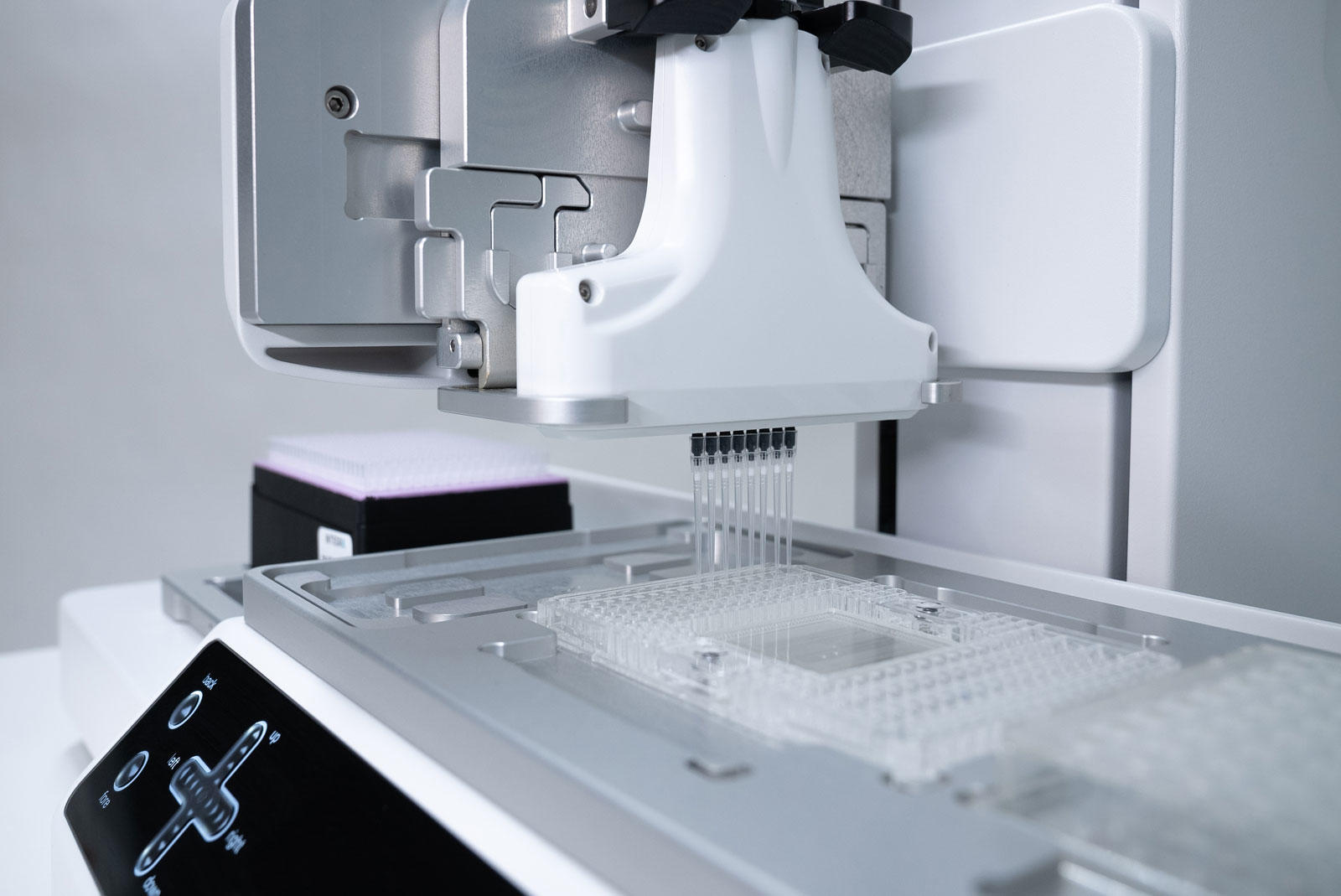
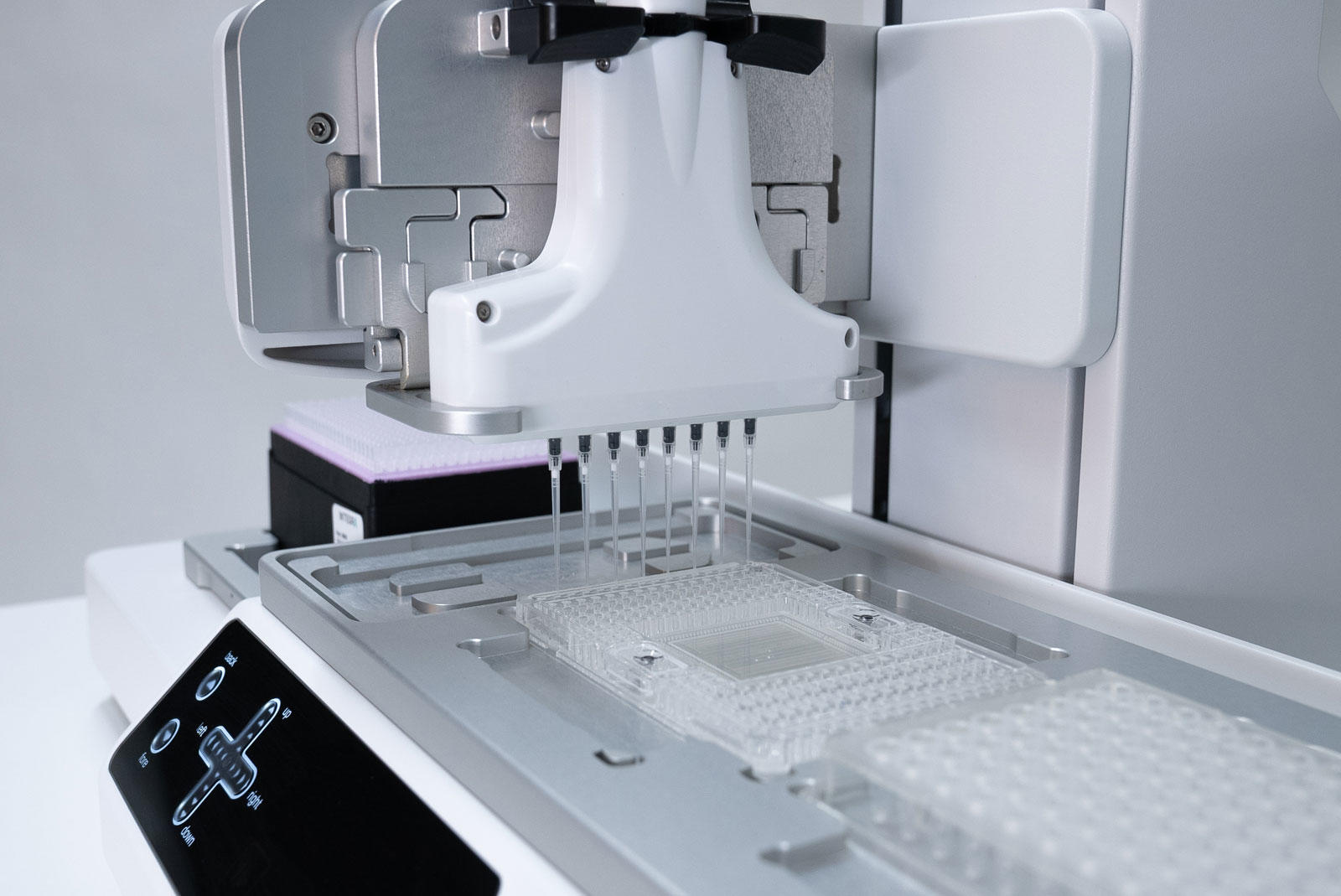
Place the 192.24 Dynamic Array IFC on position B and the 96 well PCR plate containing the samples on position C (Figure 2). Select and run the custom program 'IFC_Sample' on the VOYAGER pipette. The pipette transfers 3 µl of sample from the 96 well PCR plate to the left sample inlet of the 192.24 Dynamic Array IFC in 'Repeat Dispense' steps. Once the pipetting steps are complete, the pipette informs the user to change the sample plate. The process is repeated, using 'Repeat Dispense' steps to transfer samples from the second 96 well PCR plate to the right sample inlet of the 192.24 Dynamic Array IFC. Pre- and post-dispensing are used at each pipetting step for improved accuracy and precision during liquid handling.
Tips:
- Low aspiration and dispense speeds (set at 2 and 4, respectively), together with the use of Low Retention GRIPTIPS, prevent bubble formation when pipetting the samples.
- It is also possible to program a tip touch onto the wall of the well or the surface of the liquid, removing droplets that may stick to the point of the pipette tip and increasing pipetting precision.
Experimental set-up – Program 2
Deck position A: Empty.
Deck position B: 192.24 Dynamic Array IFC.
Deck position C: Armadillo 96 well PCR plate (Thermo Fisher Scientific) containing the assays.
IFC assay loading
Loading the IFC with the assays
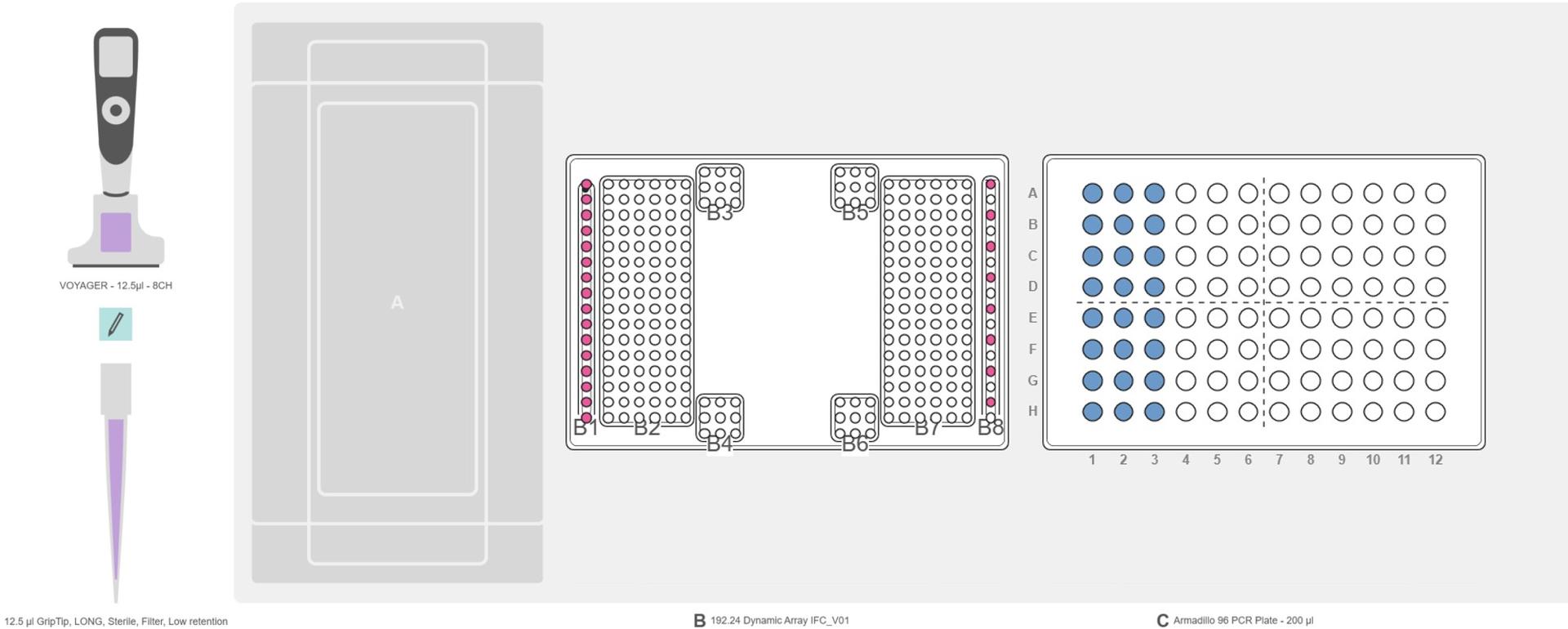
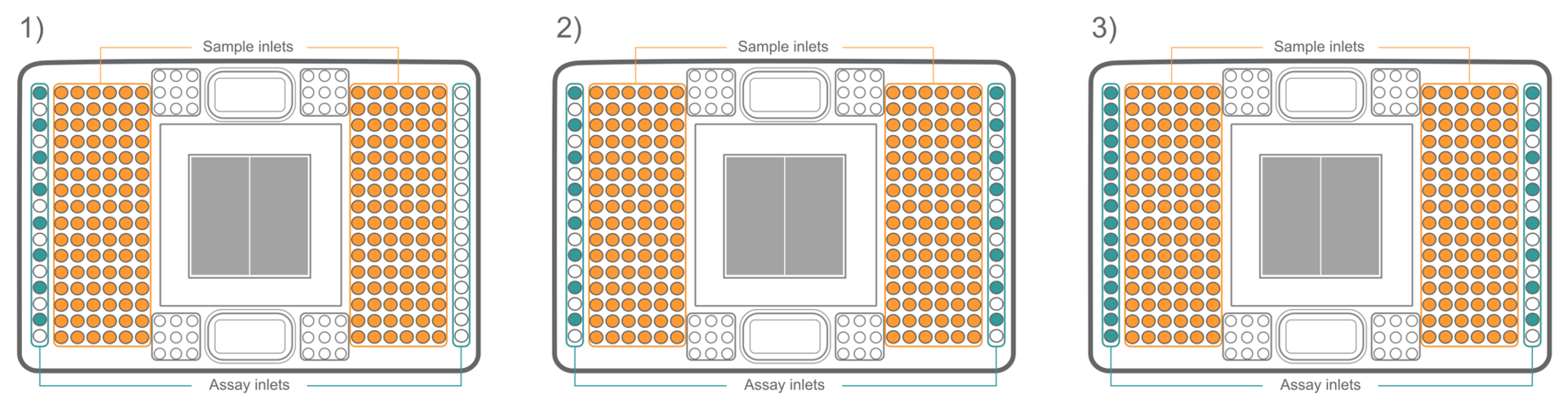
Keep the 192.24 Dynamic Array IFC on position B and place the 96 well PCR plate containing the assays on position C (Figure 4). Select the custom program 'IFC_Assay' and press ‘Run’ on the VOYAGER electronic pipette. The ASSIST PLUS pipetting robot transfers 3 µl of each assay from the first column of the 96 well PCR plate to every odd-numbered position of the left assay inlet on the IFC (Figure 5, 1). At the second pipetting step, every odd-numbered position of the right assay inlet is filled from the second column of the PCR plate (Figure 5, 2), and at the final pipetting step, assays from the third column are transferred to every even-numbered position of the left assay inlet on the IFC (Figure 5, 3). As in the previous program, pre- and post-dispensing are programmed at every step for precise pipetting results.
Tips:
- To be able to pipette to every odd-numbered position of the assay inlet, the user should click on the tip spacing icon in VIALAB when editing the target positions.
- It is very important to place the 192.24 Dynamic Array IFC on position B, as this is the only deck position where the right inlets are available to the ASSIST PLUS pipetting robot.
The user should pipette the pressure fluids and blot the carrier surface with a dry, lint-free cloth after loading the assays onto the Dynamic Array IFC. The 192.24 Dynamic Array IFC is then ready to run.
Remarks
VIALAB software:
The VIALAB programs can be easily adapted to the user's specific labware and protocols.
Partial plates:
Programs can be adapted to a different number of samples at any time, giving laboratories total flexibility to meet current and future demands.
Conclusion
Ask our expert. Leave a comment!
Write us if you have any questions regarding the application note or one of our instruments.
Any questions? I'm happy to help!
Instruments and accessories
ASSIST PLUS, Pipetting Robot
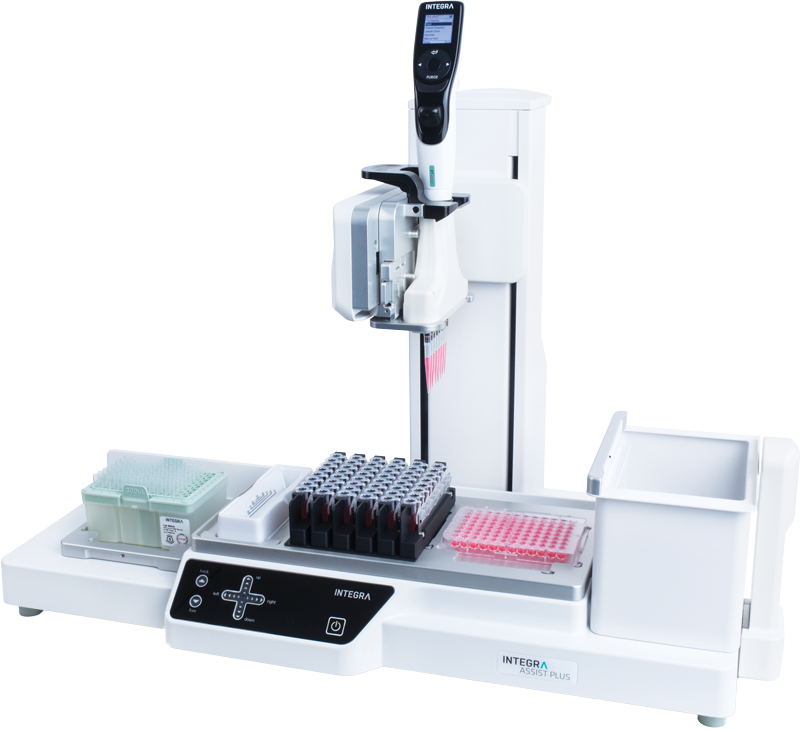
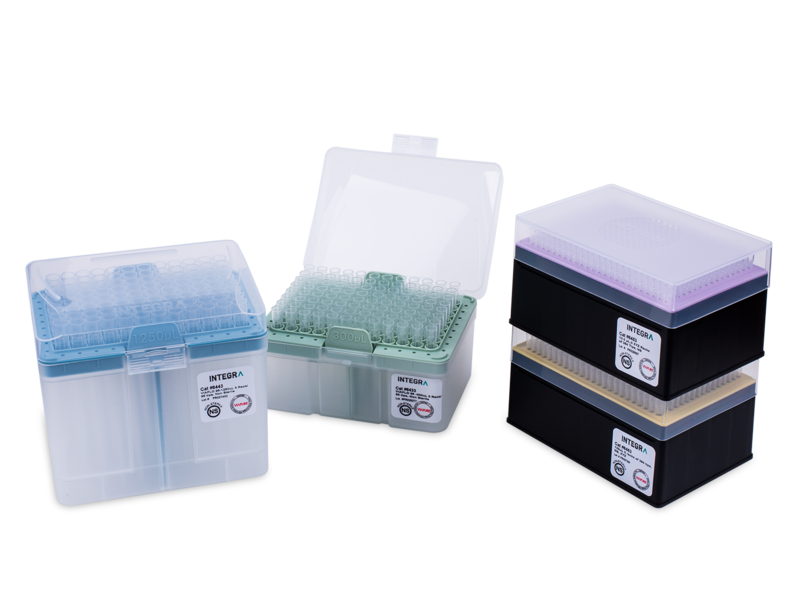
INTEGRA has developed the ASSIST PLUS pipetting robot to streamline routine pipetting tasks at an affordable price. Using INTEGRA electronic multichannel pipettes, the system:
- automates pipetting tasks,
- eliminates physical strain and
- ensures superior reproducibility and
- error free pipetting.
Part No. 4505
Download
Download App Note as PDF
DownloadAccelerated loading of Fluidigm's 192.24 Dynamic Array™ IFC for genotyping with the ASSIST PLUS pipetting robot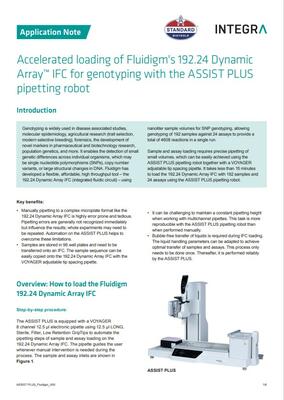
Customer’s voice
I have successfully transitioned several of our assays that we would do by hand to the ASSIST PLUS and have gotten great results! No human error and lower variability. The VIALAB software is very easy to navigate to program your assay on the pipette to use with the ASSIST PLUS.
Related products

Applications
Show all-
End-to-end Twist library preparation protocol for NGS workflow automation
-
A simple and streamlined workflow for membrane protein isolation
-
Streamlining single-cell sequencing with the Flex Apex workflow using automated liquid handling solutions
-
Optimizing DNA fragmentation and NGS library preparation with automated liquid handling
Stories
Show all-
 · Company News
Streamlining CRISPR workflows, from editing to analysis
-
 · Customer Testimonial
Enhancing the consistency of ag-tech R&D processes with the ASSIST PLUS pipetting robot
-
 · Product News
Magnetic beads represent a modern approach to gDNA isolation
-
 · Product News
Magnetic beads for NGS size selection and PCR purification