


-
Efficient collagen coating protocol for Petri dishes and flasks
Coat your Petri dishes and flasks with ease
Coating dishes or tissue culture flasks with extracellular matrix proteins, such as collagen or fibronectin, is a common procedure in cell culture laboratories. However, coating large numbers of dishes is a tedious, time-consuming task that is repetitive for the user. This application note describes how using the DOSE IT results in significant time savings and reduces excess strain compared to a regular pipette controller.
-
Table of contents
Coating dishes or tissue culture flasks with extracellular matrix proteins, such as collagen or fibronectin, is a common procedure in cell culture laboratories. However, coating large numbers of dishes is a tedious, time-consuming task that is repetitive for the user. This application note describes how using the DOSE IT results in significant time savings and reduces excess strain compared to a regular pipette controller.
Key benefits
Overview: How to coat Petri dishes with collagen
All three protocol steps involving liquid transfer were analyzed by measuring the time taken to process 100 Petri dishes, using either a pipette controller in combination with 10 ml serological pipettes or the DOSE IT peristaltic pump.
Before coating the Petri dishes, a collagen stock solution should be prepared according to the manufacturer’s instructions. This stock solution should be diluted to a final concentration of 50 μg/ml collagen in 0.02 M acetic acid.
Overview of the steps:
- DOSE IT set-up
- Coating the Petri dishes with collagen
- Removing the excess collagen solution
- Washing the coated Petri dishes
Step-by-step procedure:
1. DOSE IT set-up
Tubing adjustment, priming and calibration for dispensing the solution
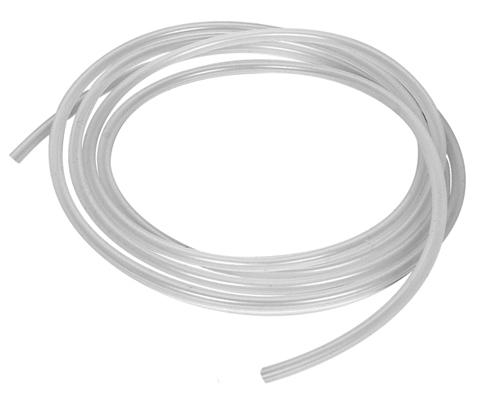
Open the pump head, adjust the tubing clamps and insert sterilized 4.0 mm tubing into the DOSE IT. Set the flow rate to 470 ml/min (280.7 rpm) for optimal performance. Put the aspiration tube with the tube collar into the collagen solution, and the dispensing tube into an empty bottle to fill the empty tubing with liquid.
Perform the priming and calibration steps according to the Operating instructions.
2. Coating the Petri dishes with collagen
Dispensing the collagen solution into the Petri dish
Put the dispensing tube above the Petri dish. The DOSE IT directly dispenses the required volume of collagen solution into the Petri dish (Table 1). Make sure the entire bottom of the Petri dish is covered with collagen solution. After filling all the Petri dishes, remove the aspiration tube from the collagen solution and put the dispensing tube into an empty bottle. Incubate the Petri dishes at room temperature for one hour. The DOSE IT can also be used for other culture flasks or dishes, with dispensing volumes given in Table 1.
Tip:
- Optimizing collagen concentration and coating times for your cell lines and experimental needs is recommended.
Table 1: Typical coating and washing volumes.
| Labware | Recommended coating volume (ml) | Recommended washing volume (ml) |
|---|---|---|
| 6 well | 0.6 | 1.0 |
| 35 mm PD | 2.0 | 1.0 |
| 60 mm PD | 5.0 | 2.5 |
| 90 mm PD | 10.0 | 5.0 |
| T25 | 8.0 | 4.0 |
| T75 | 24.0 | 12.0 |
3. Removing the excess collagen solution
Aspirating the collagen solution from the Petri dish
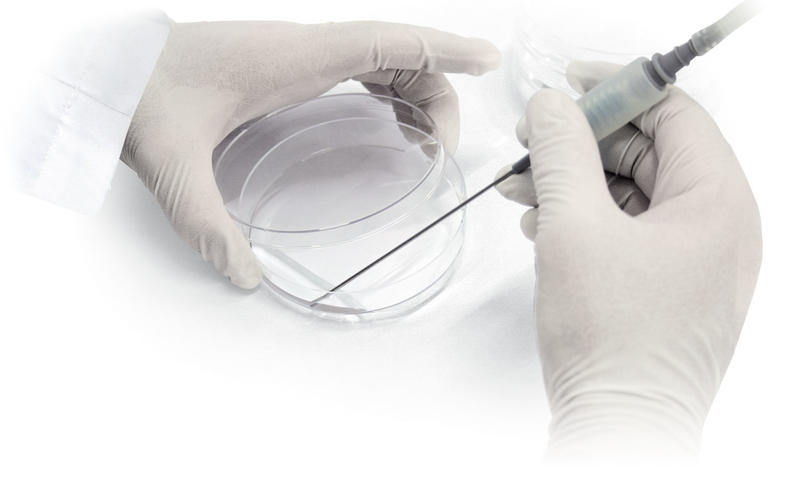
After incubation, carefully aspirate the solution from each of the Petri dishes into an empty bottle (Figure 1). The excess collagen solution can be collected in a bottle and reused up to a maximum of 5 times, if desired. Remove the aspiration tube from the used collagen solution bottle, put the dispensing tube into an empty bottle to drain, then drain the collagen solution from the tubing.
4. Washing the coated Petri dishes
Rinsing the Petri dishes with PBS buffer to remove the remaining acid
Put the aspiration tube into the PBS buffer (or serum-free medium), and the dispensing tube into an empty bottle to refill the empty tubing. Fill the tubing with PBS buffer, then rinse the Petri dish twice with PBS to remove the remaining acid (see Table 1 for volumes). Air dry the Petri dishes at room temperature inside a laminar flow hood, then seal with parafilm and store at 4 °C until needed.
Results
For all steps, using the DOSE IT was significantly faster than working with a serological pipette controller, with an overall time saving of 40 % (Table 2).
Table 2: Measured time for handling 100 Petri dishes using a serological pipette controller or a DOSE IT peristaltic pump. Righthand column shows % time saving using a peristaltic pump.
| Pipette controller | DOSE IT | Time saving (%) | |
|---|---|---|---|
| Dispense collagen | 13 min | 6 min | 54 |
| Aspirate collagen | 15 min | 12 min | 20 |
| Washing (2x) | 60 min | 35 min | 40 |
| Total | 88 min | 53 min | 40 |
Conclusion
Ask our expert. Leave a comment!
Write us if you have any questions regarding the application note or one of our instruments.
Any questions? I'm happy to help!
Instruments and accessories
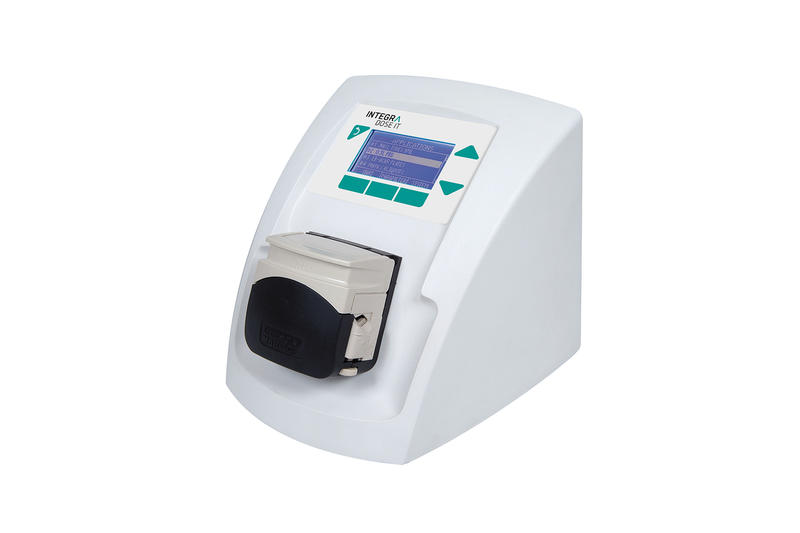
DOSE IT Laboratory Peristaltic Pump
DOSE IT has been especially designed for laboratories looking for an easy-to-use, compact and portable peristaltic pump. With its light weight and compact design, DOSE IT fits everywhere in the lab and can be easily moved. The intuitive user interface with straightforward instructions makes it very easy to operate. DOSE IT is especially helpful for dispensing culture media, buffers or other solutions.
Part No. 171000

Download
Download App Note as PDF
DownloadEfficient collagen coating protocol for Petri dishes and flasks
Customer’s voice
I Love my DOSE IT. The DOSE IT is an absolute must have for a laboratory in need of efficient, repeat dispensing protocols. I use it to rapidly add precise volumes of media for enriching samples and it saves me so much time!
Related products
Applications
Show all-
Automating media exchange and sample collection using Ronawk’s Bio-Blocks® In Similare technology and the ASSIST PLUS
-
Enhanced workflow for high throughput, high density microelectrode array (HD-MEA) electrophysiology on MaxTwo 24-Well Plates
-
Automating the Corning Matrigel® thin coating protocol for cell culture applications
-
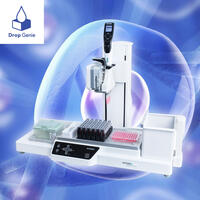
Automation-enabled high throughput electroporation of primary cells using the ASSIST PLUS and DropGenie platform
Stories
Show all-
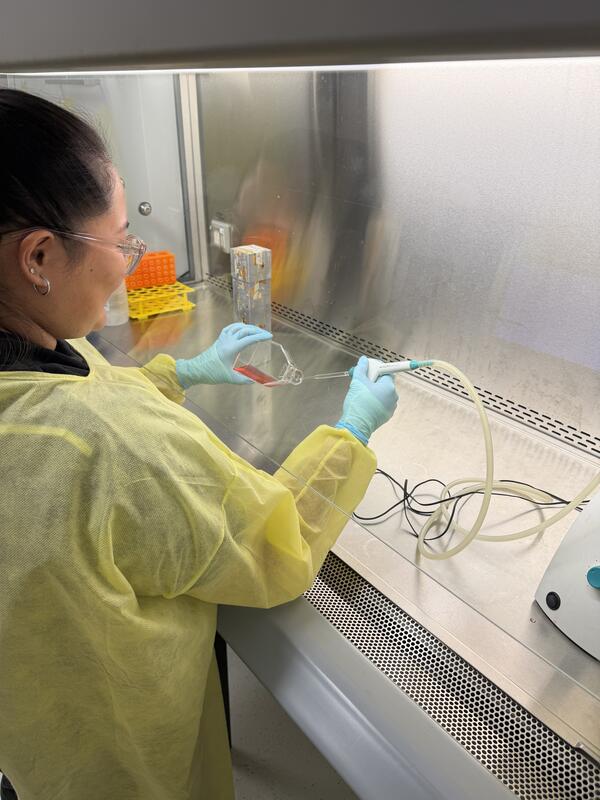 · Customer Testimonial
Optimizing respiratory virus research workflows with VACUBOY
-
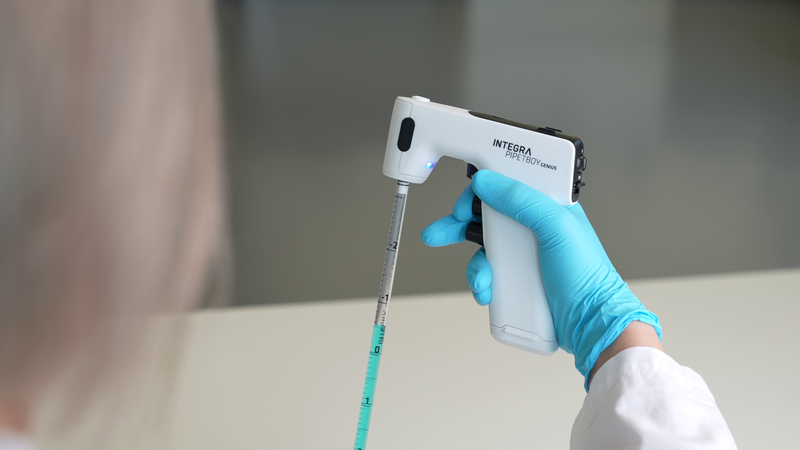 · Customer Testimonial
Setting a new benchmark in efficient cell culture with the PIPETBOY GENIUS
-
 · Customer Testimonial
Exploring new treatment pathways in pediatric oncology
-
 · Customer Testimonial
Pioneering immune sensing and signaling dynamics research