


-
Precise and reproducible automated cell passaging protocol
Mouse embryonic stem cell passaging with VIAFLO 96 and VIAFLO 384 handheld electronic pipettes
Cell culture is a technique in which cells are grown outside a living organism under well-defined, controlled conditions. It is important for basic biological research and a wide range of clinical studies. Mass culture of cells is indispensable for producing viral vaccines, enzymes, synthetic hormones, anticancer agents, recombinant proteins and antibodies, but also for studying the physiology and biochemistry of cells. Nowadays, cell culture is also used in agriculture for producing alternative foods. Preserving cell viability, avoidance of contamination, high experimental reproducibility, and accuracy are vital for manipulations carried out on cells during media changes, transfers, seeding and passaging. All these can be mastered with VIAFLO 96 and VIAFLO 384 handheld electronic pipettes.
-
Table of contents
Cell culture is a technique in which cells are grown outside a living organism under well-defined, controlled conditions. It is important for basic biological research and a wide range of clinical studies. Mass culture of cells is indispensable for producing viral vaccines, enzymes, synthetic hormones, anticancer agents, recombinant proteins and antibodies, but also for studying the physiology and biochemistry of cells. Nowadays, cell culture is also used in agriculture for producing alternative foods. Preserving cell viability, avoidance of contamination, high experimental reproducibility, and accuracy are vital for manipulations carried out on cells during media changes, transfers, seeding and passaging. All these can be mastered with VIAFLO 96 and VIAFLO 384 handheld electronic pipettes.
Key benefits
Overview: mouse embryonic stem cell passaging protocol
Experimental set-up
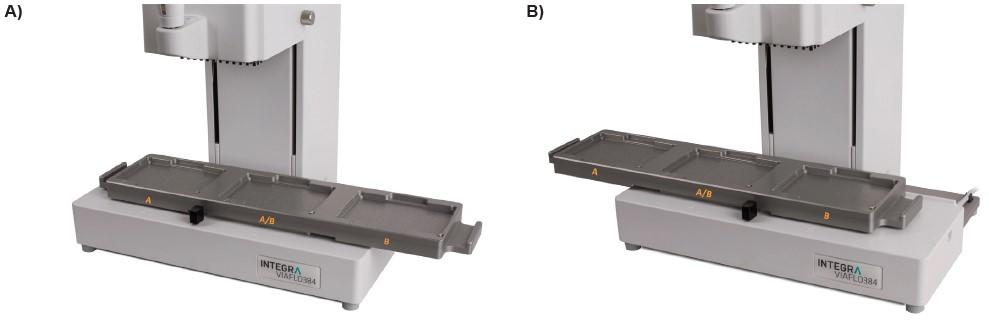
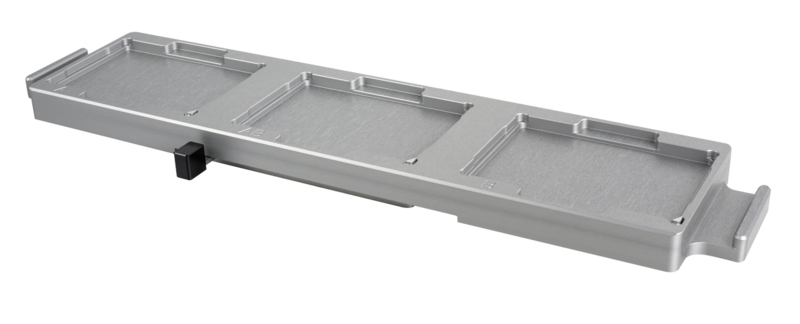
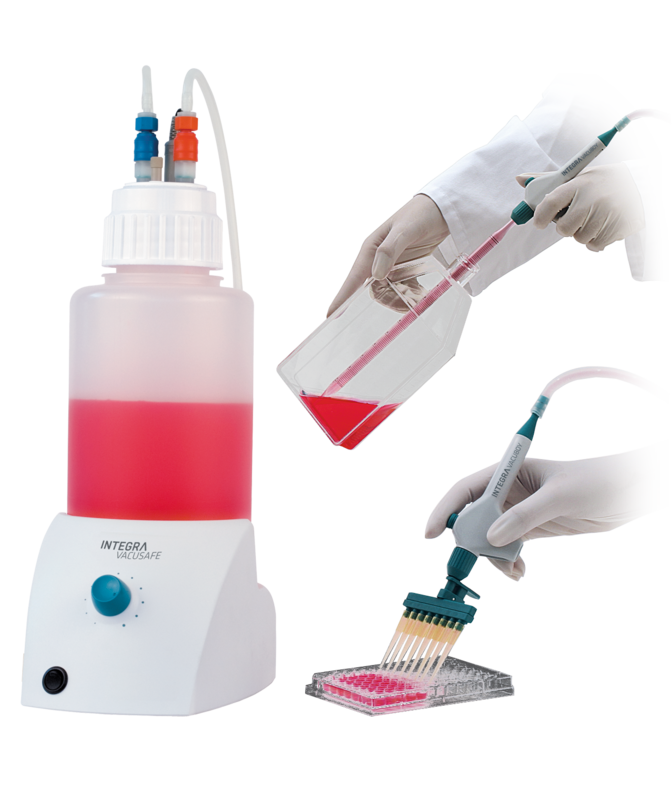
In this protocol, ES-E14TG2 mouse embryonic stem cells (Sigma) are washed, harvested and transferred to a new plate with fresh media, using a VIAFLO 384 handheld electronic pipette with a three position stage (with positions A, A/B and B, Figure 1). For the aspiration steps, a VACUBOY vacuum hand operator is used in combination with a VACUSAFE aspiration system.
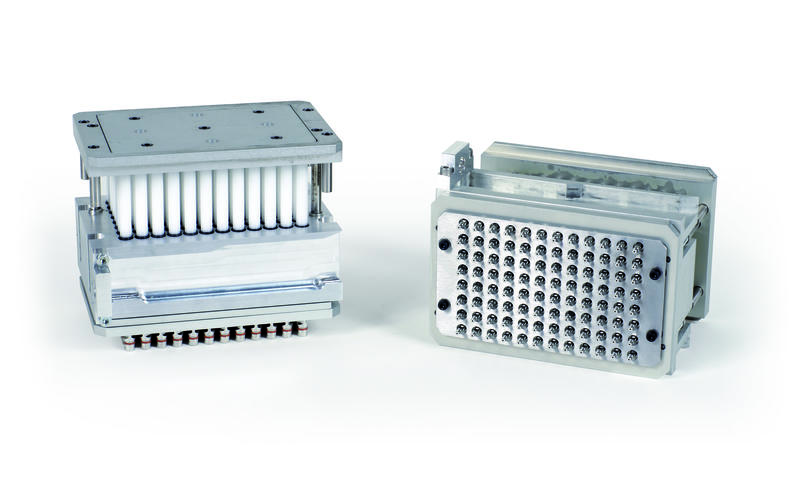
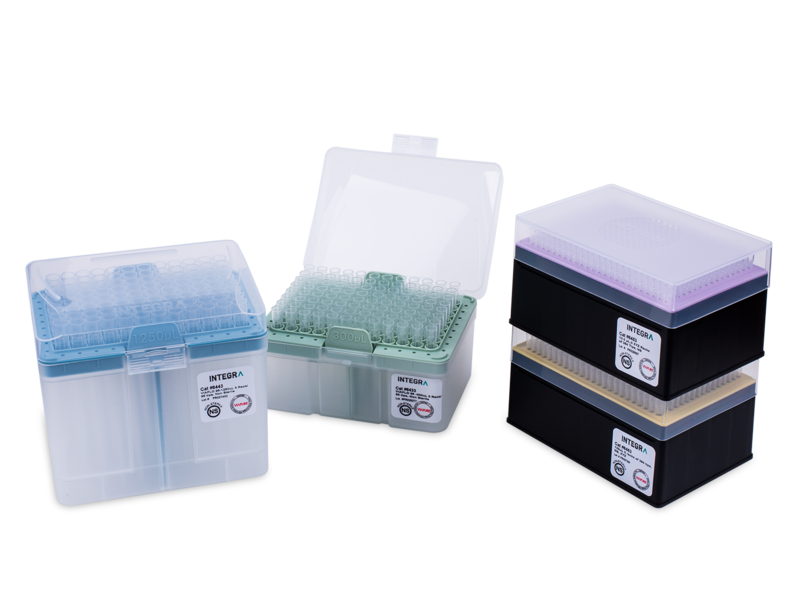
A 96 channel pipetting head (10-300 μl) is used together with 300 μl Sterile, Filter GRIPTIPS®. Customized VIALINK programs are provided to perform cell washing, harvesting, seeding and splitting with a VIAFLO 384.
Note: The VIALINK programs provided can be easily adapted to culture other cell types by adding or removing steps from the protocols supplied.
Overview of the protocol
- Step 1: Washing the cells
- Step 2: Addition of detaching reagent
- Step 3: Incubation and new media addition
- Step 4: Splitting the cells
- Step 5: Triplicating the cells
Downloads: App note and protocols for automated mouse embryonic stem cell passaging
Here you can download the complete protocols used in this application and use them on your VIAFLO 96 and VIAFLO 384. The protocol can be customized with the VIALINK software.
Step-by-step procedure
1. Washing the cells
Washing the cells with 1x PBS.
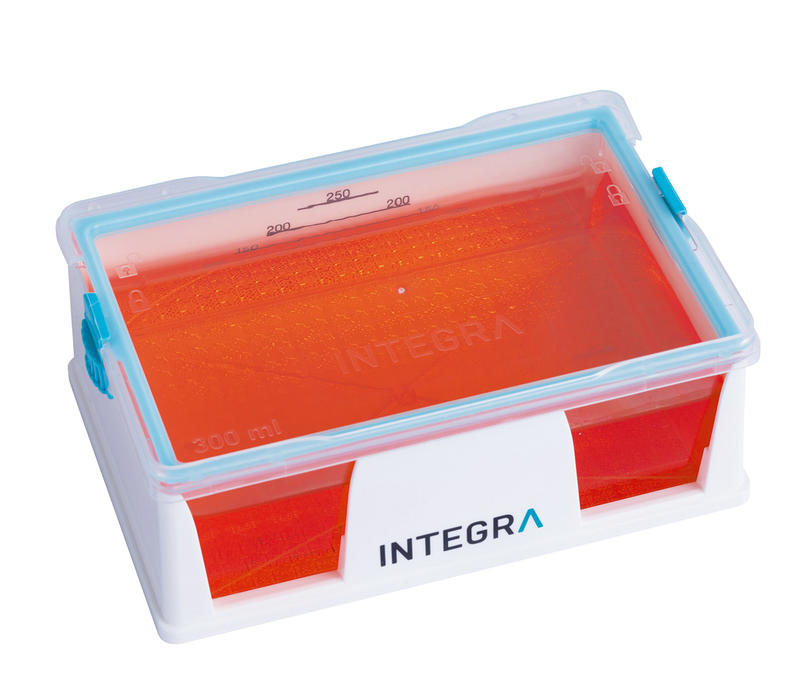
Load a full box of 300 μl Sterile, Filter GRIPTIPS on the VIAFLO 384. Slide the three position stage to the left so it is in position 2 (A/B-B). Place a 300 ml automation friendly reagent reservoir with 1x PBS in position AB.
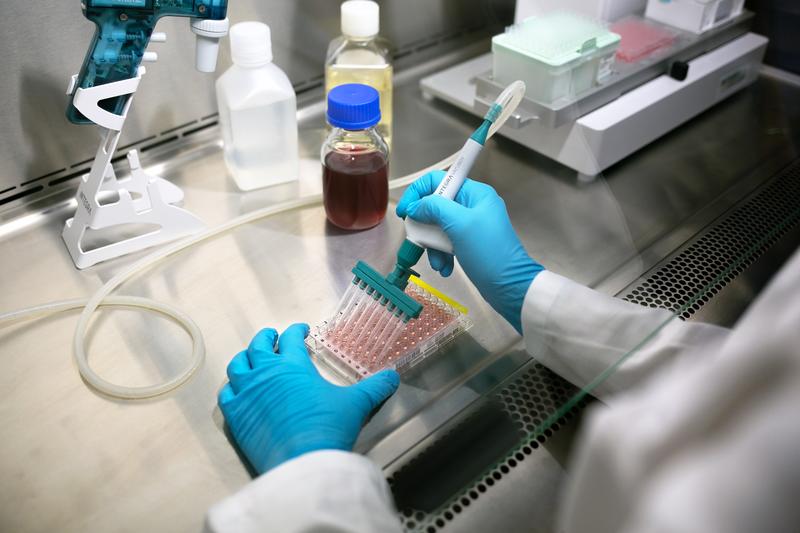
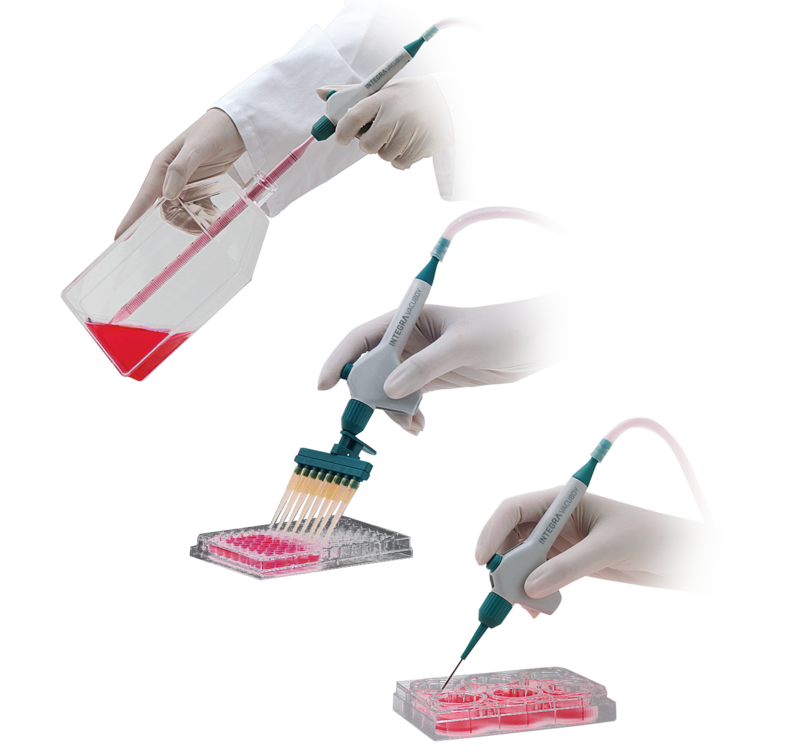
Aspirate the cell culture media (100 μl) from the 96 well culture plate using a VACUBOY in combination with a VACUSAFE (Figure 2).
After aspirating the cell culture media, place the plate on position B of the VIAFLO 384 and launch the custom VIALINK program 'PBS_WASH'. The pipette aspirates 80 μl 1x PBS from the automation friendly reservoir and dispenses it into the 96 well culture plate.
2. Addition of detaching reagent
Addition of accutase solution to detach the cells
Load a full box of 300 μl Sterile, Filter GRIPTIPS on the VIAFLO 384. Place the 300 ml automation friendly reagent reservoir with the accutase solution in position AB, with the stage in position 2.
Aspirate the 1x PBS from the culture plate using the VACUBOY with the VACUSAFE.
After aspirating the 1x PBS, place the 96 well culture plate on position B of the VIAFLO 384. Select and run the custom VIALINK program 'ACCUTASE_ADD'. The pipette aspirates 40 μl accutase solution from the automation friendly reagent reservoir and dispenses it into the 96 well cell culture plate.
3. Incubation and new media addition
Incubation of the cell culture plate and preparation of a new plate with fresh cell culture medium
Incubate the plate for 15 min at 37 °C with 8 % CO2 in the incubator to allow the accutase to detach the cells from the plate surface. During the incubation of the cell culture plate, a new 96 well culture plate with fresh cell culture medium can be prepared. Load a full box of Sterile, Filter 300 μl GRIPTIPS on the VIAFLO 384. Place the 300 ml automation friendly reagent reservoir with the fresh cell culture media on position AB, with the stage in position 2.
Take a gelatin-coated (either self-made or commercial) 96 well plate and remove the gelatin with the VACUBOY and the VACUSAFE. Place the new 96 well plate in position B of the VIAFLO 384. Launch the custom VIALINK program 'MEDIA_ADD'. The pipette aspirates 100 μl of fresh cell culture medium and dispenses it into the 96 well plate. After a 15 minute incubation, the 96 well culture plate should be examined under the microscope to check that cell detachment is complete. If the cell detachment is complete, there are two options of how to continue. In step four the user can passage the cells – splitting the cells in 1:3 ratio to a new plate. Or, in step five, the user can split the cells in 1:3 ratio, triplicating it into three new plates.
Tip:
- The incubation parameters should be changed depending on the cell type and the detaching reagent.
4. Splitting the cells
Passaging the cells in 1:3 ratio
Load a full box of Sterile, Filter 300 μl GRIPTIPS on the VIAFLO 384. Place the 300 ml automation friendly reagent reservoir with the fresh cell culture media on position AB, with the stage in position 2.
Place the 96 well plate to be split on position B. Place a new 96 well plate on position A. Select and run the custom VIALINK program 'MIX_PLATE'. The VIAFLO 384 aspirates 80 μl fresh cell culture medium and dispenses it into the 96 well plate. It will be followed by a 30-cycle mixing step. When the mixing is finished, the VIAFLO 384 aspirates 40 μl of the cell suspension. The instrument will prompt the user to move the three position stage to position 1, so that position A can be reached. The pipette dispenses 40 μl of cell suspension to the new 96 well culture plate.
Tips:
- In the mixing step, 150 μl of cell suspension is mixed, which is more than the volume in the wells. This creates bubbles, which helps to homogenize the cell suspension. This is a very efficient solution for ES-E14TG2 mouse embryonic stem cells but can be changed for some other cell lines.
- The z-height limits are defined in the program to ensure optimal tip immersion depth, preventing the pipette tips from touching the bottom of the plate.
5. Triplicating the cells
Splitting the cells in 1:3 ratio onto three 96 well plates
Load a full box of Sterile, Filter 300 μl GRIPTIPS on the VIAFLO 384. Place the 300 ml automation friendly reagent reservoir with fresh cell culture medium on position AB, with the stage in position 2.
Place the plate to split in position B. Place the first new 96 well plate on position A. Keep the other two new 96 well plates close to the instrument, they will be placed in position A during the program. Launch the custom VIALINK program 'MIX_PLATE_TRI'. 95 μl of fresh cell culture medium will be aspirated and then dispensed into the 96 well plate. The cell culture medium and the cells will be mixed for 30 cycles. When this step is finished, the pipette aspirates 120 μl of cell suspension and alerts the user to change the three stage position, sliding it into position 1. The VIAFLO 384 dispenses 40 μl of cell suspension to a new 96 well plate, then prompts the user to change plate. This step will be repeated two times, resulting in the cells being split into three new plates.
Tip:
- In this example, the ES-E14TG2 mouse embryonic stem cells were split in three. This can easily be set up differently for other cell lines, by changing the volumes of aspiration and dispensing.
Experimental results (Friedrich Miescher Institute for Biomedical Research) showed consistency between replicates of mouse embryonic cell samples with the same confluency. The mixing step was very efficient, allowing single cells to be seen under the microscope (Figure 3c).
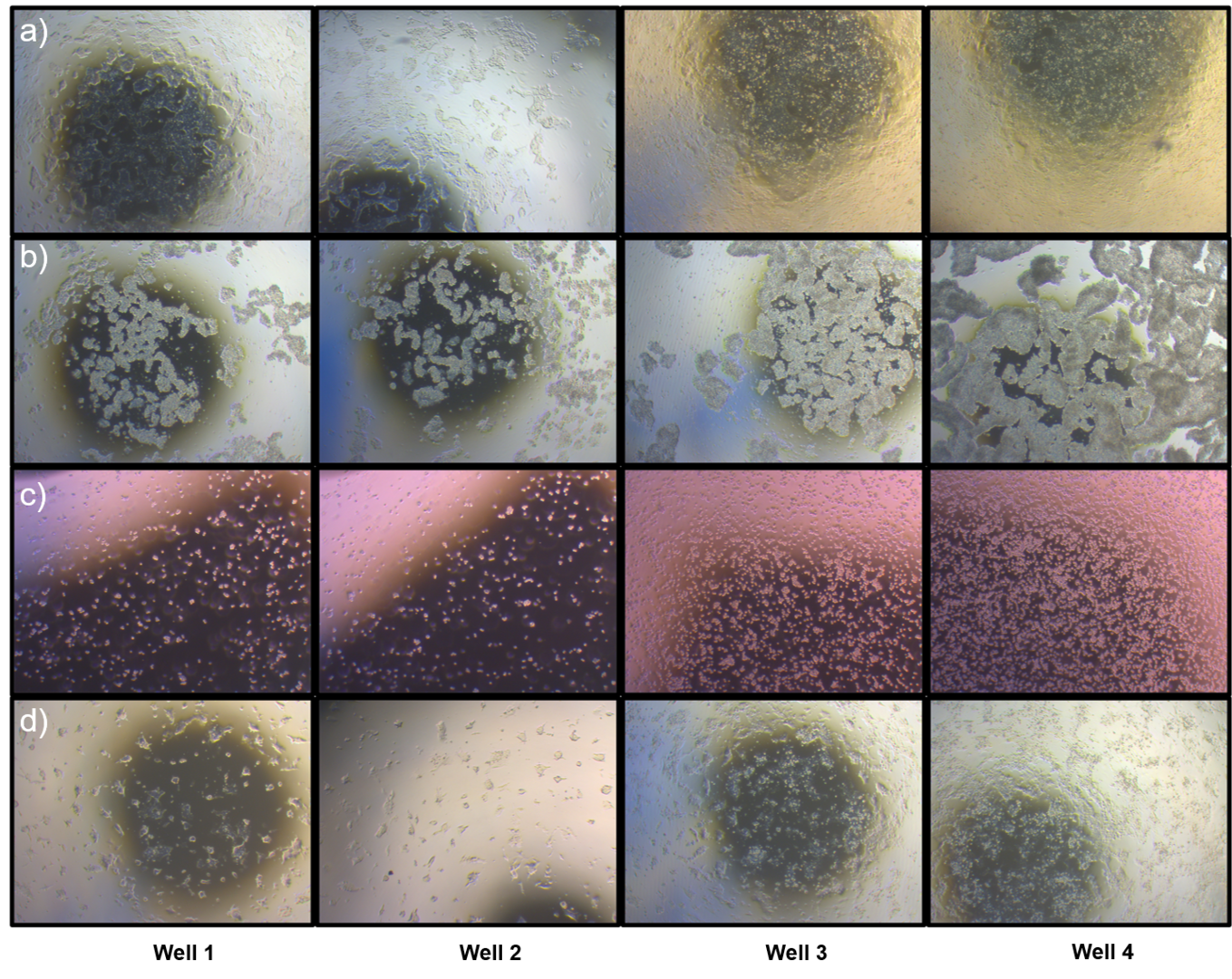
Figure 3: Microscopy picture showing the different stages of the splitting protocol for four different wells. Pictures of mouse embryonic stem cells were taken a) after washing the cells with PBS, b) after the incubation with accutase, c) after splitting the cells, and d) 24 hours after splitting the cells. Wells 1 and 2 showed lower confluence, while wells 3 and 4 had higher confluence. An Axiovert 40 CFL (Zeiss) microscope was used with 2.5x magnification. (Photos courtesy of Julie Cramard, Friedrich Miescher Institute for Biomedical Research, Basel, Switzerland.)
Remark
Partial plates:
Programs can be easily adapted to a different number of samples. The VIAFLO 384 is able to work with any number of tips loaded, giving you the benefit of simultaneous and accurate dispensing of a smaller number of samples.
Conclusion
Related articles
Further reading: An introduction to cell culture and its challenges
Ask our expert. Leave a comment!
Write us if you have any questions regarding the application note or one of our instruments.
Any questions? I'm happy to help!
Instruments and accessories
VIAFLO 96/ VIAFLO 384, Handheld Electronic Pipette
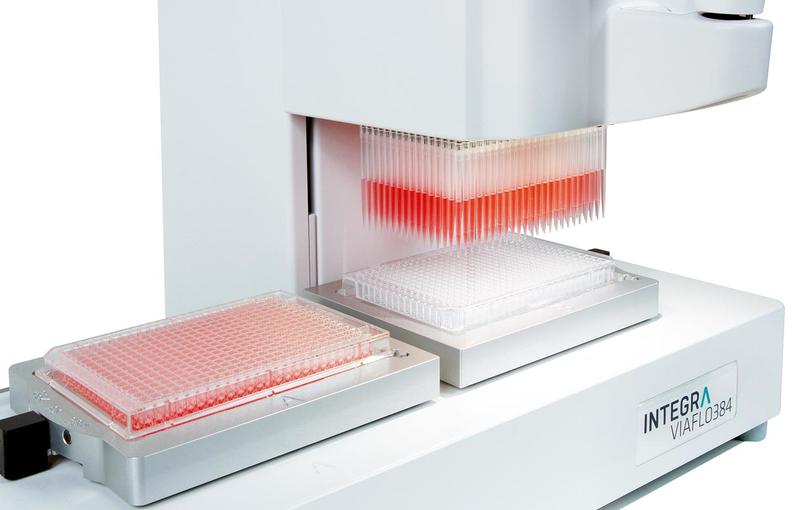
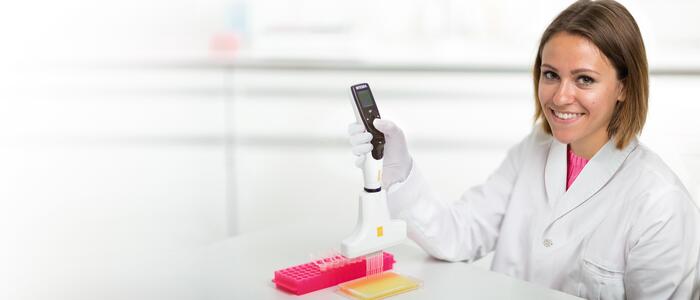
With this 24, 96 and 384 channel pipette, INTEGRA meets the need for an affordable, compact and easy to use pipette that provides increased productivity. The unique operating concept makes VIAFLO 96/384 as easy to use as any traditional handheld pipette.
Part No. 6001 / 6031
Download
Download App Note as PDF
DownloadPrecise and reproducible automated cell passaging protocol
Customer’s voice
With long term 96 well cultures, performing routine and frequent half media changes MANUALLY is laborious and fraught with scratch concerns. Using the VIAFLO 96 has made that culture easier and more robust. A must for anyone doing these kinds of cultures.
Related products


Applications
Show all-
Enhanced workflow for high throughput, high density microelectrode array (HD-MEA) electrophysiology on MaxTwo 24-Well Plates
-
Automating media exchange and sample collection using Ronawk’s Bio-Blocks® In Similare technology and the ASSIST PLUS
-
Automating the Corning Matrigel® thin coating protocol for cell culture applications
-
Automation-enabled high throughput electroporation of primary cells using the ASSIST PLUS and DropGenie platform
Stories
Show all-
 · Customer Testimonial
Optimizing respiratory virus research workflows with VACUBOY
-
 · Customer Testimonial
Setting a new benchmark in efficient cell culture with the PIPETBOY GENIUS
-
 · Customer Testimonial
Exploring new treatment pathways in pediatric oncology
-
 · Customer Testimonial
Pioneering immune sensing and signaling dynamics research