


-
Automated nucleic acid extraction and RT-PCR set-ups for SARS-CoV-2 testing
Using the ASSIST PLUS pipetting robot to simplify the preparation of NAE and RT-PCR plates for COVID-19 testing
The emergence of the novel coronavirus SARS-CoV-2 in China in January led to an increasing number of patients in the country infected with COVID-19, with the total peaking on February 12th. In March, China saw the number of COVID-19 cases start to fall, due to the local authorities enforcing regulations requiring residents to stay indoors. At the same time, other countries worldwide saw the number of infected individuals rise. To prevent new infection peaks in the country, Chinese customs authorities took immediate action to help control the spread of COVID-19, testing all nationals returning from other countries. This required rapid implementation of COVID-19 testing and automation of sample preparation processes. The ASSIST PLUS pipetting robot was chosen to meet this need, together with VOYAGER adjustable tip spacing pipettes, Wide Bore and Low Retention GRIPTIPS® and divided reagent reservoirs, to speed up and organize set-up of nucleic acid extraction (NAE) and RT-PCR.
-
Table of contents
The emergence of the novel coronavirus SARS-CoV-2 in China in January led to an increasing number of patients in the country infected with COVID-19, with the total peaking on February 12th. In March, China saw the number of COVID-19 cases start to fall, due to the local authorities enforcing regulations requiring residents to stay indoors. At the same time, other countries worldwide saw the number of infected individuals rise. To prevent new infection peaks in the country, Chinese customs authorities took immediate action to help control the spread of COVID-19, testing all nationals returning from other countries. This required rapid implementation of COVID-19 testing and automation of sample preparation processes. The ASSIST PLUS pipetting robot was chosen to meet this need, together with VOYAGER adjustable tip spacing pipettes, Wide Bore and Low Retention GRIPTIPS® and divided reagent reservoirs, to speed up and organize set-up of nucleic acid extraction (NAE) and RT-PCR.
Key benefits
Overview: Automated RT-PCR set-up
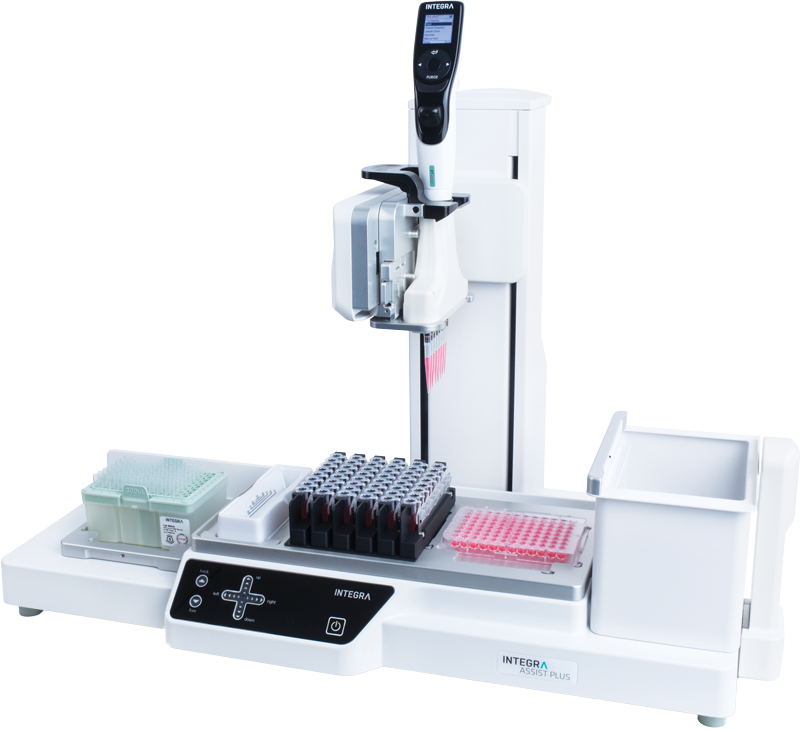
The ASSIST PLUS pipetting robot is used to automate the testing of suspected COVID-19 positive cases in 96 well plates. The following procedure is based on the protocols used by Gansu Lanzhou Customs in China and shows an example of setting up a viral NAE followed by RT-PCR to determine the presence of the novel coronavirus in human samples.
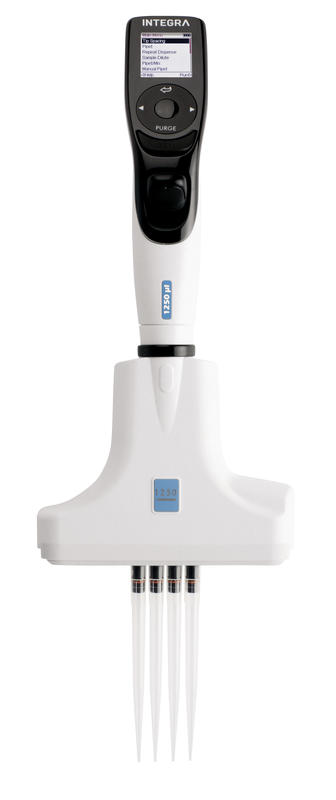
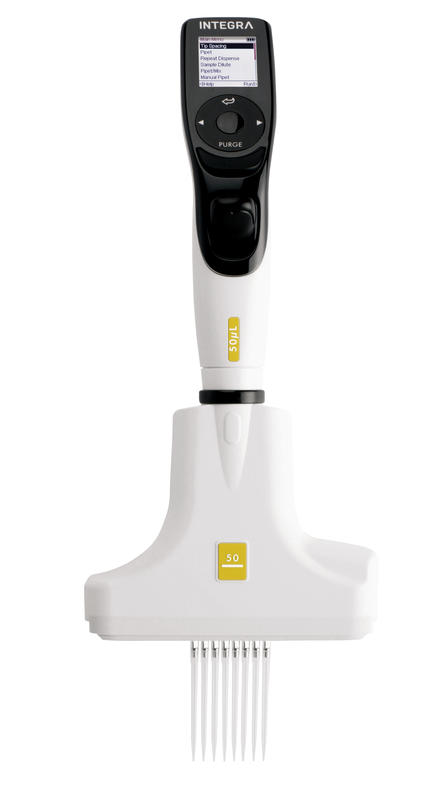
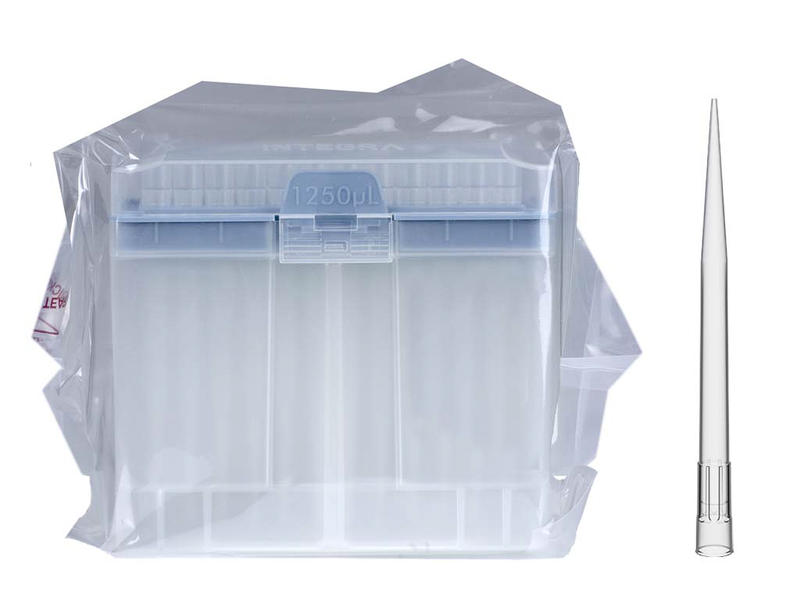
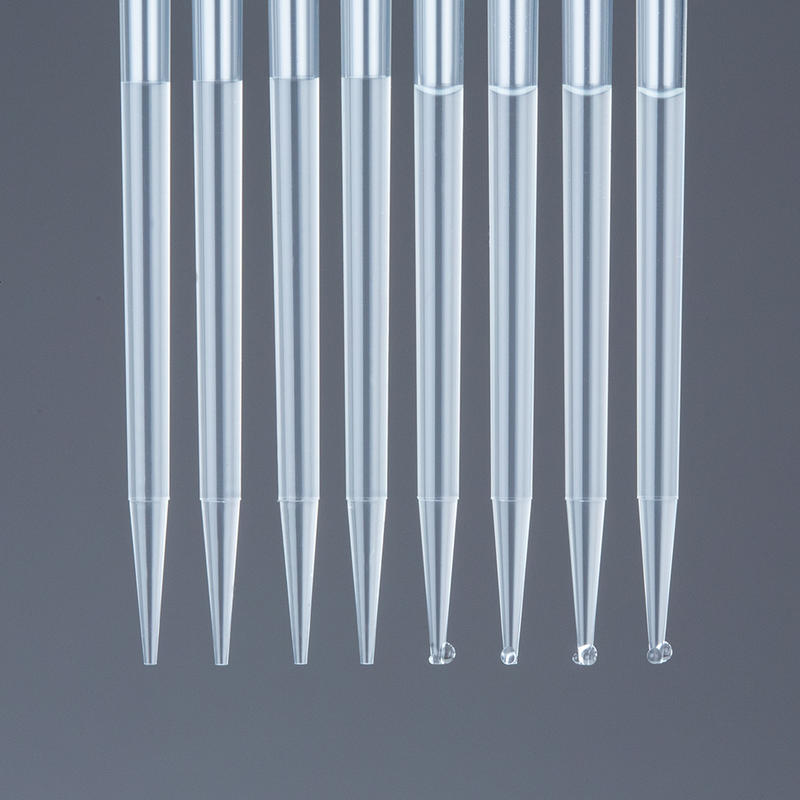
The pipetting robot operates a VOYAGER 4 channel 1250 μl electronic pipette with 1250 μl Sterile, Filter, Wide Bore GRIPTIPS to transfer the patient samples into the NAE plate. The templates were extracted from nasopharyngeal/oropharyngeal flocked swabs. After NAE, the ASSIST PLUS was used together with a VOYAGER 8 channel 50 μl electronic pipette with 125 μl Sterile, Filter, Low Retention GRIPTIPS to set up the RT-PCR before further processing to store the RNA samples in microcentrifuge tubes.
The protocol is divided into three parts:
- Program 1: Nucleic acid extraction set-up (1-NAE-Set-up)
- Program 2: RT-PCR set-up (2-RT-PCR-Set-up)
- Program 3: Sample transfer for storage (3-RNA-Sample-Storage)
Downloads: Protocols and reports for automated nucleic acid extraction and RT-PCR testing for COVID-19 with ASSIST PLUS
Here you can download the complete protocols and reports used in this application and use them on your ASSIST PLUS. The protocol can be customized with the VIALAB software.
Experimental set-up: Program 1
|
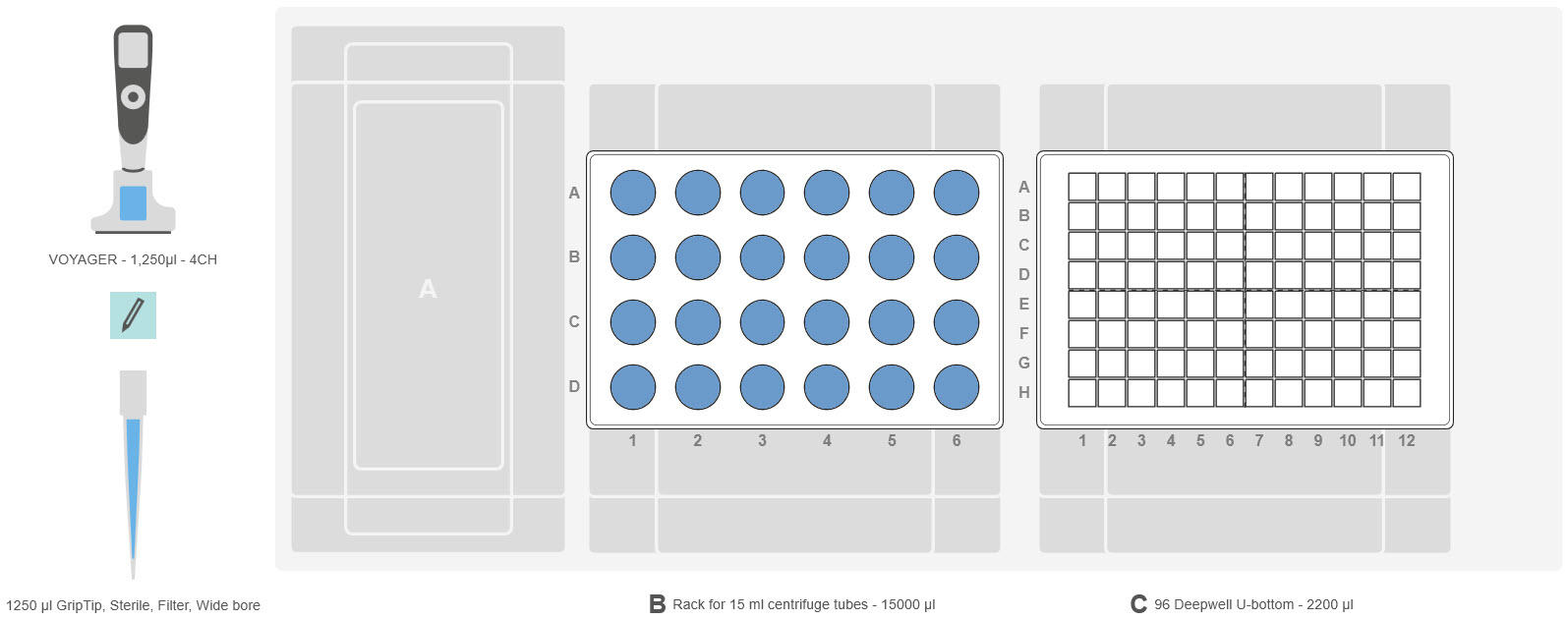
Deck position B: |
Human samples placed in tubes in an INTEGRA rack for 15 ml centrifuge tubes. |
| Deck position C: |
96 well, deep well plate used for subsequent NAE step. |
Step-by-step procedure
1. Nucleic acid extraction set-up
Transfer the human samples in the NAE plate
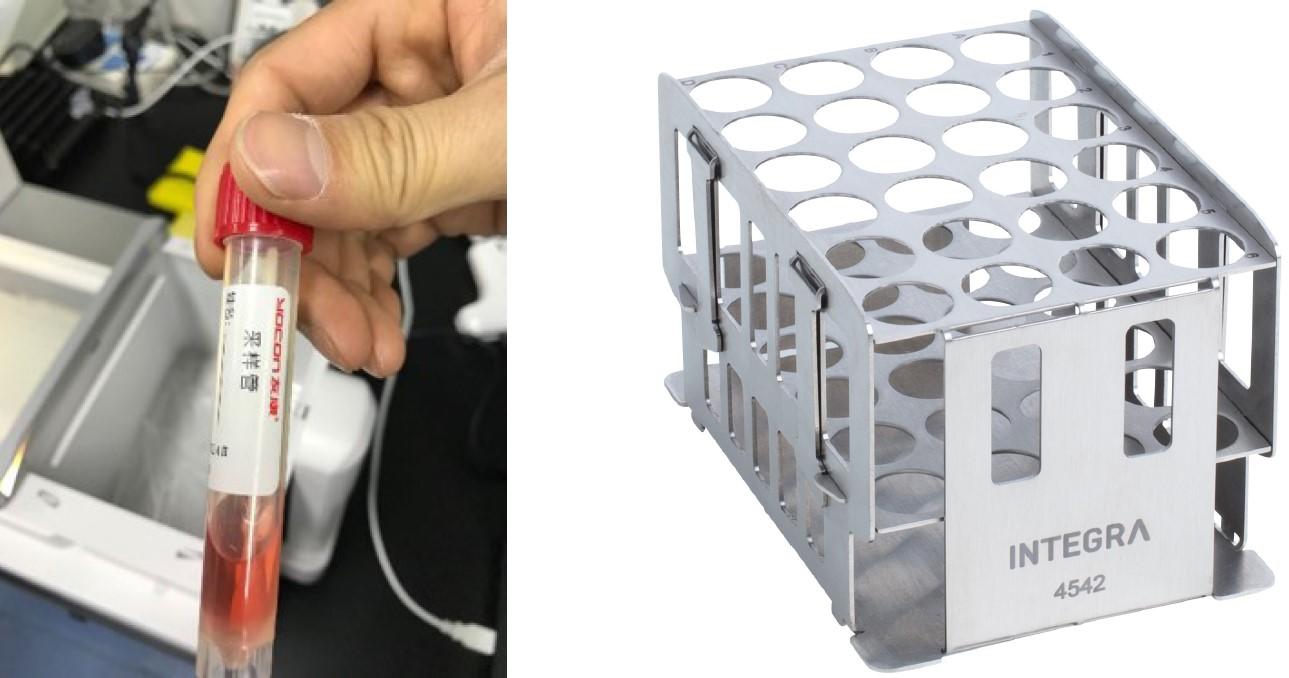
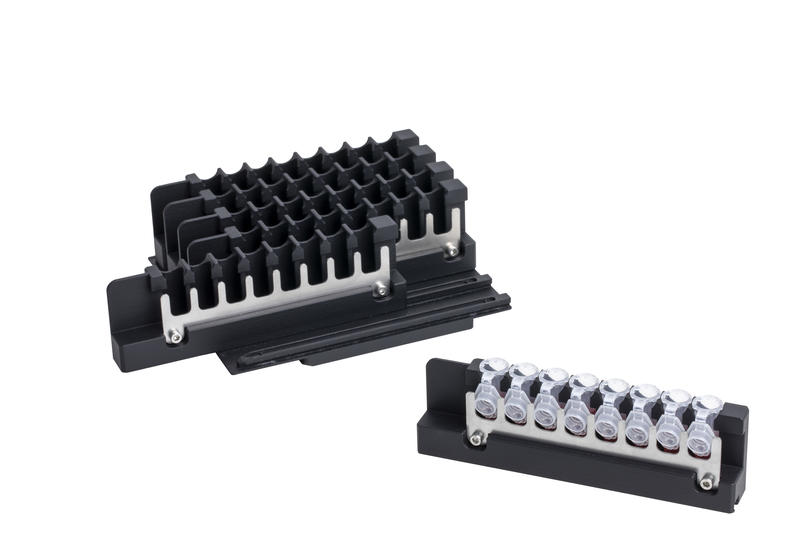
The ASSIST PLUS pipetting robot operates a VOYAGER 4 channel 1250 μl electronic pipette with 1250 μl Sterile, Filter, Wide Bore GRIPTIPS. Human samples in tubes are placed in four INTEGRA racks containing 24 tubes each (Figure 1). Prepare the deck with the required labware, as indicated in Figure 2. Select and run the VIALAB program 1-NAE-Set-up on the pipette. The VOYAGER pipette mixes the samples twice at low speed, to avoid aerosols while homogenizing the liquid. It then aspirates 200 μl of each sample followed by a 25 μl air gap before transferring the samples into the NAE plate. The pipette prompts the user to place a new sample rack on the deck once transfer of the samples in the current rack is complete. The program ends when all tubes have been processed. The plate is then ready for the NAE step.
Tips:
- The mixing and aspiration heights are optimized to allow the tips to access and pipette the liquid in the presence of the swab.
- The use of Sterile, Filter, Wide Bore GR is proven to be ideal when mixing and pipetting human samples for the NAE set-up.
- The pipetting speeds are set to speed 2 to reduce the generation of aerosols during sample handling.
- Adding an air gap after aspiration of critical liquids, together with the tip travel feature and the use of filter tips, helps to minimize the risk of contamination.
Experimental set-up: Program 2
|
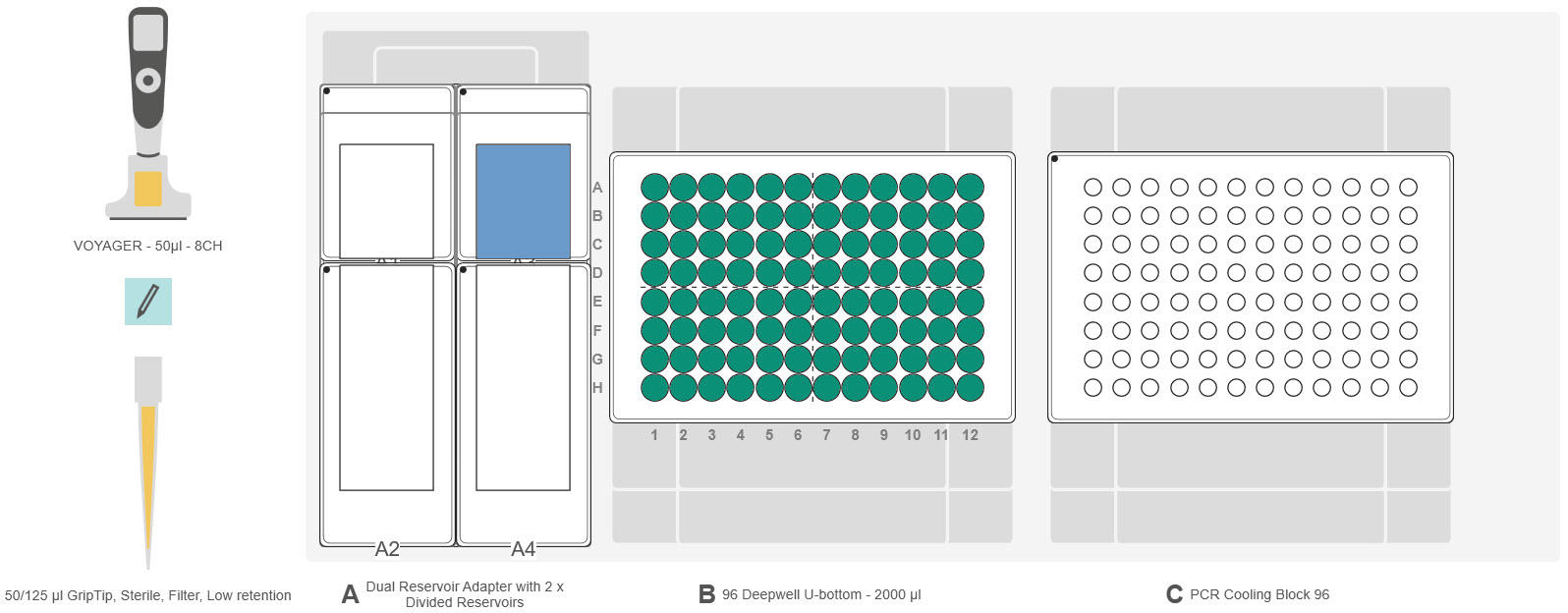
Deck position A: |
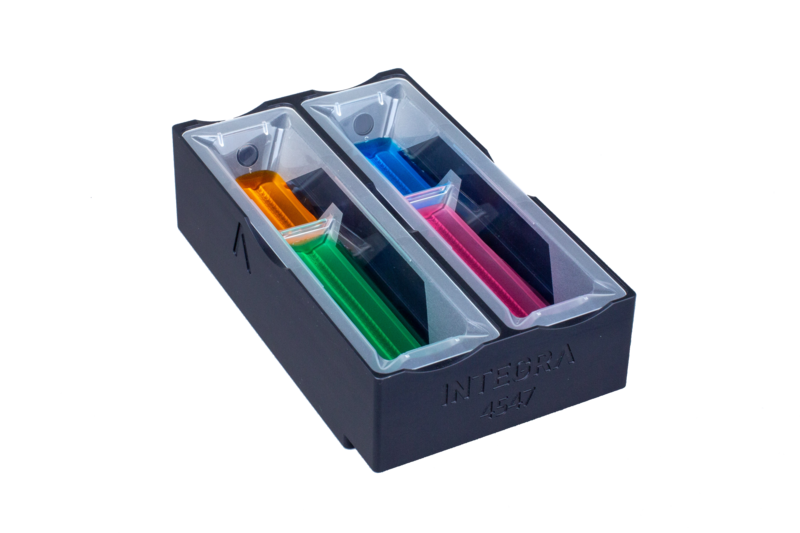
Dual reservoir adapter shown with one 25 ml, polypropylene divided reagent reservoir with SureFlo anti-sealing array. The 5 ml compartment contains the Mastermix. |
|
Deck position B: |
96 well, deep well plate containing the extracted nucleic acid templates. |
| Deck position C: |
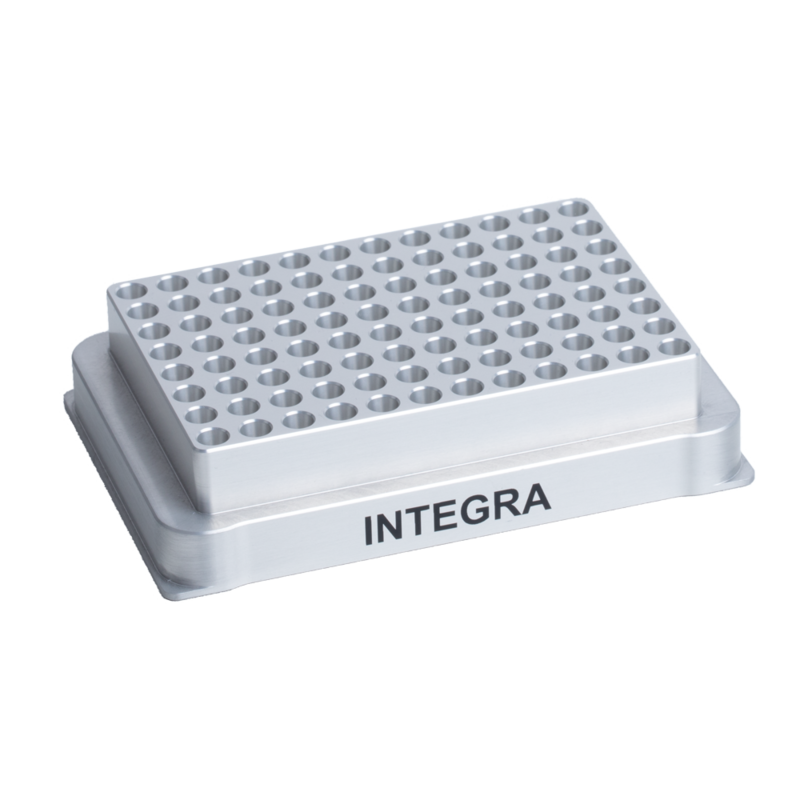
well PCR plate placed on an INTEGRA PCR cooling block. |
Step-by-step procedure
2. RT-PCR set-up
Set up the PCR plate
The ASSIST PLUS deck is prepared as indicated in Figure 3. The pipetting robot operates a VOYAGER 8 channel 50 μl together with Low Retention, Sterile, Filter GRIPTIPS. Place a dual reservoir adapter on Position A. Insert a sterile, 25 ml polypropylene divided reagent reservoir. The reservoir features a SureFlo anti-sealing array that allows an even distribution of the liquid on the bottom of the reservoir and prevents pipette tips from sealing, for maximum liquid recovery. The 96 well, deep well plate containing the extracted nucleic acid templates is placed on Position B, while the PCR plate, used with an INTEGRA PCR cooling block, goes on Position C. Select and run the VIALAB program 2-RT-PCR-Set-up. The pipette transfers the Mastermix from the reservoir into the PCR plate using the Repeat Dispense mode, followed by the extracted samples. The plate is then ready for the RT-PCR step.
Tips:
- The PCR cooling block is used as a support for the 0.1 ml MicroAmp™ Fast Optical 96-Well Reaction Plate. The cooling block also helps to keep the samples cold when the protocol requires it.
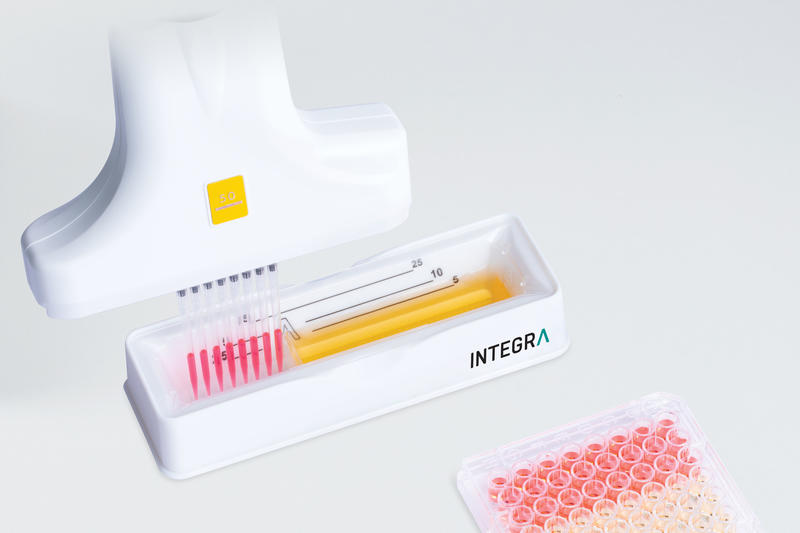
- Using the 5 ml compartment side of a 25 ml divided reagent reservoir – polypropylene with SureFlo anti-sealing array – allows a very low dead volume and minimizes the loss of the expensive Mastermix.
- The combination of a low pipetting speed – set at 2 – and Low Retention GRIPTIPS and pre- and post-dispense volumes shows excellent results when pipetting the viscous and foamy Mastermix.
- Using an air gap of 1.5 μl when aspirating the viral nucleic acid templates prevents the risk of contamination during sample transfer from one plate to another.
Experimental set-up: Program 3
|
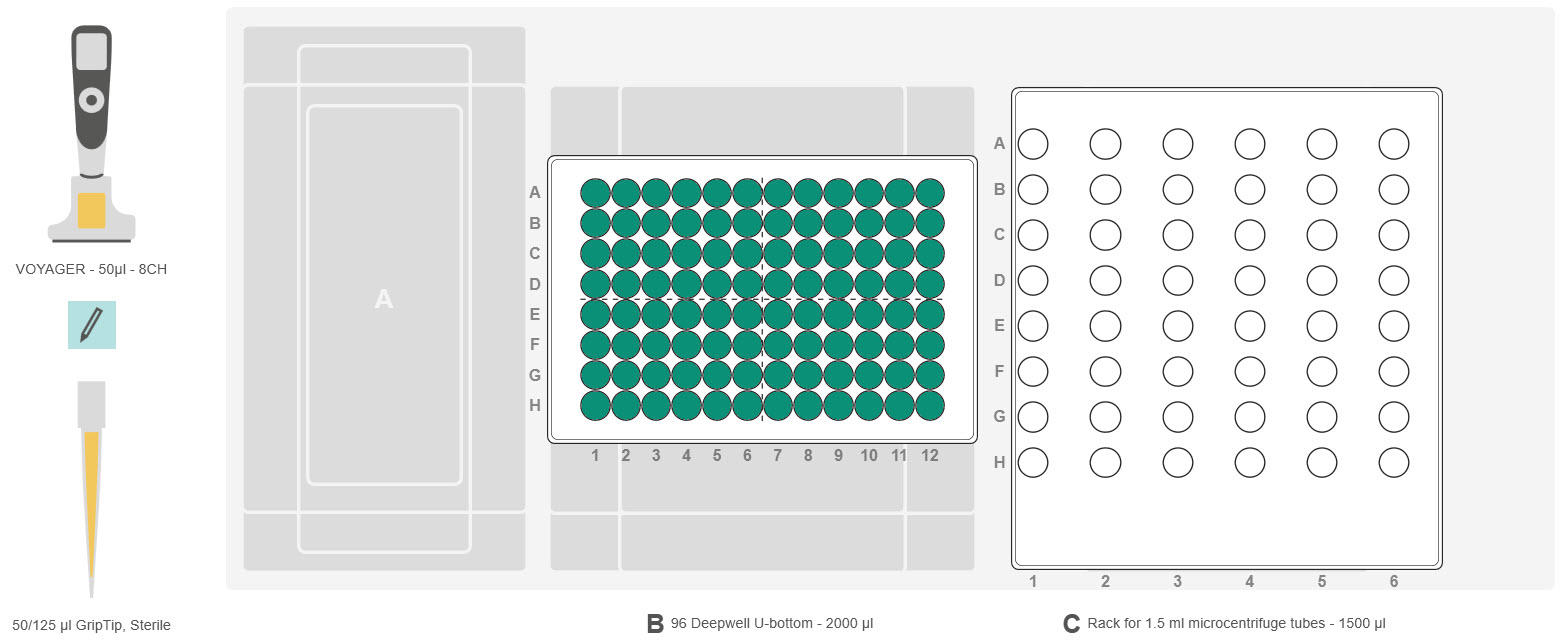
Deck position B: |
96 well, deep well plate containing the extracted nucleic acid templates. |
| Deck position C: |
INTEGRA rack for 1.5 microcentrifuge tubes, containing 48 empty tubes. |
3. Nucleic acid template storage
Transfer the nucleic acid samples into microcentrifuge tubes
Prepare two racks with 48 1.5 ml microcentrifuge tubes and place the first one on Position C (see Figure 4) of the deck. The deep well plate containing the nucleic acid templates is still on Position B. Choose the VIALAB program 3-RNA-Sample-Storage on the VOYAGER pipette. The pipette transfers the samples into the microcentrifuge tubes and informs the user when the second rack needs to be placed on the deck.
Tips:
- The combination of the tip spacing capability of the VOYAGER pipette, the automatic tip change, and optimized pipetting settings ensures an easy and rapid sample transfer without risk of contamination or reformatting errors.
- A 1.5 μl air gap has been added at the end of the aspiration to prevent cross-contamination risk.
Remarks
VIALAB software:
The VIALAB programs can be easily adapted to your specific labware and protocols, for instance when partial plates are needed.
Partial plates:
Programs can be adapted at any time to a different number of samples, giving laboratories total flexibility to meet current and future demands.
Conclusion
Ask our expert. Leave a comment!
Write us if you have any questions regarding the application note or one of our instruments.
Any questions? I'm happy to help!
Instruments and accessories
ASSIST PLUS, Pipetting Robot
INTEGRA has developed the ASSIST PLUS pipetting robot to streamline routine pipetting tasks at an affordable price. Using INTEGRA electronic multichannel pipettes, the system:
- automates pipetting tasks,
- eliminates physical strain and
- ensures superior reproducibility and
- error free pipetting.
Part No. 4505
Download
Download this App Note as PDF file
DownloadAutomated nucleic acid extraction and RT-PCR set-ups for SARS-CoV-2 testing
Customer’s voice
Perfect for medium to high throughput labs! This instrument fills a perfect gap in sample throughput. Our lab handles too many samples for manual processes, but doesn't have the throughput, space or funding for high-end automation systems. This robot suits us perfectly!
Related products
Applications
Show all-
End-to-end Twist library preparation protocol for NGS workflow automation
-
A simple and streamlined workflow for membrane protein isolation
-
Streamlining single-cell sequencing with the Flex Apex workflow using automated liquid handling solutions
-
Optimizing DNA fragmentation and NGS library preparation with automated liquid handling
Stories
Show all-
 · Company News
Streamlining CRISPR workflows, from editing to analysis
-
 · Customer Testimonial
Enhancing the consistency of ag-tech R&D processes with the ASSIST PLUS pipetting robot
-
 · Product News
Magnetic beads represent a modern approach to gDNA isolation
-
 · Product News
Magnetic beads for NGS size selection and PCR purification