


-
End-to-end Twist library preparation protocol for NGS workflow automation
NGS library preparation on the ASSIST PLUS pipetting robot using the Twist Library Preparation EF Kit 2.0
High quality and consistent DNA library preparation is essential for reliable next generation sequencing (NGS) results. The Library Preparation Enzymatic Fragmentation (EF) Kit 2.0 from Twist Bioscience (Twist EF Kit 2.0) addresses this need through an optimized enzymatic workflow that delivers robust library yields, high uniformity and improved accuracy, even from low input or challenging samples. Its updated reagent chemistry makes the kit well suited to standardized and automated NGS workflows.
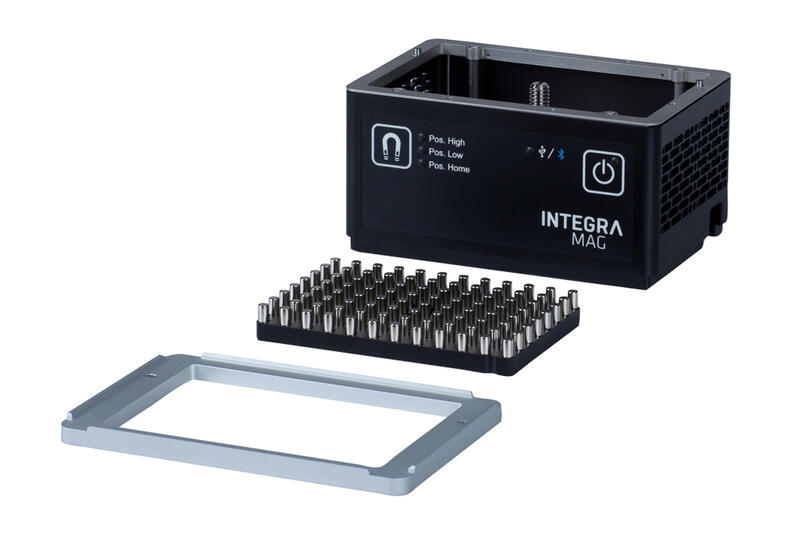
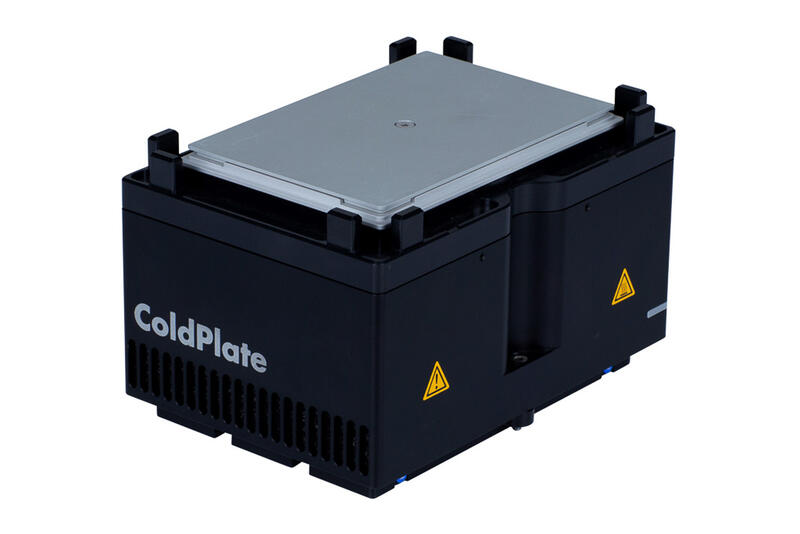
To further enhance reproducibility and operational efficiency, the Twist EF Kit 2.0 workflow was automated on the ASSIST PLUS pipetting robot, providing an end-to-end solution. Precise liquid handling is achieved using the VIAFLO electronic pipette with optimized and verified VIALAB protocols. Temperature-sensitive enzymatic steps are supported by active cooling on the COLDPLATE, while magnetic bead-based DNA size selection and PCR clean-up are automated using the MAG module, reducing manual handling. Together, the Twist EF Kit 2.0 and ASSIST PLUS platform provide an affordable, robust mid-throughput workflow capable of generating up to 96 sequencing-ready libraries per run with minimal hands-on time.
-
Table of contents
High quality and consistent DNA library preparation is essential for reliable next generation sequencing (NGS) results. The Library Preparation Enzymatic Fragmentation (EF) Kit 2.0 from Twist Bioscience (Twist EF Kit 2.0) addresses this need through an optimized enzymatic workflow that delivers robust library yields, high uniformity and improved accuracy, even from low input or challenging samples. Its updated reagent chemistry makes the kit well suited to standardized and automated NGS workflows.
To further enhance reproducibility and operational efficiency, the Twist EF Kit 2.0 workflow was automated on the ASSIST PLUS pipetting robot, providing an end-to-end solution. Precise liquid handling is achieved using the VIAFLO electronic pipette with optimized and verified VIALAB protocols. Temperature-sensitive enzymatic steps are supported by active cooling on the COLDPLATE, while magnetic bead-based DNA size selection and PCR clean-up are automated using the MAG module, reducing manual handling. Together, the Twist EF Kit 2.0 and ASSIST PLUS platform provide an affordable, robust mid-throughput workflow capable of generating up to 96 sequencing-ready libraries per run with minimal hands-on time.
Key benefits
Overview: How to automate the Twist EF Kit 2.0 on the ASSIST PLUS
This application note describes how the Twist EF Kit 2.0 can be automated on the ASSIST PLUS to enable reproducible, end-to-end NGS library preparation.
Downloads: App note and protocols for end-to-end Twist library preparation protocol for NGS workflow automation
Experimental set-up
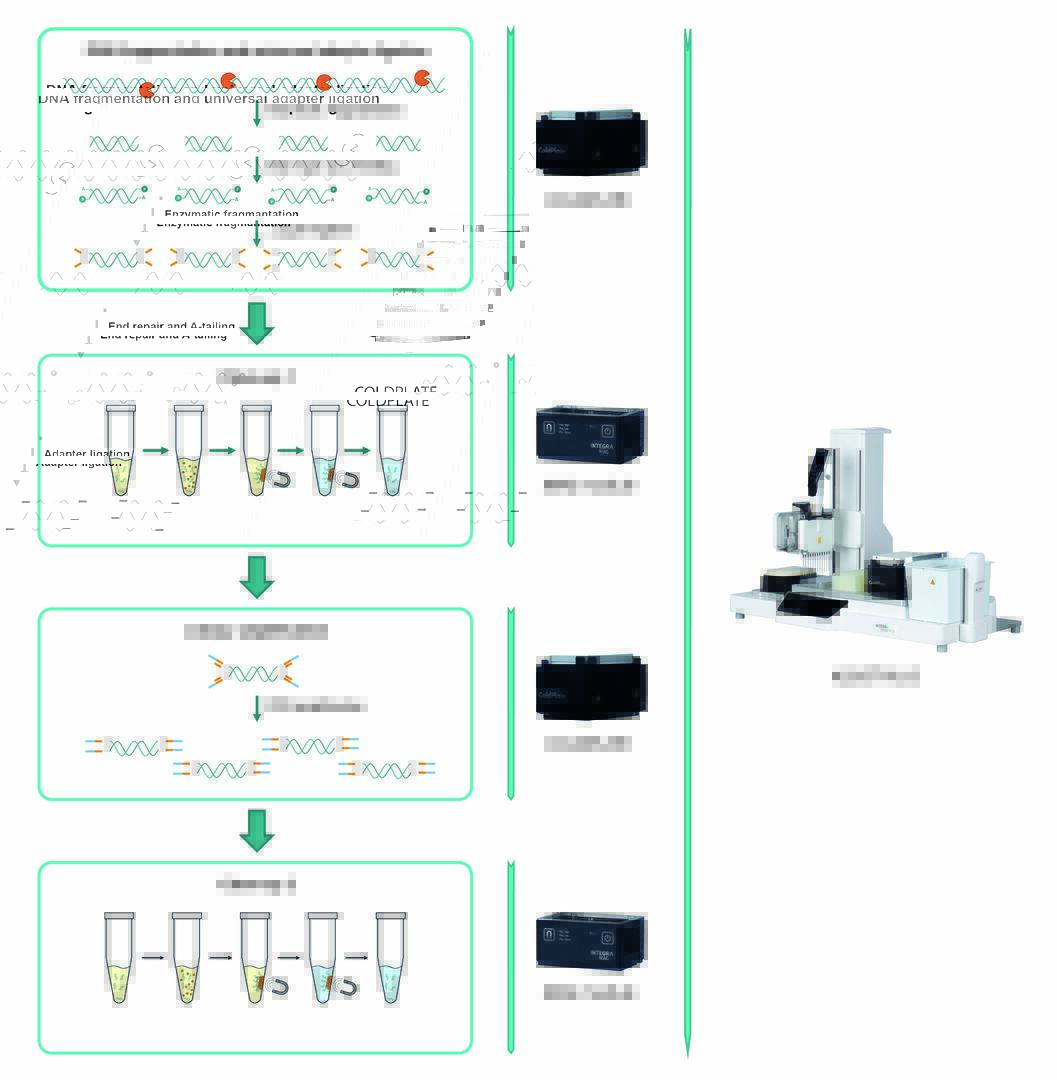
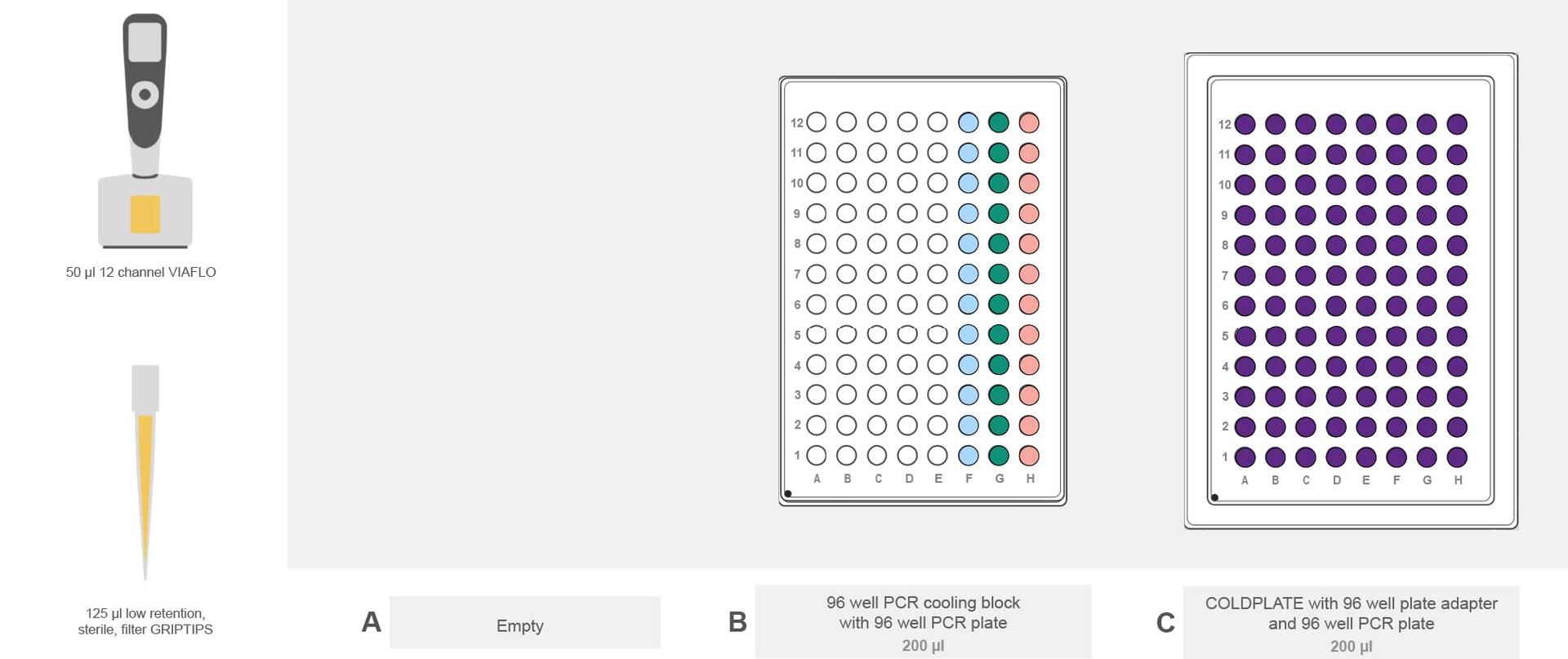
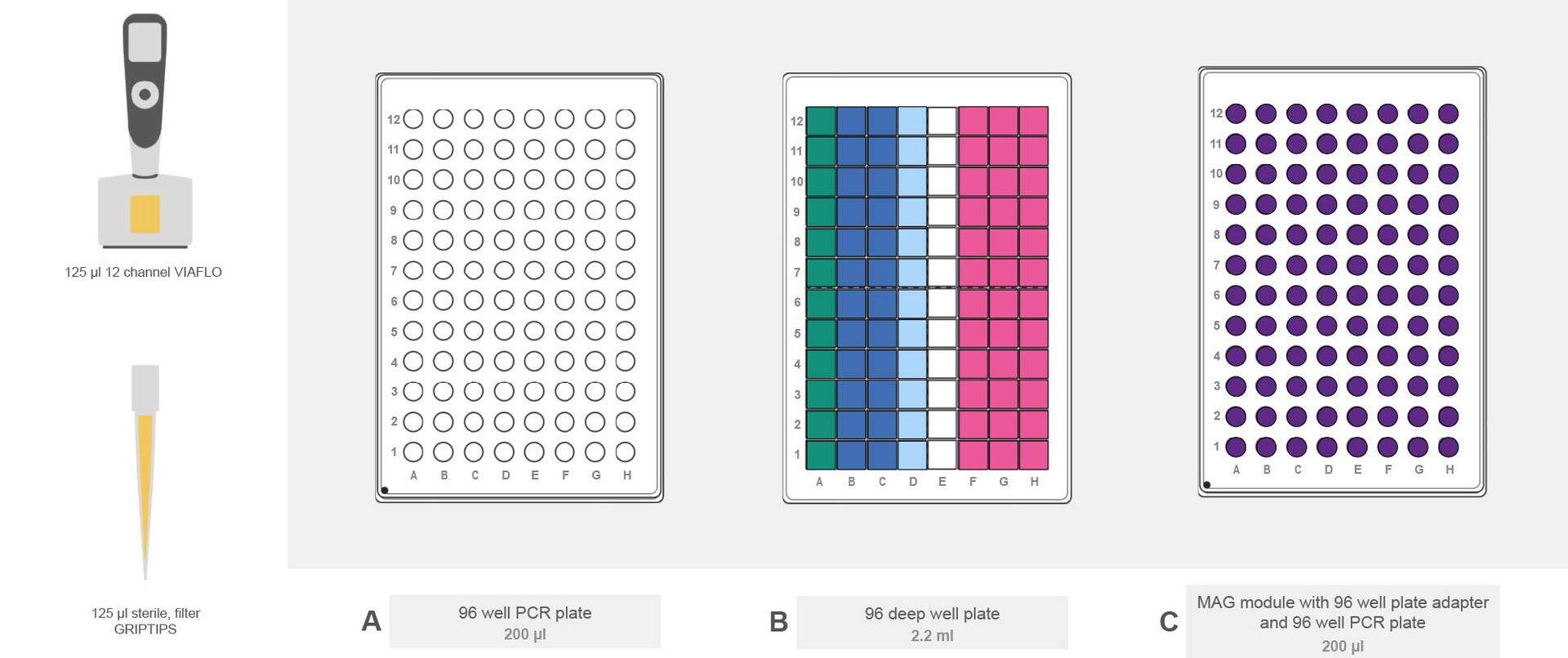
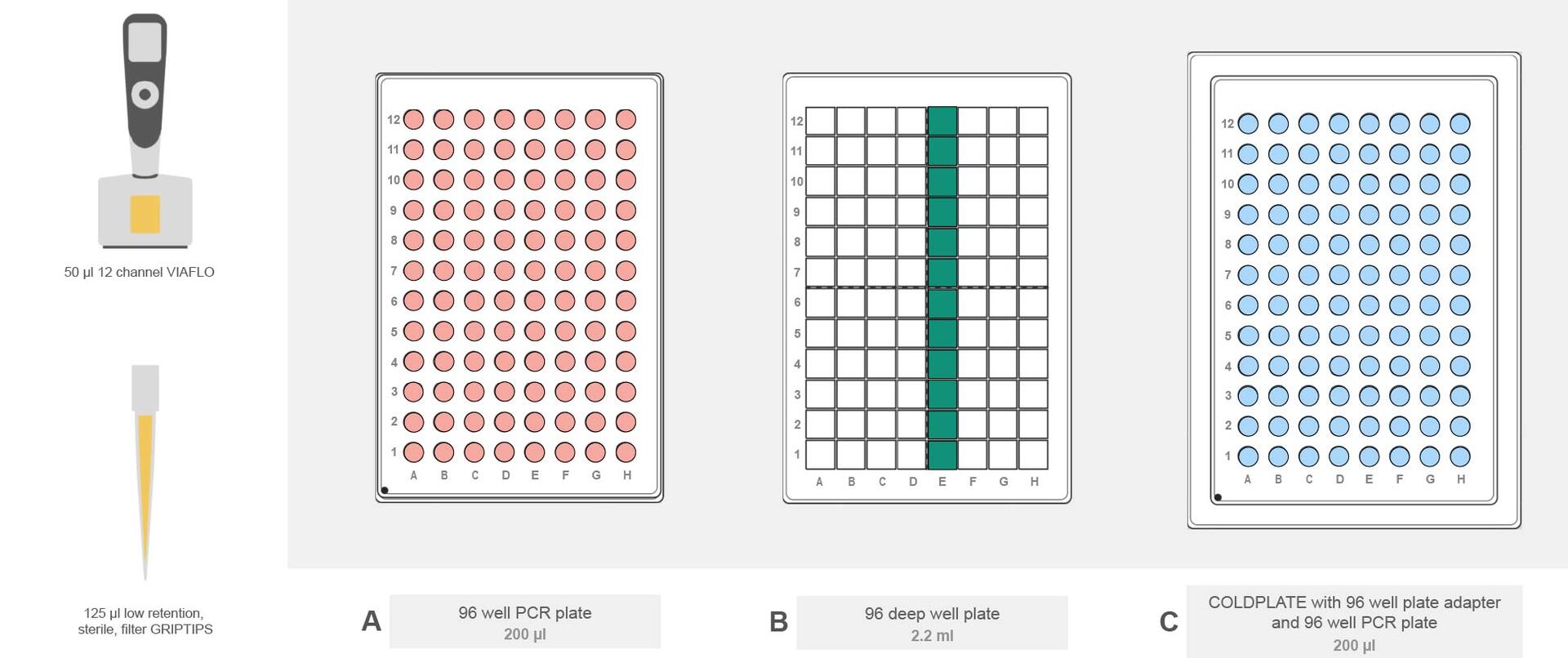
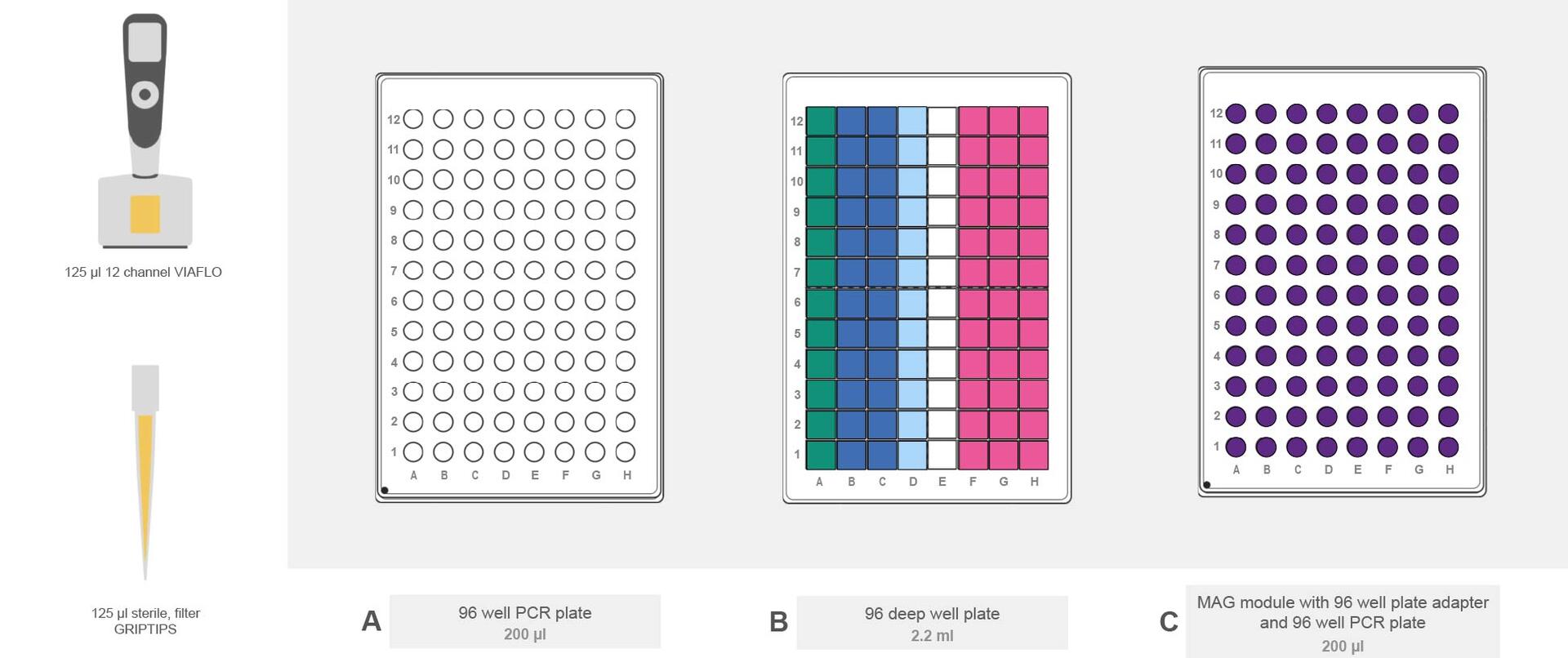
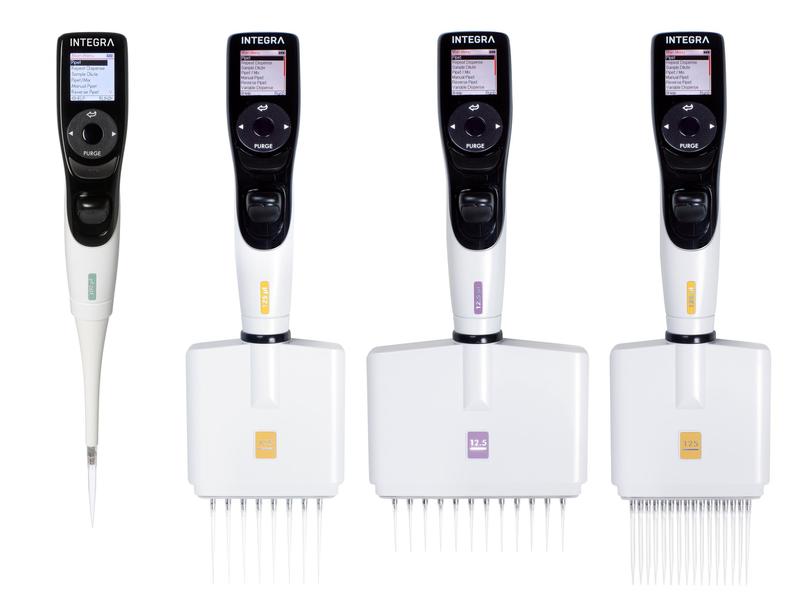
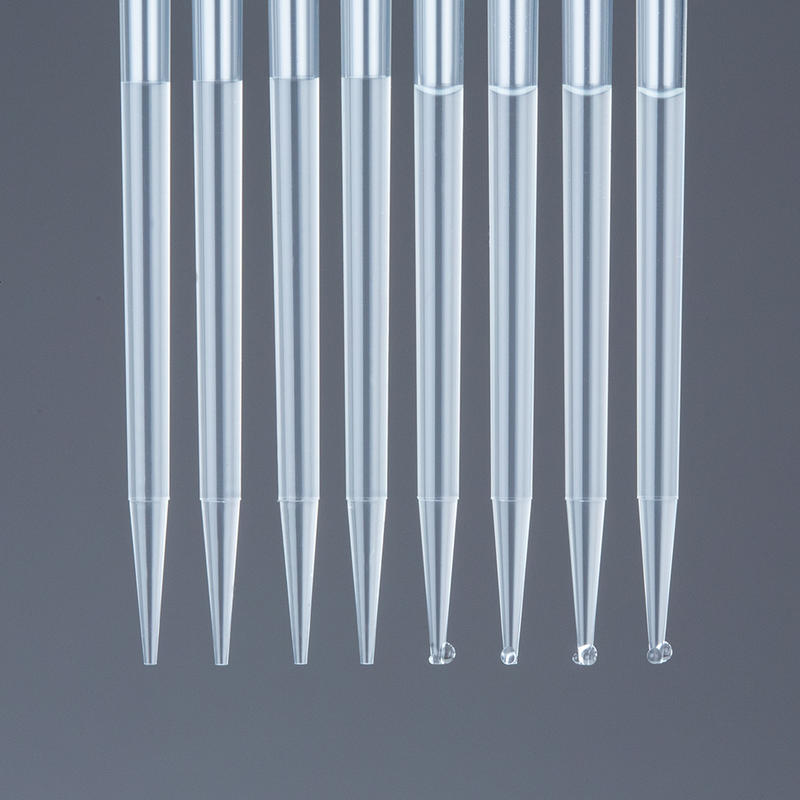
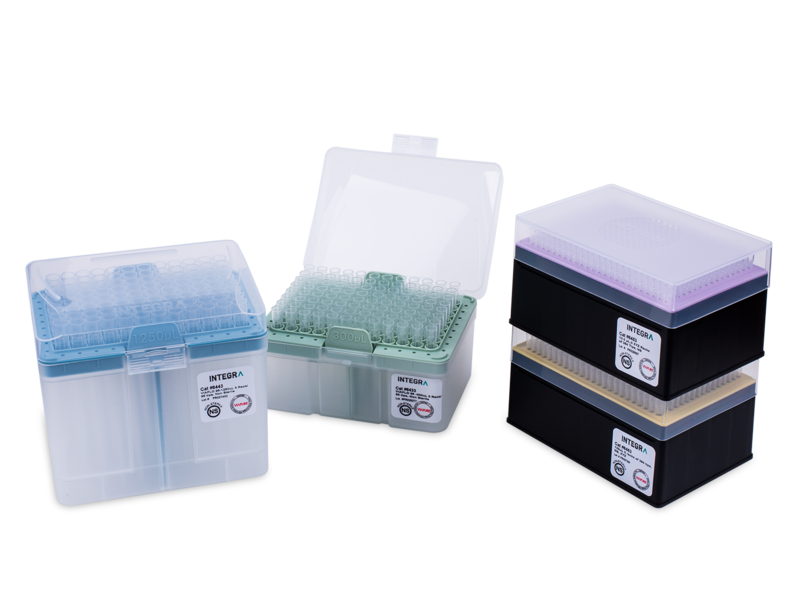
All liquid handling steps in the Twist EF Kit 2.0 workflow are automated using the ASSIST PLUS, together with the MAG module for automated magnetic bead handling and the COLDPLATE for active cooling of reagents. A 50 µl 12 channel VIAFLO electronic pipette with 125 µl low retention, sterile, filter GRIPTIPS® pipette tips was used to pipette enzyme solutions and small liquid volumes in steps 1 and 3. A 125 µl 12 channel VIAFLO pipette with 125 µl sterile, filter GRIPTIPS pipette tips was used to pipette ethanol and magnetic beads in the clean-up steps. All liquid handling steps are covered by 4 validated VIALAB programs, following the manufacturer’s 'Twist library preparation protocol' (Figure 1) and using 3 basic deck set-ups:
- DNA fragmentation and universal adapter ligation (Figure 2)
- Position A: not used
- Position B: 96 well PCR cooling block with 96 well PCR plate
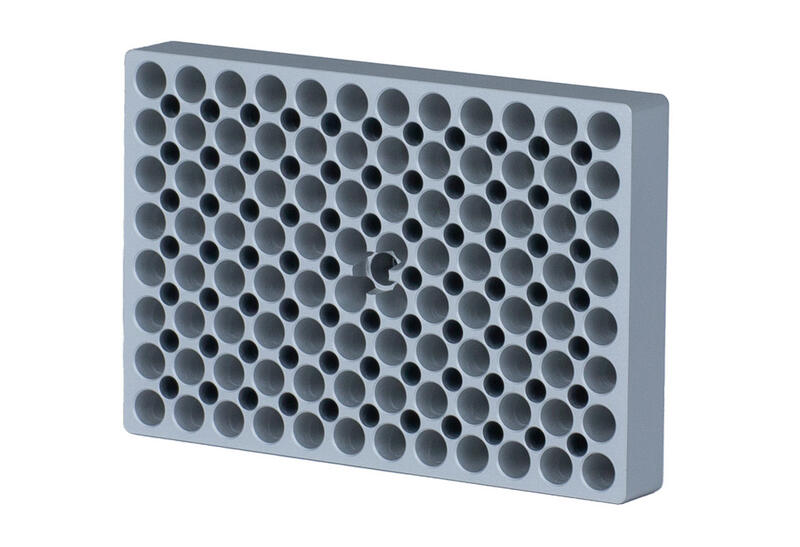
- Position C: COLDPLATE with 96 well plate adapter and 96 well PCR plate - Clean-up 1 and clean-up 2 (Figures 3 and 5)
- Position A: 96 well PCR plate
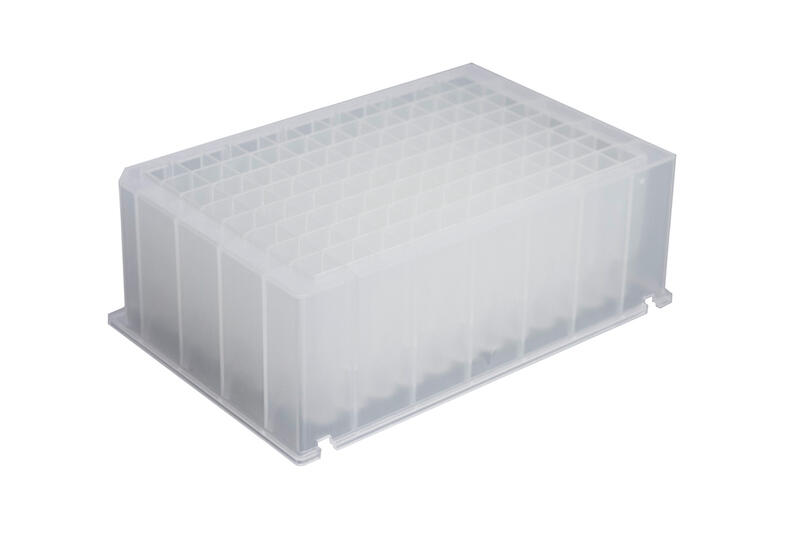
- Position B: 96 deep well plate
- Position C: MAG module with 96 well plate adapter and 96 well PCR plate - Library amplification (Figure 4)
- Position A: 96 well PCR plate
- Position B: 96 deep well plate
- Position C: COLDPLATE with 96 well plate adapter and 96 well PCR plate
Step-by-step procedure
DNA fragmentation and universal adapter ligation
Fragment, polish and ligate DNA
Prepare DNA fragments for adapter ligation.
The first reaction involves enzymatic fragmentation of genomic DNA (gDNA) into fragments of the desired size range. This combines fragmentation, end-repair and A-tailing (polishing), resulting in ligation-ready fragments with 5′-phosphate and 3′-A overhangs. In a second reaction, Twist Universal Adapters are ligated to the respective overhangs. These are required for later amplification and compatibility with the sequencing platform.
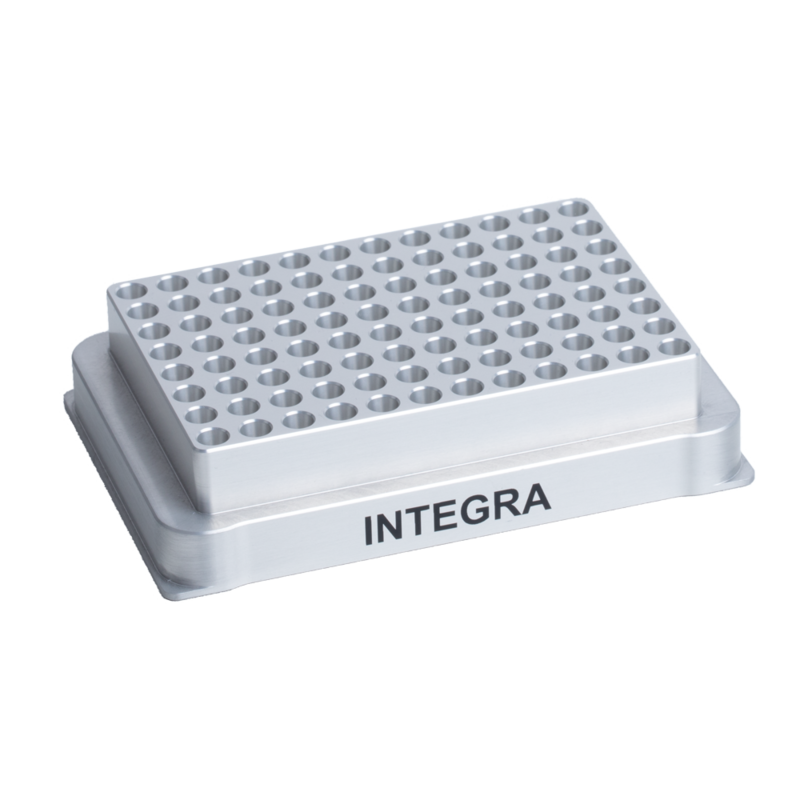
Before starting, prepare the enzymatic fragmentation mix by combining 440 µl Frag/AT Buffer with 660 µl Frag/AT Enzymes in a 1.5 ml microcentrifuge tube on ice. Homogenize with moderate vortexing for 5 seconds or by pipetting a minimum of half the total volume up and down 10 times (avoid the formation of bubbles). Add the prepared enzymatic fragmentation mix, the Twist Universal Adapters and the Ligation Master Mix to a new 96 well PCR plate and centrifuge. Place the plate on a pre-cooled, 4 °C INTEGRA 96 well PCR cooling block on position B, as shown in Figure 2. Add 40 µl of sample DNA to every well of a clean 96 well PCR plate and set up the ASSIST PLUS deck according to Figure 2. Before starting the run, make sure that the COLDPLATE is connected to the ASSIST PLUS via the AUX port.
Once the input reagents have been prepared, run the VIALAB program 'TWIST_1_FRG_LIG' on the 50 µl 12 channel VIAFLO electronic pipette. This program distributes the enzymatic fragmentation mix to each sample in position C and mixes it. Seal the sample plate with heat resistant foil and incubate it in a thermocycler. Set the fragmentation time according to the desired insert length, as specified in the 'Twist library preparation protocol' provided in the download section. The conditions should be optimized for each sample type and application. A 20 min incubation time at 37 °C is recommended for Twist target enrichment applications using 50 ng of high quality gDNA. Fragmentation is followed by polishing at 65 °C for 30 min. Place the 96 well PCR cooling block and the prepared reagent plate in the fridge while fragmentation and polishing are ongoing. Once incubation is complete, place the reagent and sample plates back on the ASSIST PLUS deck, as shown in Figure 2. Continuing the program, Twist Universal Adapters and Ligation Master Mix are distributed to each sample in position C, followed by thorough mixing. The COLDPLATE actively cools to a constant 4 °C during this process, ensuring uniform reaction kinetics across all samples. Seal the sample plate with heat resistant foil and incubate it for 15 min at 20 °C in a thermocycler. After incubation, store the ligated DNA libraries at 4 °C or continue with the first clean-up.
Clean-up 1
Purify DNA libraries
Magnetic bead-based purification removes enzymes, buffer components and excess/unligated adapters to prevent downstream interference.
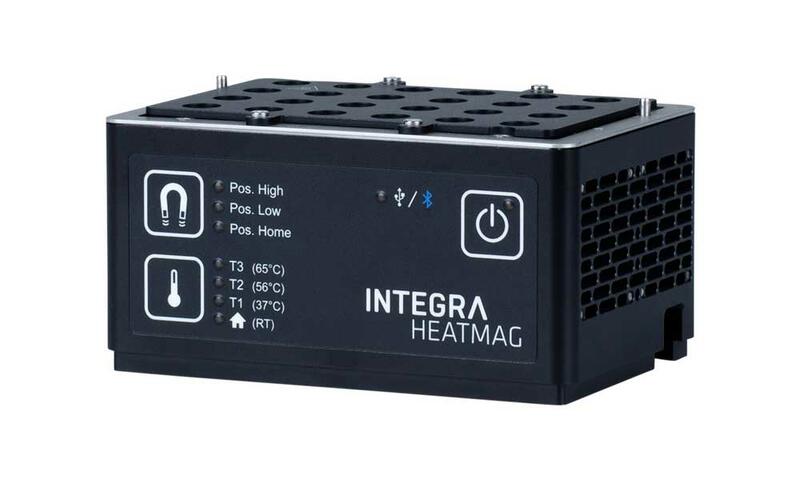
Place the sample plate on the MAG module and remove the seal. Add water, 80 % ethanol and the DNA Purification Beads 0.8x to a new 96 deep well plate and set up the ASSIST PLUS deck according to Figure 3. Before starting the run, make sure that the MAG module is connected to the ASSIST PLUS via the AUX port.
After preparing all the input reagents, run the program 'TWIST_2_CLEANUP' on the 125 µl 12 channel VIAFLO electronic pipette. This program transfers magnetic beads in a 0.8x ratio to each sample in position C, where they are mixed. After a 5 min incubation, allowing the DNA libraries to bind to the magnetic beads, the MAG module automatically raises its magnets to collect the beads. The supernatant is discarded to empty columns (F-H) of the 96 deep well plate. The bead pellets are washed twice with 80 % ethanol, without disturbance, to remove unwanted impurities. The second wash step is followed by an additional aspiration to ensure the complete removal of any residual ethanol. After air drying, the beads are resuspended in water to elute the DNA. Following a 2 min incubation, the MAG module captures the magnetic beads and the supernatant is transferred to a fresh 96 well PCR plate in position A. Seal the plate and either store the purified libraries at 4 °C or continue with the library amplification.
Library amplification
Amplify libraries after clean-up
PCR amplification enriches adapter-ligated fragments and increases library yield to reach the concentration needed for downstream sequencing.
Place the sample plate on the COLDPLATE and remove the seal. Add Equinox Library Amp Mix to a new 96 deep well plate and set up the ASSIST PLUS deck according to Figure 4. Vortex and spin the 96 well PCR plate containing the Twist UDI Primers and remove the seal. Before starting the run, make sure that the COLDPLATE is connected to the ASSIST PLUS via the AUX port.
Once the input reagents have been prepared, run the program 'TWIST_3_PCR' on the 50 µl 12 channel VIAFLO electronic pipette. This program distributes Twist UDI Primers and Equinox Library Amp Mix to each sample in position C and mixes. Seal the sample plate with heat resistant foil and start the PCR. Set the thermocycler conditions as specified in the 'Twist library preparation protocol' provided in the download section. Once the PCR is finished, either store the amplified libraries at 4 °C or continue with the final clean-up.
Tip:
- Reuse the 96 deep well plate from the library amplification step for clean-up 2, keeping column (E) empty.
Clean-up 2
Clean up libraries after amplification
A second bead clean-up removes PCR reagents, primer dimers and small DNA fragments, producing a clean, sequencing-ready library.
Place the sample plate on the MAG module and remove the seal. Add water, 80 % ethanol and the DNA Purification Beads 1x to a new 96 deep well plate and set up the ASSIST PLUS deck according to Figure 5. Before starting the run, make sure that the MAG module is connected to the ASSIST PLUS via the AUX port.
Once the input reagents have been prepared, run the program 'TWIST_4_CLEANUP' on the 125 µl 12 channel VIAFLO electronic pipette. This program follows the same principle as the first DNA clean-up. Changes include the sample input volume, 1x bead-to-sample ratio and a final elution volume of 20 µl. Once the program finishes, the clean, sequencing-ready libraries are pipetted into the 96 well PCR plate on position A. Seal the plate and store at 4 °C.
Results
Library preparation is a critical step in NGS workflows, directly impacting the quality of sequencing data. To verify the performance of automated library preparation on the ASSIST PLUS, 96 libraries were prepared using the VIALAB programs available in the download section. All libraries were prepared from 52 ng of human genomic DNA from human blood (buffy coat) with the following conditions:
- DNA was fragmented for 10 min at 37 °C. These conditions were optimized for highly pure, naked DNA, and may vary with different quantity and quality inputs.
- Bead pellets were washed twice with 125 µl of 80 % ethanol.
- Library PCR amplification was performed with 7 PCR cycles. Additional PCR cycles can be added if higher yields are desired.
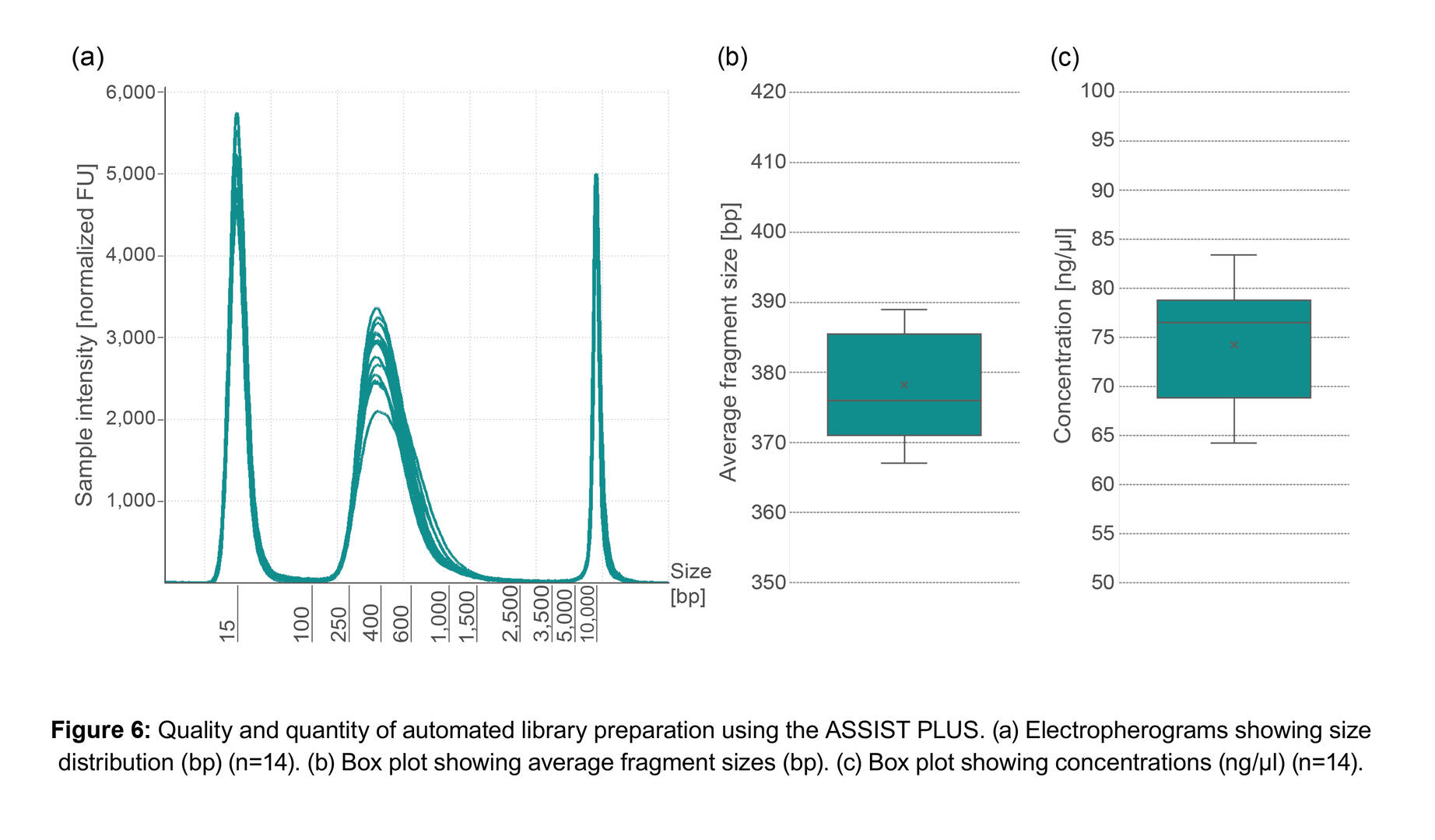
To investigate the performance of the automated library preparation, 14 samples were selected randomly from a 96-sample run and analyzed for size distribution and yield using the 4150 TapeStation System (Agilent). The libraries displayed narrow peak shapes, with an average fragment size of 378 bp (range: 367-389 bp). Library concentrations were measured at 74 ± 6.2 ng/µl, and ranged from 64 to 83 ng/µl (Figure 6). These results are well within the specifications described in the 'Twist library preparation protocol', available in the download section.
Conclusion
Ask our expert. Leave a comment!
Write us if you have any questions regarding the application note or one of our instruments.
Any questions? I'm happy to help!
Instruments and accessories
ASSIST PLUS, Pipetting Robot
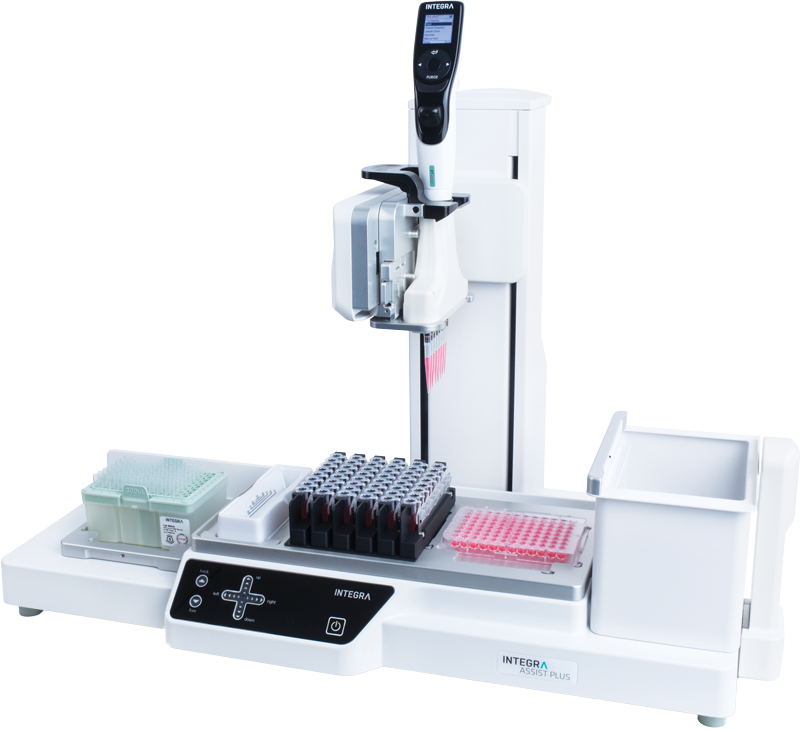
INTEGRA has developed the ASSIST PLUS pipetting robot to streamline routine pipetting tasks at an affordable price. Using INTEGRA electronic multichannel pipettes, the system:
- automates pipetting tasks,
- eliminates physical strain and
- ensures superior reproducibility and
- error free pipetting.
Part No. 4505
Downloads
Download App Note as PDF
DownloadEnd-to-end Twist library preparation protocol for NGS workflow automation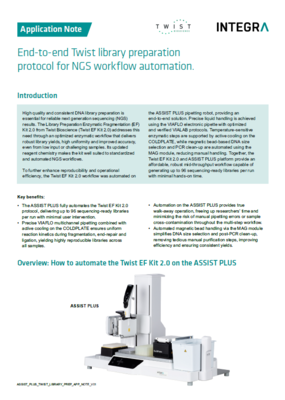
Customer’s voice
We have been using ASSIST PLUS for already more than a year, and it has been a fantastic experience. The software, the build everything is really good. We were able even to make our own add-on to the platform to enable priming step. We use it in combination with VOYGER 8 channel pipette.
Related products
Applications
Show all-
Optimizing DNA fragmentation and NGS library preparation with automated liquid handling
-
Streamlining single-cell sequencing with the Flex Apex workflow using automated liquid handling solutions
-
A simple and streamlined workflow for membrane protein isolation
-
Automating media exchange and sample collection using Ronawk’s Bio-Blocks® In Similare technology and the ASSIST PLUS
Stories
Show all-
 · Product News
Magnetic beads represent a modern approach to gDNA isolation
-
 · Product News
Magnetic beads for NGS size selection and PCR purification
-
 · Company News
Streamlining CRISPR workflows, from editing to analysis
-
 · Customer Testimonial
Enhancing the consistency of ag-tech R&D processes with the ASSIST PLUS pipetting robot