


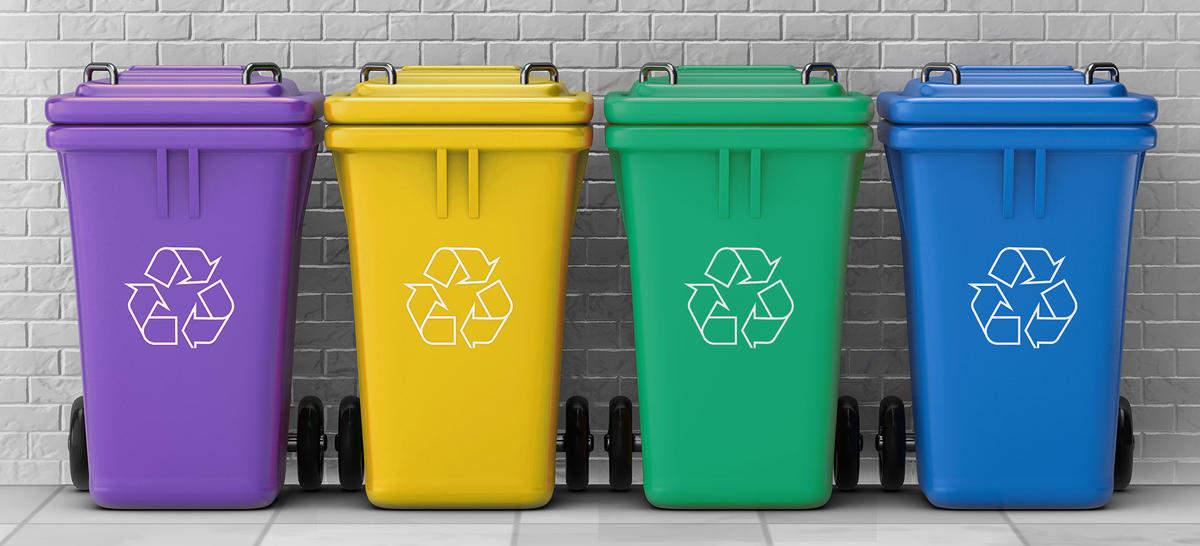
How and which INTEGRA laboratory consumables can be recycled
Our aim is to eliminating lab plastics going to landfills or disposal at sea
What to do to recycle your empty racks, inserts, and tips?
ECO Racks (PET)
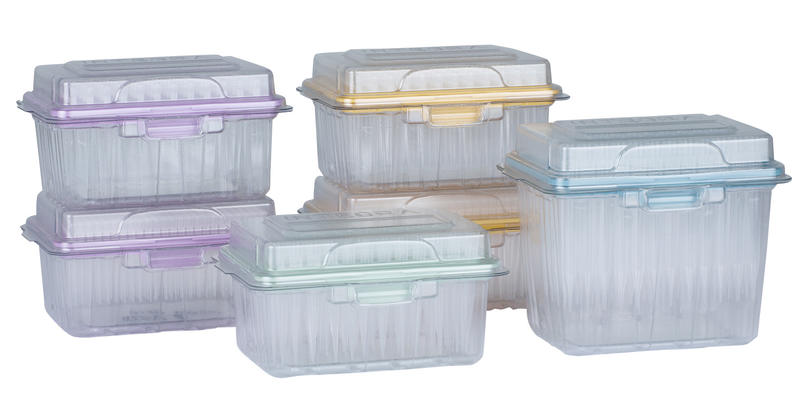
Compressed ECO Racks (3xxx series) can be easily processed by your local PET recycler. The environmental benefit of PET recycling is the highest for any plastic material1, since the production of fresh PET is very energy-intensive, and little energy can be recovered during PET incineration.
Polypropylene racks (PP)
Polypropylene racks (4xxx and 6xxx series) and ECO Rack inserts can also be handled locally, provided you have the collection, sorting and recycling infrastructure within around 1000 km – any further transport negates the environmental benefit of the recyclate. If no recycling is available, energy recovery by incineration in a cement plant or waste plant is the best alternative.
Reservoirs and tips (contaminated)
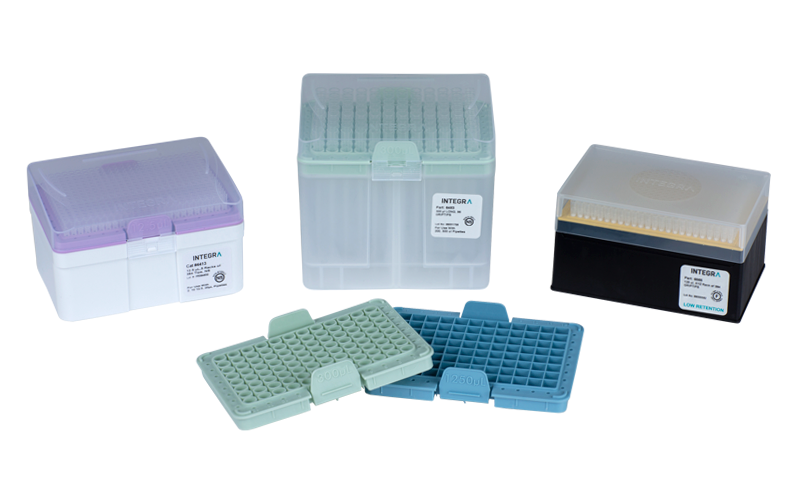
Used reservoirs and tips cannot be safely recycled, due to the risk of contamination with harmful chemical or biological agents. However, that doesn’t mean there isn’t still a ‘green’ option for their disposal. Used plastics can be incinerated in energy capture plants to produce energy and to prevent landfill. The most sensible way to do this is to capture and utilize CO2 emissions (CCU) to keep carbon in the material cycle.
Why INTEGRA does not offer a collection service
Many laboratories around the world have their own local programs for recycling tip containers, inserts and other plastic waste from the lab, as well as for the incineration of contaminated tips and reservoirs to recover energy.
Unfortunately, it is neither practical nor environmentally friendly for equipment and consumables manufacturers to offer individual collection services if no recycling facilities already exist locally. Clarification with like-minded pipette tip manufacturers has shown that no one can reuse empty containers and other used plastic products, and that the total amount of plastic put into circulation is not sufficient to support a dedicated, high -quality recycling service.
INTEGRA already pays charges for adding used laboratory plastic to household recycling collections, and has calculated that setting up a separate recycling solution would be twice as expensive. We would therefore like to use our funds more wisely, and have decided to enter into a partnership with CleanHub (INTEGRA Biosciences plastic sustainability: Over 11'700 kg of plastic waste collected in 2024 | CleanHub). This collaboration will support the collection of plastic on coastlines to prevent it from entering the oceans.
Plastic recycling in the United Kingdom
Your laboratory consumable plastic recycling specialist in the UK is RecycleLab.
RecycleLab collect and recycle a wide range of plastic lab consumables including our pipette tips and racks. They are working towards developing a circular economy whereby the plastic lab consumables they collect and recycle will be used again to manufacture new lab consumables.
What plastics are used in INTEGRA consumables?
We use three main plastics for the production of our consumables:
 |
Polypropylene (PP) |
PP is transparent, lightweight, chemically resistant and can be autoclaved. It also exhibits low binding of biomolecules, and does not contain additives that could leach into the sample. GripTips are made of virgin PP, free of DNase, RNase, endotoxins and pyrogens to ensure high quality results. PP is also used for some reservoirs, and the regrind from tip production is used to mold the standard racks. |
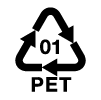 |
Polyethylene terephthalate (PET) |
PET is used for ECO Racks, as it is commonly recycled and can be formed into a rigid rack using less plastic. |
 |
Polystyrene (PS) |
PS is used for our standard reservoirs, as it is crystal clear, inexpensive and ideal for aqueous solutions. |
How can they be recycled?
Regranulate and reuse
Non-hazardous plastic lab waste is collected, pressed into balls and transported to a sorting plant where the plastic is shredded, washed and sorted. The single-sort bales are then transported to a recycler, who produces regranulates – the raw material for new plastic products. Unfortunately, this process is costly, and most plastics can only be recycled once due to the changing properties of the material. These recycled materials are more brittle and are generally used for lower stress applications, such as storage boxes or garden furniture. However, we are continuously improving the recyclability of our racks according to the Design for Recycling guidelines.
1 Turner DA, Williams ID, Kemp S. Greenhouse gas emission factors for recycling of source-segregated waste materials. Elsevier 2015.