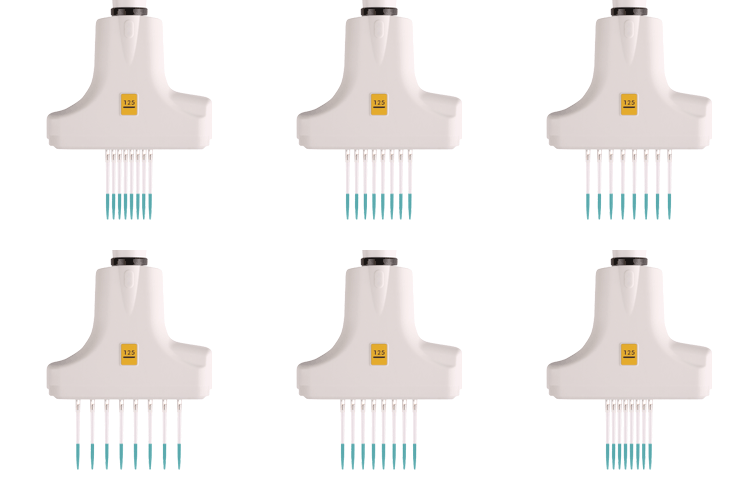
INTEGRA’s electronic pipettes enable vital screening for microbial evolution research
The VOYAGER automatic adjustable tip spacing pipette and VIAFLO lightweight electronic pipette are the perfect lab companions for studies requiring analysis of large sample numbers, to streamline workflows and get reproducible results. Dr Astrid Altamirano-Junqueira, who completed her doctoral studies into the evolution of bacterial motility in the School of Biological Studies at Reading University, discussed how these electronic pipettes aided her research: “I completed my PhD in 2019 in the United Kingdom, where I was researching microbial evolution. My focus was on microbial motility, looking at the effects of deleting the flagella master regulator gene – FleQ – in Pseudomonas fluorescens. In bacterial evolution, genes often duplicate and mutate to take on new roles. I performed in-depth gene expression studies on more than 40 different FleQ knockout P. fluorescens strains, and identified a novel strain that had undergone a rewiring of the nitrogen pathway – which flagella master regulator FleQ is part of in the wild type – to restore flagella protein expression and motility. I then went on to explore how this new ‘swimmer’ strain was affected by nitrogen starvation.”
Enabling quick results
“My first task was to grow the FleQ knockout mutants which, depending on the treatment, could take between one and 20 days to appear in the culture media. Because P. fluorescens is naturally a mobile bacteria, conventional incubator set-ups designed for organisms that adhere to a surface or grow in suspension were not a viable option; insufficient agitation of aflagellate P. fluorescens led to bacteria settling to the bottom of the well and becoming resource starved. This leads to a decrease in growth over time, even without nitrogen starvation, potentially skewing results. I therefore needed to use a Bioscreen C MBR analyzer, which provides much stronger plate shaking, and can perform on-the-fly measurements without needing the plate to be stationary and settled.”
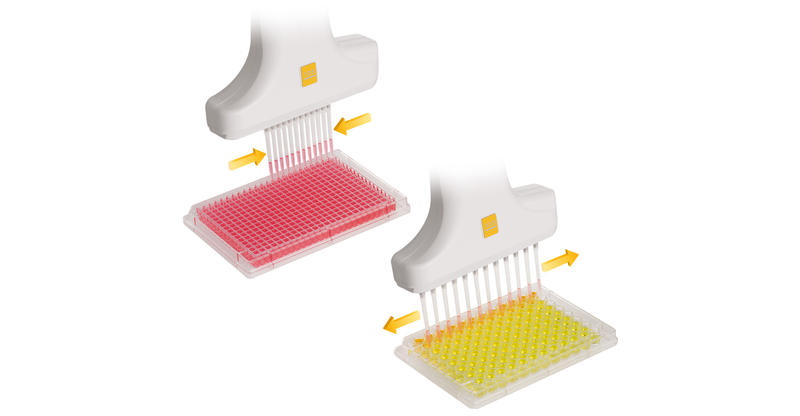
“The challenge of using the Bioscreen C is that is uses a honeycomb design microplate, which does not have the same well spacing as standard 96 well microplates. At first, I was pipetting into each well individually, but you can incubate and analyze up to 200 samples at a time on this platform, which makes the process incredibly time consuming. It took almost six hours to prepare and inoculate the plate the first time I tried it and, as it was incredibly tiring, I was concerned that if my concentration slipped, I might end up making mistakes. It was also difficult to keep the plate cold so that the bacteria didn’t start growing before the plate was fully loaded. As it was such a time critical step, I really needed a more efficient solution for my pipetting, so I started researching alternative pipetting options, and discovered INTEGRA’s multichannel electronic pipette range. The Bioscreen manual actually recommends the VOYAGER adjustable tip spacing pipette as the most efficient option for use with the instrument, allowing easy transfer of multiple samples from tubes to plates, or between plates with different spacing. With the VOYAGER, I can load an entire plate in less than 15 minutes, which is amazing.”
The perfect combination for a variety of workflows
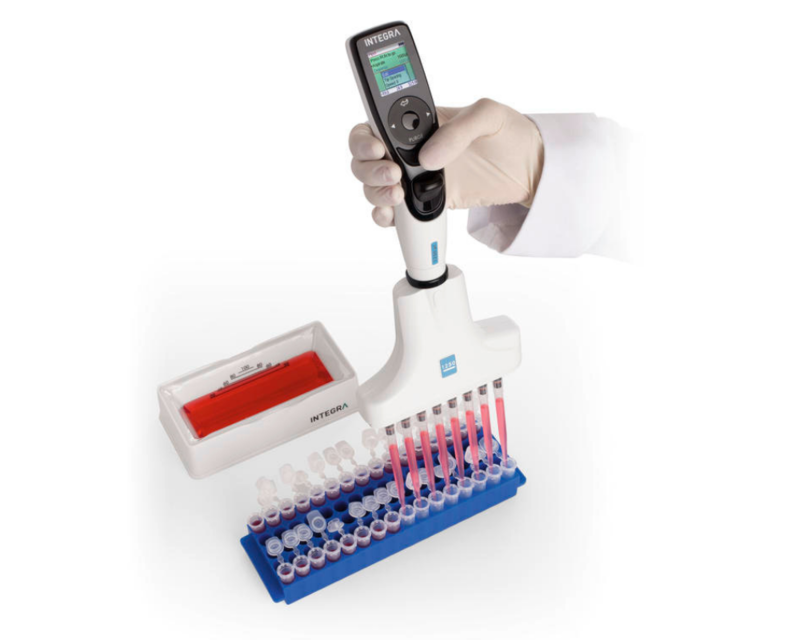
“This combination of the Bioscreen C and VOYAGER allowed me to grow and analyze multiple biological replicates of the various mutants, then explore the effects of nitrogen starvation and different nitrogen sources on bacterial mobility. I also obtained a single channel VIAFLO electronic pipette for use in other aspects of my workflow, and both this and the VOYAGER are incredibly flexible. I now use both pipettes for a wide range of different tasks, including gel loading and PCR set-up. It’s so much quicker than using a mechanical single channel pipette and, because its electronic, it doesn't put strain on your thumb. Traditional manual pipettes require a lot more pressure on the plunger to pipette which, when you’re processing many samples or performing a protocol with multiple steps, can take its toll on your hand. With the electronic pipettes, there is reduced risk of repetitive strain injuries, and they are fast and accurate, which saves both time and money, allowing me to process more samples in a day. I also love that you can program both pipettes to match your workflow; I found this very useful for my research, as I had so many strains and needed to perform multiple replicates for each one.”
Expanding experimental capabilities
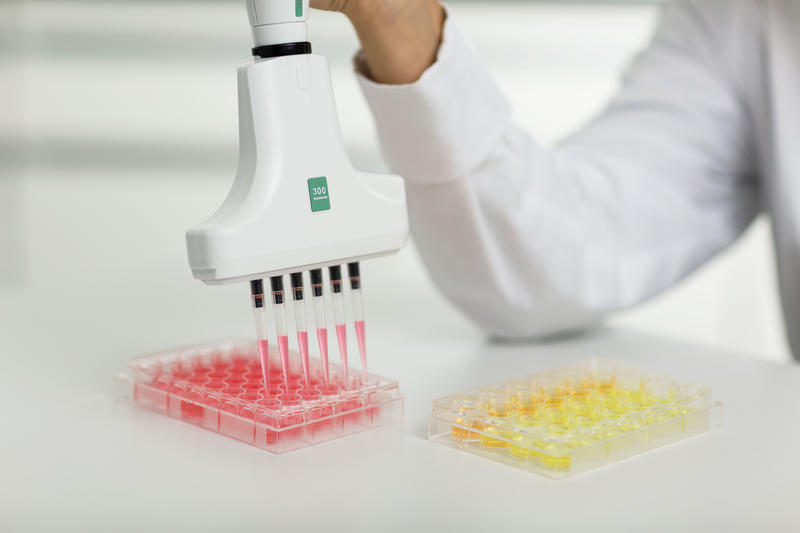
“The time savings that I gained from using the VOYAGER and VIAFLO pipettes meant I could study more strains in my final year of my PhD, as well as more culture conditions. This allowed me to gain as much information as possible for the strains, which was vital for multivariate analysis. I was able to really analyze the statistics and get in-depth insight into the different mutants. I was even able to identify a novel ammonia transporter that, after genome sequencing, led to the discovery of a new strain – FleQS4. This is currently in the process of publication, and it’s thanks to the INTEGRA electronic pipettes that I could perform all the PCR experiments and screening for this gene, for every strain, in just two weeks – I’m incredibly thankful for the VOYAGER!” Astrid concluded.