


ASSISTing leukemia research at the Cancer Institute
From blood to genotype
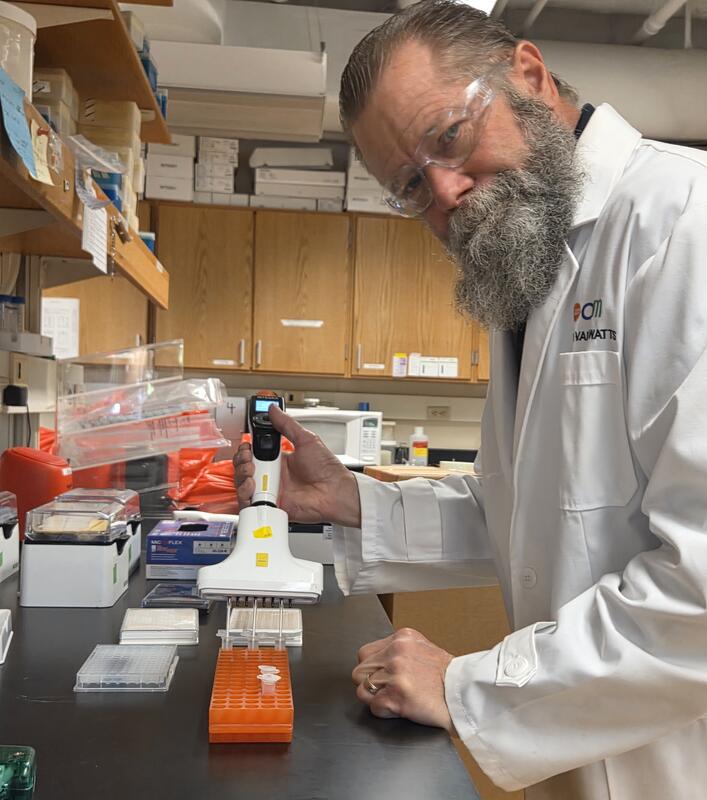
Yvette’s group is focused on uncovering the risk factors and mechanisms that give rise to bone marrow failure and myelodysplastic syndrome (MDS), both age-related disorders that greatly increase the risk of developing leukemia. The lab has recently started a DNA extraction project, and is using VOYAGER adjustable tip spacing electronic pipettes to help streamline the process of pipetting between different labware types.
The ability to change tip spacing at the push of a button is ideal for this workflow, Yvette explained: “We’ve started this new project with the aim of quickly going from blood to genotype for a large batch of samples. We already had an 8 channel VOYAGER, which we use for loading gels, but decided to buy a larger volume 6 channel VOYAGER to help with this project. It’s fantastic for speeding up the sample extraction process, transferring 200 µl of blood from collection tubes into a 96 well format accurately and efficiently, and we then continue to use the VOYAGER pipettes for the rest of the DNA isolation protocol. Having both the high and low volume VOYAGER pipettes means that any reformatting we need to do is a breeze – we’ve got all volumes covered.”
Automate your electronic pipette
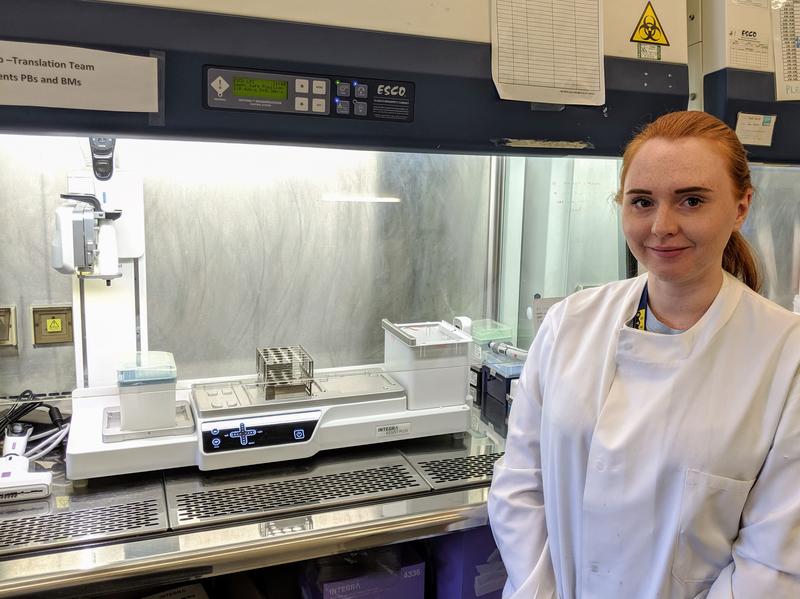
After being impressed with the VOYAGER, the team looked to expand their range, and another product caught their collective eye. Yvette continued: “After speaking to the INTEGRA sales rep, we arranged a couple of demos of the ASSIST PLUS pipetting robot, and quickly realized how beneficial this would be to the group; it’s such a versatile platform and could be used for so many of our applications. The VOYAGER can be mounted onto the system, which then automatically carries out our pipetting tasks according to our preprogrammed settings; it’s so much more efficient than manually pipetting a large batch of samples. The interface of the VIALAB pipetting automation software is clear and intuitive – anyone who wants to use the ASSIST PLUS can just set up their own protocol pretty easily. You can still use the pipette separately if you want to, so we can take the VOYAGER off and manually prepare samples if needed. It’s amazing to have that flexibility in such a busy lab. We originally bought the ASSIST PLUS for the DNA extraction project, but now that we have it in our lab, we find that we're using it for everything, it was certainly worth the investment.”
Higher throughput and increased accuracy
An efficient and reliable workflow is compulsory for Yvette’s busy lab, and INTEGRA pipettes fit seamlessly into various aspects of their work, from start to finish. “Once we’ve extracted the DNA, we prepare libraries using PCR for next generation sequencing to screen for mutations that can predispose individuals to MDS or leukemia. The ASSIST PLUS is great for pipetting really small volumes, which means that we can now use 384 well plates and process more samples. We haven’t been able to use these plates previously but, with the accuracy of the ASSIST PLUS, we have the confidence that our results will be precise and reproducible. It also really speeds up the whole process, which makes it less tedious, and reduces the chances of people making mistakes! We’ve got about 6,000 samples to sequence for this project, which is why we wanted a more automated process, and our throughput has been improved infinitely.”
The perfect lab partner
“We’ve recently started looking at using the ASSIST PLUS for magnetic bead DNA clean up before pooling and sequencing our samples. Automation of this process will be a real revelation, as clean ups are quite a hassle to do at the moment. INTEGRA has been great at offering advice on protocol development, and the customer support is fantastic. Any ideas we’ve had, such as suggestions for software updates, the team has been on board with; you really feel like you’re being listened to and supported.”
“We are incredibly happy with our experience with INTEGRA and its range of products. The level of automation provided by the ASSIST PLUS has been hugely beneficial to our entire group, and it can be used in many applications within our workflow. Automation gives us the confidence that the level of accuracy is high, and cuts out the inevitable tedious and repetitive aspects of lab work that comes with handling such large sample numbers. The ASSIST PLUS is the ideal lab partner, and there’s often a queue to use it – it’s a solid member of the team now,” Yvette concluded.
Further reading:
Any questions? I'm happy to help!
Applications
Show all-
Automated DNA extraction protocol to effortlessly isolate gDNA from blood
-
Automating the Corning Matrigel® thin coating protocol for cell culture applications
-
Automation-enabled high throughput electroporation of primary cells using the ASSIST PLUS and DropGenie platform
-
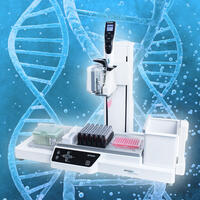
Automated DNA size selection for flexible NGS workflow integration
Stories
Show all-
 · Company News
Streamlining CRISPR workflows, from editing to analysis
-
 · Customer Testimonial
Enhancing the consistency of ag-tech R&D processes with the ASSIST PLUS pipetting robot
-
 · Customer Testimonial
Advancing muscle–bone research with faster, more efficient genotyping workflows
-
 · Customer Testimonial
Exploring targeted treatments for chronic pain using VOYAGER pipettes