


-
Automated NGS Nextera 16S metagenomic sequencing library preparation using the ASSIST PLUS pipetting robot
A guide to automation of the Nextera 16S metagenomic library preparation
The 16S metagenomic sequencing protocol allows targeted analysis of microbial communities by using the 16S ribosomal RNA (rRNA) gene – a trusted marker for phylogenetic classification – in combination with next generation sequencing (NGS) technology. This protocol ensures accurate amplicon sequencing, enabling the study of a diverse range of microbial populations.
The workflow involves amplifying the variable regions 3 and 4 (V3 and V4) of the 16S rRNA gene with custom primers, incorporating Illumina sequencing adapters and dual indices for multiplexing. Using paired-end 300 bp reads, this approach delivers high quality data for taxonomic classification at the genus and species levels.
This application guide provides programs for each of these steps for further optimization, helping you to automate 16S metagenomic sequencing library preparation on the ASSIST PLUS.
-
Table of contents
The 16S metagenomic sequencing protocol allows targeted analysis of microbial communities by using the 16S ribosomal RNA (rRNA) gene – a trusted marker for phylogenetic classification – in combination with next generation sequencing (NGS) technology. This protocol ensures accurate amplicon sequencing, enabling the study of a diverse range of microbial populations.
The workflow involves amplifying the variable regions 3 and 4 (V3 and V4) of the 16S rRNA gene with custom primers, incorporating Illumina sequencing adapters and dual indices for multiplexing. Using paired-end 300 bp reads, this approach delivers high quality data for taxonomic classification at the genus and species levels.
This application guide provides programs for each of these steps for further optimization, helping you to automate 16S metagenomic sequencing library preparation on the ASSIST PLUS.
Key benefits
Overview: How to perform automated 16S rRNA library preparation
The ASSIST PLUS pipetting robot streamlines 16S metagenomic sequencing library preparation while improving throughput, precision and reliability. Four preprogrammed VIALAB template scripts ensure efficient processing of the highlighted steps of 16S library preparation workflow (Figure 1) for up to 24 samples. For normalization and pooling, INTEGRA provides tested programs in other established app notes. These automated, walk-away protocols enhance user convenience and standardization for increased reproducibility and reduced hands-on time. Elevate your research with the ASSIST PLUS; achieve consistent and reliable results while saving valuable time.
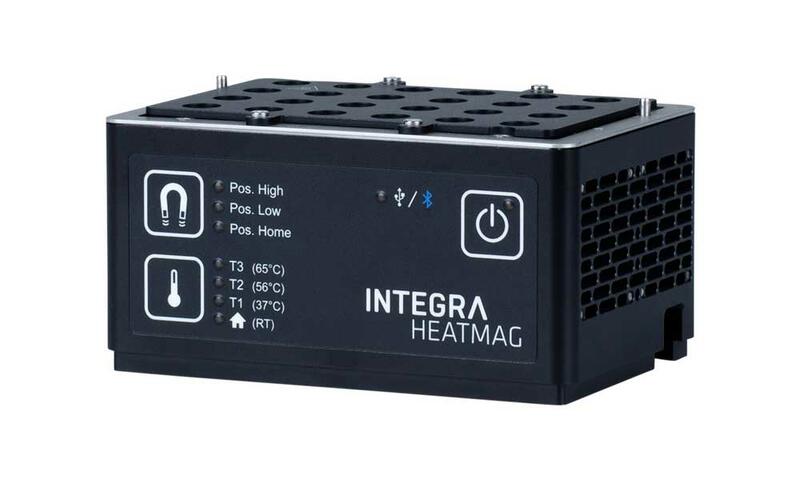
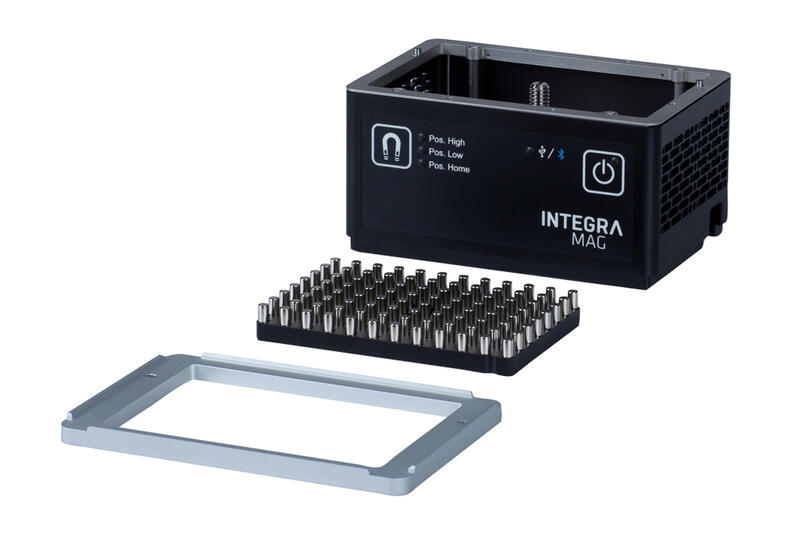
The bead clean-up step is an integral part of 16S library prep and can easily be carried out using an INTEGRA MAG module. This magnetic separation device uses vertical magnet array movements to enable automated magnetic bead handling, avoiding unnecessary manual interventions.
Downloads: App note and programs
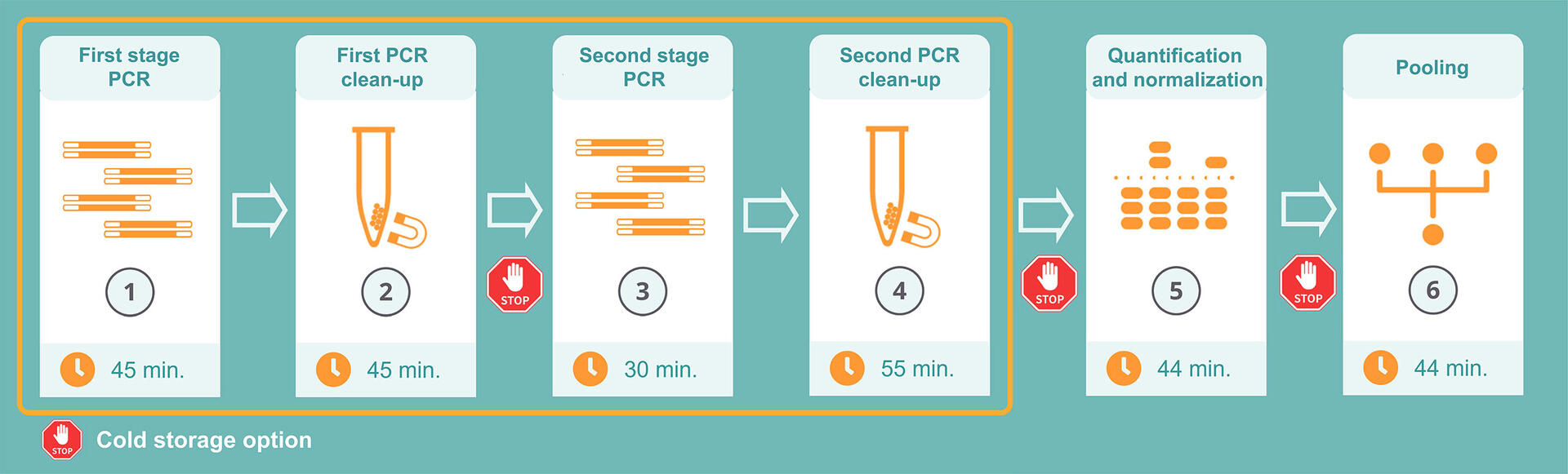
An overview of the key steps is presented in Figure 1. Each of these steps plays an essential role in the overall procedure and will be examined in detail in the following subsections.
First stage PCR
- Protocol steps in VIALAB
-
![First stage PCR - workflow overview]()
This step employs PCR to amplify the DNA template using a primer that is specific to the region of
interest and has overhang adapters attached.Sample number: up to 24
Estimated process time: 18 minStep Phase Description Manual intervention 1 Initial volumes Define initial reagent volumes in the labware on the ASSIST PLUS deck No 2 Master mix Set up the master mix 3 Distribute master mix Distribute 22.5 µl of the master mix into each well of the plate 4-5 Add DNA template Add 2.5 µl of DNA template per well and mix 6 Seal plate Manually seal the PCR plate and place it into Yes ASSIST PLUS deck set-up

Figure 2: The ASSIST PLUS deck set-up for first stage PCR. Position A: DNA samples used for library preparation in a Bio-Rad Hard-Shell® 96-Well PCR Plate (light blue). Position B: Rack for 1.5/2 ml microcentrifuge tubes with 3 tubes containing 2x concentrated KAPA HiFi HotStart ReadyMix in position A1 (green), forward and reverse primers in positions B1 and C1, respectively (pink). Position C: Target plate – empty PCR plate mounted on a COLDPLATE with a PCR plate adapter. Reagents
Color Reagent Volume
per sample (µl)Volume
per 24 samples* (µl)Deck
positionMicrobial DNA template, 5 ng/µl 50 - A 2x KAPA HiFi HotStart ReadyMix 12.5 330 B Forward primer, 1 µM amplicon PCR 5 132 B Reverse primer, 1 µM amplicon PCR 5 132 B * including 10 % overhead
- Materials and labware
-
Instruments, modules and pipettes
Labware type Name Manufacturer Part no. Pipette 300 µl D-ONE INTEGRA 4531 Tube rack Rack for 2 ml microcentrifuge tubes INTEGRA 4540 Cooling plate COLDPLATE INTEGRA 4950 (module)
4954 (adapter)Consumables
Consumable type Name Manufacturer Part no. Plate Hard-Shell 96-Well PCR Plate Bio-Rad HSP9601 Tip 12.5 µl sterile, filter GRIPTIPS® INTEGRA 6455 Tip 300 µl sterile, filter GRIPTIPS® INTEGRA 6435 - Protocol information
-
PCR cycling program
Step Temp. (°C) Time Cycles Initial denaturation 95 3 min 1x Denaturation 95 30 sec 25x Annealing 55 30 sec Extension 72 30 sec Final extension 72 5 min 1x Hold 4 ∞ (infinite) 1x


First PCR clean-up
- Protocol steps in VIALAB
-
![First PCR clean up - workflow overview]()
Following the addition of overhang adapters in first stage PCR, excess primers, nucleotides and enzymes must be removed to avoid interference in subsequent stages.
Sample number: up to 24
Estimated process time: 46 minStep Phase Description Manual intervention 1 Initial volumes Define the initial reagent volumes in the labware on the ASSIST PLUS deck No 2-8 Add magnetic beads Add 20 µl of magnetic beads per sample 9-15 Wash 1 Wash using 125 µl of 80 % EtOH per sample 16-25 Wash 2 Wash again using 125 µl of 80 % EtOH per sample 26-33 Elution Elute sample in 52.5 µl of elution buffer per sample ASSIST PLUS deck set-up

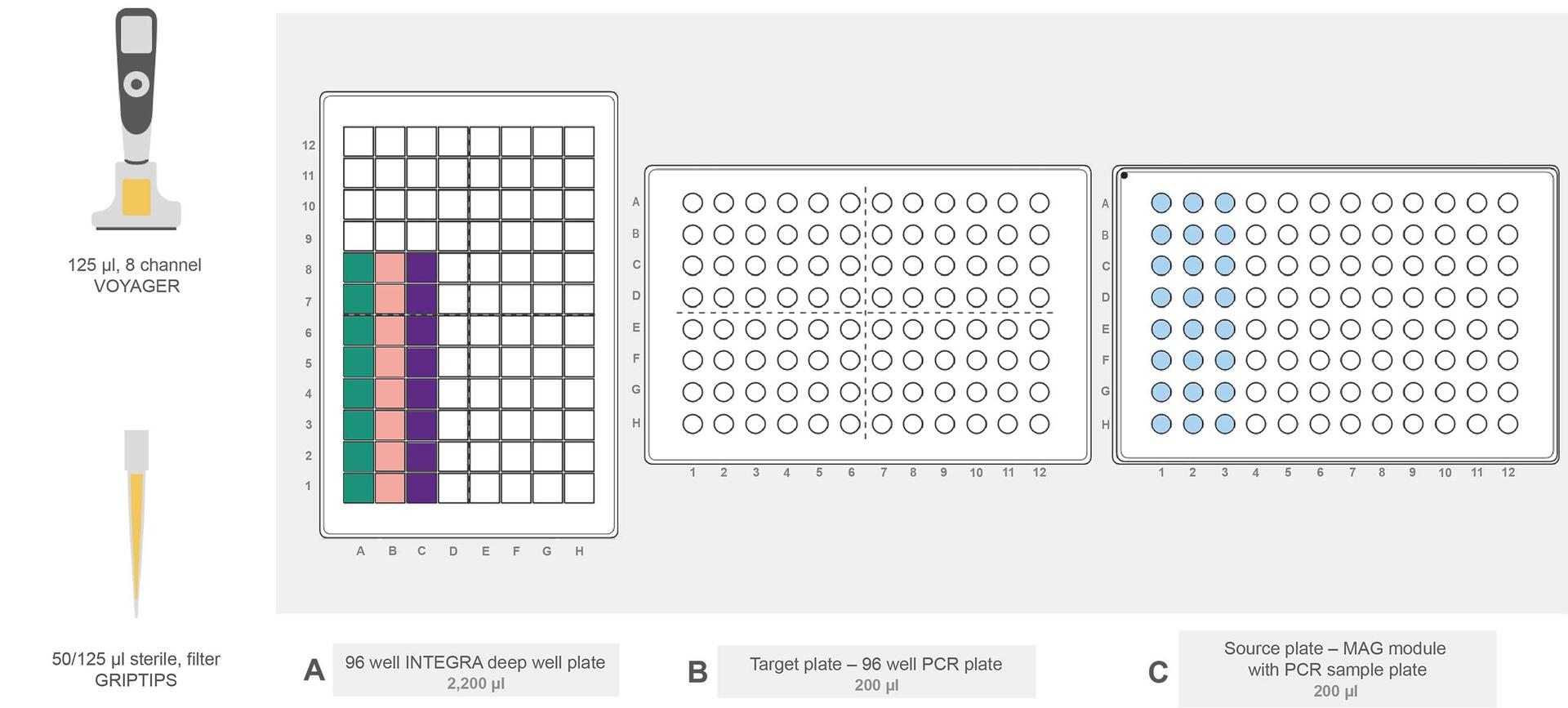
Figure 3: The ASSIST PLUS deck set-up for first PCR clean-up. Position A: Reagents – INTEGRA deep well plate containing magnetic beads (green), wash buffer (80 % EtOH, pink) and elution buffer (lilac). Position B: Target plate – empty PCR plate for collection of cleaned PCR product. Position C: Source plate on MAG module – empty PCR plate for PCR clean-up with magnetic beads on a MAG module (light blue: DNA samples). Reagents
Color Reagent Volume
per sample (µl)Volume
per 24 samples* (µl)Deck
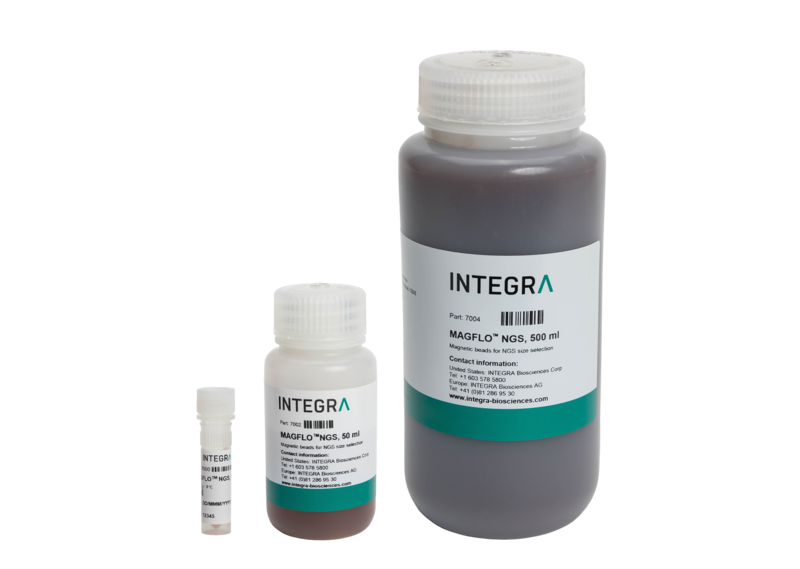
positionPCR amplification sample product 25 - C SPRI magnetic beads (e.g. MAGFLO NGS™) 20 528 A 80 % EtOH 250 6,600 A Elution buffer 50 1,320 A * including 10 % overhead
- Materials and labware
-
Instruments, modules and pipettes
Labware type Name Manufacturer Part no. Pipette 125 μl, 8 channel VOYAGER electronic pipette INTEGRA 4722 Module MAG with 96 well PCR adapter plate INTEGRA 4900 (module)
4906 (adapter)Consumables
Consumable type Name Manufacturer Part no. Plate 96 well deep well plate, polypropylene, sterile, 2.2 ml INTEGRA 6353 Plate Hard-Shell 96-Well PCR Plate Bio-Rad HSP9601 Tip 125 µl sterile, filter GRIPTIPS INTEGRA 6455

Second stage PCR
- Protocol steps in VIALAB
-
![Second stage PCR - workflow overview]()
The second PCR cycle adds indexing barcodes and sequencing adapters, enabling sample multiplexing and compatibility with sequencing platforms.
Sample number: up to 24
Estimated process time: 47 minStep Phase Description Manual intervention 1 Initial volumes Define the initial reagent volumes in the labware on the ASSIST PLUS deck No 2-5 Distribute primer 1 Distribute 5 µl of N701-N703 Nextera primer into the plate 6-14 Distribute primer 2 Distribute 5 µl of S501-S508 Nextera primer into the plate 15 Master mix Set up the master mix 16 Distribute master mix Distribute 35 µl of the master mix into each well 17-18 Add DNA template Add 5 µl of DNA template into each well and mix 19 Seal plate Manually seal the PCR plate and place it into a PCR cycler Yes ASSIST PLUS deck set-up

Figure 4: The ASSIST PLUS deck set-up for second stage PCR. Position A: PCR plate containing DNA samples used for library preparation (green). Position B: Rack for 1.5/2 ml microcentrifuge tubes with 8+5 tubes containing Nextera index primer 2 (light blue), Nextera index primer 1 (pink), 2x KAPA HiFi HotStart ReadyMix (lilac) and PCR grade H2O (dark blue). Position C: Target plate – empty PCR plate on a COLDPLATE with a PCR plate adapter. Reagents
Color Reagent Volume
per sample (µl)Volume
per 24 samples* (µl)Deck
positionNextera index primer 1
N701 – 10 µM
N702 – 10 µM
N703 – 10 µM5 44 each B Nextera index primer 2
S501 – 10 µM
S502 – 10 µM
S503 – 10 µM
S504 – 10 µM
S505 – 10 µM
S506 – 10 µM
S507 – 10 µM
S508 – 10 µM5 17 each B 2x KAPA HiFi HotStart ReadyMix 25 660 B PCR grade H2O 10 264 B Purified DNA template 5 - A * including 10 % overhead
- Materials and labware
-
Instruments, modules and pipettes
Labware type Name Manufacturer Part no. Plate 0.5-300 μl D-ONE INTEGRA 4531 Plate Rack for 2 ml microcentrifuge tubes INTEGRA 4540 Tip COLDPLATE INTEGRA 4950 (module)
4954 (adapter)Consumables
Consumable type Name Manufacturer Part no. Plate Hard-Shell 96-Well PCR Plate Bio-Rad HSP9601 Tip 12.5 µl sterile, filter GRIPTIPS INTEGRA 6455 Tip 300 µl sterile, filter GRIPTIPS INTEGRA 6435 - Protocol information
-
PCR cycling program
Step Temp. (°C) Time Cycles Initial denaturation 95 3 min 1x Denaturation 95 30 sec 8x Annealing 55 30 sec Extension 72 30 sec Final extension 72 5 min 1x Hold 4 ∞ (infinite) 1x


Second PCR clean-up
- Protocol steps in VIALAB
-
![Second stage PCR clean up - workflow overview]()
The second PCR clean-up step ensures excess primers, adapters and other contaminants are removed, resulting in a high quality, sequencing-ready 16S metagenomic library.
Sample number: up to 24
Estimated process time: 48 minStep Phase Description Manual intervention 1 Initial volumes Define the initial reagent volumes in the labware on the ASSIST PLUS deck No 2-8 Add magnetic beads Add 56 µl of magnetic beads per sample 9-15 Wash 1 Wash using 125 µl of 80 % EtOH per sample 16-23 Wash 2 Wash again using 125 µl of 80 % EtOH per sample 24-29 Elution Elute sample in 27.5 µl of elution buffer per sample ASSIST PLUS deck set-up

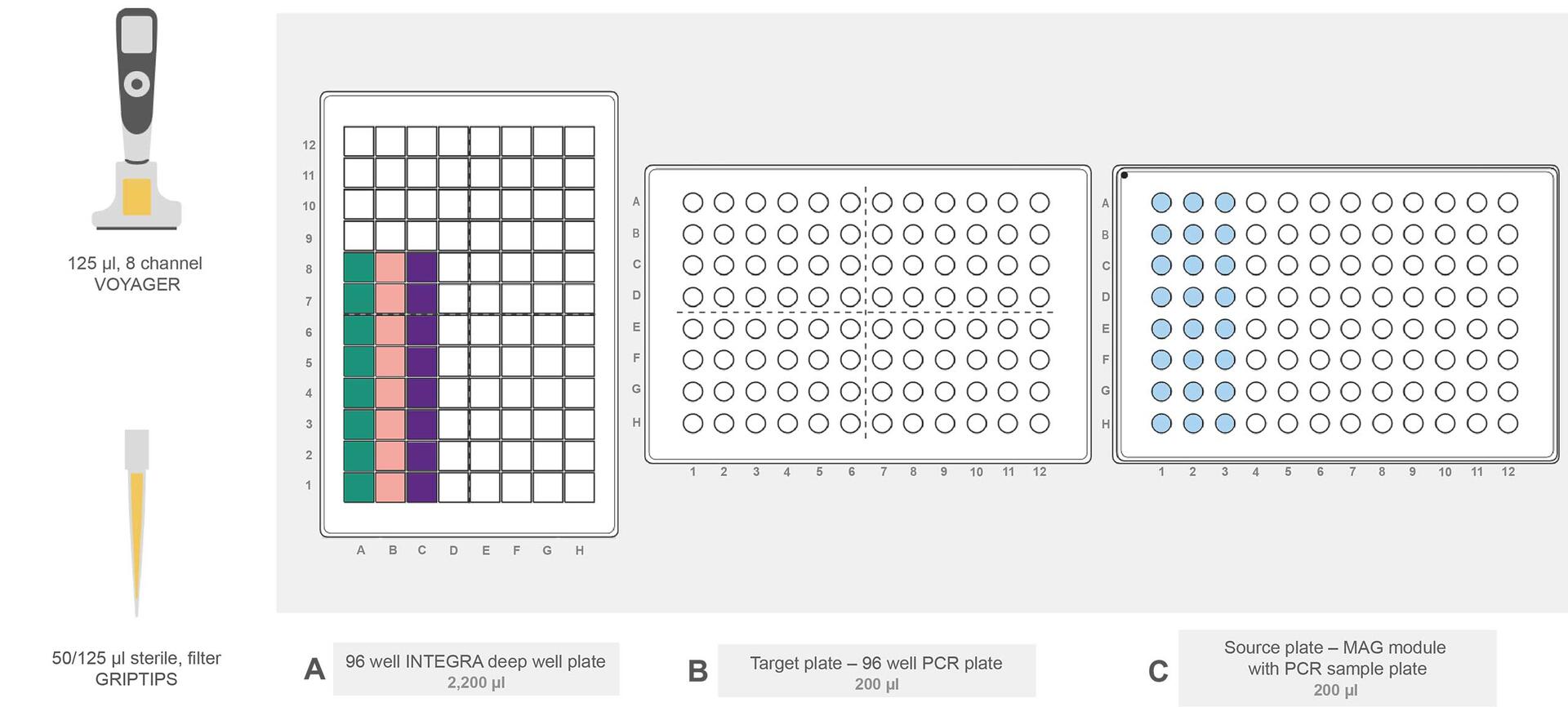
Figure 5: The ASSIST PLUS deck set-up for the second PCR clean-up. Position A: Reagents – INTEGRA deep well plate containing magnetic beads (green), wash buffer (80 % EtOH, pink) and elution buffer (lilac). Position B: Target plate – empty PCR plate for collection of PCR clean-up product. Position C: Source plate on MAG module – empty PCR plate for PCR clean-up with magnetic beads on a MAG module (light blue: DNA samples). Reagents
Color Reagent Volume
per sample (µl)Volume
per 24 samples* (µl)Deck
positionPCR amplification sample product of second stage PCR 50 - C SPRI magnetic beads (e.g. MAGFLO NGS) 56 1,479 A 80 % EtOH 250 2,600 A Elution buffer 27.5 726 A * including 10 % overhead
- Materials and deck labware
-
Instruments, modules and pipettes
Labware type Name Manufacturer Part no. Pipette 125 μl, 8 channel VOYAGER electronic pipette INTEGRA 4722 Module MAG with 96 well PCR adapter plate INTEGRA 4900 (module)
4906 (adapter)Consumables
Consumable type Name Manufacturer Part no. Plate 96 well deep well plate, polypropylene, sterile, 2.2 ml INTEGRA 6353 Plate Hard-Shell 96-Well PCR Plate Bio-Rad HSP9601 Tip 125 µl sterile, filter GRIPTIPS INTEGRA 6455

Conclusion
Ask our expert. Leave a comment!
Write us if you have any questions regarding the application note or one of our instruments.
Any questions? I'm happy to help!
Instruments and accessories
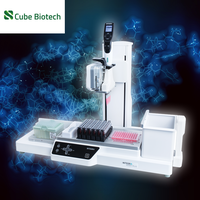
ASSIST PLUS, Pipetting Robot
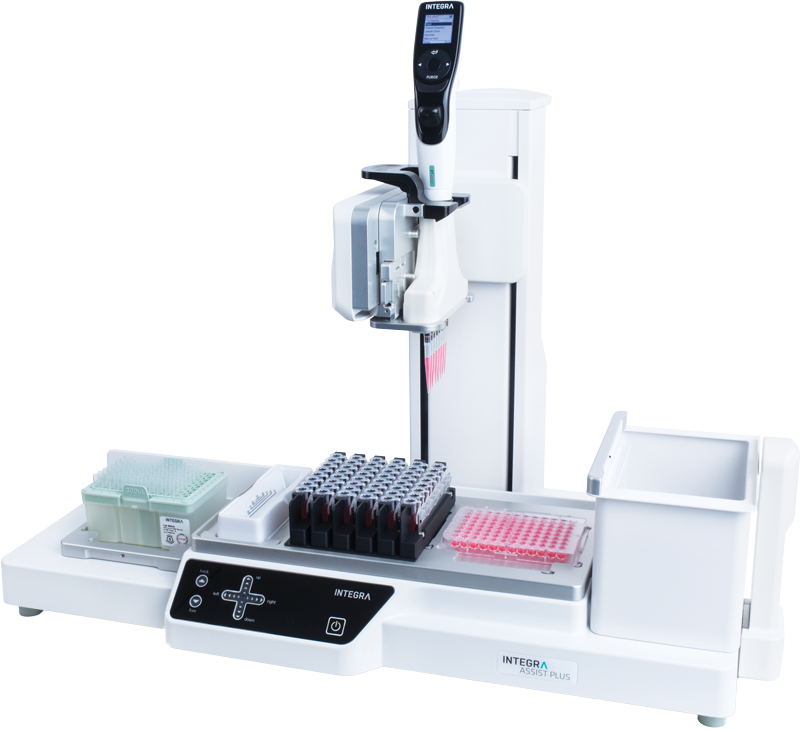
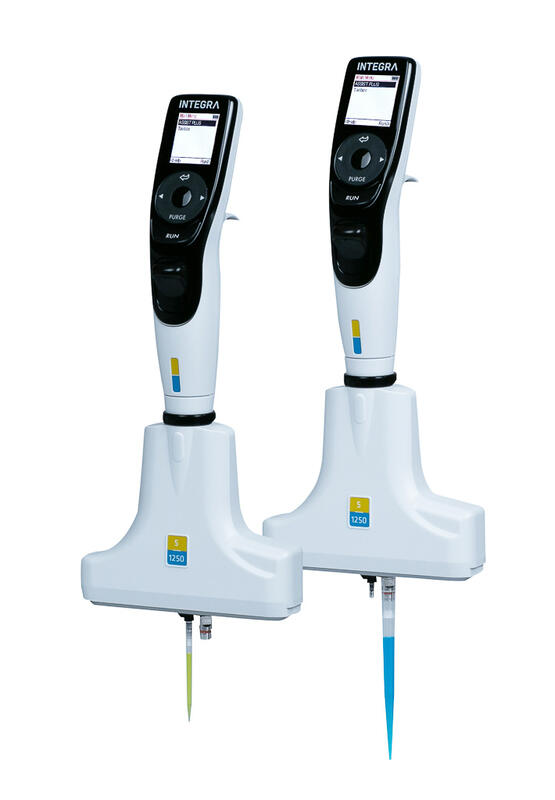
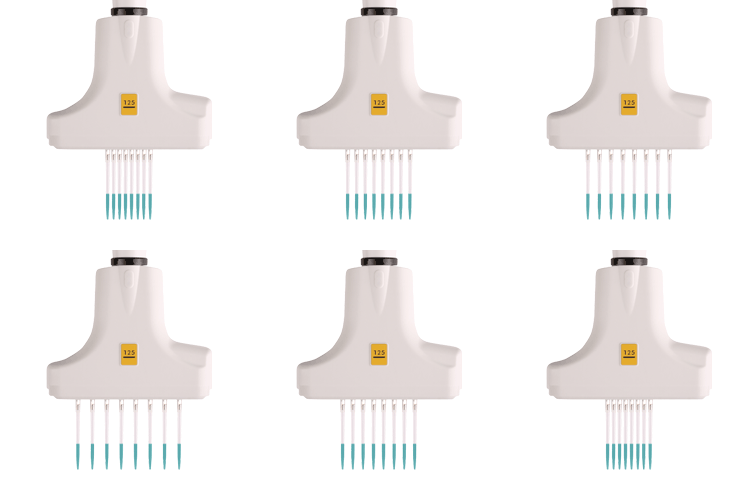
INTEGRA has developed the ASSIST PLUS pipetting robot to streamline routine pipetting tasks at an affordable price. Using INTEGRA electronic multichannel pipettes, the system:
- automates pipetting tasks,
- eliminates physical strain and
- ensures superior reproducibility and
- error free pipetting.
Part No. 4505
Download
Download App Note as PDF
DownloadAutomated NGS Nextera 16S metagenomic sequencing library preparation using the ASSIST PLUS pipetting robot
Related products

Applications
Show all-
End-to-end Twist library preparation protocol for NGS workflow automation
-
Streamlining single-cell sequencing with the Flex Apex workflow using automated liquid handling solutions
-
Optimizing DNA fragmentation and NGS library preparation with automated liquid handling
-
A simple and streamlined workflow for membrane protein isolation
Stories
Show all-
 · Company News
Streamlining CRISPR workflows, from editing to analysis
-
 · Product News
Magnetic beads represent a modern approach to gDNA isolation
-
 · Product News
Magnetic beads for NGS size selection and PCR purification
-
 · Customer Testimonial
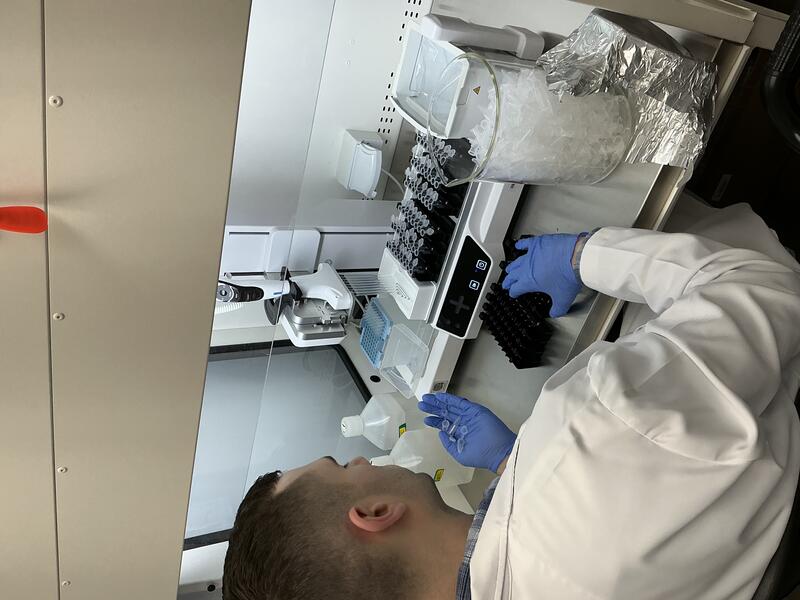
Enhancing the consistency of ag-tech R&D processes with the ASSIST PLUS pipetting robot