


-
Fast and efficient sample transfer from plate to plate with INTEGRA's electronic pipettes
Effortless sample reformatting
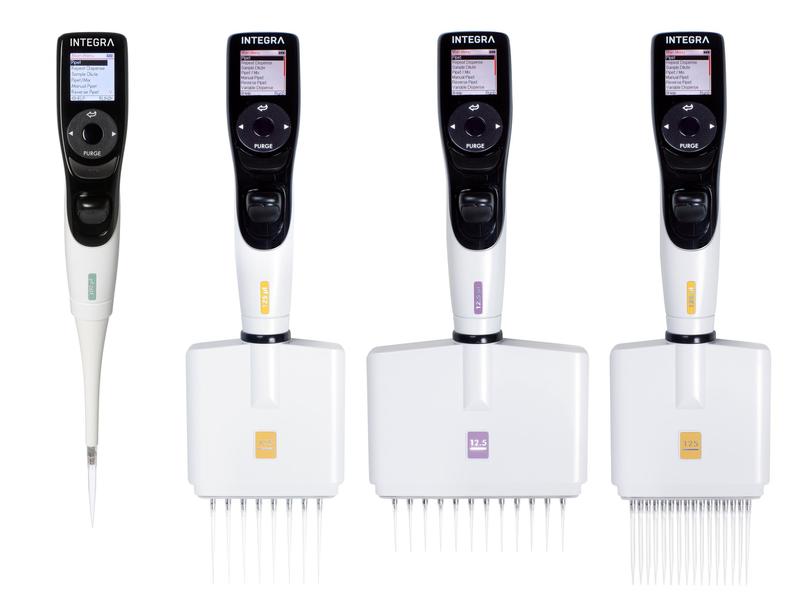
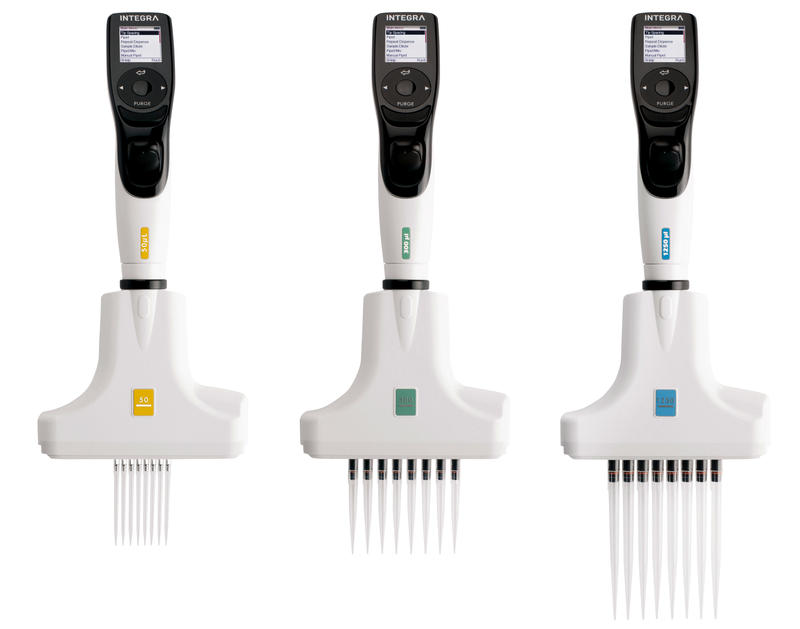
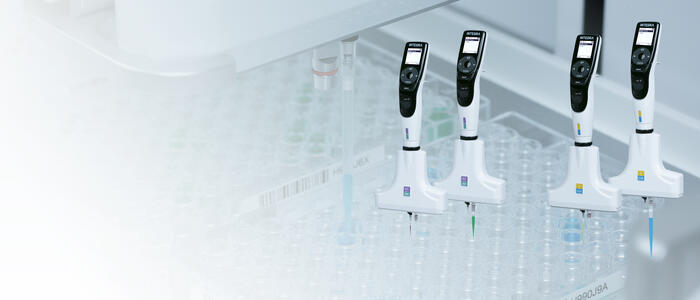
The transfer of samples between same (e.g. from 96 well to 96 well plate) or different plate formats (e.g. from 96 well to 384 well plate) is a common process in life science applications, from cell culture, seeding and staining to drug testing, PCR, protein analysis and nucleic acid purification. However, it is a slow, tedious and highly error prone procedure when performed manually with a single channel pipette. INTEGRA's electronic pipettes allow precise and efficient transfer of multiple samples in parallel, significantly speeding up the reformatting process. For example, the VOYAGER adjustable tip spacing pipette is an ideal tool when the source and target plate formats differ, and can be used either manually or automated on the ASSIST PLUS pipetting robot. For even higher throughput reformatting, the VIAFLO 96, VIAFLO 384 and MINI 96 offer a fast solution for whole plate transfers. If you want to know how to accelerate tube to plate transfers, this application note could also be of interest to you: Fast and efficient tube to plate transfers.
-
Table of contents
The transfer of samples between same (e.g. from 96 well to 96 well plate) or different plate formats (e.g. from 96 well to 384 well plate) is a common process in life science applications, from cell culture, seeding and staining to drug testing, PCR, protein analysis and nucleic acid purification. However, it is a slow, tedious and highly error prone procedure when performed manually with a single channel pipette. INTEGRA's electronic pipettes allow precise and efficient transfer of multiple samples in parallel, significantly speeding up the reformatting process. For example, the VOYAGER adjustable tip spacing pipette is an ideal tool when the source and target plate formats differ, and can be used either manually or automated on the ASSIST PLUS pipetting robot. For even higher throughput reformatting, the VIAFLO 96, VIAFLO 384 and MINI 96 offer a fast solution for whole plate transfers. If you want to know how to accelerate tube to plate transfers, this application note could also be of interest to you: Fast and efficient tube to plate transfers.
Key benefits
Overview: How to transfer samples from plates to plates
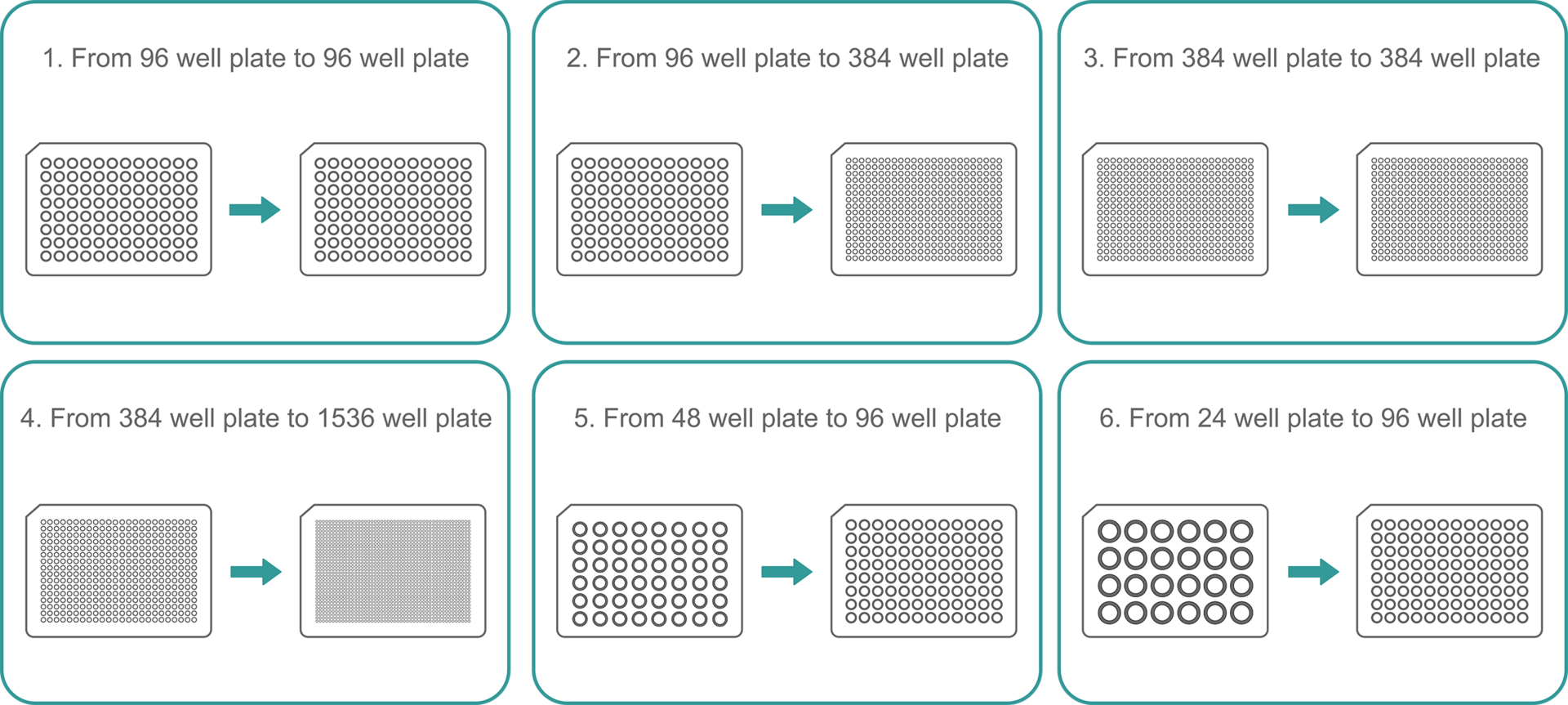
This application note shows some examples of how to transfer samples from plate to plate (Figure 1).
Download: App note for the sample transfer from plate to plate
Here you can download the complete application note.
Step-by-step procedure:
1. 96 well plate replication
Transferring samples from one 96 well plate to another 96 well plate.
It is possible to replicate 96 well plates with all INTEGRA's electronic pipettes.
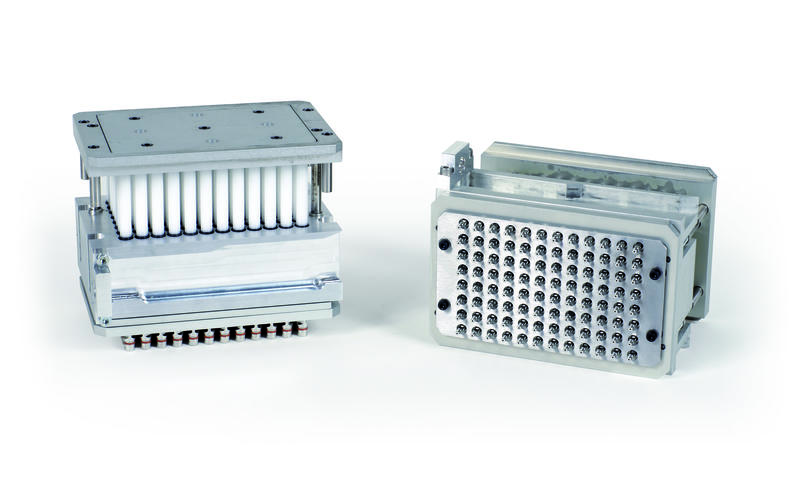
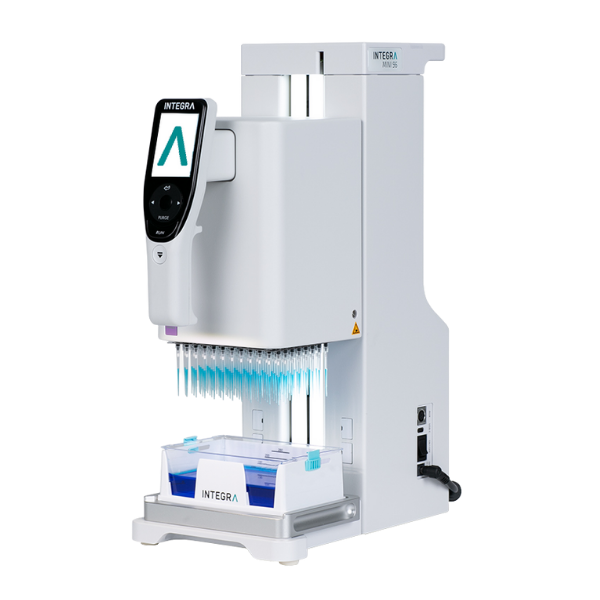
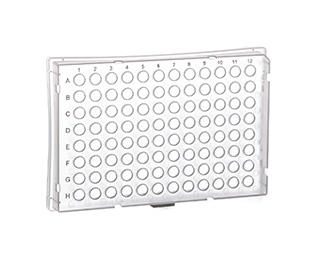
The MINI 96 portable electronic pipette, the VIAFLO 96 or VIAFLO 384 handheld electronic pipettes offer the easiest and fastest solution to replicate a 96 well plate. These instruments transfer 96 samples in one pipetting step.
The 12 channel VOYAGER and the VIAFLO electronic pipettes can be used – either manually or on the ASSIST PLUS pipetting robot – to transfer samples from a 96 well plate to a 96 well plate.
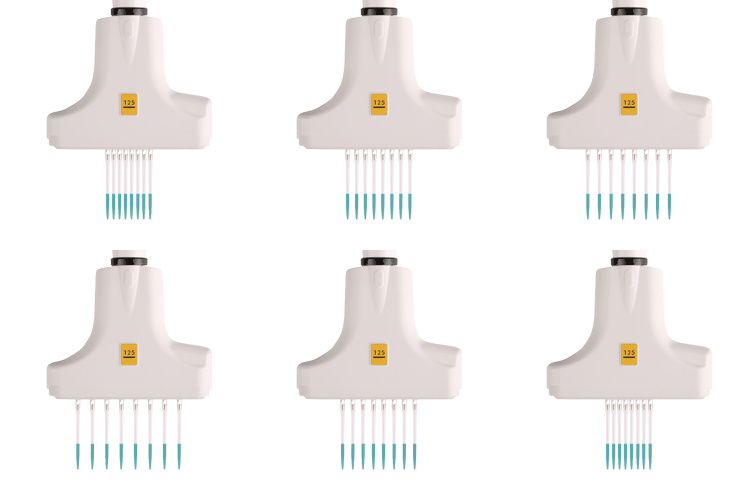
Working manually with the VOYAGER adjustable tip spacing pipette is important to set the right well to well distance:
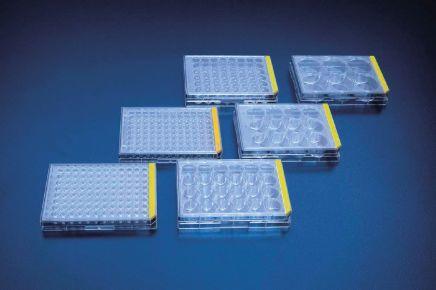
- 26 mm for 12 well plates
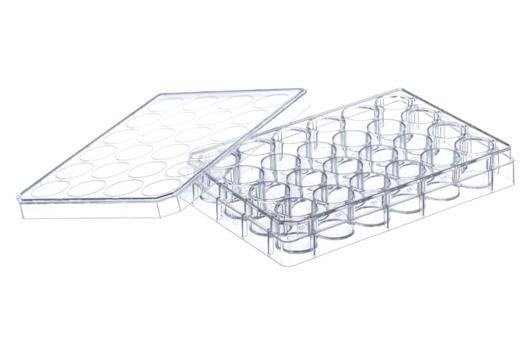
- 19 mm for 24 well plates
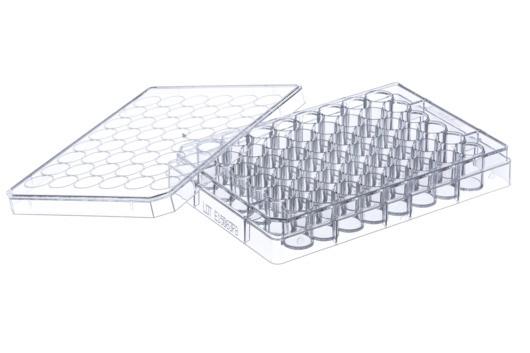
- 14 mm for 48 well plates
- 9 mm for 96 well plates
- 4.5 mm for 384 well plates.
This can be done by selecting 'Tip spacing' in the main menu of the pipette, followed by choosing 'Position 2', and setting the tip spacing accordingly. Once saved, the tip spacing is available at any time.
Pairing the VIAFLO or VOYAGER electronic pipettes with the ASSIST PLUS pipetting robot allows a hands-free replication process.
2. Transfer from 96 well plates to 384 well plate
Transferring samples from 96 well plates to a 384 well plate.
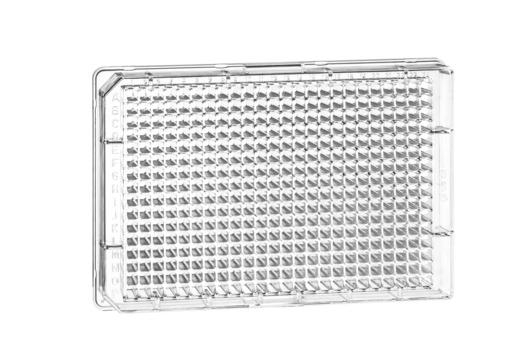
It is possible to transfer samples from 96 well plates to a 384 well plate with all INTEGRA's electronic pipettes. For example, the VOYAGER 8 and 12 channel electronic pipettes can be used, or they can be paired with the ASSIST PLUS pipetting robot.
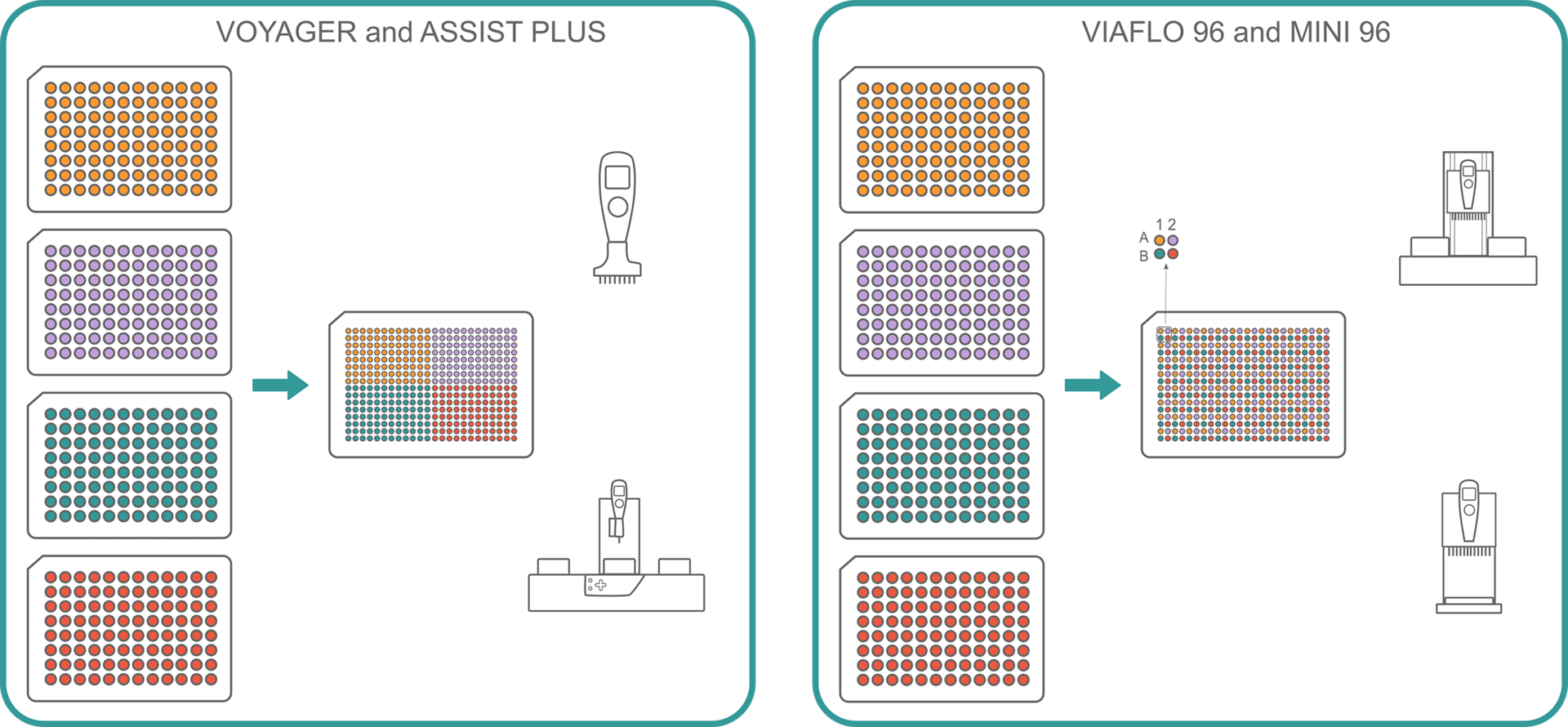
When deciding which instrument to choose for sample transfer from four 96 well plates to a single 384 well plate, the sample order in the destination plate should be considered (see Figure 2). The sample order from the source plates can easily be maintained when transferring the samples with a VOYAGER (with or without the ASSIST PLUS), but using the VIAFLO 96 or the MINI 96 will change the sample order.
3. 384 well plate replication
Transferring samples from one 384 well plate to another 384 well plate.
Replication of 384 well plates is possible with all INTEGRA's electronic pipettes.
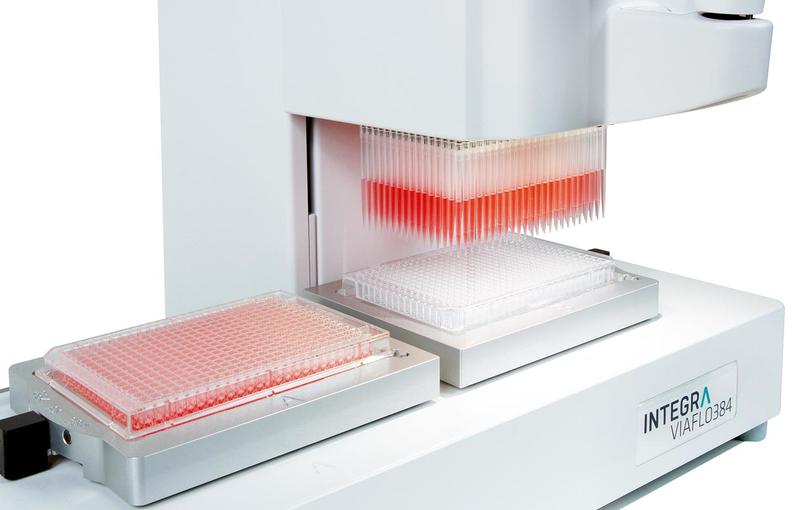
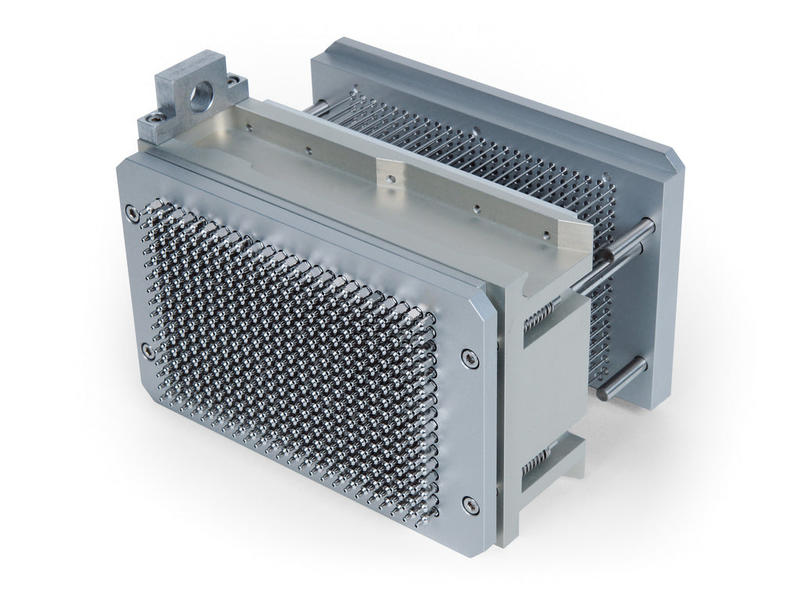
The fastest option is the VIAFLO 384 handheld electronic pipette, which allows the transfer of 384 samples in one go. Alternatively, the VIAFLO 96 handheld electronic pipette enables sample transfer in four steps.
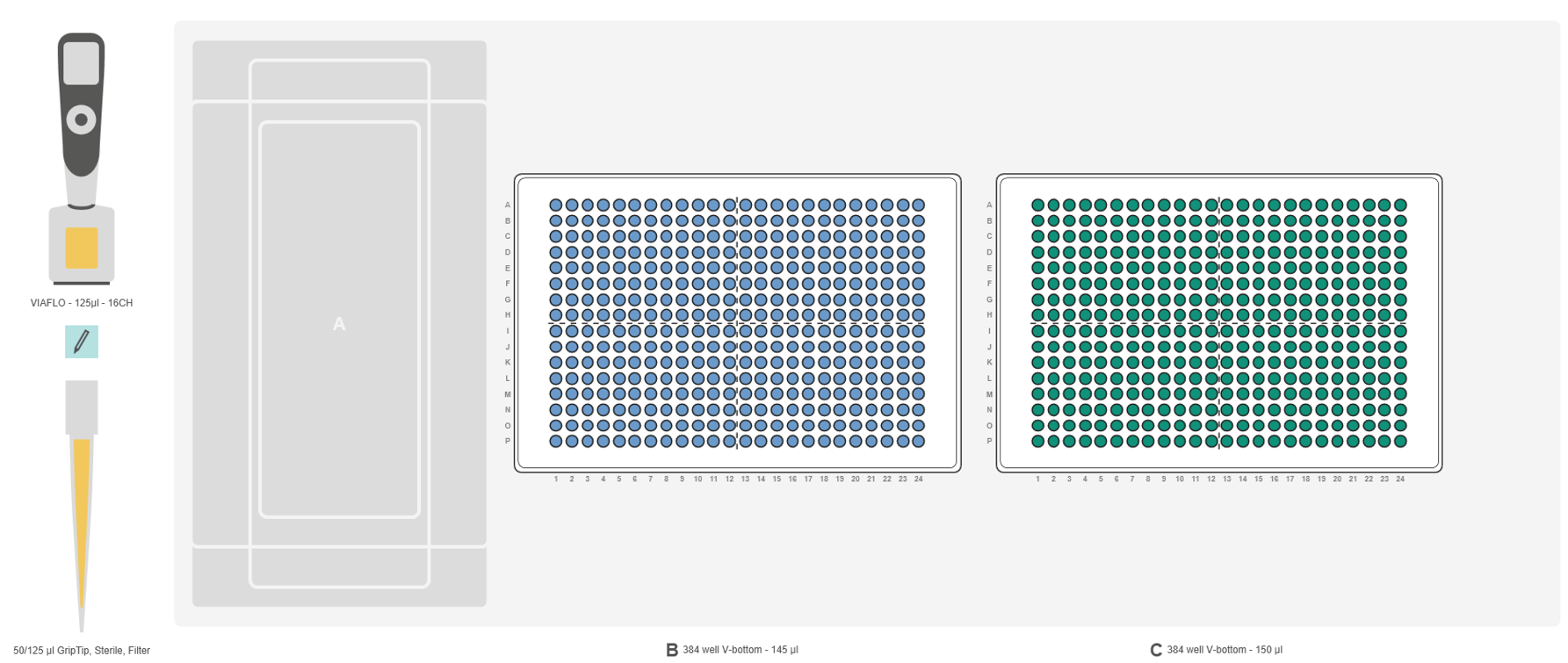
On the ASSIST PLUS pipetting robot, the 12 channel VOYAGER or 16 channel VIAFLO electronic pipettes are the fastest options. The 384 well plates should be placed in a portrait orientation on the deck when using the 12 channel VOYAGER, or in a landscape orientation when using the 16 channel VIAFLO (Figure 3).
4. Transfer from 384 well plates to 1536 well plates
Transferring samples from 384 well plates to a 1536 well plate.
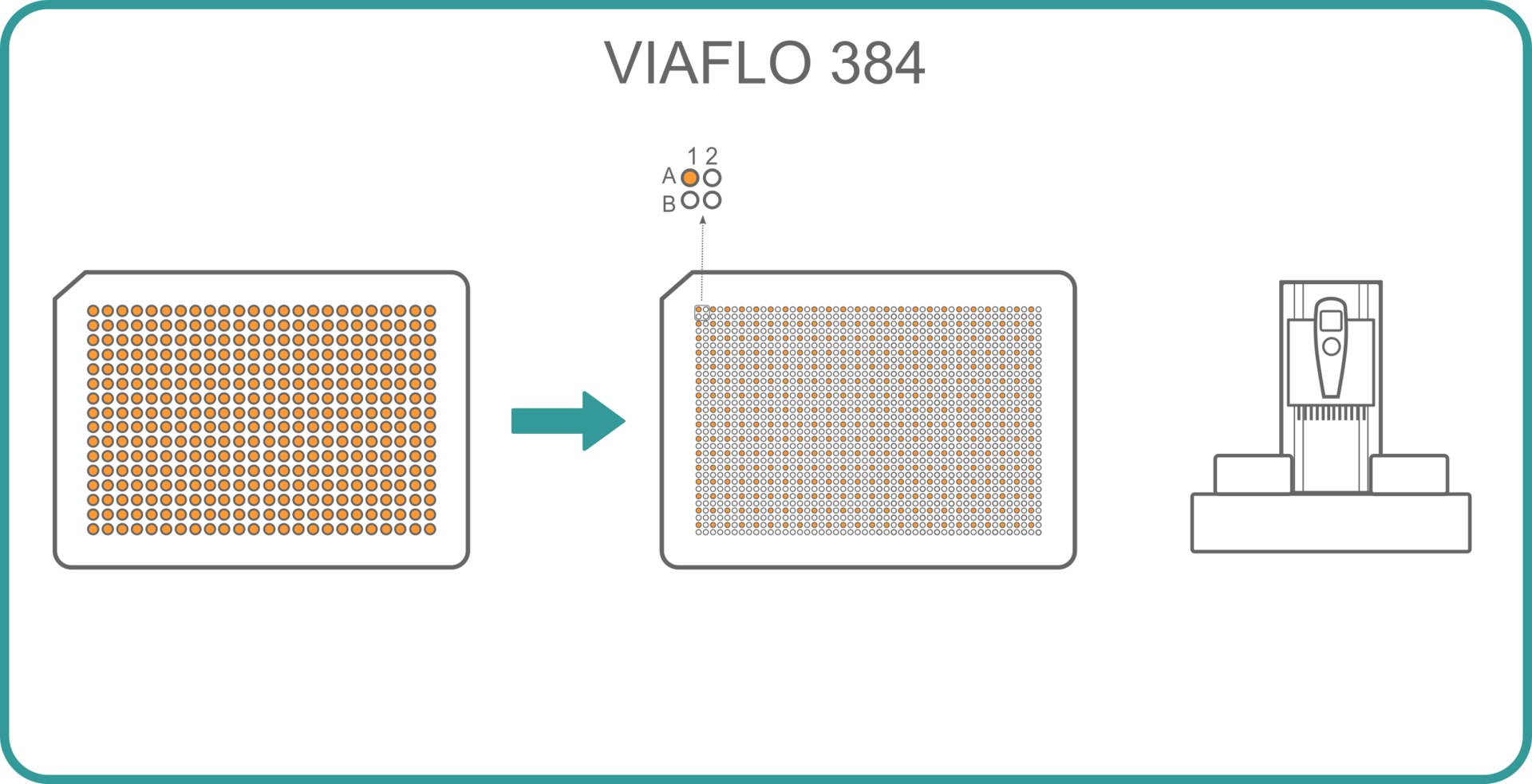
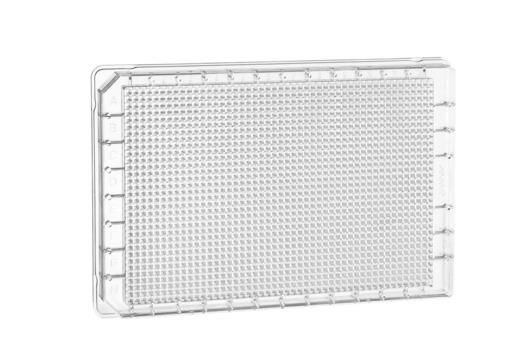
The VIAFLO 384 is the ideal instrument to transfer samples from 384 well plates to a 1536 well plate. However, the resulting sample order in the destination plate should be taken into account (see Figure 4 and Figure 5).
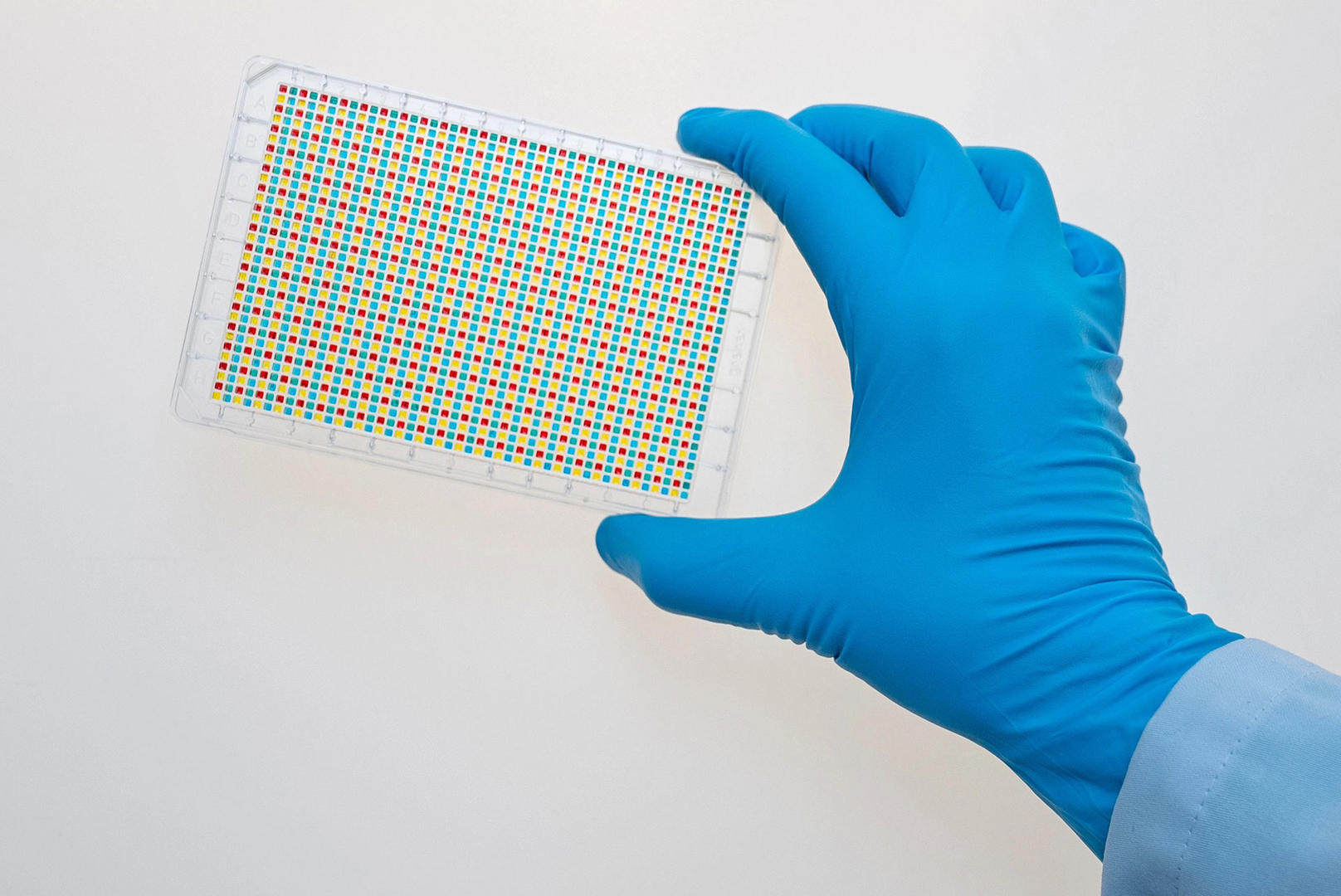
5. Transfer from 24 well plates to 96 well plate
Transferring samples from 24 well plates to a 96 well plate.
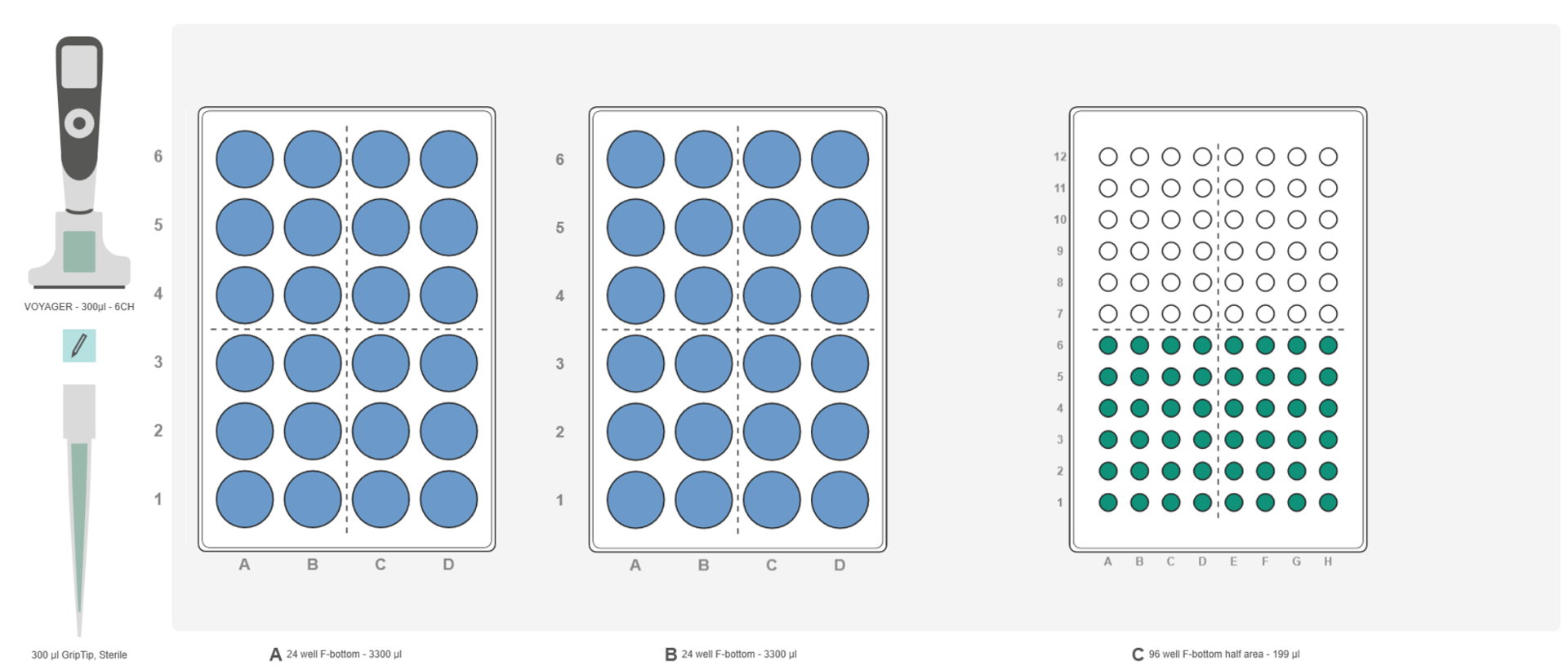
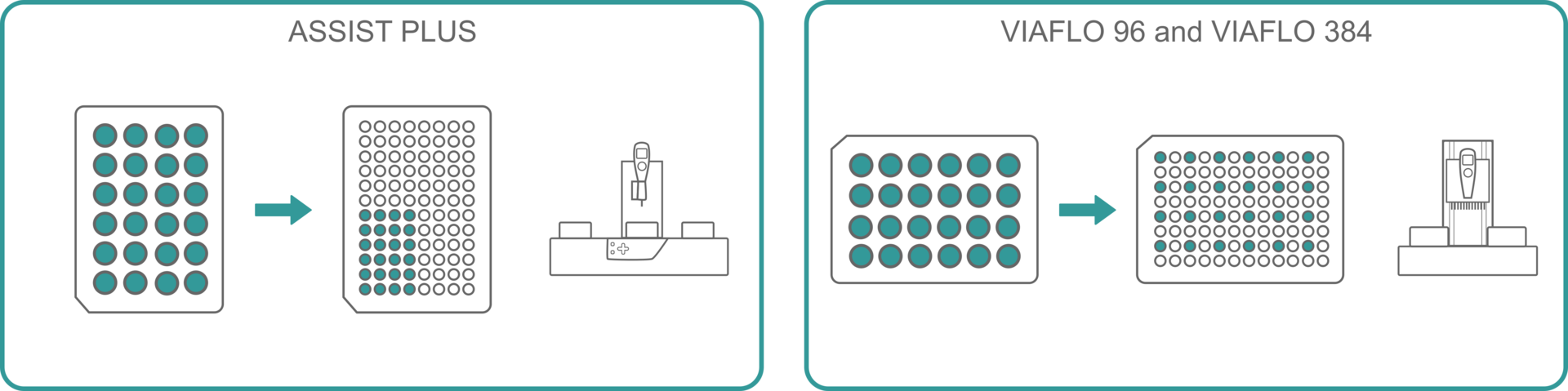
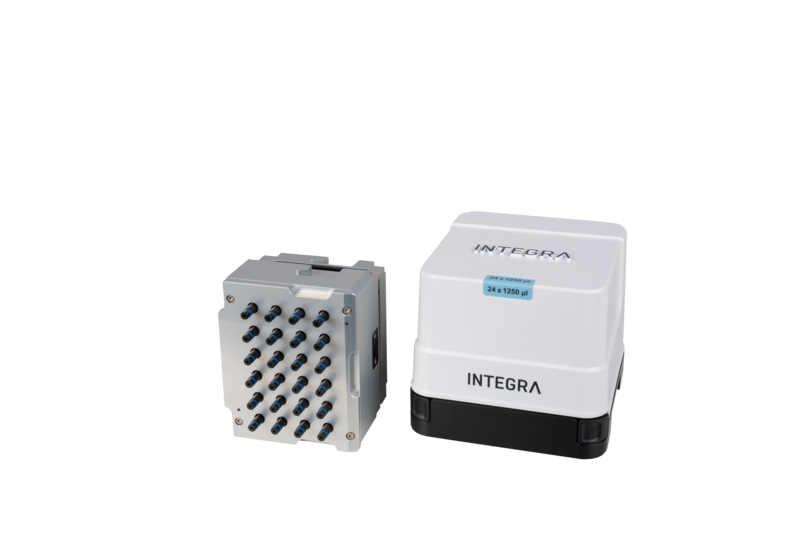
Transferring samples from 24 well plates to a 96 well plate can be performed manually with the VOYAGER adjustable tip spacing pipette or can be automated by pairing the VOYAGER with the ASSIST PLUS pipetting robot. Alternatively, the VIAFLO 96 and VIAFLO 384 handheld electronic pipettes can be equipped with a 24 channel pipetting head.
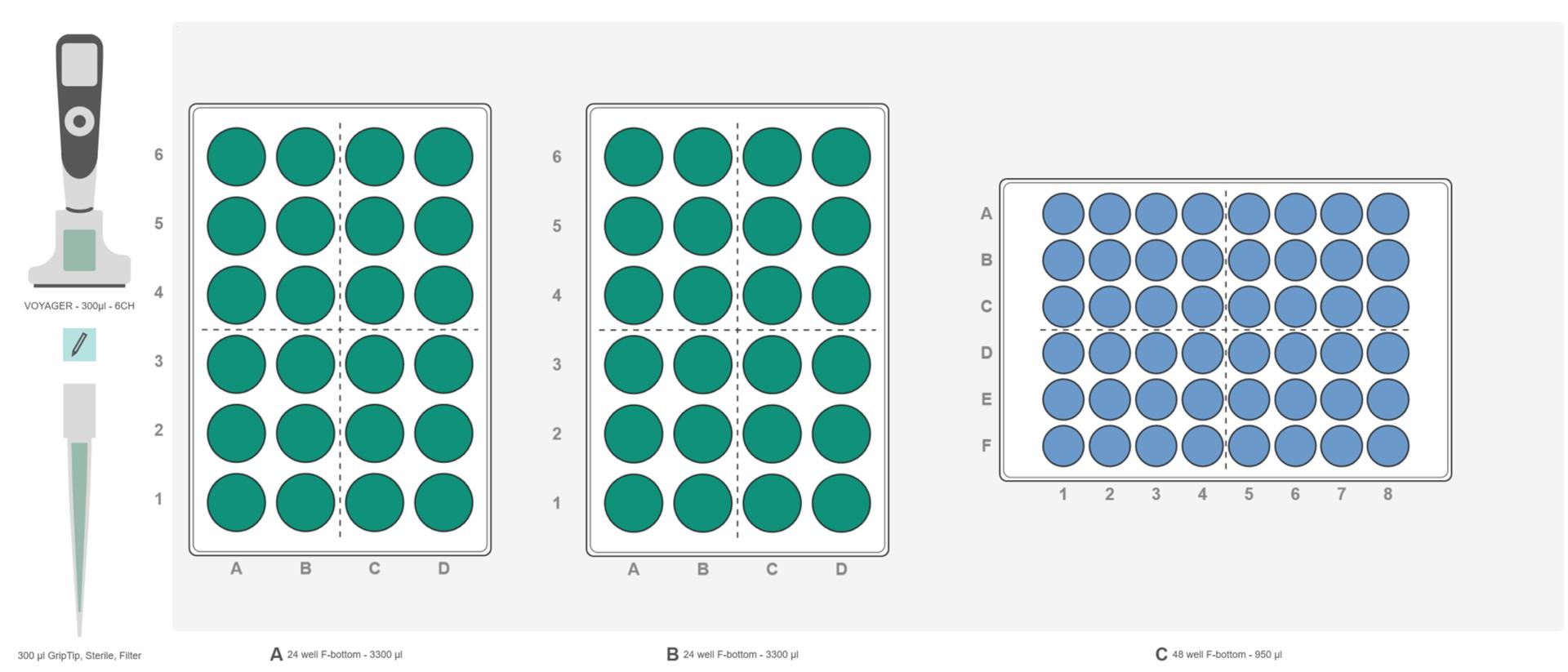
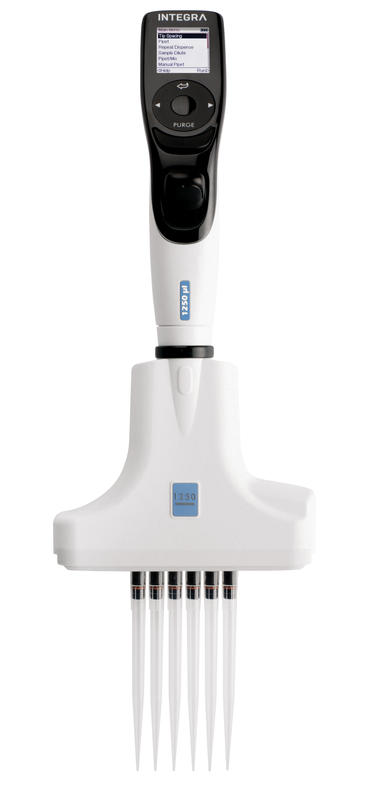
The VOYAGER 6 channel electronic pipettes can be used to transfer samples from a 24 well plate to a 96 well plate and, when using the ASSIST PLUS, the right plate orientation is very important. The 24 and the 96 well plates should be placed in portrait orientation on the deck (Figure 6).
When a VIAFLO 96 or VIAFLO 384 with a 24 channel pipetting head is used to transfer samples from 24 well plates to a 96 well plate, the user should be aware of the sample order in the destination plate (see Figure 7).
6. Processing 48 well plates
Transferring samples from 48 well plates.
Transferring samples from 48 well plates to 12, 24, 48, 96 or 384 well plates can be performed manually with a VOYAGER adjustable tip spacing pipette, or automatically by using the VOYAGER in combination with an PLUS pipetting robot.
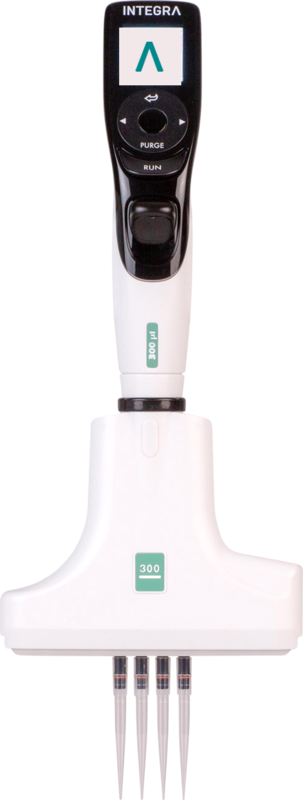
Depending on the target plate, 4, 6 or 8 channel VOYAGER pipettes can be used to transfer samples from 48 well plates.
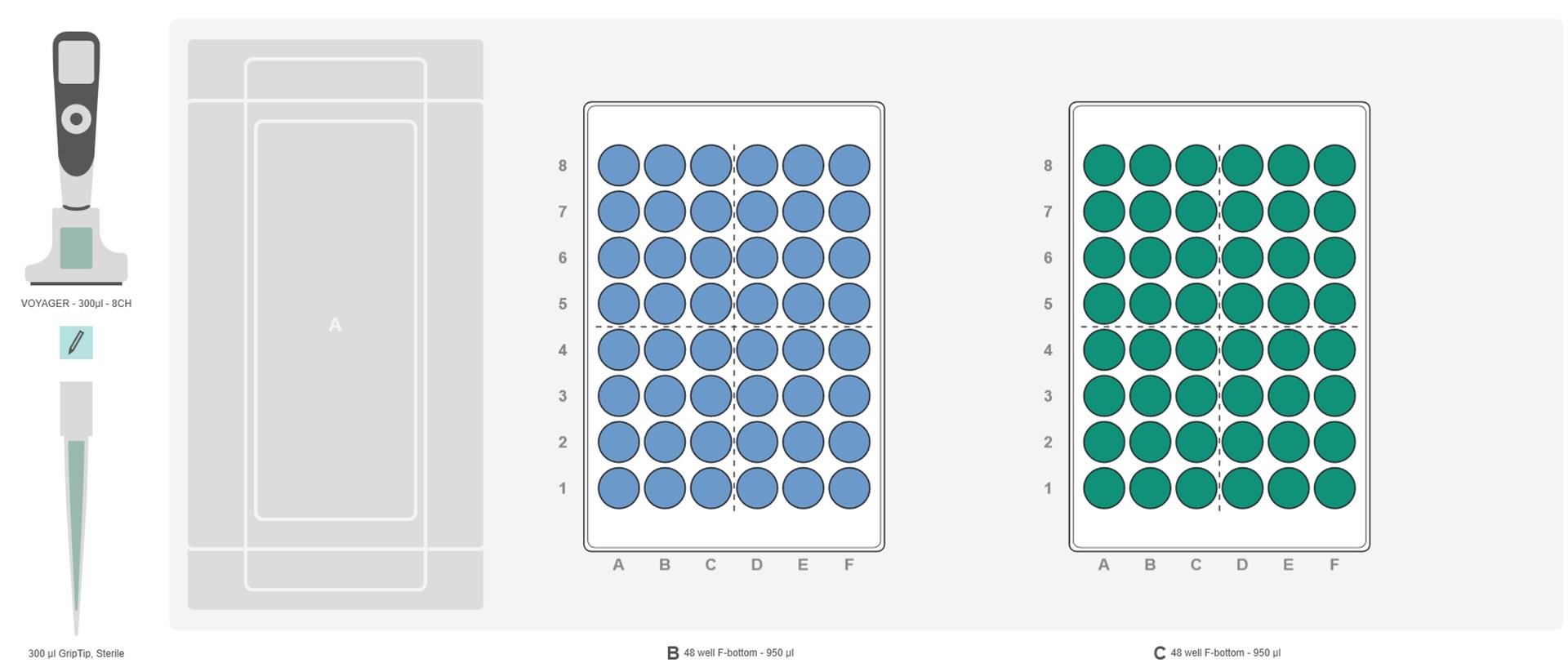
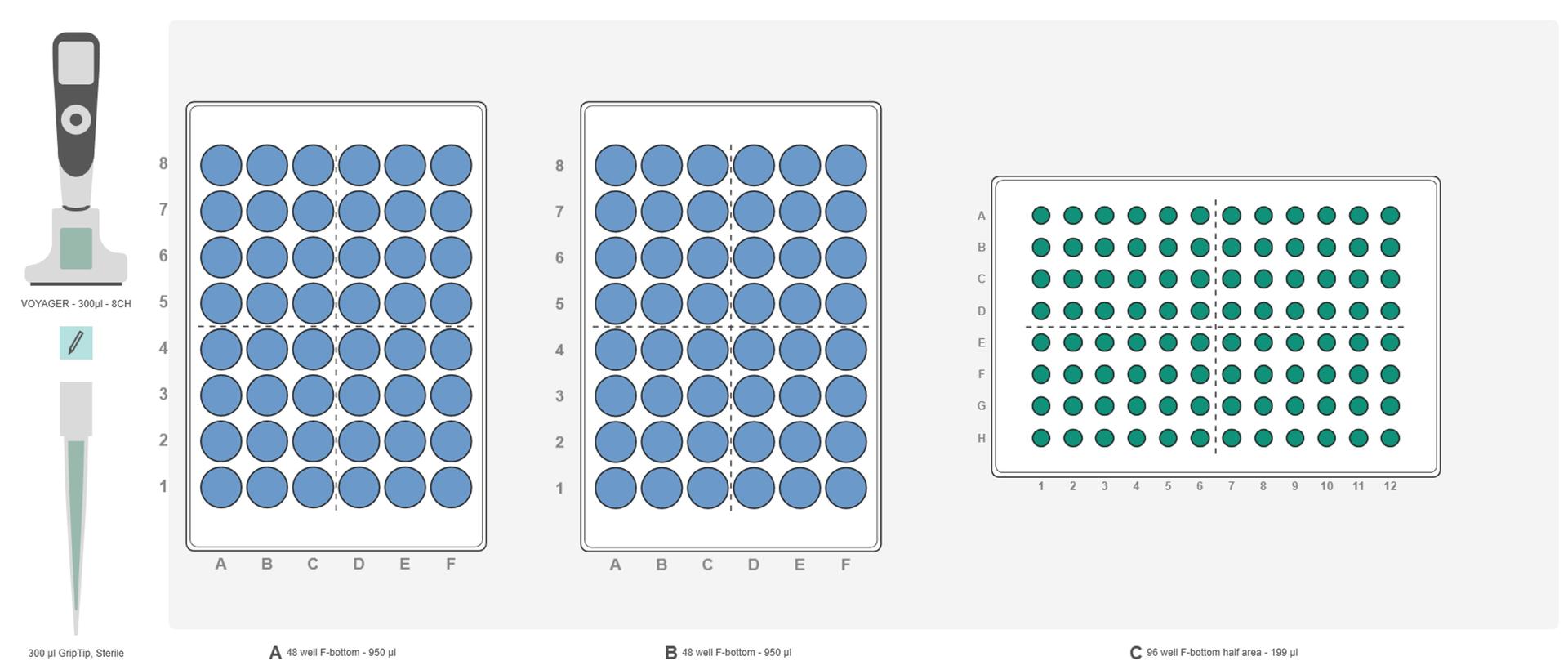
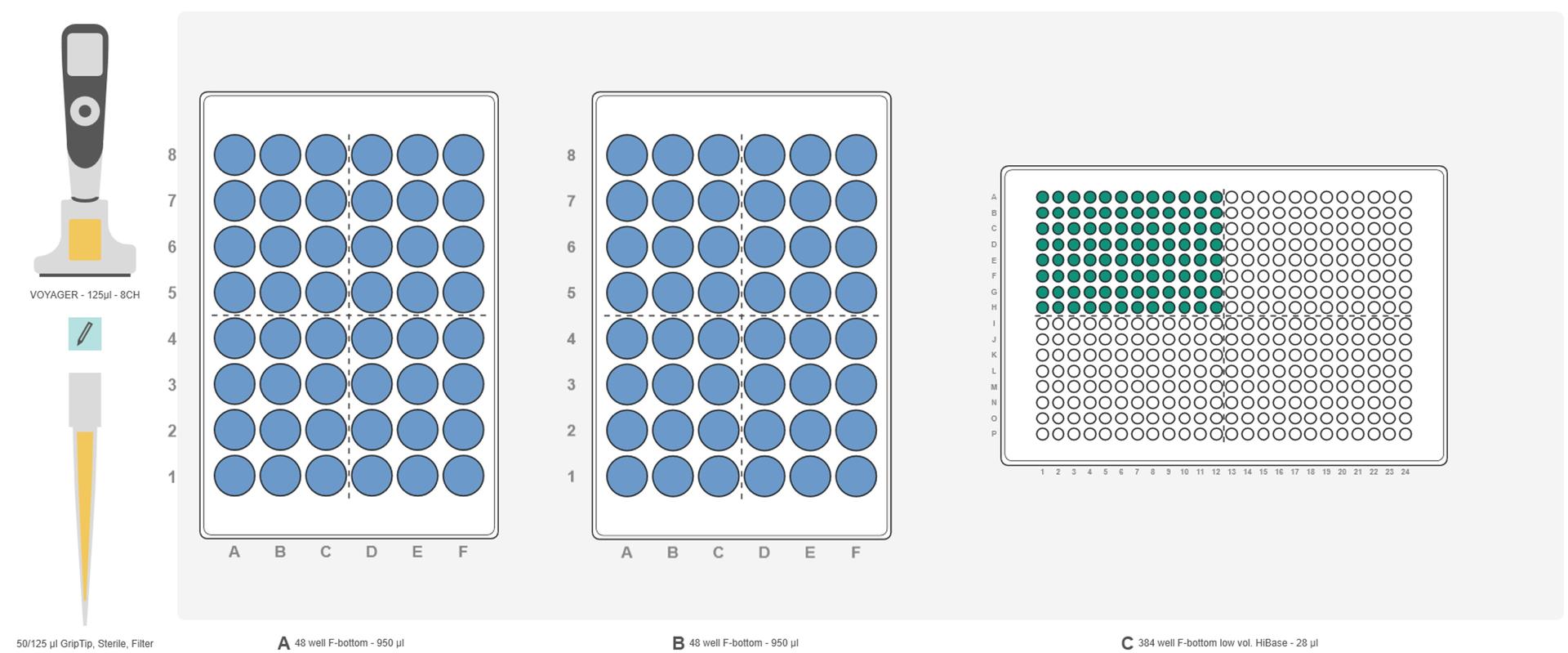
When the ASSIST PLUS pipetting robot is used for transfers from a 48 well plate to 12 well plates, both plates should be in portrait format. For transfers from a 48 well plate to 24 well plates, the 48 well plate should be in landscape orientation, while the 24 well plate should be in portrait. When a 48 well plate is replicated, both plates should be in portrait orientation. For transfers from a 48 well plate to a 96 or 384 well plate, the 48 well plate has to be in portrait orientation, and the 96 or 384 well plate in landscape (Figure 8).
7. 24 well plate replication
Transferring samples from one 24 well plate to another 24 well plate.
Replicating a 24 well plate is possible with the VOYAGER adjustable tip spacing pipettes, an ASSIST PLUS pipetting robot paired with a VOYAGER pipette, or with the VIAFLO 96 and VIAFLO 384 handheld electronic pipettes equipped with a 24 channel pipetting head.
A 4 or 6 channel VOYAGER pipette can be used for the transfer. When the sample transfer is automated with the ASSIST PLUS pipetting robot, the plates have to be in landscape orientation if a 4 channel VOYAGER pipette is used, whereas a 6 channel VOYAGER pipette requires plates to be placed in portrait.
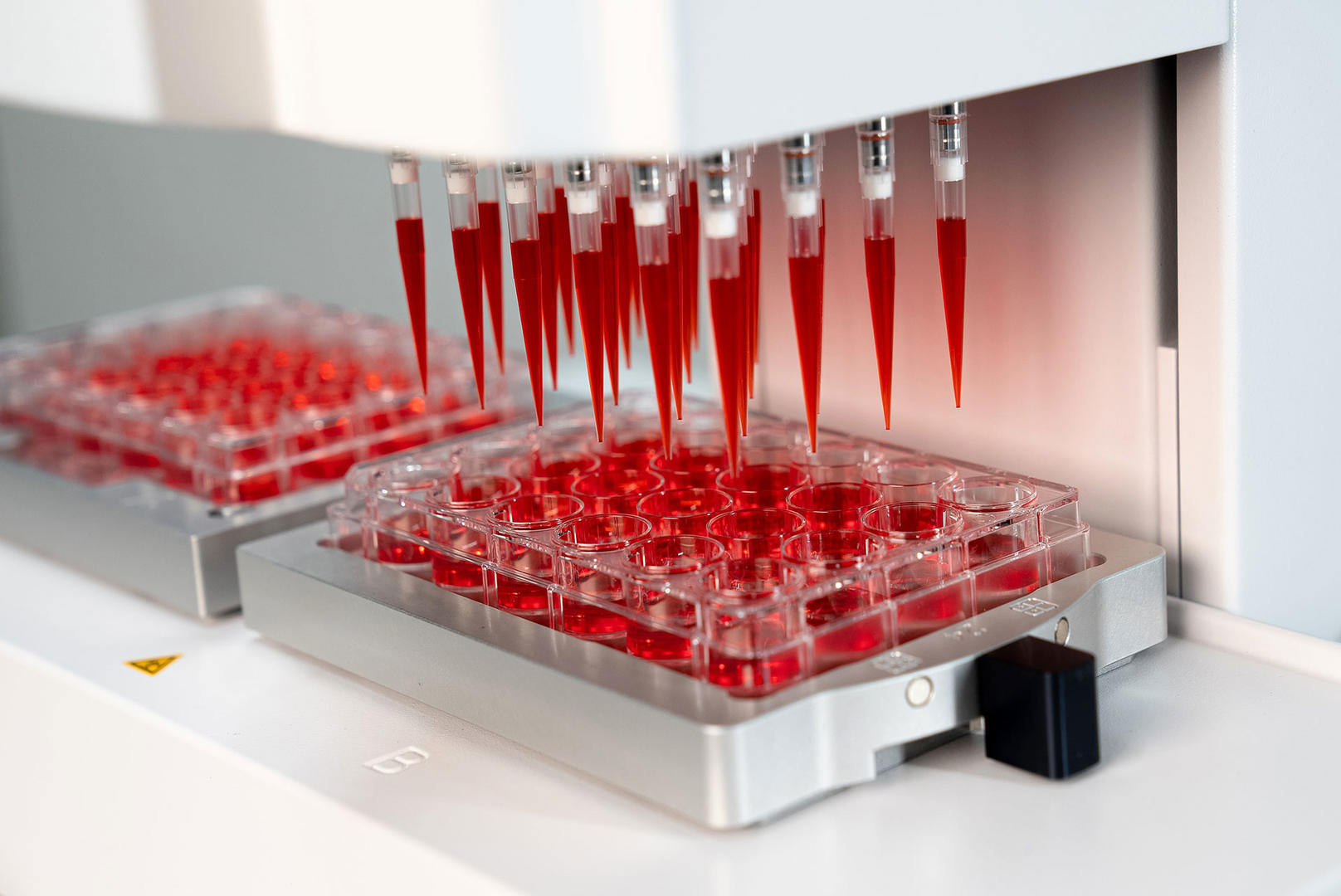
For processing of a full 24 well plate in one go, the VIAFLO 96 and VIAFLO 384 handheld electronic pipettes can be used with a 24 channel pipetting head (Figure 9) and 24 channel plate holders. With this set-up, it is possible to load GRIPTIPS® from a tip box four times. Always check the well to well distance of the 24 well plate, and align the pipetting head according to your plate.
8. Processing of 12 well plates
Transferring samples from 12 well plates.
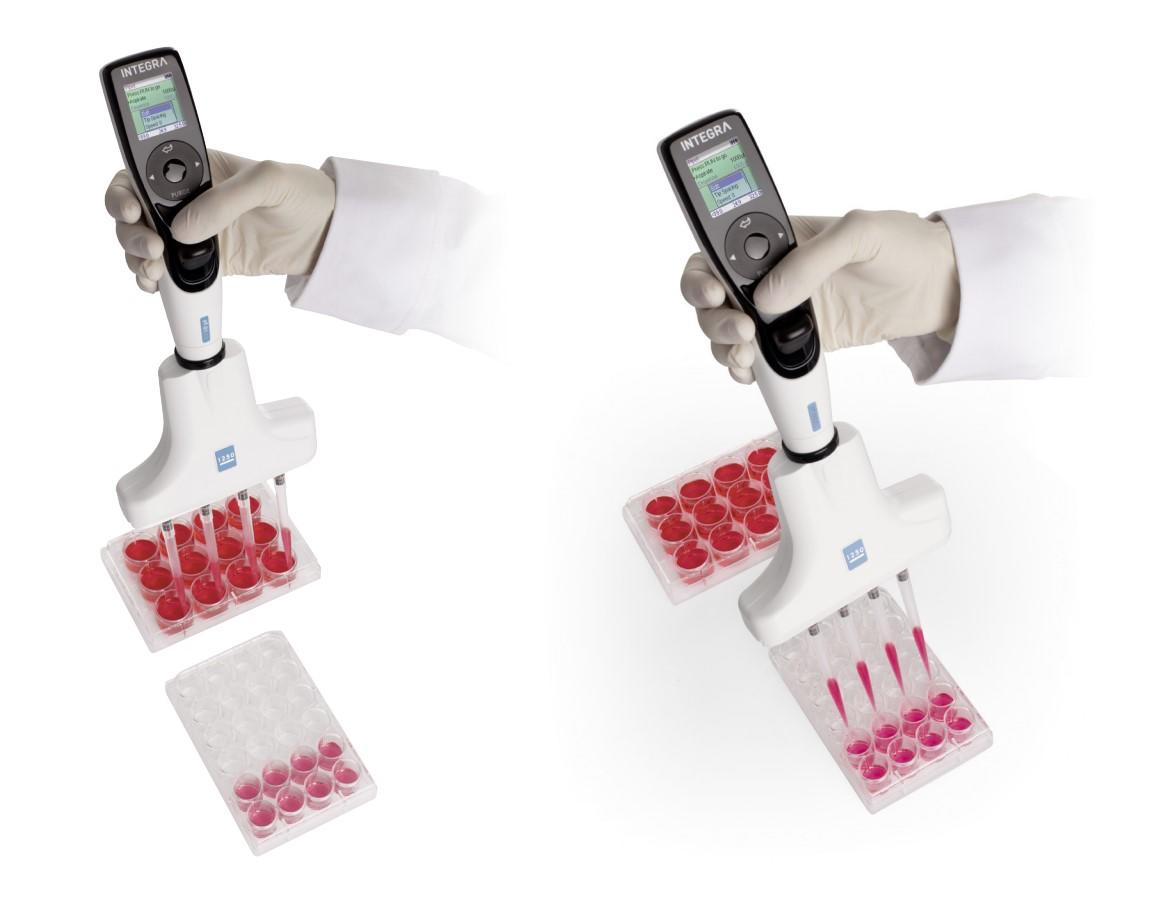
Transferring samples manually from 12 well plates to 12, 24, 48 or 96 well plates is possible with a VOYAGER adjustable tip spacing pipette, or automatically with the ASSIST PLUS pipetting robot equipped with a VOYAGER pipette.
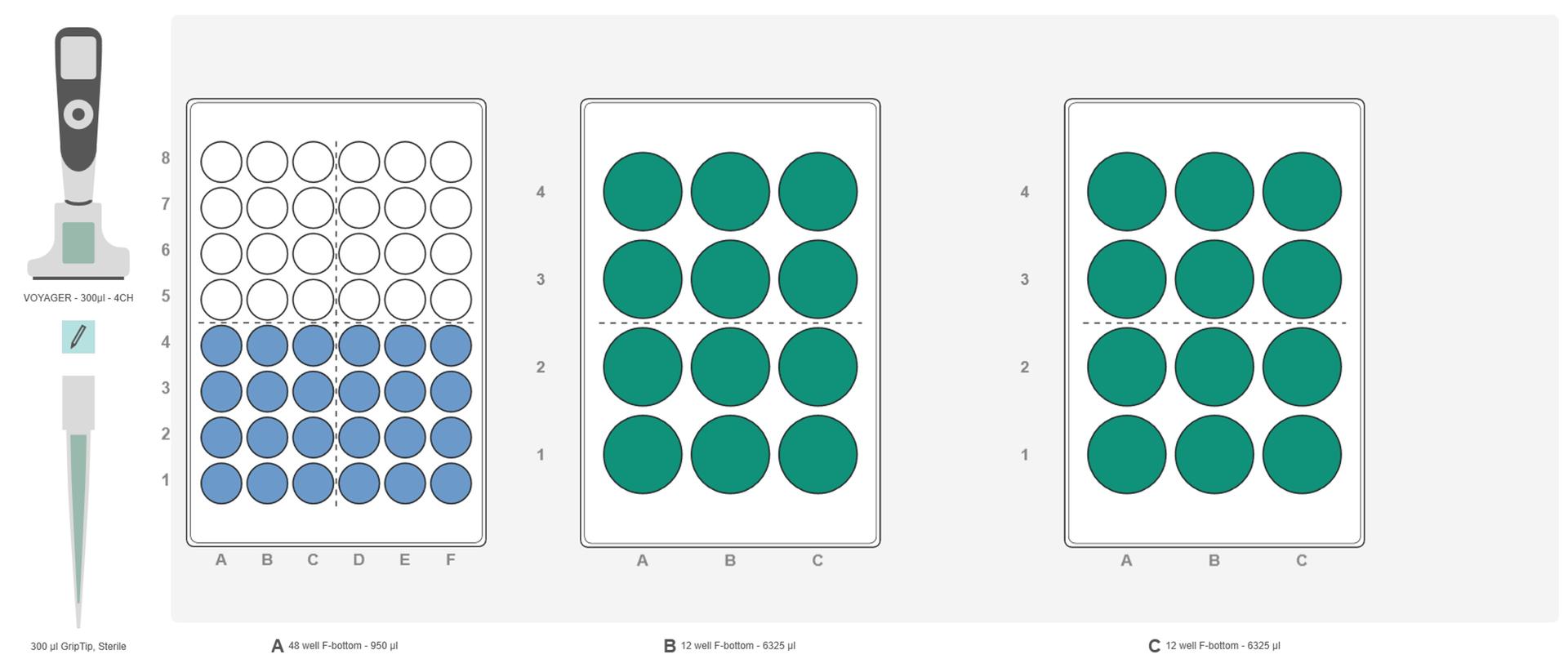
For transferring samples from a 12 well plate to any other plate format, a 4 channel VOYAGER electronic pipette is required (Figure 10).
When using the ASSIST PLUS pipetting robot, the 12 well plate has to be placed on the deck in portrait orientation (Figure 11). 12 well plate to 24 or 96 well plate transfers require the destination plate to be in landscape orientation, whereas 12 well plate to 48 well plate transfers require the 48 well plate to be in portrait. Two 12 well plates can be processed without any manual intervention, giving more walk-away time.
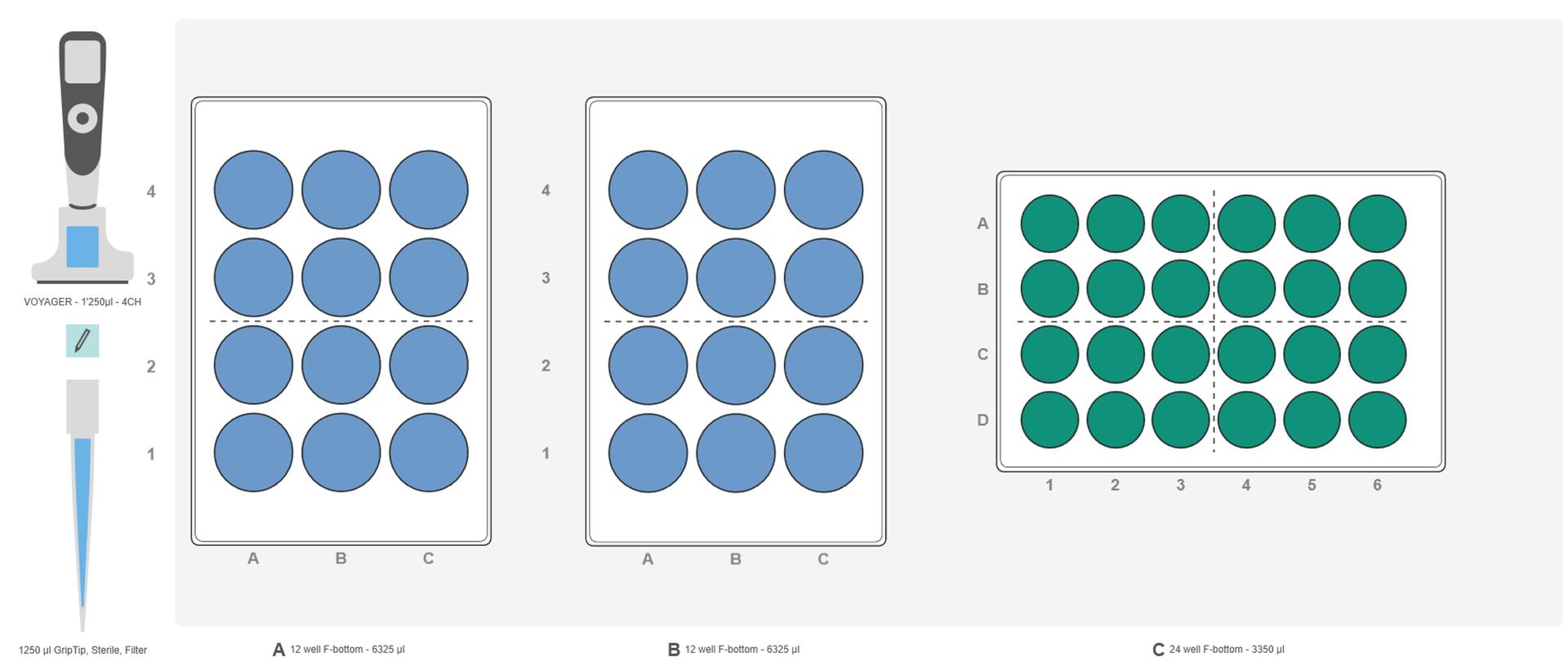
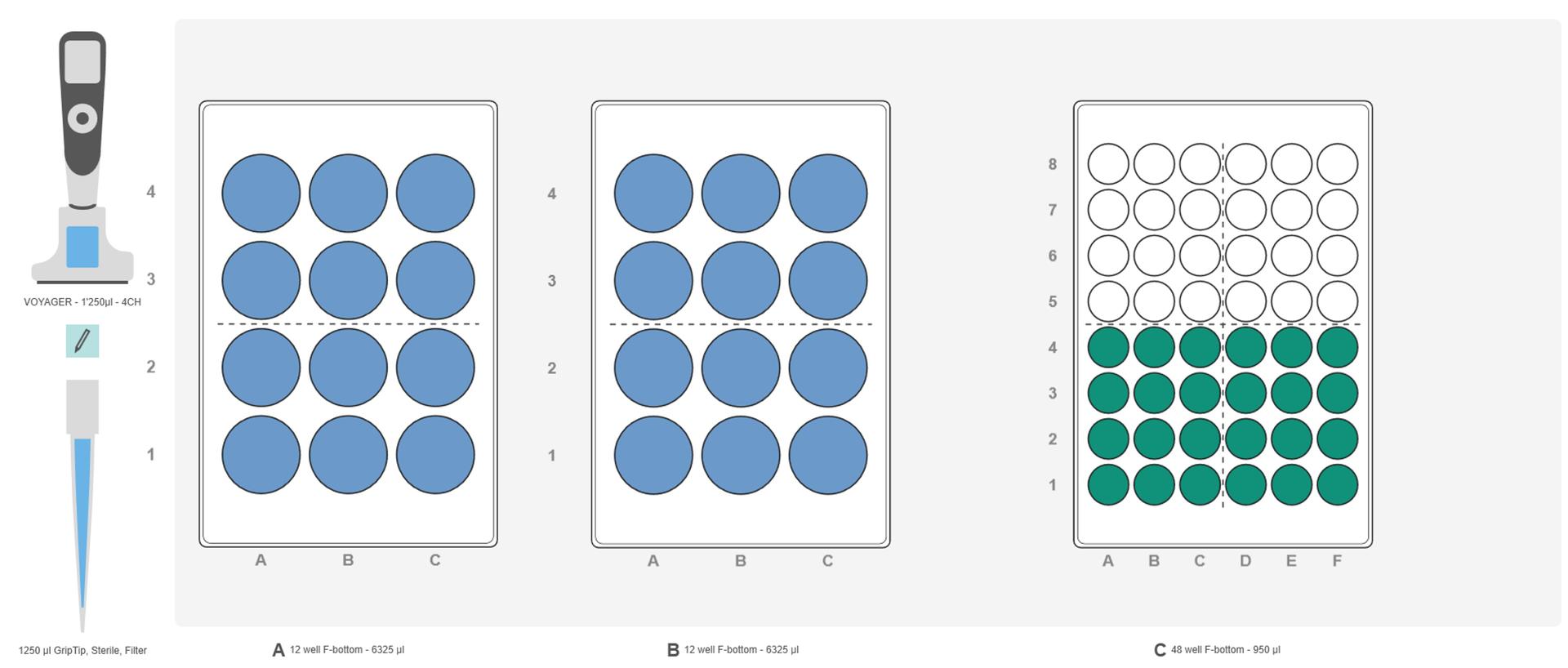
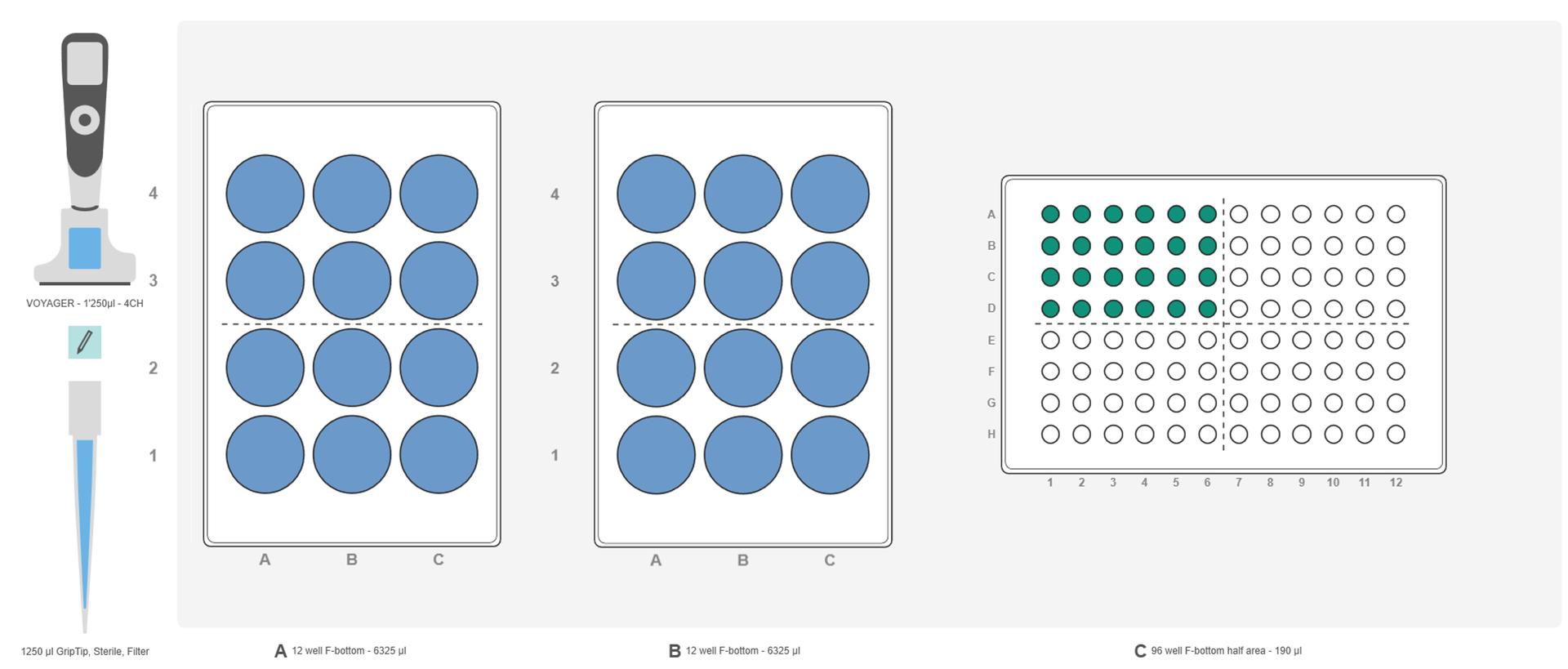
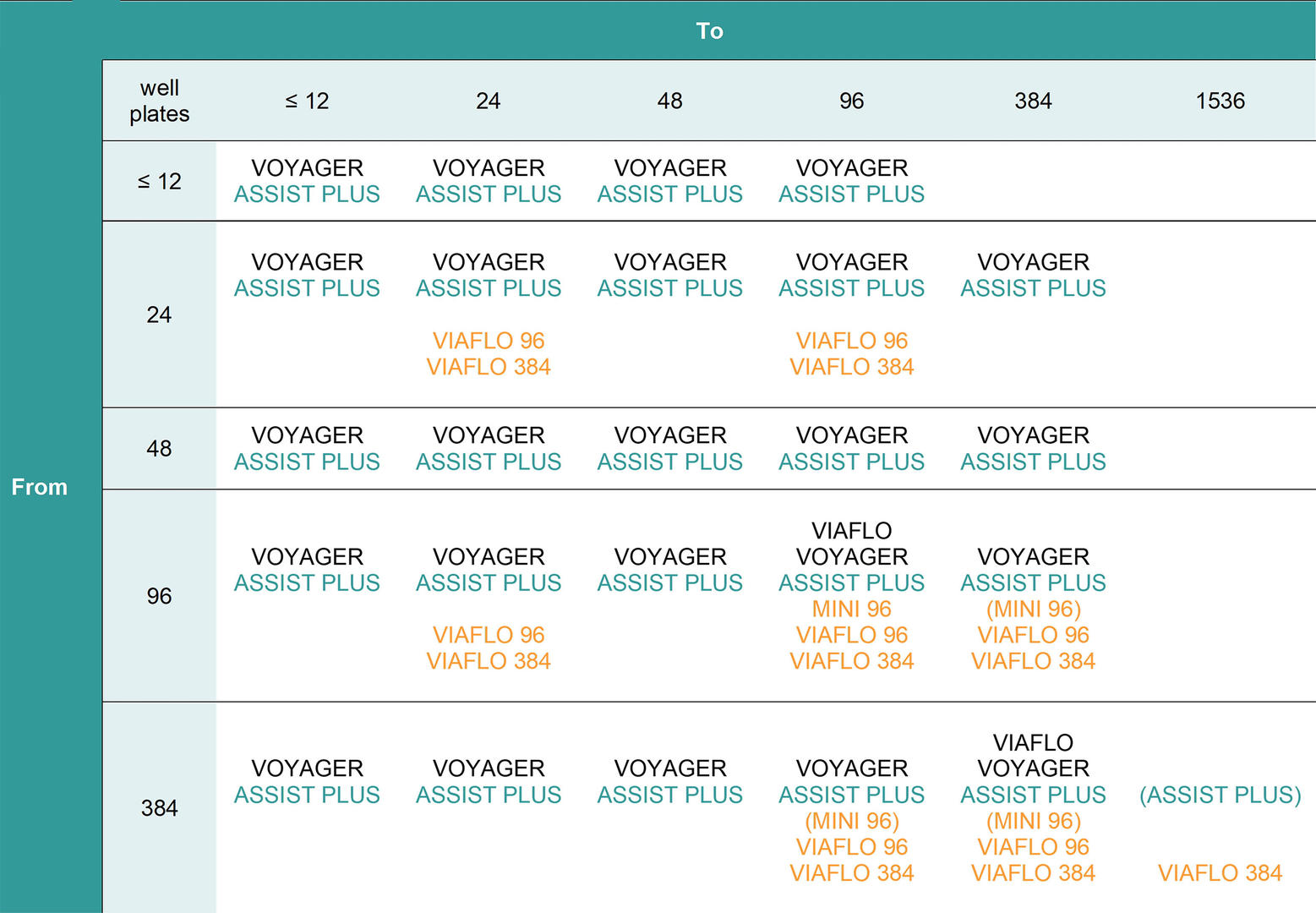
Table 1: Summary of possible plate to plate transfers with INTEGRA electronic pipettes.
Conclusion
VIAFLO 96 or VIAFLO 384.
Related articles
Further reading:
Ask our expert. Leave a comment!
Write us if you have any questions regarding the application note or one of our instruments.
Any questions? I'm happy to help!
Instruments and accessories
ASSIST PLUS, Pipetting Robot
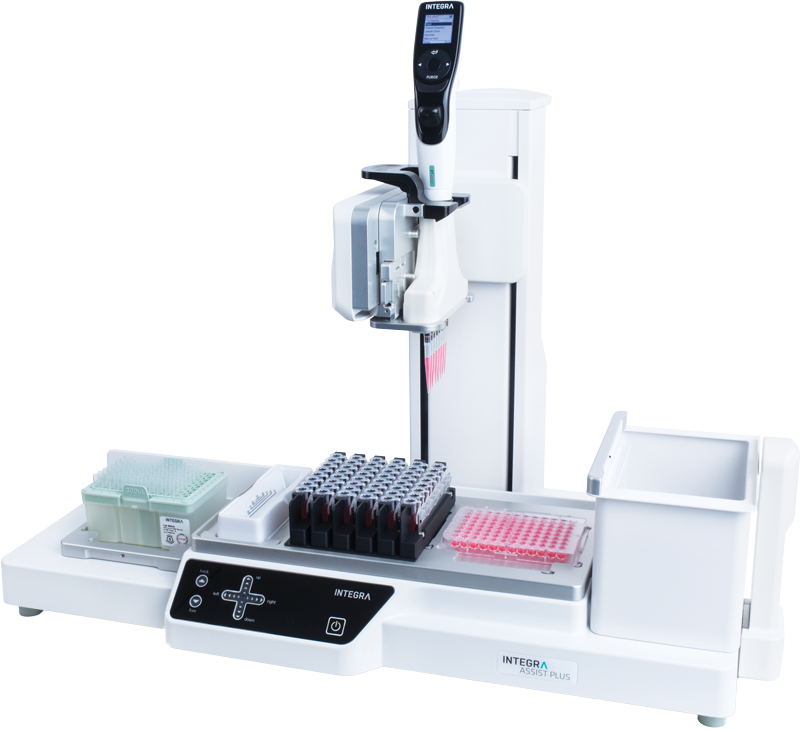
INTEGRA has developed the ASSIST PLUS pipetting robot to streamline routine pipetting tasks at an affordable price. Using INTEGRA electronic multichannel pipettes, the system:
- automates pipetting tasks,
- eliminates physical strain and
- ensures superior reproducibility and
- error free pipetting.
Part No. 4505
Download
Download App Note as PDF
DownloadFast and efficient sample transfer from plate to plate with INTEGRA's electronic pipettes
Customer’s voice
The pipetting robot is robust, easy to program and performs excellent. Reproducible and satisfactory results. We use the robot for challenging tasks such as accurate pipetting of drug compounds into enzymatic assays. Accurate and good mixing of components ensures reproducibility.
Related products

Applications
Show all-
End-to-end Twist library preparation protocol for NGS workflow automation
-
A simple and streamlined workflow for membrane protein isolation
-
Streamlining single-cell sequencing with the Flex Apex workflow using automated liquid handling solutions
-
Optimizing DNA fragmentation and NGS library preparation with automated liquid handling
Stories
Show all-
 · Company News
Streamlining CRISPR workflows, from editing to analysis
-
 · Customer Testimonial
Enhancing the consistency of ag-tech R&D processes with the ASSIST PLUS pipetting robot
-
 · Product News
Magnetic beads for NGS size selection and PCR purification
-
 · Product News
Magnetic beads represent a modern approach to gDNA isolation