


-
Automating media exchange and sample collection using Ronawk’s Bio-Blocks® In Similare technology and the ASSIST PLUS
Save media, space and plasticware by automating cell culture with Bio-Blocks and ASSIST PLUS
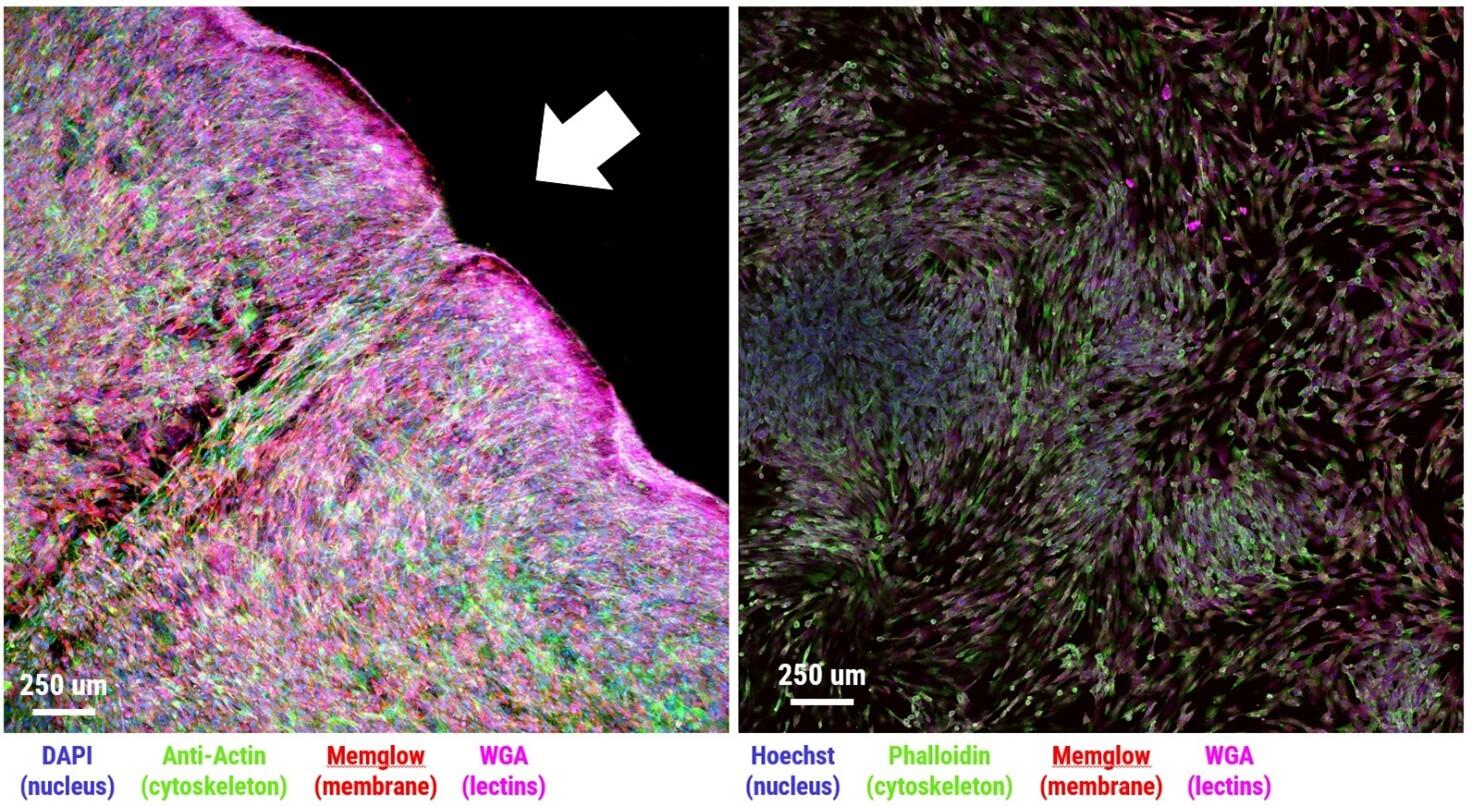
Combining Ronawk’s Bio-Block 3D hydrogel with INTEGRA’s ASSIST PLUS pipetting robot and D-ONE pipetting module enables scalable extracellular vesicle (EV) and secretome production and collection. Previous studies with the Bio-Block system demonstrate how its design eliminates subculturing and provides a tissue-mimetic environment, where mesenchymal stromal cells retain their stem-like phenotype with enhanced viability, and significantly increase EV secretion. Automating media handling and secretome collection with the ASSIST PLUS and D-ONE ensures reproducibility and hands-free operation, streamlining benchtop scale-up of EV/secretome production.
-
Table of contents
Combining Ronawk’s Bio-Block 3D hydrogel with INTEGRA’s ASSIST PLUS pipetting robot and D-ONE pipetting module enables scalable extracellular vesicle (EV) and secretome production and collection. Previous studies with the Bio-Block system demonstrate how its design eliminates subculturing and provides a tissue-mimetic environment, where mesenchymal stromal cells retain their stem-like phenotype with enhanced viability, and significantly increase EV secretion. Automating media handling and secretome collection with the ASSIST PLUS and D-ONE ensures reproducibility and hands-free operation, streamlining benchtop scale-up of EV/secretome production.
Key benefits
Overview: How to perform media exchange and preservation in Bio-block 3D cell culture using the ASSIST PLUS and D-ONE Pipetting Module
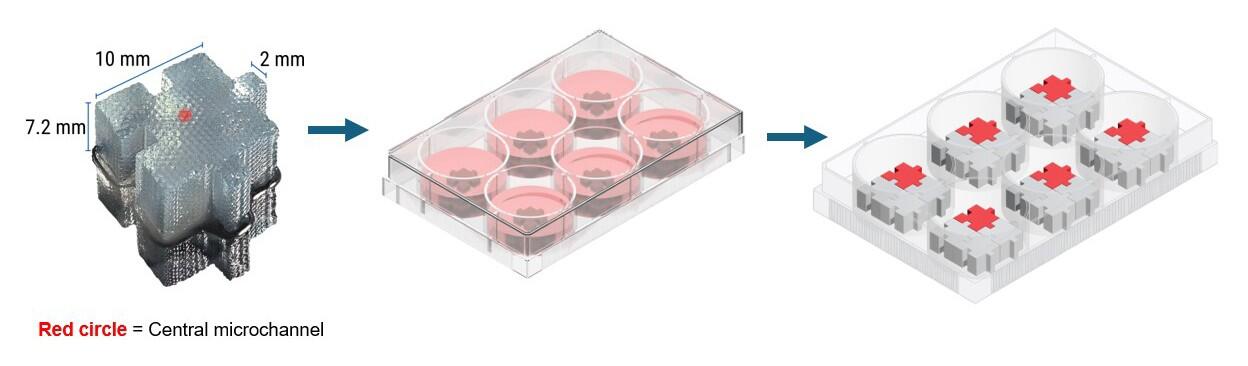
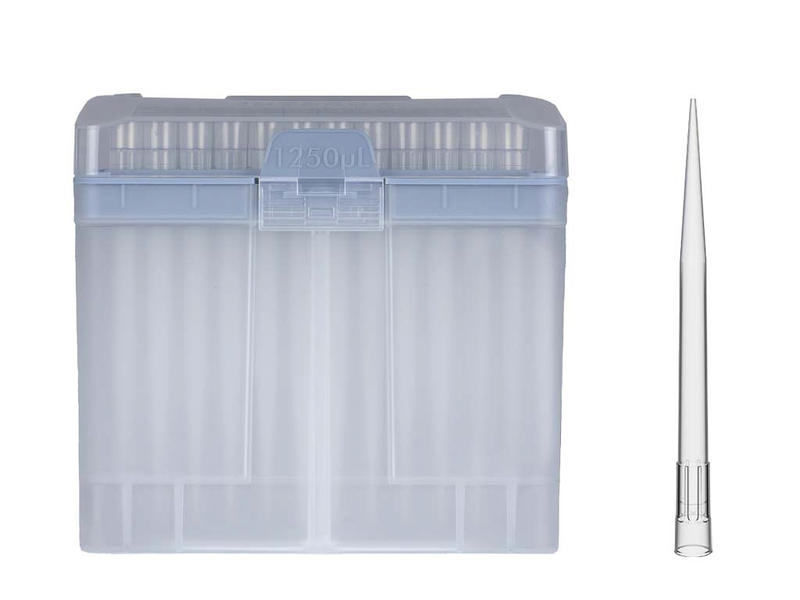
When cell medium exchange is required, the ASSIST PLUS with D-ONE 5-1,250 μl single channel pipetting module is first used to collect spent medium from the culture plate. Each sterile 1,250 μl GRIPTIPS® pipette tip is positioned to avoid contact with the Bio-Blocks in the well, and the spent medium can be aliquoted into vials for downstream analysis if required. Fresh medium is then added to each well. The program provided for this application includes a labware change step, demonstrating the versatility of the ASSIST PLUS specifically when performing workflows that require multiple labware types.
Downloads: App note and protocols for automating media exchange and sample collection using Ronawk’s Bio-Blocks® In Similare technology and the ASSIST PLUS
Step-by-step procedure
Medium exchange
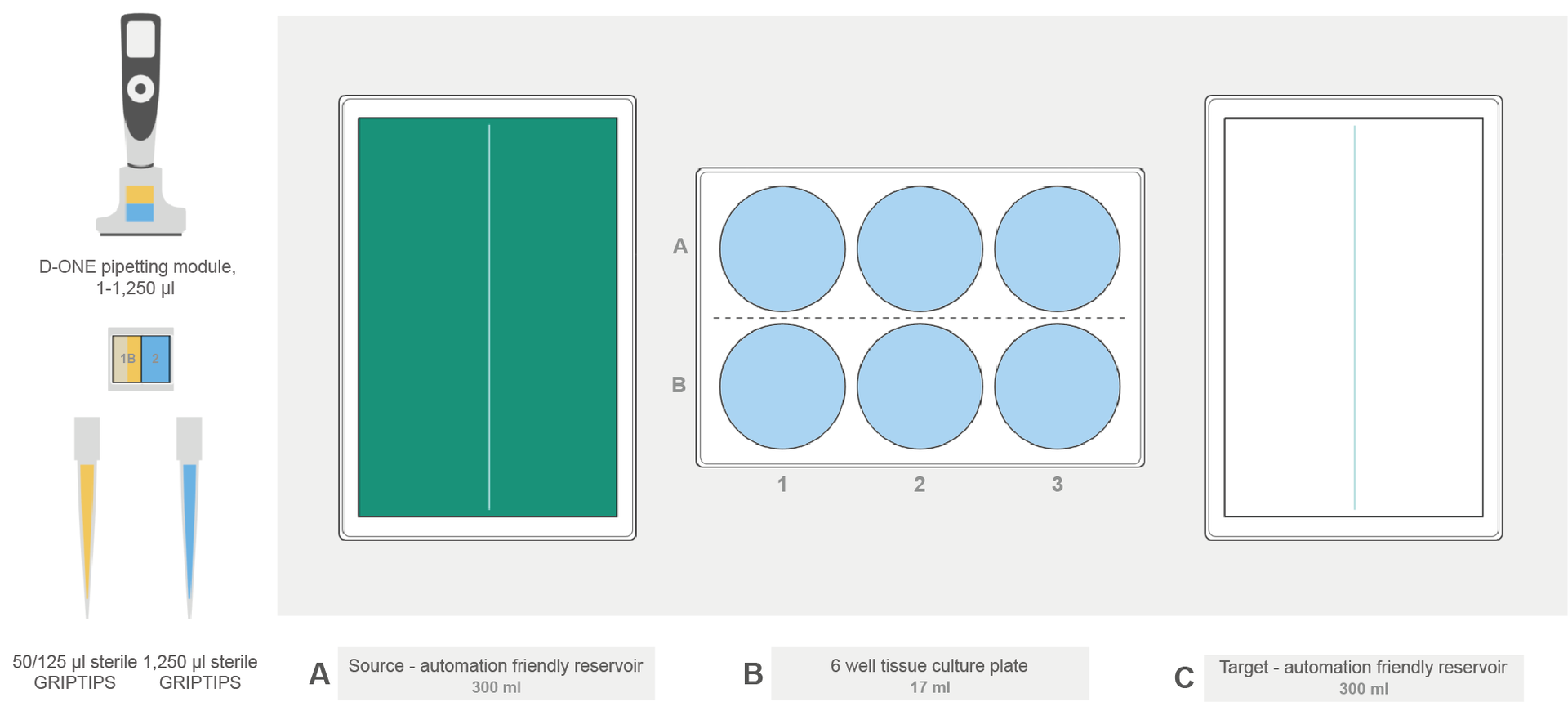
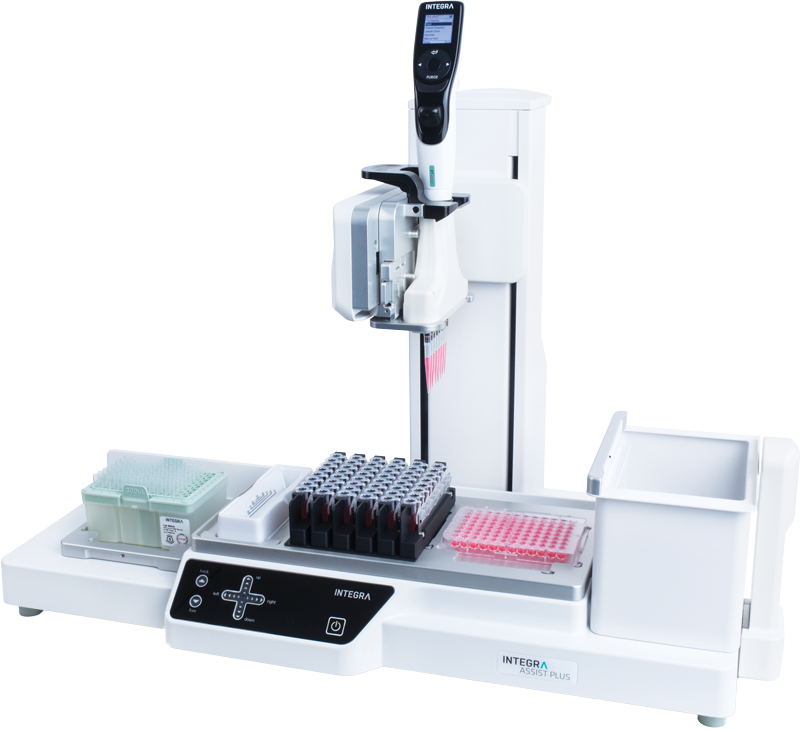
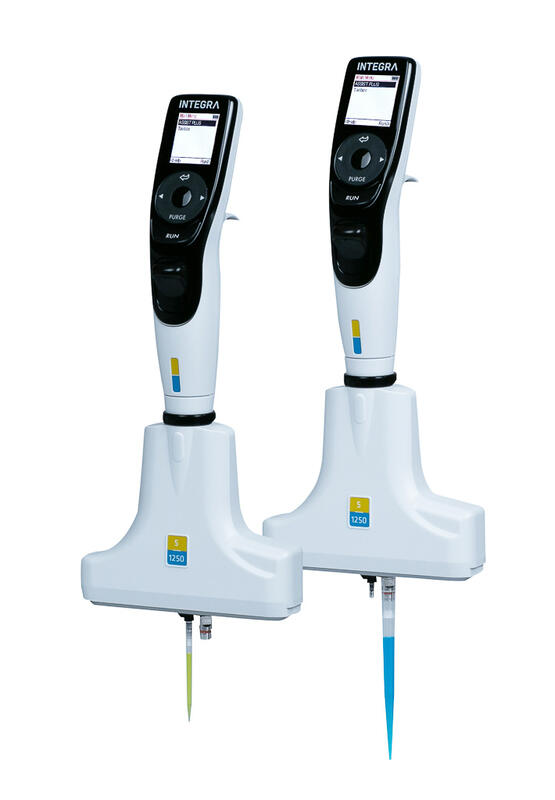
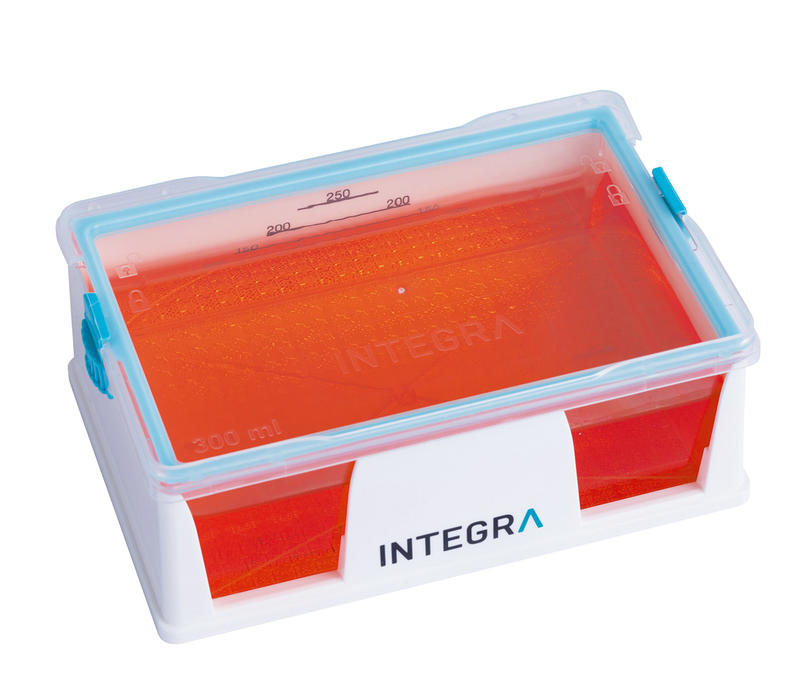
Load the 5-1,250 μl D-ONE single channel pipetting module and 50-1,250 μl sterile GRIPTIPS onto the ASSIST PLUS. Place a 300 ml automation friendly reagent reservoir holding clean medium on deck position A, the 6 well culture plate holding Bio-Blocks with cell culture on deck position B in portrait orientation, and an empty automation friendly reservoir on deck position C.
Select the program ‘Bio-Block Medium Exchange’ on the pipette. The pipette will aspirate 5,000 μl from each well of the plate using 4 separate aspirations of 1,250 μl each. To avoid damaging the Bio-Blocks with cells, the pipetting location is offset so the tip enters the culture plate away from the Bio-Blocks. Tip travel is activated so the tip travels dynamically during the aspiration, avoiding large air aspirations. Following each aspiration, the spent medium is dispensed into the reservoir on deck C. The reservoir can be exchanged after each well if the medium from each well needs to be analyzed separately. 1 pipette tip is used for each well, minimizing consumable costs for the user while avoiding cross contamination between wells.
When the medium removal is complete, a new tip is loaded onto the pipette, and addition of clean medium commences. Similar pipette tip offsets are used in this step to avoid damaging the Bio-Blocks. If all six wells do not contain the same cell type, and the medium needs to be processed separately, exchange the right most reservoir with a fresh insert to avoid cross contamination.
Tips:
- Use sterile, filter GRIPTIPS for contamination-free processing
- INTEGRA's ASSIST PLUS programming software, VIALAB, allows placement of the pipette tip anywhere within the source or target well. With Bio-Blocks, the pipetting position is set to avoid touching the hydrogel during addition or removal of media
- VIALAB software allows the operator to define tip changes, reducing waste when the same tip may be used for multiple liquid transfers
Media aliquoting for downstream processes
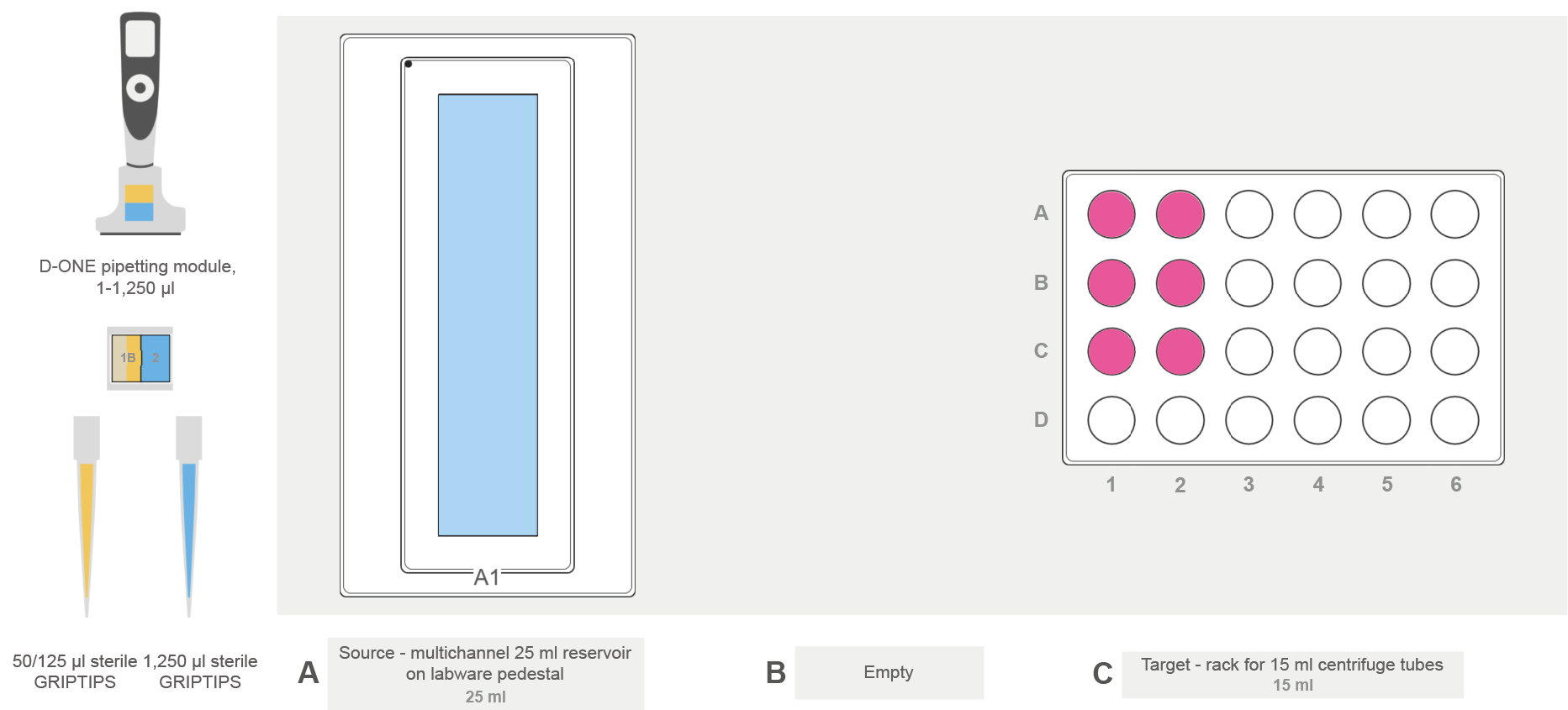
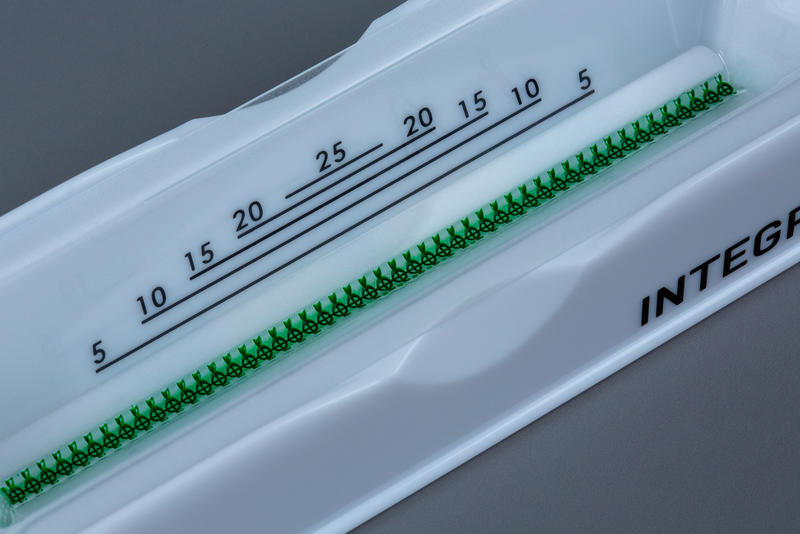
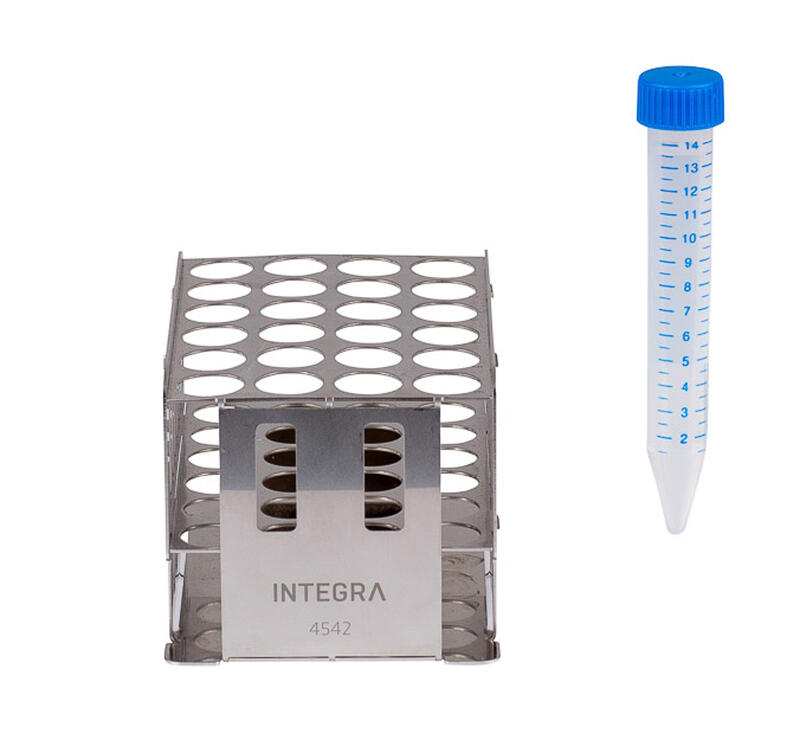
Following the completion of the media exchange, the ASSIST PLUS stops running and the pipette screen displays a message guiding the operator through the labware exchange. The operator should place a reservoir with the collected medium on deck position A and a tube rack holding 6 15 ml conical centrifuge tubes on deck C. The operator presses RUN to resume the program only after the labware change has been manually performed. 5 ml of collected media is then added to each centrifuge tube. If the medium needs to be processed separately for different cell types, tap the arrow in the center of the ASSIST PLUS display after the first medium transfer to pause the run. Exchange the 25 ml reservoir with a fresh insert, add the medium for the next well, then continue the program by pressing the arrow in the center of the ASSIST PLUS display again to resume the program.
Tips:
- For transfer volumes that exceed the pipette’s maximum volume, a single transfer step with a multiplier is offered, allowing simpler programming
- Consider a labware change step in your VIALAB program when additional labware is needed on the deck of the ASSIST PLUS
Conclusion
Ask our expert. Leave a comment!
Write us if you have any questions regarding the application note or one of our instruments.
Any questions? I'm happy to help!
Instruments and accessories
ASSIST PLUS, Pipetting Robot
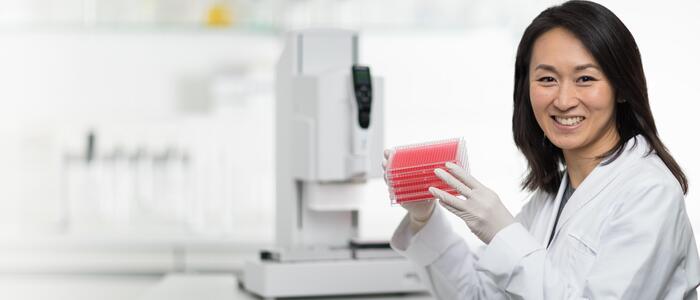
INTEGRA has developed the ASSIST PLUS pipetting robot to streamline routine pipetting tasks at an affordable price. Using INTEGRA electronic multichannel pipettes, the system:
- automates pipetting tasks,
- eliminates physical strain and
- ensures superior reproducibility and
- error free pipetting.
Part No. 4505
Downloads
Download App Note as PDF
DownloadAutomating media exchange and sample collection using Ronawk’s Bio-Blocks® In Similare technology and the ASSIST PLUS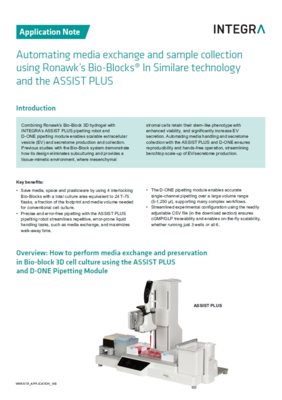
Customer’s voice
The Assist Plus plays a crucial role in our lab's high throughput. It accurately and quickly performs it's functions, and the vialab software makes designing an experiment incredibly easy. Would highly recommend this equipment to anyone looking for a reliable, accurate tool for multiple functions across the lab.
Related products
Applications
Show all-
End-to-end Twist library preparation protocol for NGS workflow automation
-
A simple and streamlined workflow for membrane protein isolation
-
Streamlining single-cell sequencing with the Flex Apex workflow using automated liquid handling solutions
-
Optimizing DNA fragmentation and NGS library preparation with automated liquid handling
Stories
Show all-
 · Company News
Streamlining CRISPR workflows, from editing to analysis
-
 · Customer Testimonial
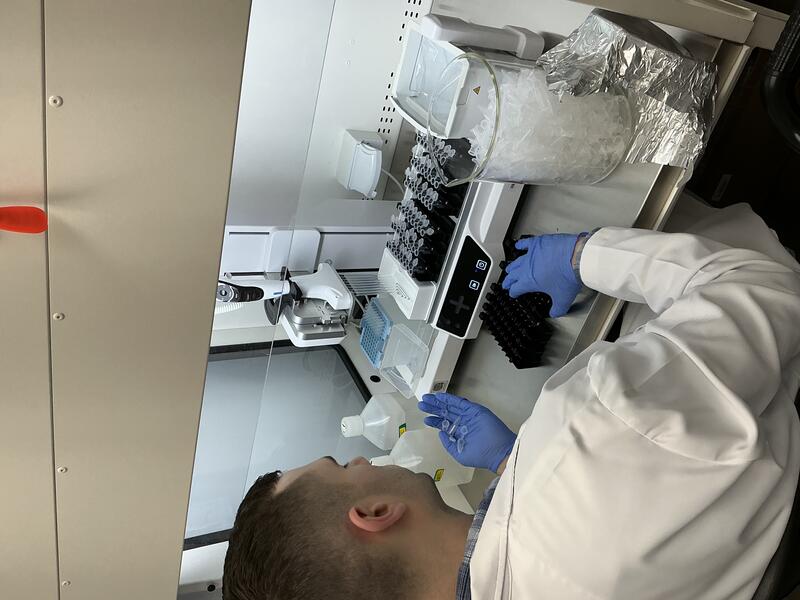
Enhancing the consistency of ag-tech R&D processes with the ASSIST PLUS pipetting robot
-
 · Product News
Magnetic beads represent a modern approach to gDNA isolation
-
 · Product News
Magnetic beads for NGS size selection and PCR purification