


-
Enabling the Illumina DNA PCR-Free Library Prep kit on the MIRO CANVAS NGS prep system
Automate your NGS library preparation
There is an increasing demand for NGS library preparation protocols that do not include PCR to avoid the introduction of PCR bias into the pool of DNA for sequencing.1
The Illumina DNA PCR-Free Prep kit follows a PCR-free workflow and is being increasingly used in sensitive applications such as whole genome sequencing (WGS) because it is both flexible and easy to automate.2 Its on-bead tagmentation step is especially important for reducing library preparation time and sample input requirements. These features are of great interest for clinical applications such as tumor evaluations and newborn diagnostics, and are also important for research uses.
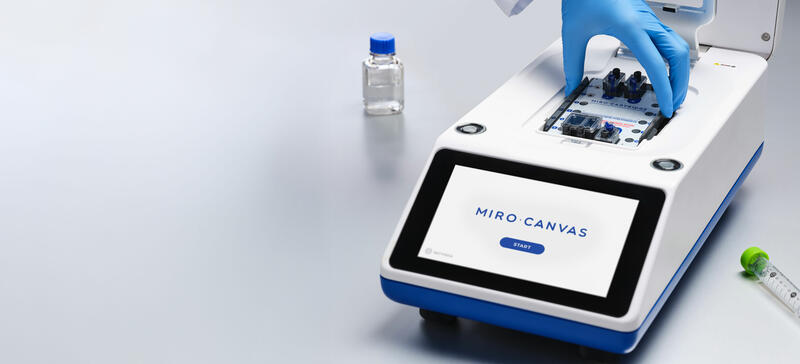
The MIRO CANVAS is a digital microfluidics (DMF) platform that allows custom low throughput workflow automation for complex protocols such as NGS library preparation. The system is compatible with a wide range of reagents.3
This application note describes the results that can be expected when using the Illumina DNA PCR-Free Prep kit in a protocol developed for the MIRO CANVAS. The resulting research use only libraries can then be sequenced using Illumina platforms.
-
Table of contents
There is an increasing demand for NGS library preparation protocols that do not include PCR to avoid the introduction of PCR bias into the pool of DNA for sequencing.1
The Illumina DNA PCR-Free Prep kit follows a PCR-free workflow and is being increasingly used in sensitive applications such as whole genome sequencing (WGS) because it is both flexible and easy to automate.2 Its on-bead tagmentation step is especially important for reducing library preparation time and sample input requirements. These features are of great interest for clinical applications such as tumor evaluations and newborn diagnostics, and are also important for research uses.
The MIRO CANVAS is a digital microfluidics (DMF) platform that allows custom low throughput workflow automation for complex protocols such as NGS library preparation. The system is compatible with a wide range of reagents.3
This application note describes the results that can be expected when using the Illumina DNA PCR-Free Prep kit in a protocol developed for the MIRO CANVAS. The resulting research use only libraries can then be sequenced using Illumina platforms.
Key benefits
Overview: How to enable the Illumina DNA PCR-Free Library Prep kit on the MIRO CANVAS
Experimental set-up
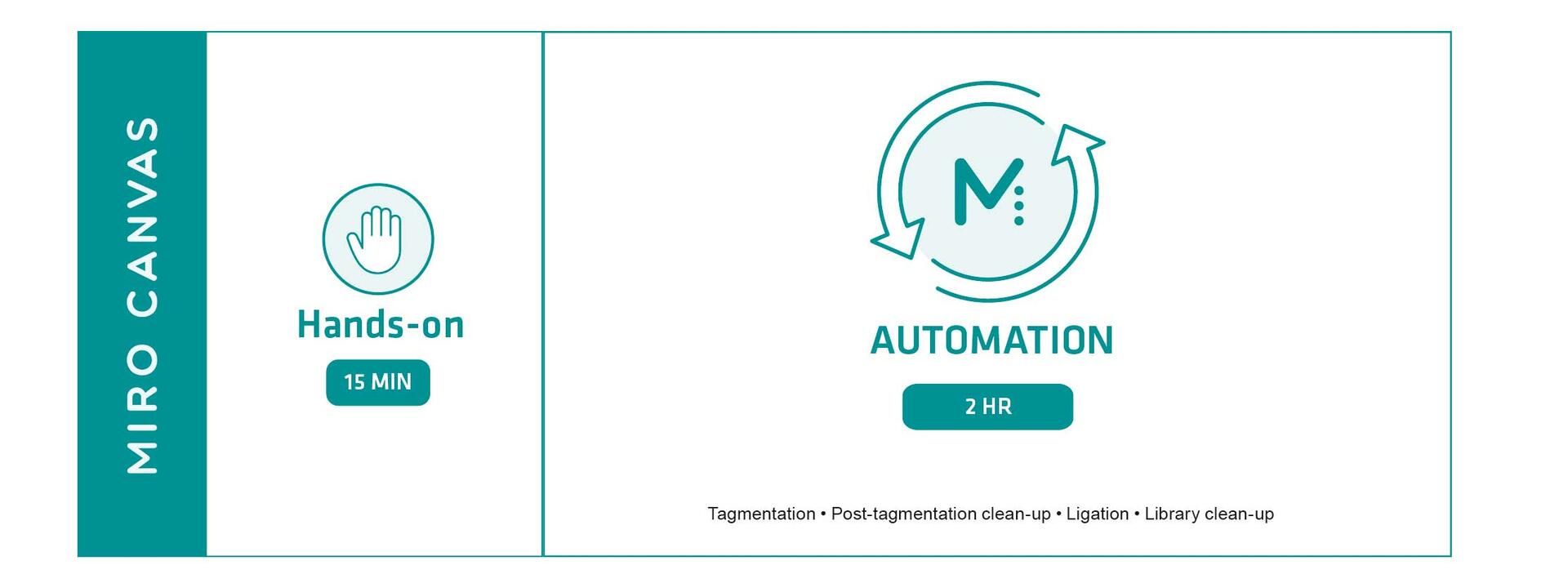
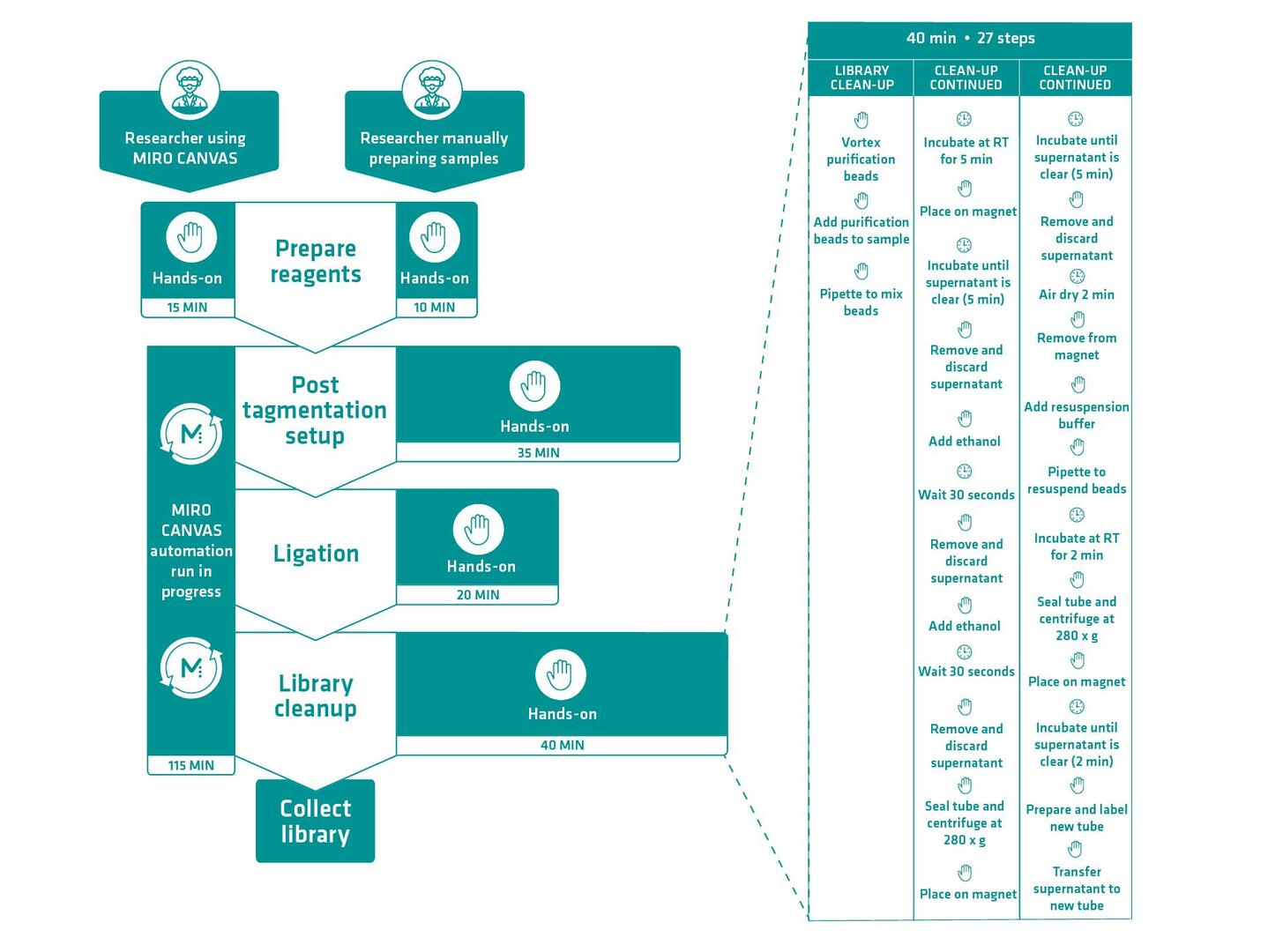
The Illumina DNA PCR-free library prep protocol was designed for fully automated use on the MIRO CANVAS and has been tested using high quality DNA inputs in the 50-500 ng range. DNA should be quantified using a Qubit™ dsDNA Quantification Assay Kit, Broad Range, or similar before starting. Libraries are quantified using a Qubit ssDNA Assay Kit or qPCR. Tagmentation, post-tagmentation clean-up, ligation and library clean-up steps are all automated on the MIRO CANVAS (Figure 1). Downstream normalization and pooling require hands-on time.
Downloads: App note for enabling the Illumina DNA PCR-Free Library Prep kit on the MIRO CANVAS NGS prep system
Results
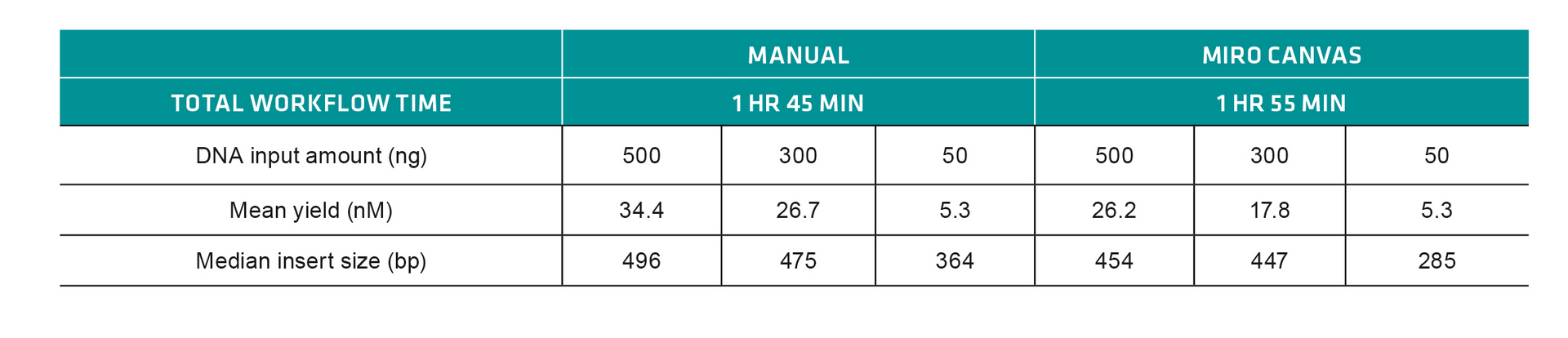
Automating the experimental workflow on the MIRO CANVAS produces library yields and insert sizes that result in quality sequencing metrics. The Illumina DNA PCR-Free Prep protocol for standard inputs has been modified and tested using 50-500 ng NA12878 gDNA* on the MIRO CANVAS. In this modified version (Table 1), combining the standard input protocol volumes of DNA and bead-linked transposomes PCR-free (BLT-PF) with low input single-sided bead purification (1.8x ratio) was determined to be optimal for obtaining libraries of an ideal size and with sufficient quantity for sequencing (Table 2). Libraries prepared with as low as 50 ng of input gDNA were sequenced on a NovaSeq 6000 S4. The 1.8x ratio resulted in the kit’s expected insert size of ~450 bp for >300 ng input. BLT-PF and DNA input volumes will need to be further adjusted for 50 ng input to achieve the expected insert size in both manual preparation and the automated workflow on the MIRO CANVAS.
*NA12878 gDNA samples were obtained from the NIGMS Human Genetic Cell Repository at the Coriell Institute for Medical Research.
Table 1: Conditions for sample purification bead addition and insert size selection across the different DNA inputs tested.
IPB=Illumina Purification Beads
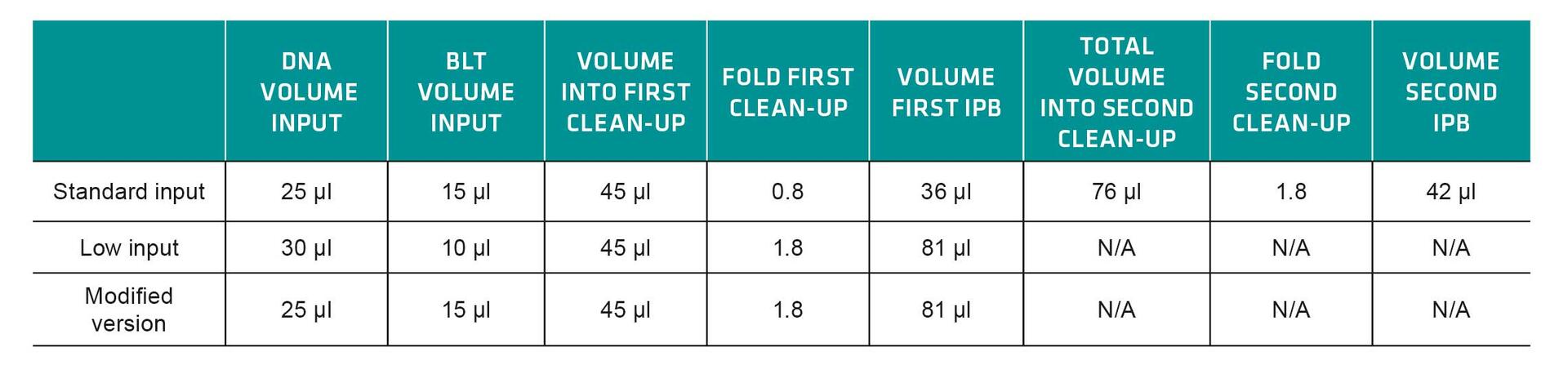
Table 2: Library insert sizes and yields generated from different inputs of unsheared NA12878 DNA.
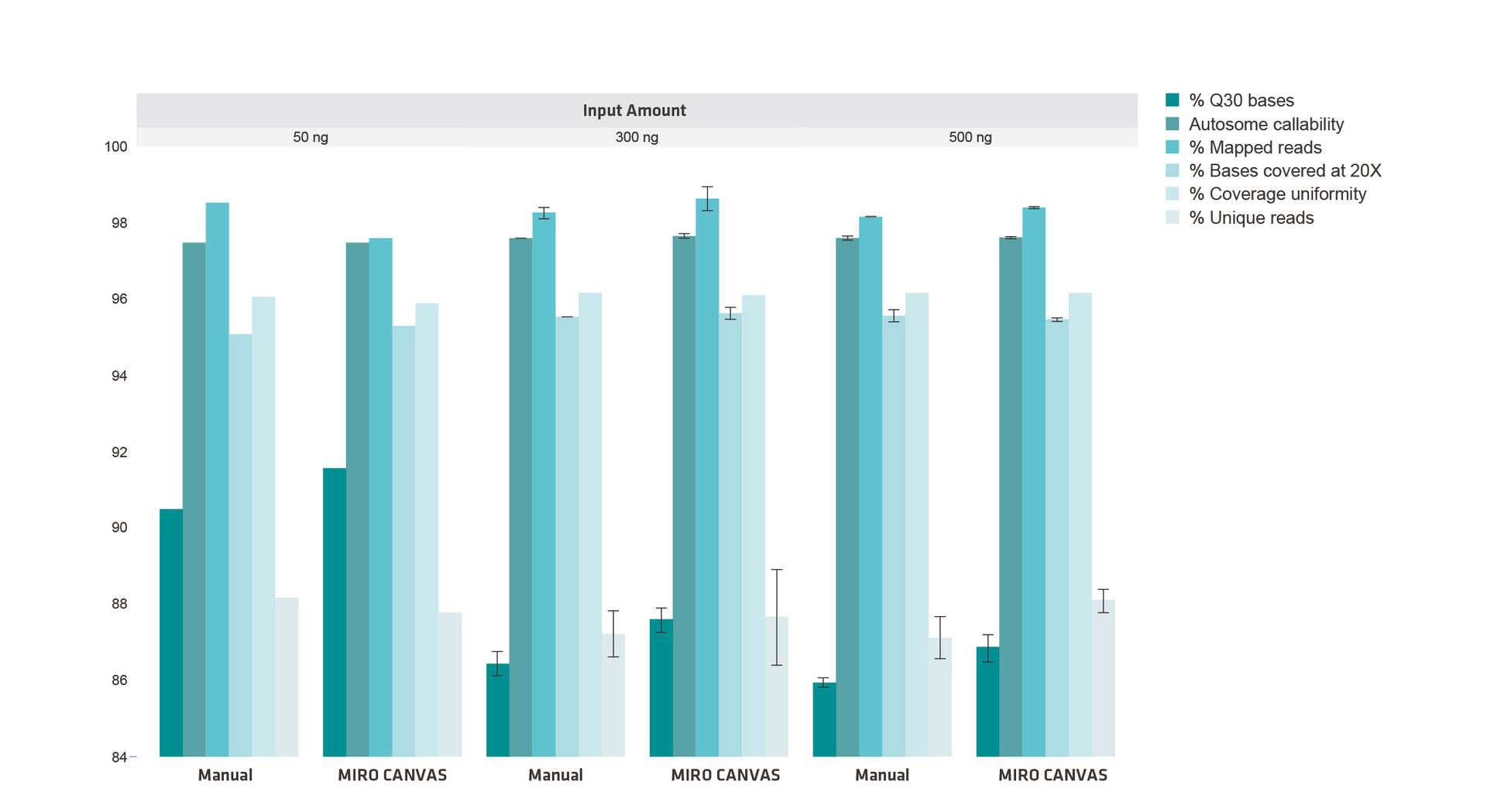
Illumina DNA PCR-free libraries prepared from a range of DNA inputs using either manual or MIRO CANVAS preparation methods demonstrate comparable % Q30 score, autosome callability, % mapped reads, % of bases covered at 20x, coverage uniformity and % unique reads.
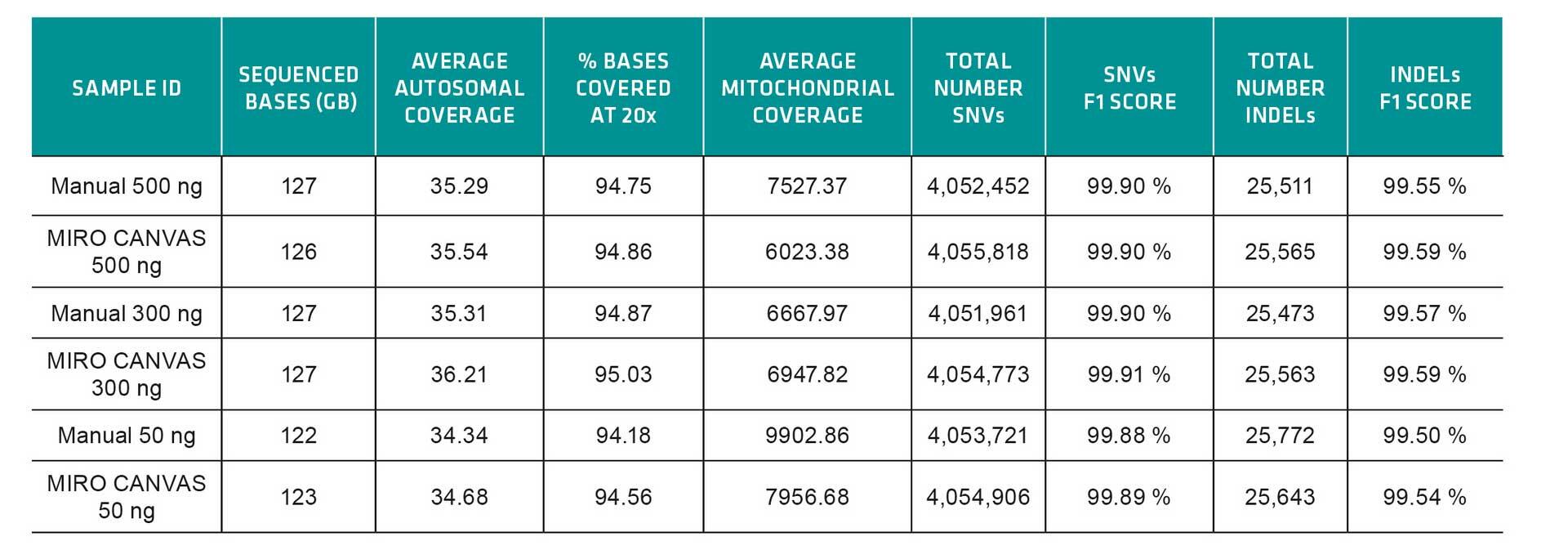
The resulting sequencing metrics are comparable between manually prepared libraries and those generated using the automated workflow on the MIRO CANVAS (Figure 2). For DNA input amounts >300 ng, MIRO CANVAS libraries match or exceed the sequencing metrics for manual libraries, including base call accuracy, passing genotype calls in autosomal chromosomes, reads that confidently map to the reference genome, the % of bases covered at 20x, uniformity of coverage and duplication rates. Quality control (QC) metrics used in applications aimed at variant detection were additionally examined after subsampling to 40x sequencing coverage (Table 3). MIRO CANVAS libraries presented equal or better F1 scores for both SNVs and INDELs, as well as % bases covered at 20x, across all input ranges of tested DNA.
Table 3: The performance of QC metrics relevant for variant calling across a range of input DNA. All samples were subsampled to 40x sequencing coverage.
MIRO CANVAS walk-away automation reduces hands-on time
The total time required for library preparation with the Illumina DNA PCR-Free Prep kit is 25 minutes greater when automated on the MIRO CANVAS, but the hands-on time is considerably less than for manual preparation workflows (Table 1). Automation with the MIRO CANVAS reduces hands-on time to zero for the tagmentation, post-tagmentation clean-up, ligation and library clean-up steps.
References
- Kebschull JM et al. Nucleic Acids Res 2015; 43 (21): e143.
- Yoo J et al. Poster 32 presented at the Association of Biomolecular Resources Facilities (ABRF) 2021 Virtual Annual Meeting; 7–11 March 2021.
- Illumina DNA PCR-Free Prep. Available at: https://www.illumina.com/products/by-type/sequencing-kits/library-prep-kits/dna-pcr-free-prep.html accessed April 2021.
Conclusion
Related articles
Further reading:
Ask our expert. Leave a comment!
Write us if you have any questions regarding the application note or one of our instruments.
Any questions? I'm happy to help!
Instruments and accessories
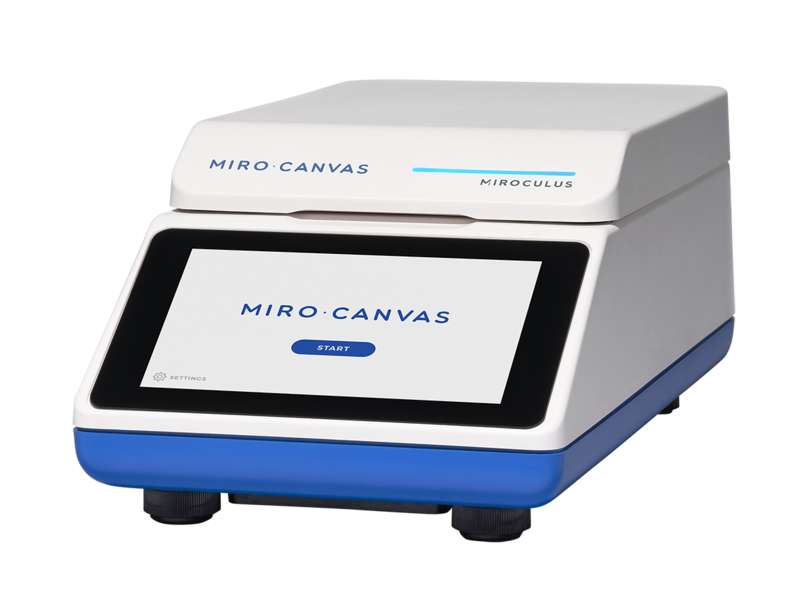
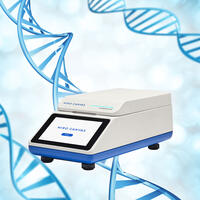
MIRO CANVAS, NGS prep system
A revolutionary microfluidics platform which enables full automation of NGS prep protocols.
-
Fully automated - Simple, walk-away automation for on-demand NGS sample preparation
-
Efficient - Minimize costs with up to 75 % reduction in reagent use and only 15 minutes of hands-on time
-
Flexible - Established NGS sample prep protocols for both short- and long-read sequencing platforms
Part No. M-01-0001-001-01
Downloads
Download App Note as PDF
DownloadEnabling the Illumina DNA PCR-Free Library Prep kit on the MIRO CANVAS NGS prep system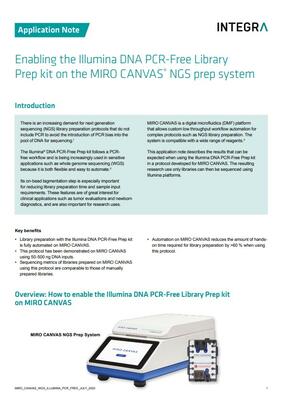
Related products


Applications
Show all-
The MIRO CANVAS NGS prep system enables fully automated library prep for nanopore human whole genome sequencing (WGS)
-
Automated library preparation for a nanopore DNA barcoding protocol on the MIRO CANVAS
-
Implementing the Twist Human Core Exome Kit on the MIRO CANVAS
-
Automating PacBio® SMRTbell® whole genome sequencing library prep on the MIRO CANVAS
Stories
Show all-
 · Product News
How our liquid handling solutions streamline NGS workflows
-
 · Product News
New digital microfluidics platform fully automates NGS sample preparation
-
 · Product News
Streamline your NGS workflow (Webinar)
-
 · Customer Testimonial
Exploring the human microbiome with automated NGS library prep
-
 · Customer Testimonial
Revolutionizing NGS library preparation with automated liquid handling integration