


This content was originally published on 27. August 2019 and has been updated.
Ergonomic pipettes and pipetting guidelines
What causes RSIs during pipetting?
There are many different terms and abbreviations that buzz around the subject of ergonomic pipetting, such as:
- RSI: repetitive strain injury
- WRULD: work-related upper limb disorder
- MSD: musculoskeletal disorder
- CTD: cumulative trauma disorder
To cut a long story short, these terms all essentially refer to pain in the hand, elbow, shoulder or neck caused by prolonged and repetitive movements, so we'll stick to the term ‘RSI’ in this article. The likelihood of developing an RSI from pipetting is dependent on various risk factors. The 3 major ones are posture, force and repetition.
Posture
In many labs, pipetting is done sitting at the lab bench. Just like sitting in front of your computer, it’s important to keep your back straight and your head and shoulders aligned whenever possible, as well as keeping your shoulders relaxed. Your legs should be placed beneath the lab bench with your feet flat on the floor or, if necessary, a footrest. Ideally, your arms should be kept close to your body; organize your workplace so that all your reagents and labware are within easy reach to avoid the need to stretch.
Force
RSI is often caused by repeated forceful movements. One way to reduce your risk is by minimizing the force required to perform certain tasks, or the frequency they need to be carried out – ideally both! Force is needed to lift up a pipette, hold it in an upright position during use, aspirate and dispense liquids, and attach and eject tips. Several factors can reduce the force needed to pipette, and we'll let you know what to keep an eye on when selecting a pipette in the next section of this article.
Repetition
Performing the same monotonous movements over and over again – several hours a day, and several days a week – is another important risk factor for developing RSI. In the next section, we'll also have a look at how you can reduce the number of pipetting steps involved in a workflow.
How to prevent RSIs
If you already experience pain from pipetting, or want to make sure that you stay pain free, you should check if your pipettes have been designed with ergonomics in mind. There are several aspects that can influence how much force is required while pipetting, and how often a movement needs to be repeated.
Handle and finger hook
The strain of lifting a pipette and keeping it in an upright position cannot be avoided without switching to benchtop instruments or automated platforms. However, pipettes with a lightweight, well-balanced design are easier to hold. Finger hooks, for example, ensure that some of the pipette's weight rests on the index finger, and that the hand and fingers can loosen their grip. Moreover, pipettes with handles that can be rotated help to keep the wrist in a neutral position, allowing each user to choose the ideal position for them.
Plunger force
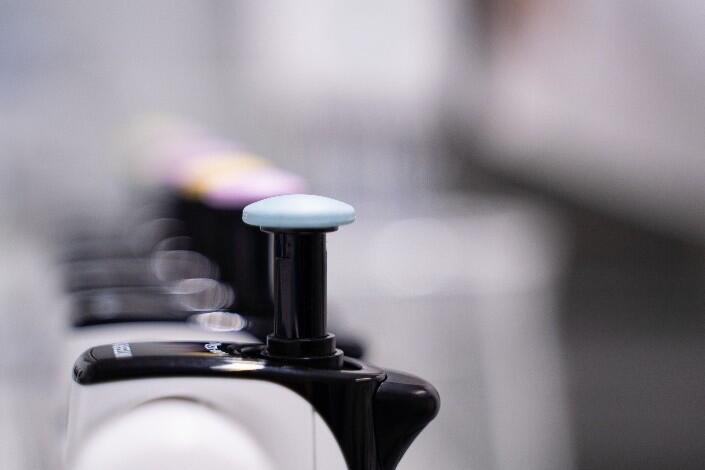
Pipettes only aspirate and dispense liquids when a plunger is moved up and down. When using manual pipettes, the plunger needs to be depressed and released with the help of the thumb. To keep the risk for problems such as thumb tenosynovitis as low as possible, you should select pipettes with a minimal plunger force and stroke distance. Using electronic pipettes is an alternative solution that further minimizes the strain placed on the thumb, as liquid displacement is controlled by a microprocessor.
Tip attachment and ejection forces
Pipette tips are made from polypropylene, which has a memory effect and wants to move back to its original shape. This is why universal tips – designed to fit on cone shaped fittings from multiple manufacturers – eventually loosen, leak or fall off. To avoid these issues, users working with universal tips must hammer their pipettes into the tips to ensure that they are secure for the duration of the pipetting step. This not only leads to high attachment forces, but also increases the ejection force needed to dispose of the tips. Pipettes designed to work with proprietary tips that snap onto the tip fittings feature significantly lower attachment and ejection forces, reducing hand and thumb strain.
Volume change mechanism
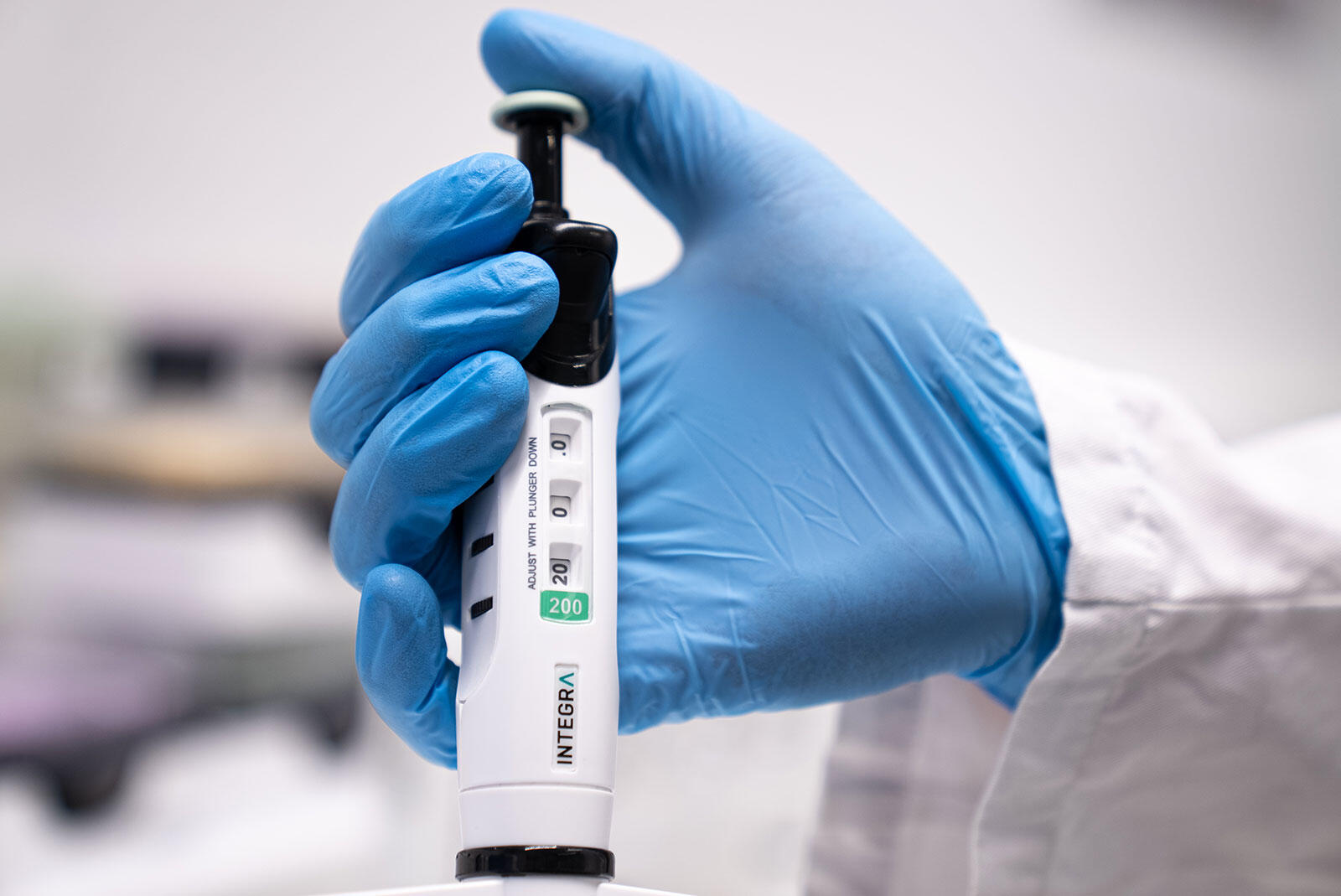
Traditional manual pipettes use a single rotating dial or plunger to set the volumes. This approach makes frequent adjustment of volumes tedious for the wrist and fingers, especially when switching from lower to higher volumes. However, there are pipettes with alternative volume change mechanisms, for example those featuring several dials similar to combination locks. These mechanisms can reduce the number of rotational movements and minimize the risk of RSIs.
Efficiency
Performing the same movements over and over again always increases the risk of developing or aggravating an RSI, so you should look for pipettes designed to increase your efficiency. Using multichannel, adjustable tip spacing and electronic pipettes can help.
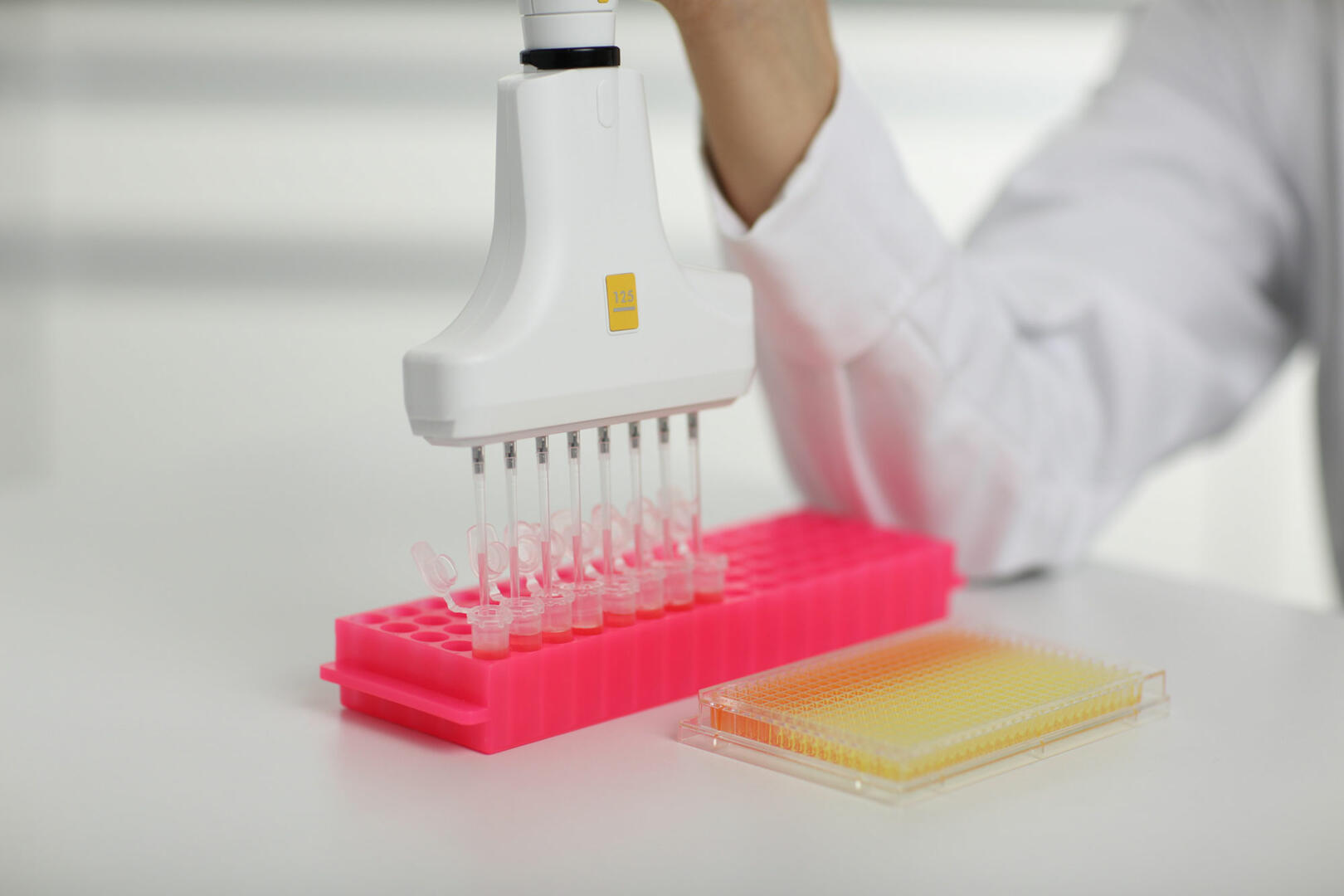
- Multichannel vs. single channel pipettes: Multichannel pipettes can streamline tasks like transferring reagents from a reservoir to a microwell plate. For example, instead of performing 96 transfers from the reservoir to the 96 well plate with a single channel pipette, an 8 channel pipette will reduce the number of transfers to just 12.
- Adjustable tip spacing vs. single channel pipettes: If all your multichannel pipettes have fixed tip spacing, you need to use a single channel pipette when transferring reagents or samples between different labware formats. Adjustable tip spacing pipettes are the solution to this, as they can transfer several samples between labware formats in parallel, such as between tubes and 384 well plates.
- Electronic vs. manual pipettes: In addition to relieving the thumb force required for depressing and releasing the plunger, electronic pipettes can help you reduce the time spent pipetting. For example, if you need to fill all the wells of a 96 well plate with a specific amount of reagent, you need to go back and forth between the reservoir and the microplate 96 times with a manual single channel pipette. As electronic pipettes offer a repeat dispense mode, you can reduce the number of pipetting steps by aspirating a larger amount of reagent from the reservoir, then aliquoting it into several wells of the 96 well plate.
Features of an ergonomic pipette
To summarize, here's a checklist of the ergonomics questions to ask when choosing a pipette:
- Is the pipette well balanced in the hand?
- Does the pipette require a firm grip to hold it? Does it have a finger hook?
- Can the handle of the pipette be rotated?
- Are tip attachment and ejection forces low? Do tips snap onto the tip fittings or do you need to hammer the pipette into the tips?
Manual pipette users should also ask themselves the following questions:
- How heavy or lightweight is the pipette?
- Does the pipette have a low plunger force and a short stroke distance?
- How many rotational movements are needed to change volumes?
- Should I switch to a multichannel, adjustable tip spacing or electronic pipette to reduce the number of repetitive movements?
What INTEGRA can offer
We know that pipetting can be a pain, and always keep ergonomics in mind when developing new products. Read on to discover how our liquid handling solutions can help to prevent RSIs.
GRIPTIPS® pipette tips
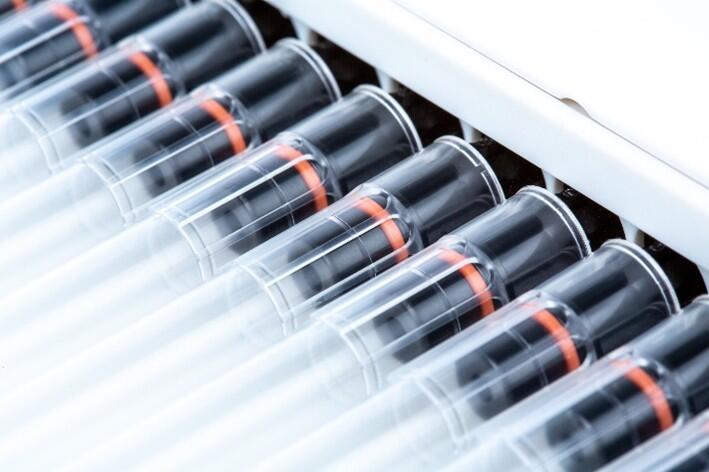
Our pipettes are designed in combination with GRIPTIPS to prevent users from having to hammer on pipette tips. GRIPTIPS snap effortlessly onto the tip fittings with minimal force. This avoids over-tightening, so ejection forces are also reduced, minimizing the strain on the user's hand and thumb.
EVOLVE manual pipettes
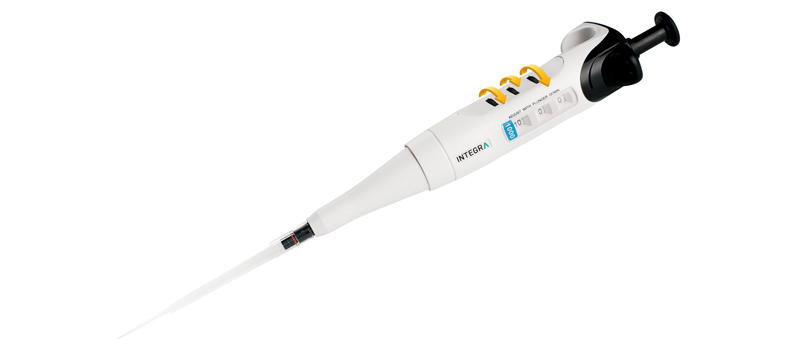
Our EVOLVE manual pipettes offer low plunger forces, are lightweight and have a finger hook to reduce the risk of developing an RSI. In contrast to using a single rotating plunger or dial to adjust volumes, the EVOLVE features 3 separate quick set dials. This not only enables users to set volumes more than 10 times faster, but also reduces the numbers of rotational movements needed. To minimize the number of pipetting steps, the EVOLVE is available in single and 8, 12 and 16 channel options, with a rotating handle on all multichannel options.
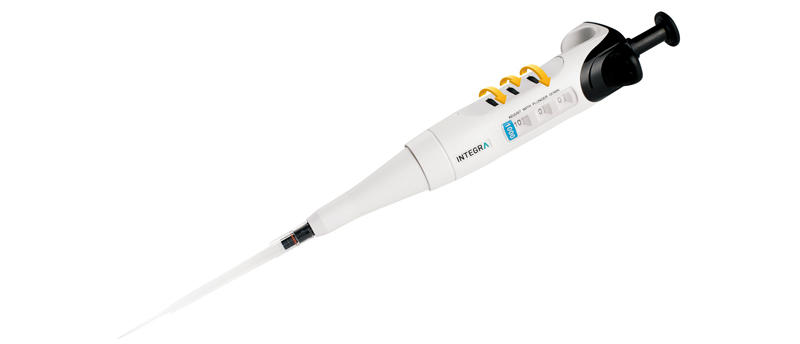
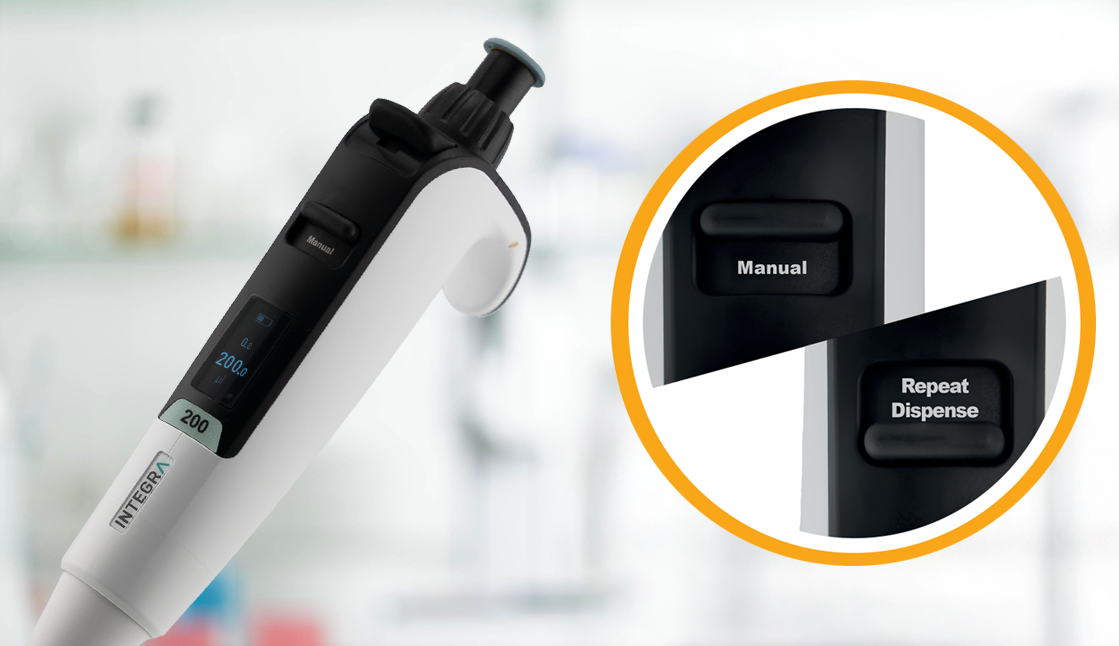
SWITCH hybrid pipettes
The SWITCH hybrid pipette brings together the best of manual and electronic pipetting in one lightweight, well-balanced instrument. Users can transition seamlessly between manual precision and electronic repeat dispensing for fast aliquoting, depending on the task at hand. Designed with ergonomics in mind, the SWITCH features handle dimensions that fit comfortably in the palm, a consistent plunger height that keeps the thumb in a relaxed position across all pipetting volumes, and an extremely low plunger force. It also offers rapid volume setting, requiring far fewer wrist movements than traditional handheld pipettes. These innovations reduce strain during repetitive workflows, making pipetting faster, more efficient and more comfortable, even during long sessions at the bench.
VIAFLO electronic pipettes
VIAFLO electronic pipettes are comfortable to hold, thanks to their lightweight, well-balanced design and finger hook. The VIAFLO provides 10 intuitive, preset pipetting programs to accelerate and simplify common applications, reducing the time spent pipetting. Easy-to-use custom programs are also available for more complex assays, and pipetting parameters can be adjusted using an ergonomic thumbwheel interface, avoiding the need to repeatedly push buttons to change settings. Multichannel options can further enhance efficiency, and feature a handle that can be rotated so that every user can find their ideal pipetting position.
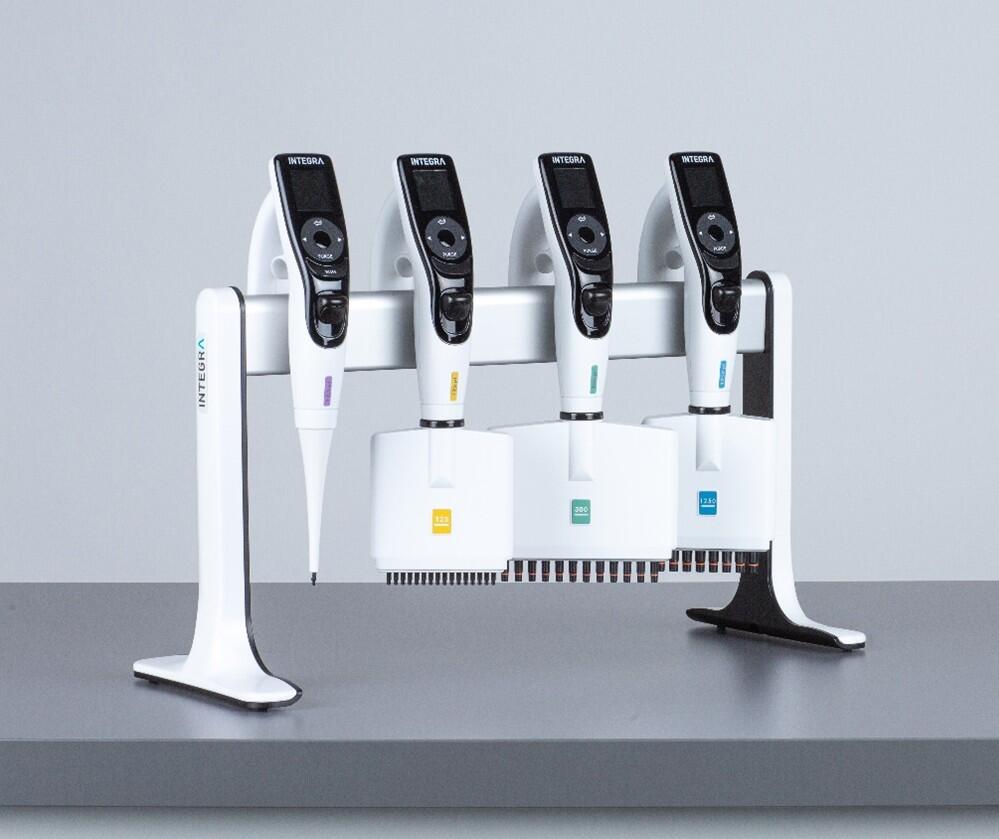
VOYAGER adjustable tip spacing pipettes
Just like our VIAFLO pipettes, VOYAGER pipettes are ergonomically designed with a finger hook and rotating handle. They also offer the same thumbwheel interface and pipetting modes to speed up workflows. However, what’s truly unique is their automatic adjustable tip spacing functionality, allowing you to expand or reduce tip spacing at the push of a button. This enables effortless transfer of multiple samples in parallel between labware of different formats, eliminating the need to use single channel pipettes for these tasks. This drastically cuts the time spent pipetting and, consequently, reduces the risk of RSIs. Use our calculator to find out how much time you could save pipetting, and learn how quickly an investment in a VOYAGER pipette pays off.
The PIPETBOY GENIUS pipet controller
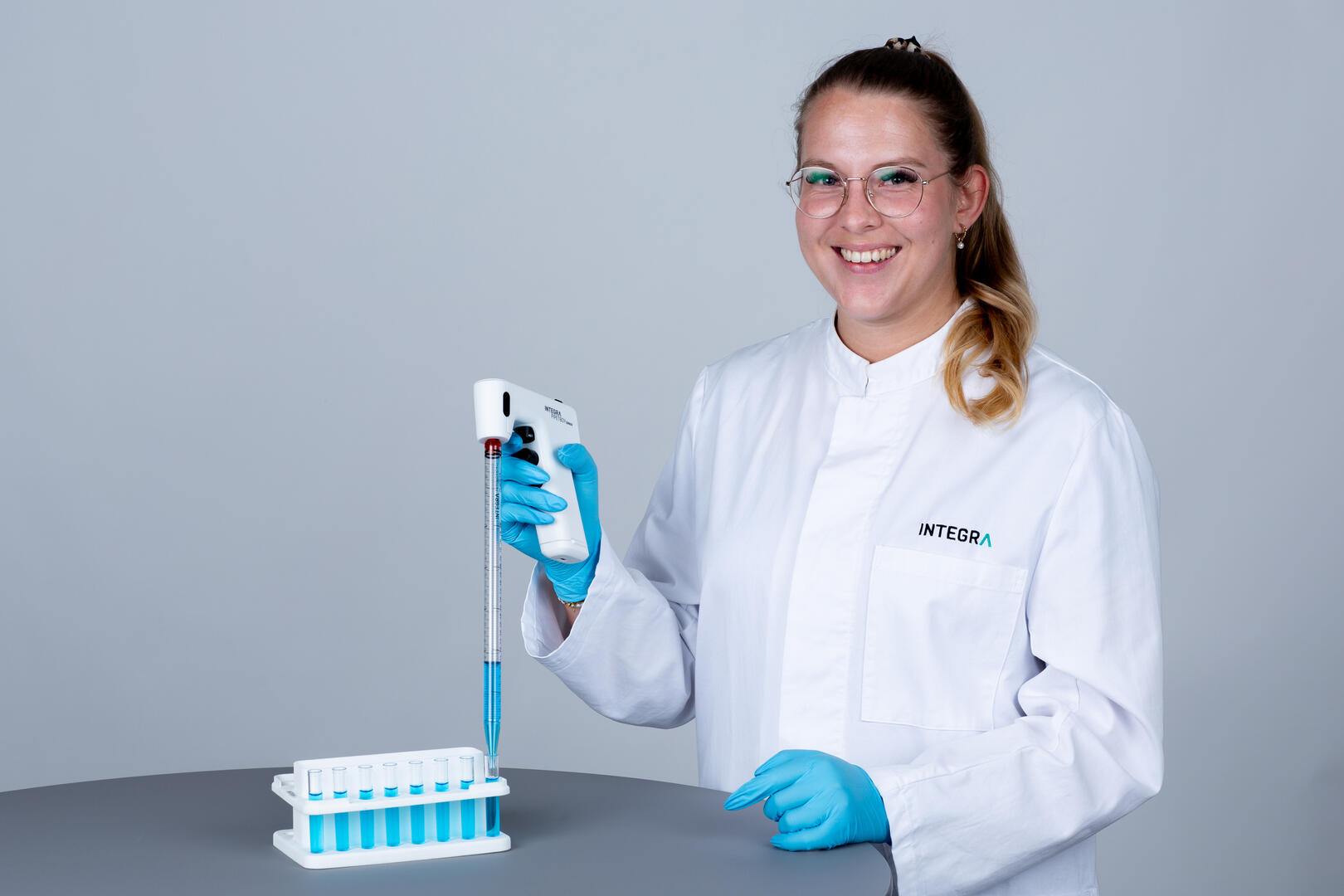
Do you also need an ergonomic solution for handling larger volumes? Check out the PIPETBOY GENIUS serological pipet controller. It enables effortless, consistent repeat dispensing of multiple aliquots from 0.1 to 100 ml from a single aspiration when used with our serological pipets. This function eliminates the need to monitor graduations, relieving strain on the body and reducing eye fatigue, as you are no longer forced into awkward and uncomfortable postures to see how much liquid you are dispensing.
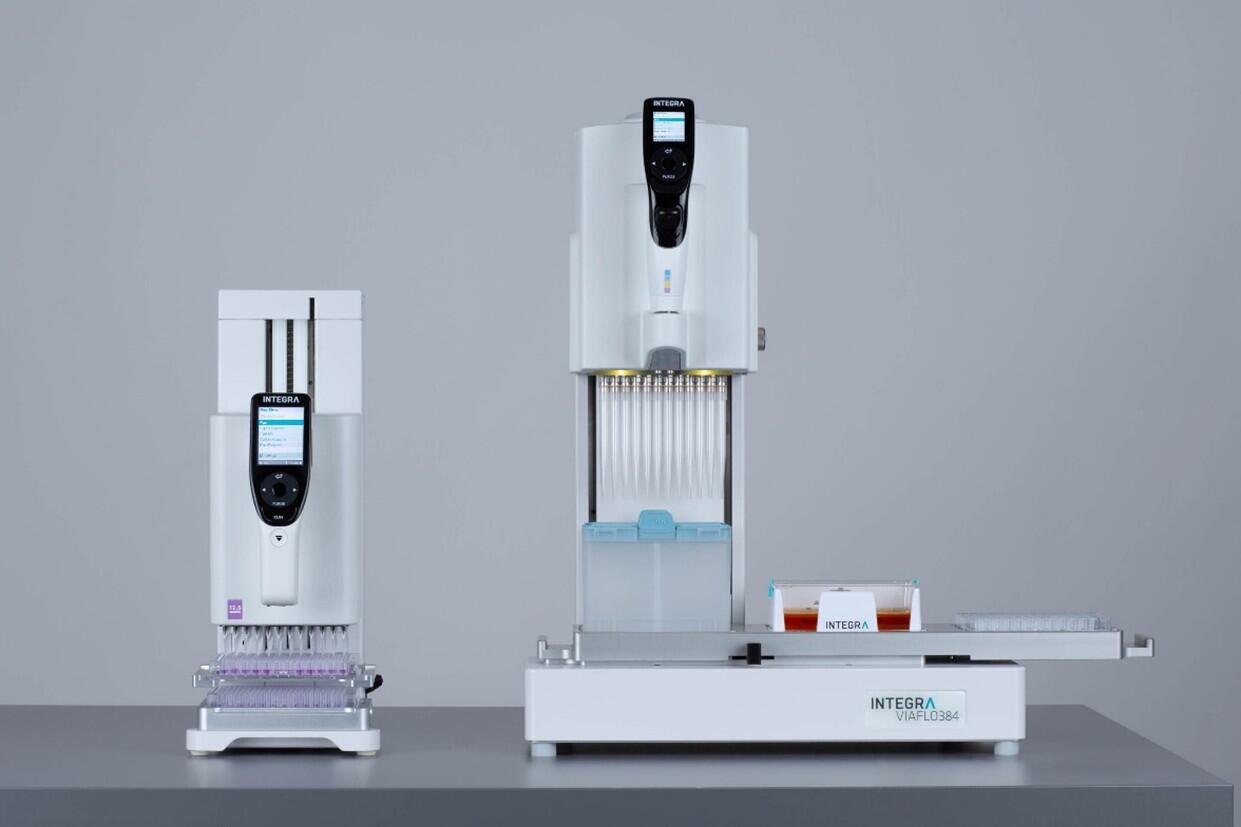
MINI 96, VIAFLO 96 and VIAFLO 384 pipettes
Our 96 and 384 channel pipettes eliminate the need to lift and stabilize pipettes in an upright position. Simply grip the handle and guide the pipette to where you want it to go! A servo motor assists movements so that pipetting is effortless, while the intuitive thumbwheel interface, computer-controlled plunger and electronic tip loading and ejection further reduce the strain placed on the hand and wrist. Moreover, these pipettes can fill entire 96 or 384 well plates in one pipetting step, greatly increasing efficiency to minimize the time spent at the bench.
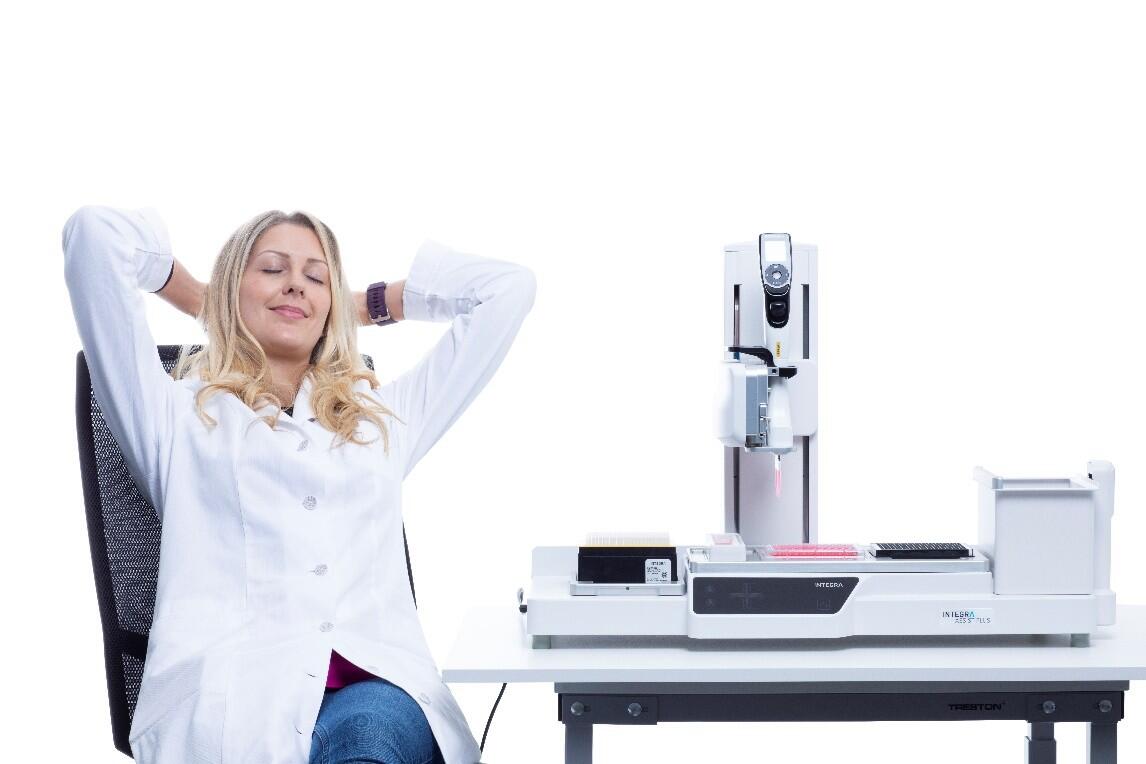
The ASSIST PLUS pipetting robot
The ASSIST PLUS pipetting robot is an affordable solution for labs looking to fully automate workflows and repetitive tasks, eliminating physical strain. It can automate VIAFLO and VOYAGER electronic pipettes, as well as D-ONE single channel pipetting modules, and is simple to program using VIALAB software – no special training required!
Are you interested in learning more about ergonomic pipetting and our pipetting solutions? Book a free online or onsite training session with one of our liquid handling experts or request a product demo.
Further reading:
Any questions? I'm happy to help!
Applications
Show all-
End-to-end Twist library preparation protocol for NGS workflow automation
-
A simple and streamlined workflow for membrane protein isolation
-

Streamlining single-cell sequencing with the Flex Apex workflow using automated liquid handling solutions
-
Optimizing DNA fragmentation and NGS library preparation with automated liquid handling
Stories
Show all-
 · Product News
Enhancing ergonomics with intelligent serological pipetting
-
 · Product News
Set volumes in the blink of an eye with the EVOLVE manual pipette
-
 · Product News
SWITCH hybrid pipette: scientifically proven ergonomics for better pipetting
-
 · Product News
Why iHEALTH 360 champions INTEGRA's pipetting solutions to prevent RSIs