-
Minimizing dead volume during qPCR set-up with the divided reservoir on the ASSIST PLUS pipetting robot
Save time and expensive reagents during qPCR set-up
Overcoming high dead volume to save precious and expensive reagents is an important goal for laboratories. The assumption that only pipetting from single tubes guarantees the lowest possible dead volume holds up well. However, even with automated single channel pipettes, this is not an option when high throughput is required. INTEGRA has developed novel divided reservoirs to reduce reagent wastage when using the VOYAGER adjustable tip spacing pipette. Reagent transfer can be fully automated with high accuracy and low dead volume by mounting the VOYAGER onto the ASSIST PLUS pipetting robot. Here we demonstrate the cost- and time-saving benefits when preparing master mixes with expensive SYBR® Green dye, TaqMan® probes and DNA polymerase reagents for multiplex qPCR using a divided reservoir.
-
Table of contents
Overcoming high dead volume to save precious and expensive reagents is an important goal for laboratories. The assumption that only pipetting from single tubes guarantees the lowest possible dead volume holds up well. However, even with automated single channel pipettes, this is not an option when high throughput is required. INTEGRA has developed novel divided reservoirs to reduce reagent wastage when using the VOYAGER adjustable tip spacing pipette. Reagent transfer can be fully automated with high accuracy and low dead volume by mounting the VOYAGER onto the ASSIST PLUS pipetting robot. Here we demonstrate the cost- and time-saving benefits when preparing master mixes with expensive SYBR® Green dye, TaqMan® probes and DNA polymerase reagents for multiplex qPCR using a divided reservoir.
Key benefits
Overview: How to reduce dead volume during automated qPCR set-up
In this application note, we demonstrate how to carry out fast and accurate multiplex qPCR master mix transfers with the lowest possible dead volume using the ASSIST PLUS pipetting robot equipped with a VOYAGER adjustable tip spacing pipette and divided reagent reservoir.
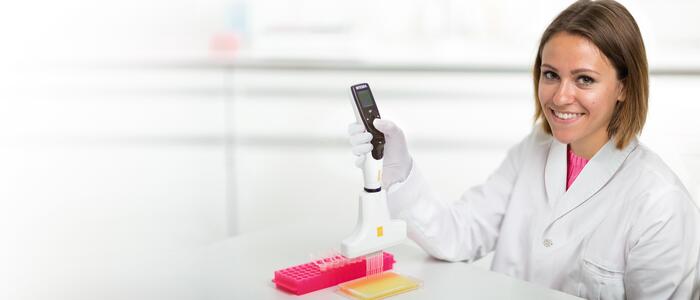
When performing multiplex qPCR assays, SYBR Green dye, TaqMan probes targeting different genes of interest, a DNA polymerase and buffer are combined into the master mix, which is then transferred to a PCR plate. The method of transferring the master mix plays a crucial role in decreasing reagent waste and costs during automated qPCR set-up.
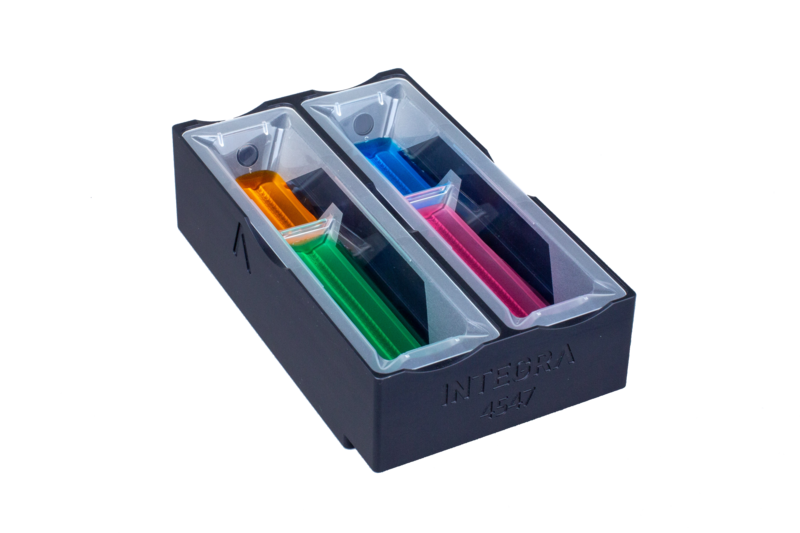
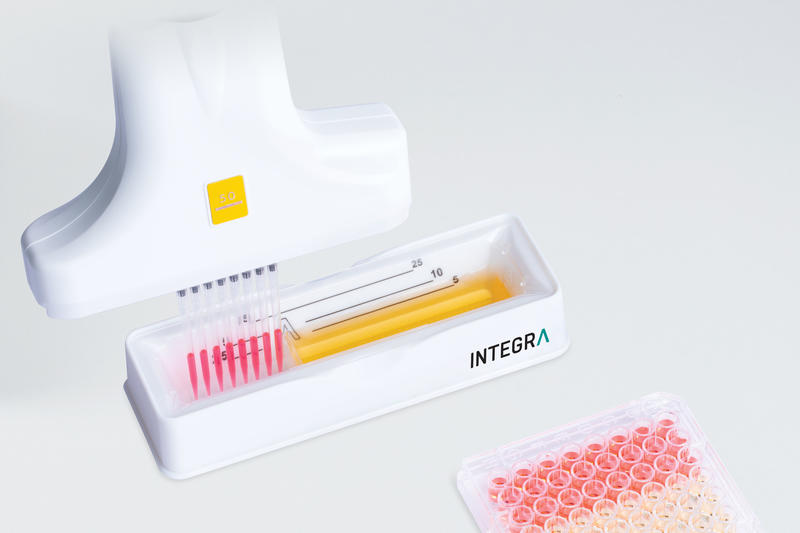
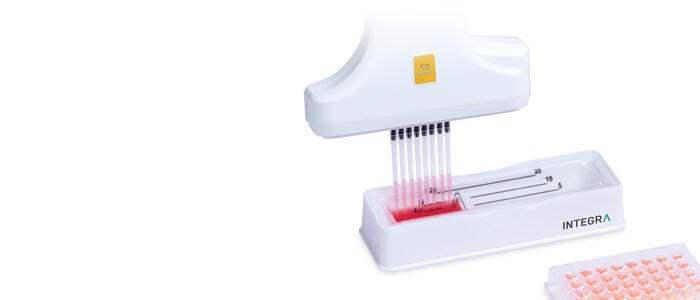
The divided reservoir is split into two compartments, with maximum volumes of 5 ml and 10 ml. The 5 ml compartment offers the lowest available dead volume, and can be accessed with the VOYAGER pipette by adjusting the tip spacing to the minimal distance. The SureFlo bottom allows aspiration from the very bottom of the reservoir to reduce the dead volume.
Downloads: App note and protocol for low dead volume qPCR set-up with the ASSIST PLUS pipetting robot
Here you can download the complete protocol used in this application and use them on your ASSIST PLUS. The protocol can be customized with the VIALAB software.
Experimental set-up
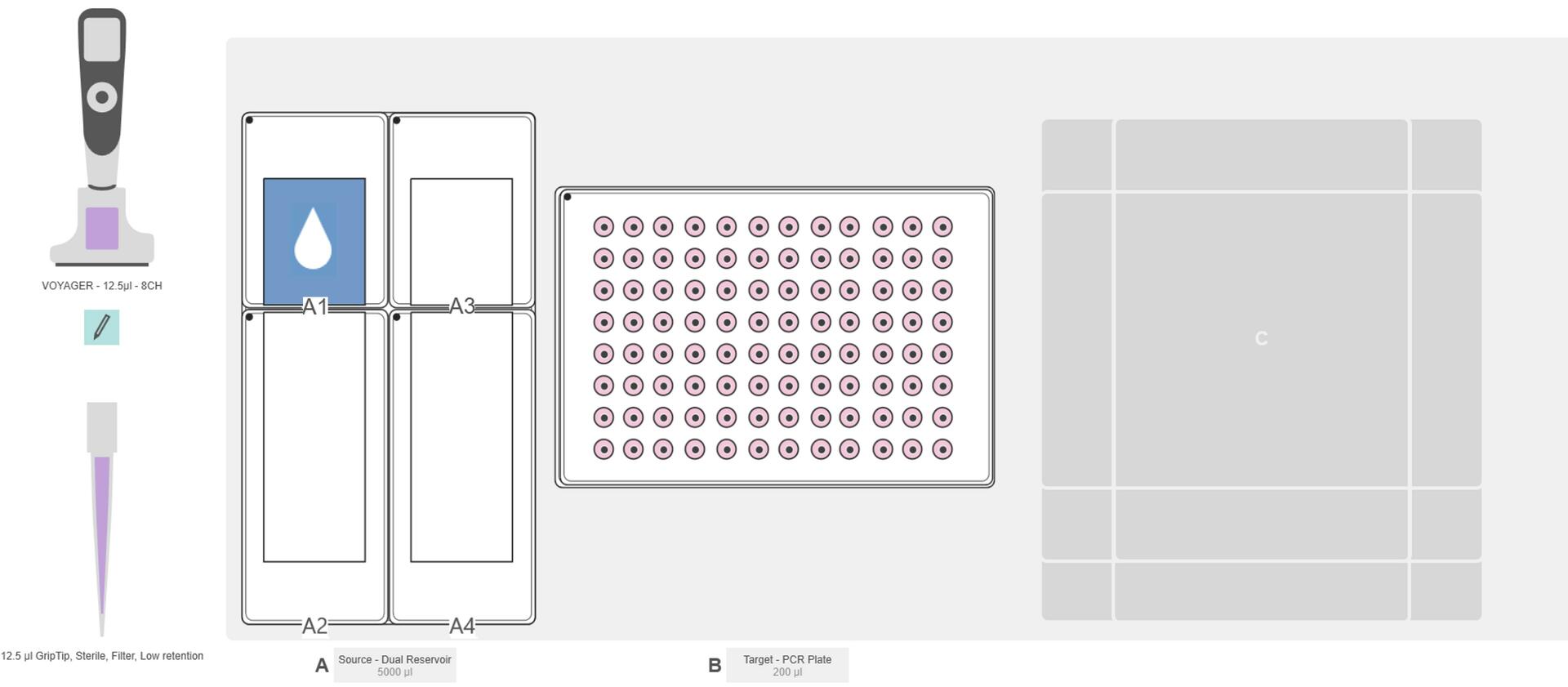
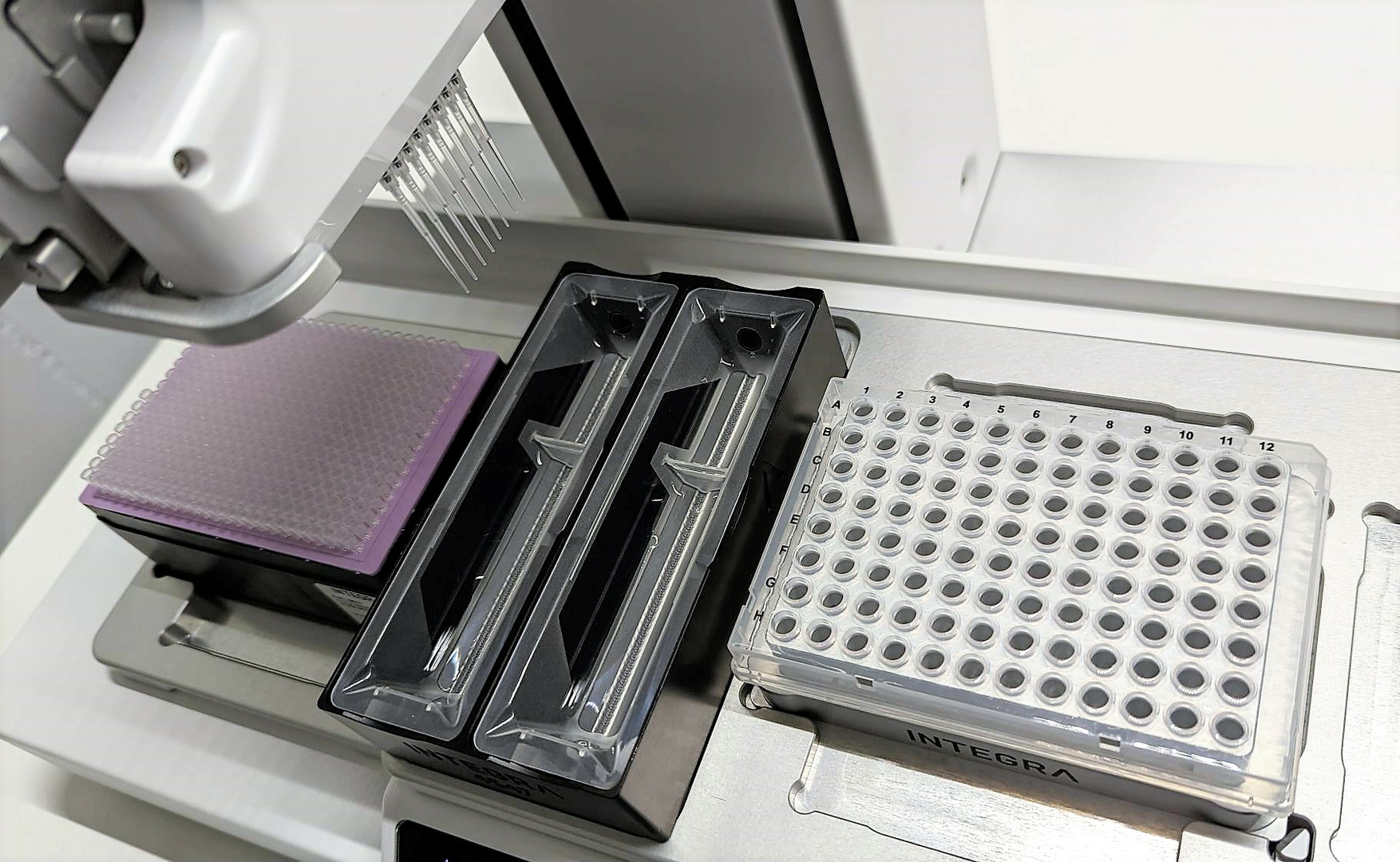
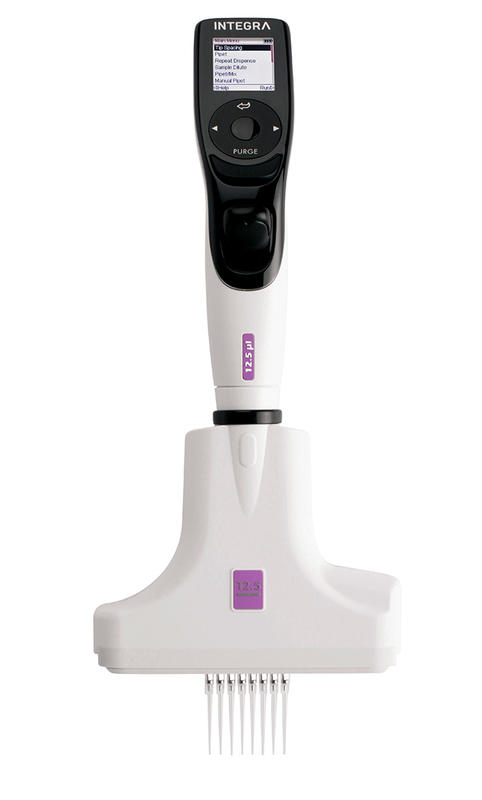
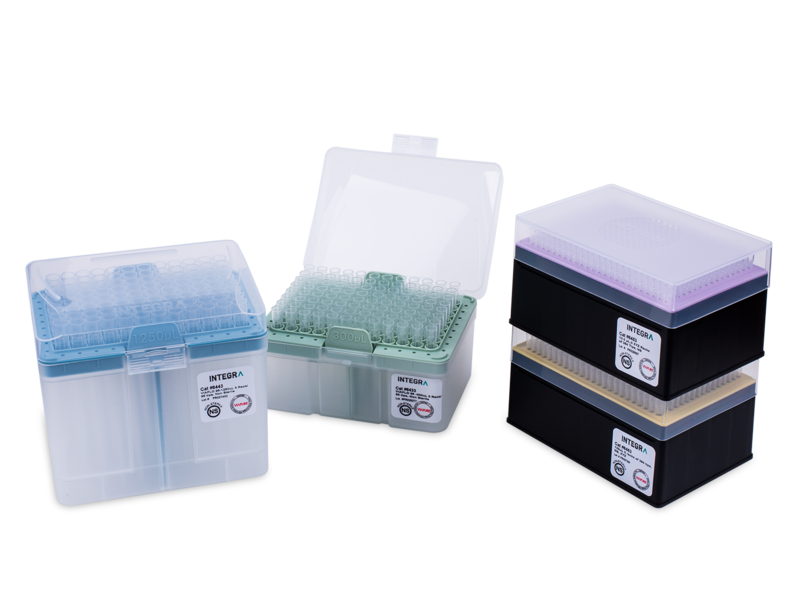
The 8 channel 12.5 µl VOYAGER adjustable tip spacing pipette with 12.5 µl sterile, filter, low retention GRIPTIPS® is mounted on the ASSIST PLUS pipetting robot.
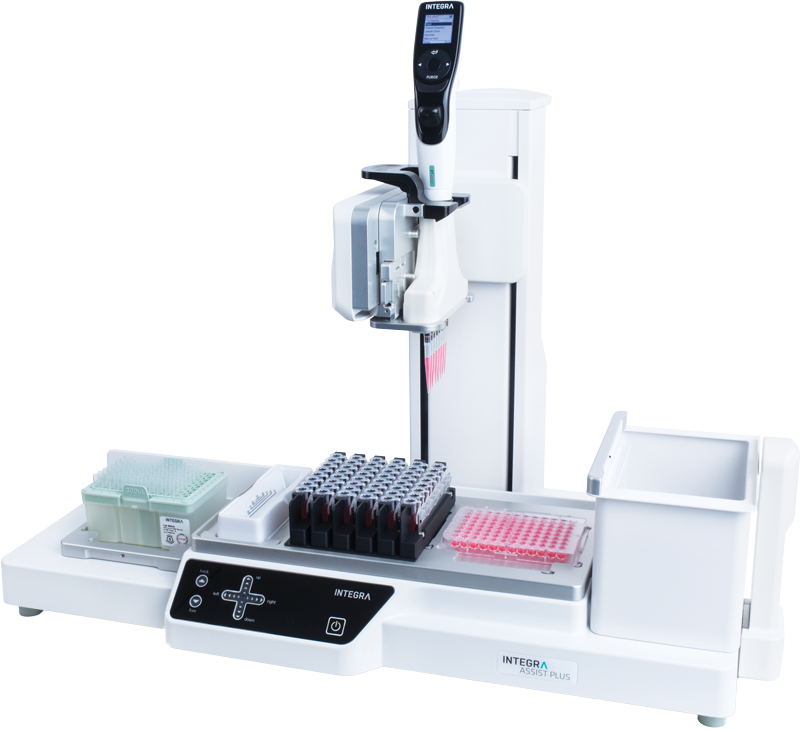
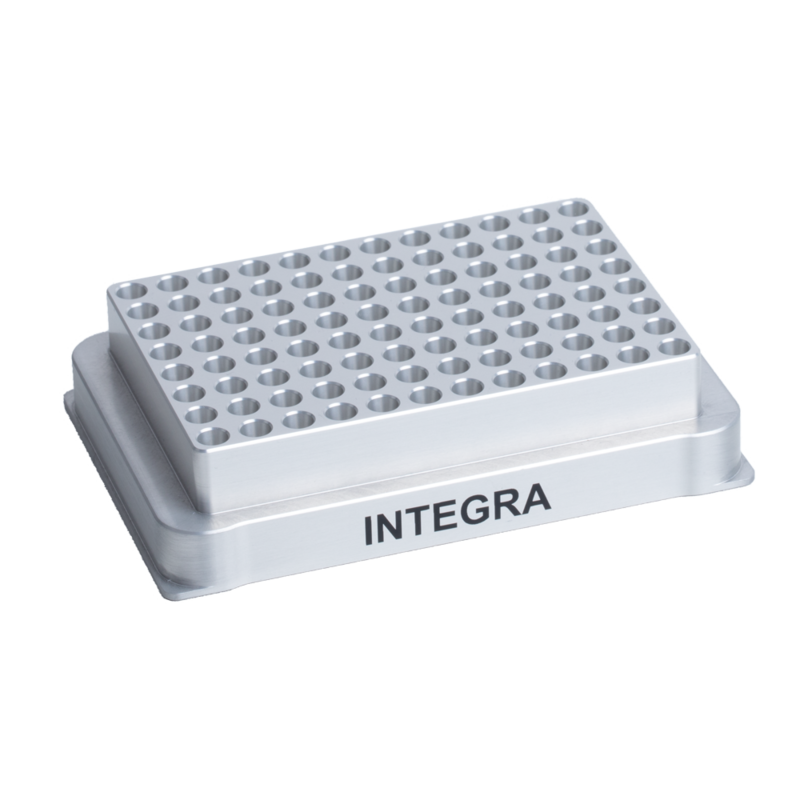
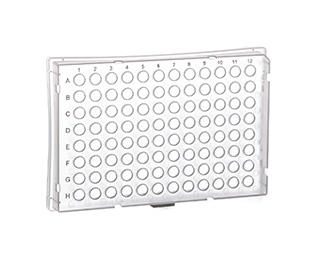
On deck position A (Figure 1), INTEGRA's divided reagent reservoir with SureFlo anti-sealing array is set up onto the dual reservoir adapter with qPCR master mix in the 5 ml compartment, A1. An INTEGRA PCR cooling block together with a Sapphire 96 well PCR plate is placed in landscape orientation on deck position B (Figure 1).
Step-by-step procedure
Select and run the VIALAB program 'Master_mix_transfer_from_reservoir'. The 8 channel 12.5 µl VOYAGER adjustable tip spacing pipette aspirates 10 µl of the master mix from A1 of the divided reagent reservoir (Figure 2), and dispenses it into each well of the 96 well PCR plate. A pre- and post-dispense of 0.5 µl guarantees precision while pipetting expensive reagent.
Tips:
- Pipetting height is crucial for accessing the last microliters of liquid. Set the Safety Bottom Offset to 0 mm, and pipette from the very bottom of the reservoir.
- Setting a slow aspiration speed for the last aspiration step ensures that the correct volume of liquid will aspirate when the liquid level is low.
- When using low retention GRIPTIPS, pre-wetting and pre-/post-dispense steps improve accuracy and precision while pipetting small volumes.
- If focusing on higher throughput over low dead volume, the VOYAGER adjustable tip spacing pipette can be exchanged for a higher volume model for repeat dispensing.
Results
To highlight the time and cost savings of INTEGRA's divided reservoir when used with the VOYAGER adjustable tip spacing pipette on the ASSIST PLUS pipetting robot, we investigated how quickly filling a 96 well PCR plate with 10 µl of multiplex qPCR master mix could be achieved.
As shown in Figure 3, we compared the residual dead volume and hands-on times when transferring multiplex qPCR master mix in single dispenses (Figure 3a) or multiple dispenses (Figure 3b) with:
-
a single channel pipette from a microcentrifuge tube
-
a VOYAGER multichannel pipette from a standard or divided reservoir
-
a VOYAGER pipette mounted on an ASSIST PLUS from a divided reservoir
As there are no comparable reservoirs on the market available, we chose a 25 ml reservoir and used a similar set-up as for the divided reagent reservoir during master mix transfer.
Using a single channel manual pipette, the 96 well plate was filled with 10 µl master mix in each well in 6 minutes, by individual transfers from a microcentrifuge tube filled with 970 µl of master mix. The excess volume needed was reduced to 1 % of the total volume of the master mix (1 reaction volume). The processing time was decreased by using a multichannel pipette and a reservoir, especially when using the repeat dispense function of an electronic pipette. However, the use of the standard reservoir led also to an increase in the dead volume up to 260 µl (26 reaction volumes), which equates to 23 % more master mix needed per 96 well plate compared to the microcentrifuge tube. When using the divided reagent reservoir and the VOYAGER instead, this issue was avoided completely, resulting in only a 1 % dead volume (1 reaction volume). This matched the advantage of using microcentrifuge tubes, while keeping the speed benefits of a multichannel pipette.
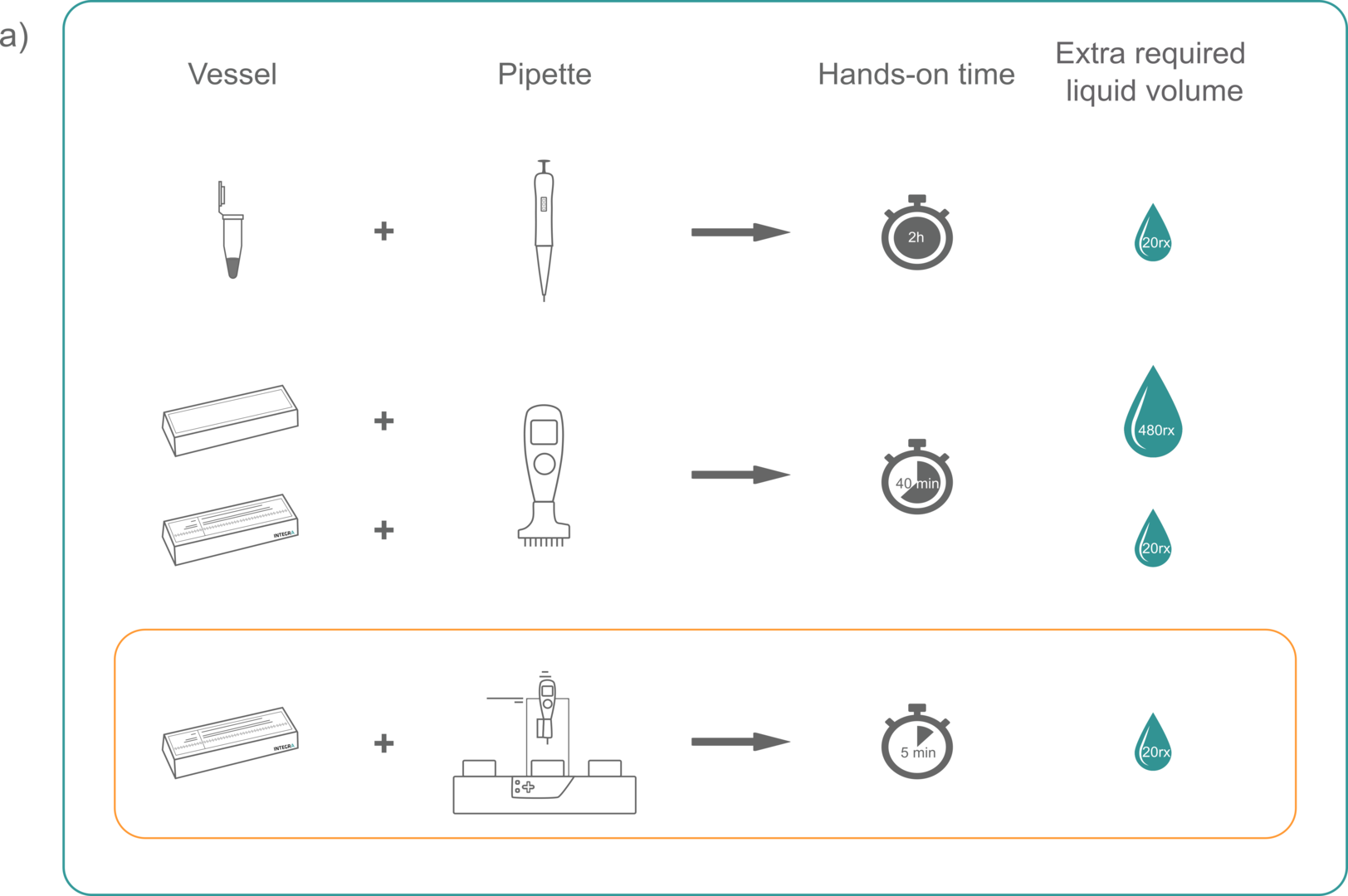
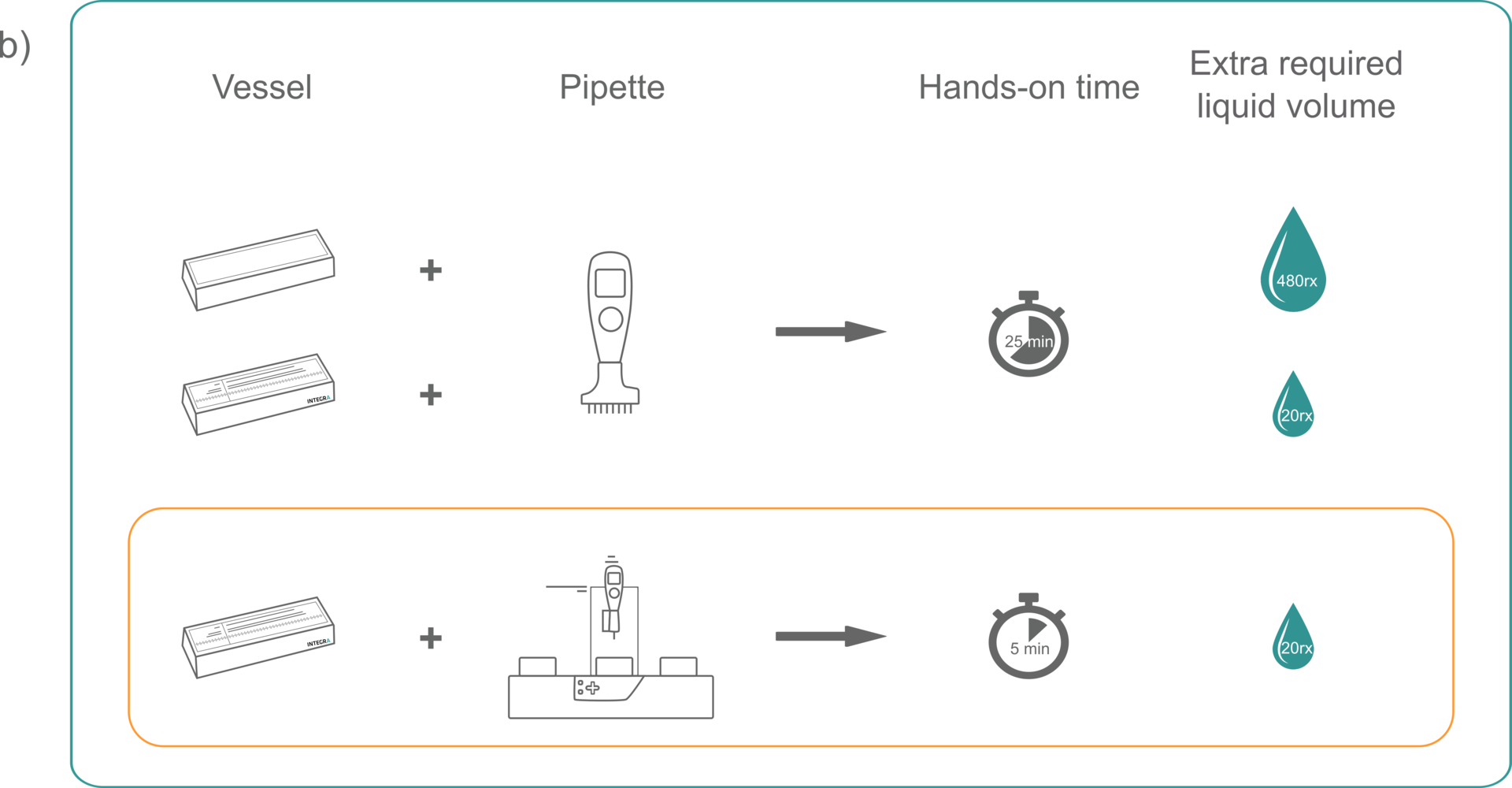
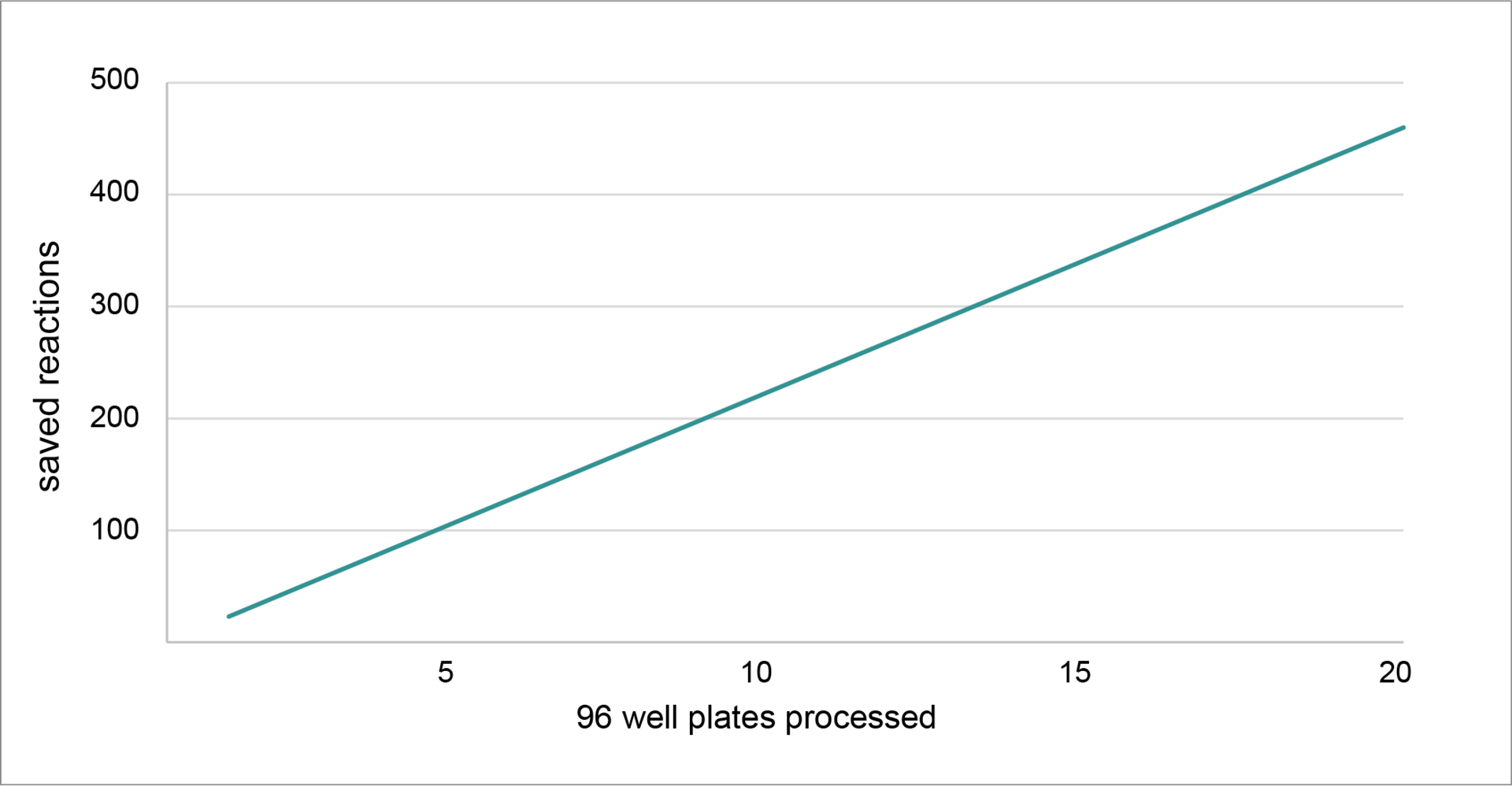
Automating the VOYAGER on the ASSIST PLUS using INTEGRA's divided reagent reservoir led to additional hands-free time, and throughput was further increased by using the repeat dispensing function. Automation provided 2 hours of hands-free time while filling twenty 96 well qPCR plates with master mix, and successfully kept the dead volume down to 1 % (20 reaction volumes). Compared to the standard reservoir, the divided reservoir saved 480 reaction volumes (Figure 4). This emphasizes the potential cost savings of the reservoirs, particularly for performing multiplex qPCR with SYBR Green, large amounts of expensive TaqMan probes, and precious DNA polymerase.
Remarks
- VIALAB software: The VIALAB programs can be easily adapted to your specific labware and protocols, for instance when partial plates are needed.
- Partial plates: Programs can be adapted at any time to a different number of samples, giving laboratories total flexibility to meet current and future demands.
Conclusion
Ask our expert. Leave a comment!
Write us if you have any questions regarding the application note or one of our instruments.
ご質問は有りませんか?喜んでお答します。
Used instruments and accessories
ASSIST PLUS, Pipetting Robot
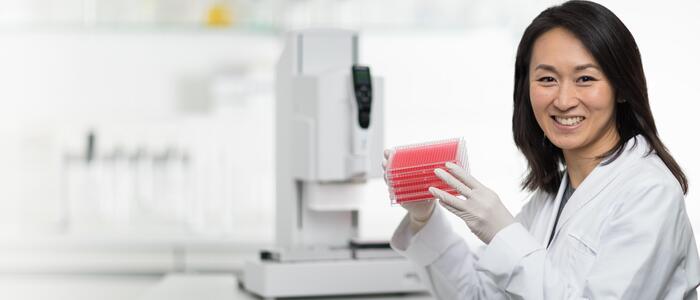
INTEGRA has developed the ASSIST PLUS pipetting robot to streamline routine pipetting tasks at an affordable price. Using INTEGRA electronic multichannel pipettes, the system:
- automates pipetting tasks,
- eliminates physical strain and
- ensures superior reproducibility and
- error free pipetting.
Part No. 4505
Download
Download App Note as PDF
ダウンロードMinimizing dead volume during qPCR set-up with the divided reservoir on the ASSIST PLUS pipetting robot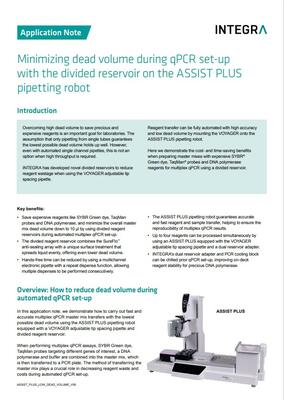
Customer’s voice
Great reservoirs. Used for cell culture - no sealing of tips when extracting the last volume from the reservoir and therefore very little wasted reagents! Great idea to have the reusable stand as well! Makes for a very sturdy reservoir.
アプリケーション
全てを表示-
End-to-end Twist library preparation protocol for NGS workflow automation
-
A simple and streamlined workflow for membrane protein isolation
-
Streamlining single-cell sequencing with the Flex Apex workflow using automated liquid handling solutions
-
Optimizing DNA fragmentation and NGS library preparation with automated liquid handling